
After a long day, you finally get into bed expecting a good night’s sleep. But instead of waking up refreshed, you wake up tired, groggy, and mentally drained. Sound familiar? You’re not alone. Millions of Americans struggle with poor sleep quality despite spending enough hours in bed.
The problem is often not the amount of sleep but the quality of sleep—especially deep sleep. Deep sleep is the stage when your body repairs itself, restores energy, strengthens immunity, and supports brain function. The good news is that certain nighttime habits can significantly improve your chances of getting deeper, more restorative sleep.
This guide explains the best nighttime habits for deep sleep, why they matter, and how you can build a healthier sleep routine naturally.
Quick Answer
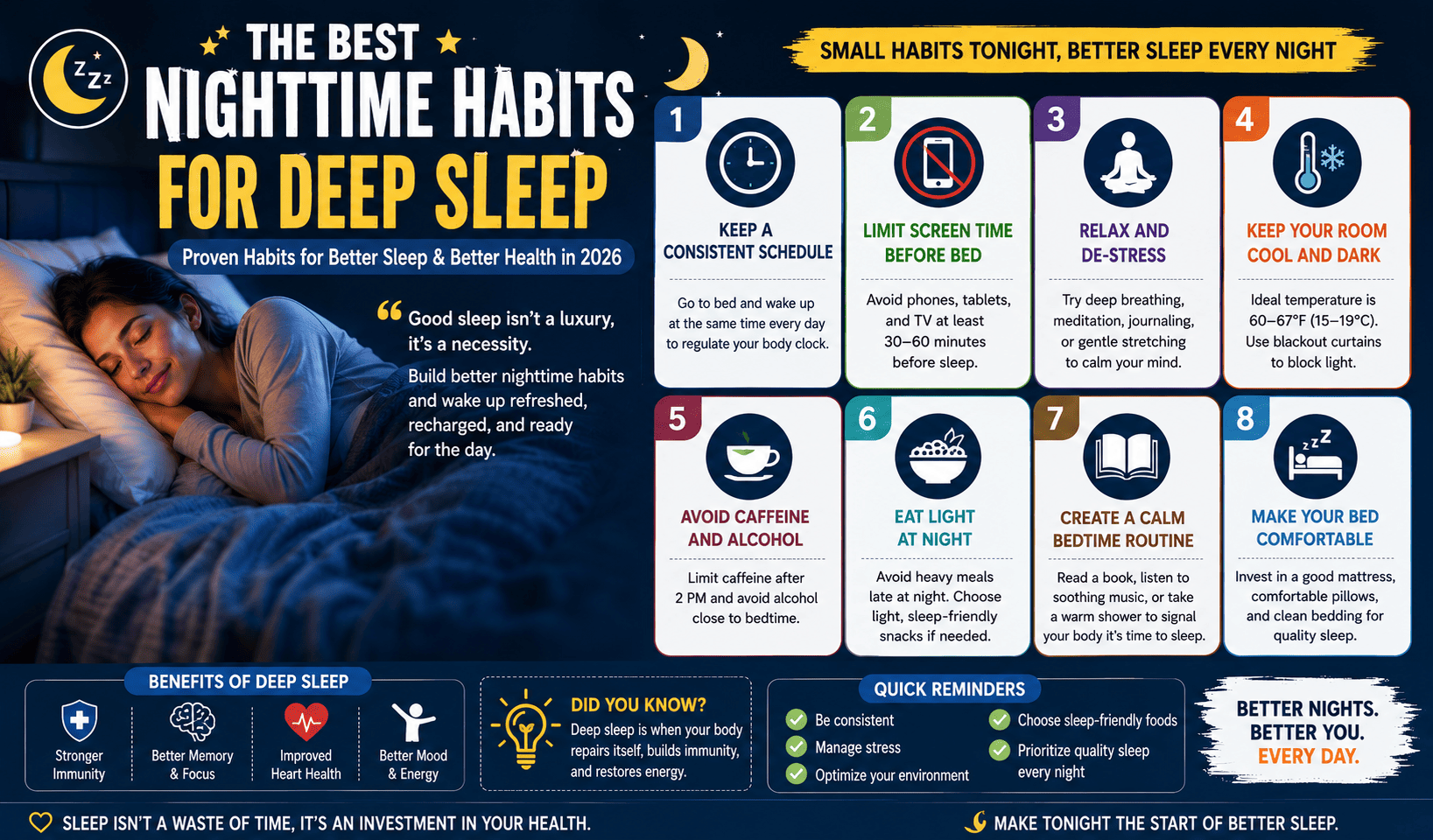
The best nighttime habits for deep sleep include maintaining a consistent bedtime, limiting screen exposure before bed, keeping your bedroom cool and dark, managing stress, avoiding heavy meals late at night, and following a relaxing bedtime routine. These habits help support natural melatonin production and improve sleep quality.
What Are Nighttime Habits for Deep Sleep?
Nighttime habits are the activities and routines you follow during the hours leading up to bedtime. These habits influence how quickly you fall asleep, how long you stay asleep, and how much deep sleep your body achieves.
Deep sleep is one of the most important stages of the sleep cycle. During this stage, your body focuses on physical recovery, muscle repair, immune function, and memory consolidation.
Healthy nighttime habits help signal to your brain that it’s time to rest. Poor habits, on the other hand, can keep your nervous system active and make quality sleep harder to achieve.
Also Read : What causes frequent waking during sleep?
Symptoms of Poor Deep Sleep
Many people don’t realize they are missing out on deep sleep because they still spend enough time in bed.
Early Signs
- Waking up tired despite 7–8 hours of sleep
- Morning grogginess
- Difficulty concentrating
- Mild brain fog
- Low motivation
Advanced Signs
- Chronic fatigue
- Mood changes
- Poor memory
- Increased stress levels
- Reduced productivity
- Frequent daytime sleepiness
If these symptoms happen regularly, your nighttime routine may need improvement.
Also Read : How does stress affect REM sleep?
Causes & Risk Factors That Affect Deep Sleep
Several factors can interfere with deep sleep quality.
Stress and Anxiety
Stress is one of the biggest obstacles to deep sleep. When stress hormones remain elevated, the brain stays alert even when the body is tired. This often leads to difficulty falling asleep, frequent waking, and lighter sleep stages.
People dealing with work pressure, financial concerns, family responsibilities, or chronic stress often experience reduced sleep quality.
Excessive Screen Time
Smartphones, tablets, televisions, and laptops expose you to blue light. This type of light may suppress melatonin production, making it harder for your body to prepare for sleep.
Late-night scrolling can also stimulate the brain and delay sleep onset.
Poor Sleep Schedule
Going to bed at different times each night confuses your body’s internal clock.
An inconsistent schedule may reduce:
- Sleep efficiency
- Deep sleep duration
- Overall recovery
Consistency is one of the most important sleep optimization habits.
Late-Night Eating
Eating large meals shortly before bed may lead to:
- Indigestion
- Acid reflux
- Discomfort
- Interrupted sleep
The body may focus on digestion rather than recovery.
Bedroom Environment
Factors such as temperature, lighting, noise, and mattress comfort can directly affect sleep quality.
A room that is too hot, too bright, or too noisy may disrupt deep sleep cycles.
Also Read : Can magnesium deficiency affect sleep?
Comparison Table: Good vs Poor Nighttime Habits
| Healthy Habit | Poor Habit |
|---|---|
| Consistent bedtime | Irregular sleep schedule |
| Reading before bed | Scrolling social media |
| Dim lighting | Bright screens |
| Light evening meal | Heavy late-night meal |
| Relaxation routine | Working until bedtime |
| Cool bedroom | Hot sleeping environment |
Best Treatment Options and Habits for Deep Sleep
Improving deep sleep usually involves lifestyle adjustments rather than complicated treatments.
1. Follow a Consistent Sleep Schedule
Your body operates on a natural internal clock known as the circadian rhythm.
Going to bed and waking up at roughly the same time every day helps regulate this rhythm and improve sleep quality.
Even on weekends, try to keep your sleep schedule consistent.
2. Create a Relaxing Bedtime Routine
The hour before bed should help your body transition from activity to rest.
Good bedtime activities include:
- Reading
- Gentle stretching
- Meditation
- Journaling
- Deep breathing exercises
These activities help lower stress levels and prepare the brain for sleep.
3. Stop Checking Your Phone Before Bed
One of the most effective sleep habits is reducing nighttime phone use.
Constant notifications, social media scrolling, and bright screens can keep the brain stimulated when it should be winding down.
Many sleep experts recommend avoiding screens for at least 30–60 minutes before bedtime.
4. Optimize Bedroom Temperature
Room temperature plays a major role in sleep quality.
Many experts suggest maintaining a bedroom temperature between 60°F and 67°F (15°C–19°C).
A cooler environment supports the body’s natural temperature drop that occurs during sleep.
5. Limit Evening Caffeine
Caffeine can remain in the body for several hours.
Even afternoon coffee may affect sleep in sensitive individuals.
If deep sleep is a goal, consider limiting caffeine intake later in the day.
6. Reduce Stress Before Bed
Stress management is one of the most overlooked sleep strategies.
Helpful approaches include:
- Mindfulness
- Breathing exercises
- Gratitude journaling
- Evening walks
Reducing stress before bed often leads to better sleep quality and improved recovery.
7. Keep Your Bedroom Dark
Light exposure influences melatonin production.
A darker room helps signal to your brain that it’s nighttime.
Consider:
- Blackout curtains
- Sleep masks
- Dimming lights before bed
Small changes can have a noticeable impact on sleep quality.
Also Read : Can sleeping with the TV on affect sleep?
Diet & Lifestyle Tips for Better Deep Sleep
What you eat and drink throughout the day can influence how well you sleep at night.
Foods That May Support Sleep
Certain foods contain nutrients associated with relaxation and healthy sleep patterns.
Examples include:
- Bananas
- Almonds
- Oatmeal
- Kiwi
- Greek yogurt
- Herbal teas
These foods can fit naturally into a balanced diet.
What to Avoid Before Bed
Some habits may interfere with sleep quality.
Common examples include:
- Energy drinks
- Excess caffeine
- Alcohol
- Heavy meals
- Sugary snacks late at night
Avoiding these close to bedtime may help improve sleep consistency.
Daily Routine Improvements
Deep sleep starts long before bedtime.
During the day:
- Stay physically active
- Get morning sunlight exposure
- Maintain regular meal timing
- Manage stress proactively
These habits help support healthier sleep patterns at night.
When to See a Doctor
Occasional poor sleep is common. However, persistent sleep problems may require professional evaluation.
Consider speaking with a healthcare provider if you experience:
- Chronic insomnia
- Severe daytime fatigue
- Loud snoring
- Breathing pauses during sleep
- Frequent nighttime waking
- Sleep problems lasting several weeks
These symptoms could indicate an underlying sleep disorder.
Also Read : How to improve deep sleep naturally?
Who Is at Risk?
Certain groups may be more likely to experience poor deep sleep.
1. Office Workers
Long work hours, stress, and excessive screen exposure can negatively affect sleep quality.
2. College Students
Irregular schedules and late-night studying often disrupt healthy sleep habits.
3. Parents
Young children and caregiving responsibilities may interrupt sleep consistency.
4. Older Adults
Sleep patterns naturally change with age, making deep sleep harder to maintain.
5. Shift Workers
Working irregular hours can disrupt circadian rhythms and reduce sleep quality.
Frequently Asked Questions
1. What is the best nighttime habit for deep sleep?
Maintaining a consistent sleep schedule is one of the most effective habits for improving deep sleep quality.
2. Does screen time affect deep sleep?
Yes. Excessive screen exposure before bed may reduce melatonin production and make it harder to fall asleep.
3. What should I avoid before bed?
Try to avoid caffeine, alcohol, heavy meals, and excessive phone use close to bedtime.
4. Can stress reduce deep sleep?
Yes. Elevated stress levels may keep the brain active and interfere with restorative sleep stages.
5. How long before bed should I stop using my phone?
Many sleep experts recommend avoiding screens for at least 30–60 minutes before bedtime.

Deep sleep optimization can help support better recovery and immune function.
Conclusion
If you’re wondering what the best nighttime habits for deep sleep are, the answer often comes down to consistency, relaxation, and creating an environment that supports healthy sleep.
Simple habits like maintaining a regular bedtime, reducing screen exposure, managing stress, keeping your room cool, and avoiding heavy meals before bed can make a meaningful difference.
Deep sleep is essential for recovery, energy, focus, and overall wellness. By improving your nighttime routine, you can help your body get the restorative sleep it needs and wake up feeling more refreshed each morning.
Medically reviewed information sourced from trusted health organizations.
References
- National Institutes of Health (NIH). Sleep and Sleep Disorders.
https://www.nhlbi.nih.gov/health/sleep - Sleep Foundation. Sleep Health Resources.
https://www.sleepfoundation.org/ - Centers for Disease Control and Prevention (CDC). Sleep and Sleep Disorders.
https://www.cdc.gov/sleep/ - Mayo Clinic. Sleep Disorders Overview.
https://www.mayoclinic.org/
Reviewed by: Dzarro Editorial Team
Fact-checked using trusted medical and scientific sources.
Last Updated: June 13, 2026

Sandip Choudhary is a Health & Wellness Researcher and Content Creator specializing in sleep, digestive health, preventive wellness, and evidence-based health education. He has been creating online content and researching health-related topics for several years, focusing on translating complex medical information into practical guidance for everyday readers.
With a strong background in SEO and content strategy, Sandip ensures that every article is optimized for both search engines and real users. His goal is to provide reliable, clear, and helpful information that supports healthier living.
Disclaimer: The content published is for informational purposes only and is not a substitute for professional medical advice.
1 thought on “What are the best nighttime habits for deep sleep?”
Comments are closed.