
Have you ever gone to bed exhausted, slept for several hours, and still woke up feeling mentally drained? Maybe you find yourself tossing and turning at night, having vivid dreams, or waking up frequently despite spending enough time in bed. If this sounds familiar, stress may be affecting your REM sleep.
Millions of Americans experience chronic stress due to work pressure, financial concerns, family responsibilities, and daily life demands. While most people know stress can make it harder to fall asleep, fewer realize that it can also interfere with REM sleep—one of the most important stages of the sleep cycle.
Understanding how stress affects REM sleep can help you improve sleep quality, boost mental clarity, and support overall health.
Quick Answer
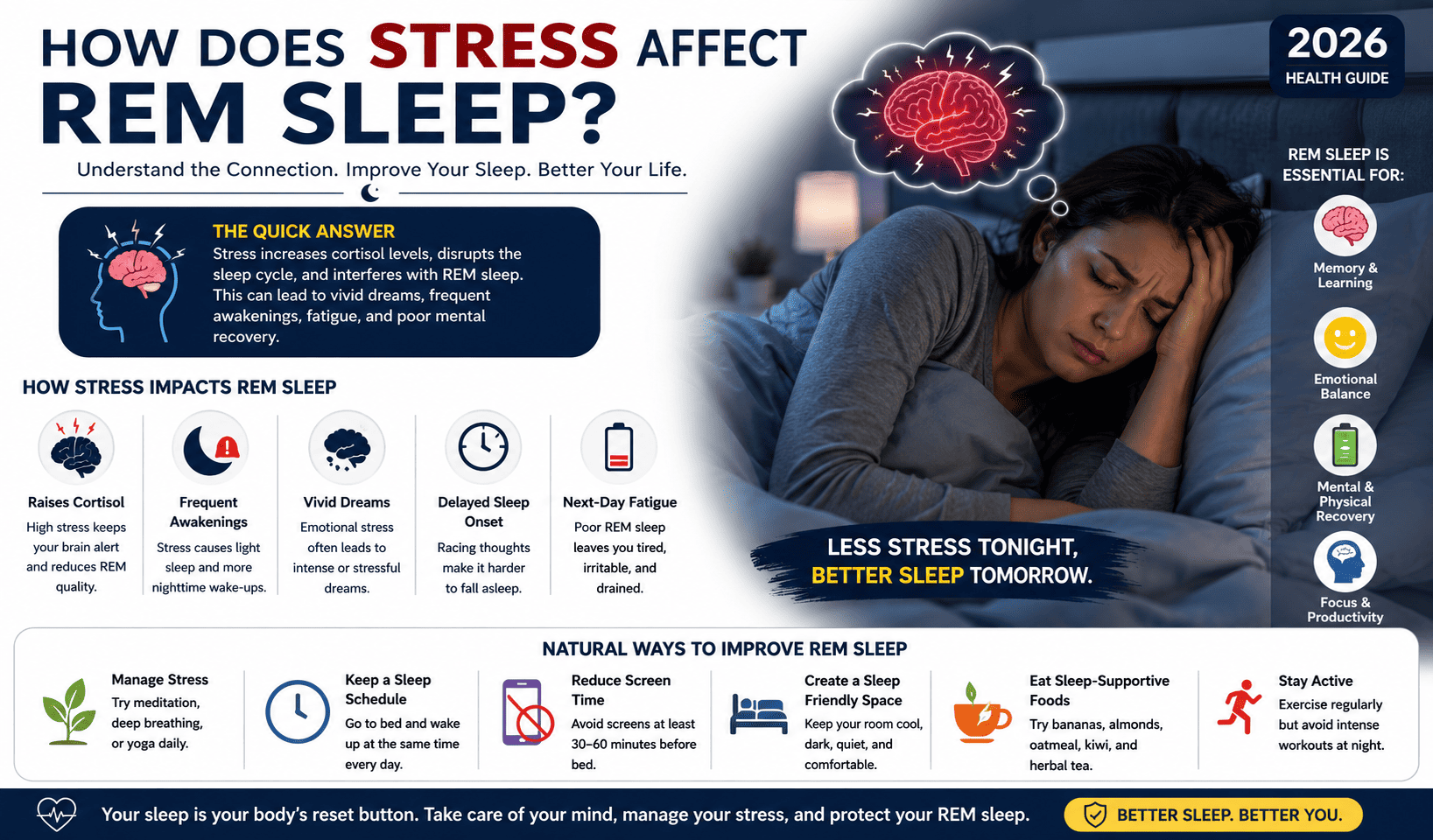
Stress can affect REM sleep by increasing cortisol levels, disrupting the body’s natural sleep cycle, causing frequent awakenings, and reducing restorative sleep quality. Chronic stress may lead to vivid dreams, fragmented REM sleep, morning fatigue, poor concentration, and emotional exhaustion. Managing stress naturally can help restore healthier sleep patterns.
What Is REM Sleep?
REM stands for Rapid Eye Movement sleep.
It is one of the four main stages of the sleep cycle and plays a critical role in:
- Memory processing
- Learning
- Emotional regulation
- Brain recovery
- Mental performance
During REM sleep:
- Brain activity increases
- Most dreaming occurs
- Memories are organized
- Emotional experiences are processed
A healthy adult typically spends about 20–25% of total sleep time in REM sleep.
Without sufficient REM sleep, you may wake up feeling mentally exhausted even after sleeping for several hours.
Why REM Sleep Matters
Many people focus only on the number of hours they sleep, but sleep quality matters just as much.
Healthy REM sleep supports:
Mental Health
- Emotional balance
- Stress resilience
- Mood regulation
Cognitive Function
- Memory
- Focus
- Problem-solving skills
Physical Recovery
- Hormonal balance
- Nervous system recovery
- Overall wellness
When stress disrupts REM sleep, these important functions can suffer.
Also Read : Can magnesium deficiency affect sleep?
Common Symptoms of Stress Affecting REM Sleep
Stress-related REM sleep disruption often develops gradually.
Early Symptoms
- Difficulty falling asleep
- Frequent waking during the night
- Light sleep
- Restless sleep
- Vivid dreams
- Morning grogginess
Advanced Symptoms
- Chronic fatigue
- Brain fog
- Poor concentration
- Mood swings
- Increased anxiety
- Emotional exhaustion
- Reduced productivity
- Difficulty remembering information
Many people experience these symptoms without realizing stress is the underlying cause.
How Does Stress Affect REM Sleep?
Stress affects multiple systems involved in healthy sleep.
1. Increased Cortisol Levels
Cortisol is commonly known as the stress hormone.
When stress levels rise:
- Cortisol remains elevated
- Relaxation becomes difficult
- Sleep cycles become disrupted
High nighttime cortisol can interfere with REM sleep and reduce sleep quality.
2. Frequent Nighttime Awakenings
Stress often causes the brain to remain more alert during sleep.
This may lead to:
- Waking multiple times
- Difficulty returning to sleep
- Interrupted REM cycles
Even brief awakenings can reduce restorative sleep.
3. Increased Dream Activity
Stress can affect dream patterns.
Many people report:
- Vivid dreams
- Intense dreams
- Emotional dreams
- Nightmares
These dream changes often occur because REM sleep is closely linked to emotional processing.
4. Delayed Sleep Onset
Stress can make it harder to fall asleep.
Common reasons include:
- Racing thoughts
- Overthinking
- Anxiety
- Mental stimulation
When sleep onset is delayed, the overall sleep cycle becomes less efficient.
5. Nervous System Overactivation
The body enters “fight-or-flight” mode during stress.
This state can:
- Increase heart rate
- Increase alertness
- Reduce relaxation
- Disrupt sleep architecture
As a result, REM sleep may become fragmented or less restorative.
Also Read : Why do I feel more tired on weekends?
Stress vs Healthy Sleep Comparison
| Factor | Healthy Sleep | Stress-Affected Sleep |
|---|---|---|
| Sleep onset | Easy | Delayed |
| Night awakenings | Rare | Frequent |
| REM quality | Stable | Disrupted |
| Dreams | Normal | Vivid or stressful |
| Morning energy | Refreshed | Fatigued |
| Concentration | Strong | Reduced |
Main Causes & Risk Factors
Several factors increase the likelihood of stress-related REM sleep disruption.
Chronic Stress
The most common cause.
Examples include:
- Workplace pressure
- Financial concerns
- Relationship stress
- Caregiving responsibilities
Long-term stress can significantly affect sleep quality.
Anxiety Disorders
People with anxiety often experience:
- Racing thoughts
- Hypervigilance
- Nighttime worry
These factors may interfere with REM sleep.
Poor Sleep Habits
Unhealthy sleep routines can worsen stress-related sleep problems.
Examples:
- Irregular bedtime
- Excess screen time
- Late-night work
- Sleeping with the TV on
Excess Caffeine
Many Americans rely heavily on caffeine.
Too much caffeine may:
- Increase alertness
- Delay sleep
- Reduce sleep quality
Alcohol Consumption
Although alcohol may initially cause drowsiness, it often disrupts REM sleep later in the night.
Also Read : What is revenge bedtime procrastination?
Best Treatment Options
Improving REM sleep usually involves reducing stress and supporting healthy sleep habits.
1. Manage Stress Naturally
Reducing stress is one of the most effective ways to improve REM sleep.
Helpful Techniques
- Meditation
- Deep breathing
- Journaling
- Yoga
- Mindfulness exercises
Even 10–15 minutes per day can make a difference.
2. Maintain a Consistent Sleep Schedule
Going to bed and waking up at the same time daily helps regulate:
- Circadian rhythm
- Melatonin production
- Sleep quality
Consistency supports healthier REM sleep cycles.
3. Improve Your Sleep Environment
A sleep-friendly environment may improve overnight recovery.
Recommended Conditions
- Cool room temperature
- Minimal noise
- Dark room
- Comfortable mattress
Environmental improvements can support better sleep naturally.
4. Limit Evening Screen Time
Phones, tablets, and TVs emit blue light.
Blue light may:
- Suppress melatonin
- Delay sleep onset
- Affect REM sleep quality
Try limiting screens 30–60 minutes before bedtime.
5. Seek Professional Help When Needed
For severe sleep problems, healthcare professionals may recommend:
- Sleep evaluations
- Cognitive behavioral therapy
- Anxiety management strategies
Persistent sleep disruption should not be ignored.
Diet & Lifestyle Tips
Nutrition and daily habits play an important role in sleep quality.
Foods That May Support Better Sleep
- Bananas
- Kiwi
- Oatmeal
- Almonds
- Walnuts
- Greek yogurt
- Herbal tea
These foods may help support relaxation and healthy sleep patterns.
Foods & Drinks to Limit
- Energy drinks
- Excess coffee
- Sugary snacks
- Heavy late-night meals
- Alcohol
These may worsen stress and disrupt sleep quality.
Daily Routine Improvements
Morning
- Get sunlight exposure
- Hydrate after waking
- Move your body
Daytime
- Manage stress proactively
- Exercise regularly
- Take mental breaks
Evening
- Dim lights
- Relax before bed
- Avoid overstimulation
Consistency is often the key to long-term improvement.
When to See a Doctor
Speak with a healthcare professional if you experience:
- Severe insomnia
- Persistent nightmares
- Chronic fatigue
- Loud snoring
- Breathing interruptions during sleep
- Anxiety affecting daily life
- Ongoing sleep issues lasting several weeks
These symptoms may indicate a sleep disorder or underlying health condition.
Who Is Most at Risk?
1. Office Workers
High workloads and screen exposure can increase stress-related sleep problems.
2. Students
Academic pressure often contributes to poor REM sleep.
3. Parents
Interrupted sleep and caregiving responsibilities may affect recovery.
4. Women
Hormonal fluctuations combined with stress can influence sleep quality.
5. Adults Experiencing Burnout
Chronic stress and emotional exhaustion often impact REM sleep.
FAQs
1. Can stress reduce REM sleep?
Yes. Chronic stress can disrupt REM sleep cycles, reduce sleep quality, and increase nighttime awakenings.
2. Why do I have vivid dreams when stressed?
Stress affects emotional processing during REM sleep, often leading to more intense or vivid dreams.
3. Can anxiety affect REM sleep?
Yes. Anxiety may increase alertness and interfere with healthy sleep cycles.
4. How can I improve REM sleep naturally?
Managing stress, maintaining a consistent sleep schedule, reducing screen time, and improving sleep hygiene may help improve REM sleep.
5. Does alcohol affect REM sleep?
Yes. Alcohol may initially cause drowsiness but often disrupts REM sleep later in the night.
👉 Simple sleep balance tips may help regulate your body clock naturally.
Conclusion
Stress and REM sleep are closely connected. While occasional stress is a normal part of life, chronic stress can interfere with healthy sleep cycles, increase nighttime awakenings, and reduce restorative REM sleep.
The good news is that small changes—such as stress management, healthy sleep habits, a consistent bedtime routine, and a supportive sleep environment—can help improve REM sleep naturally.
If sleep problems continue despite lifestyle improvements, seeking professional medical advice can help identify underlying issues and support long-term sleep health.
Medically reviewed information sourced from trusted health organizations.
References
- National Institutes of Health (NIH). Sleep and Sleep Disorders.
https://www.nhlbi.nih.gov/health/sleep - Sleep Foundation. Sleep Health Resources.
https://www.sleepfoundation.org/ - Centers for Disease Control and Prevention (CDC). Sleep and Sleep Disorders.
https://www.cdc.gov/sleep/ - Mayo Clinic. Sleep Disorders Overview.
https://www.mayoclinic.org/
Reviewed by: Dzarro Editorial Team
Fact-checked using trusted medical and scientific sources.
Last Updated: June 13, 2026

Sandip Choudhary is a Health & Wellness Researcher and Content Creator specializing in sleep, digestive health, preventive wellness, and evidence-based health education. He has been creating online content and researching health-related topics for several years, focusing on translating complex medical information into practical guidance for everyday readers.
With a strong background in SEO and content strategy, Sandip ensures that every article is optimized for both search engines and real users. His goal is to provide reliable, clear, and helpful information that supports healthier living.
Disclaimer: The content published is for informational purposes only and is not a substitute for professional medical advice.