
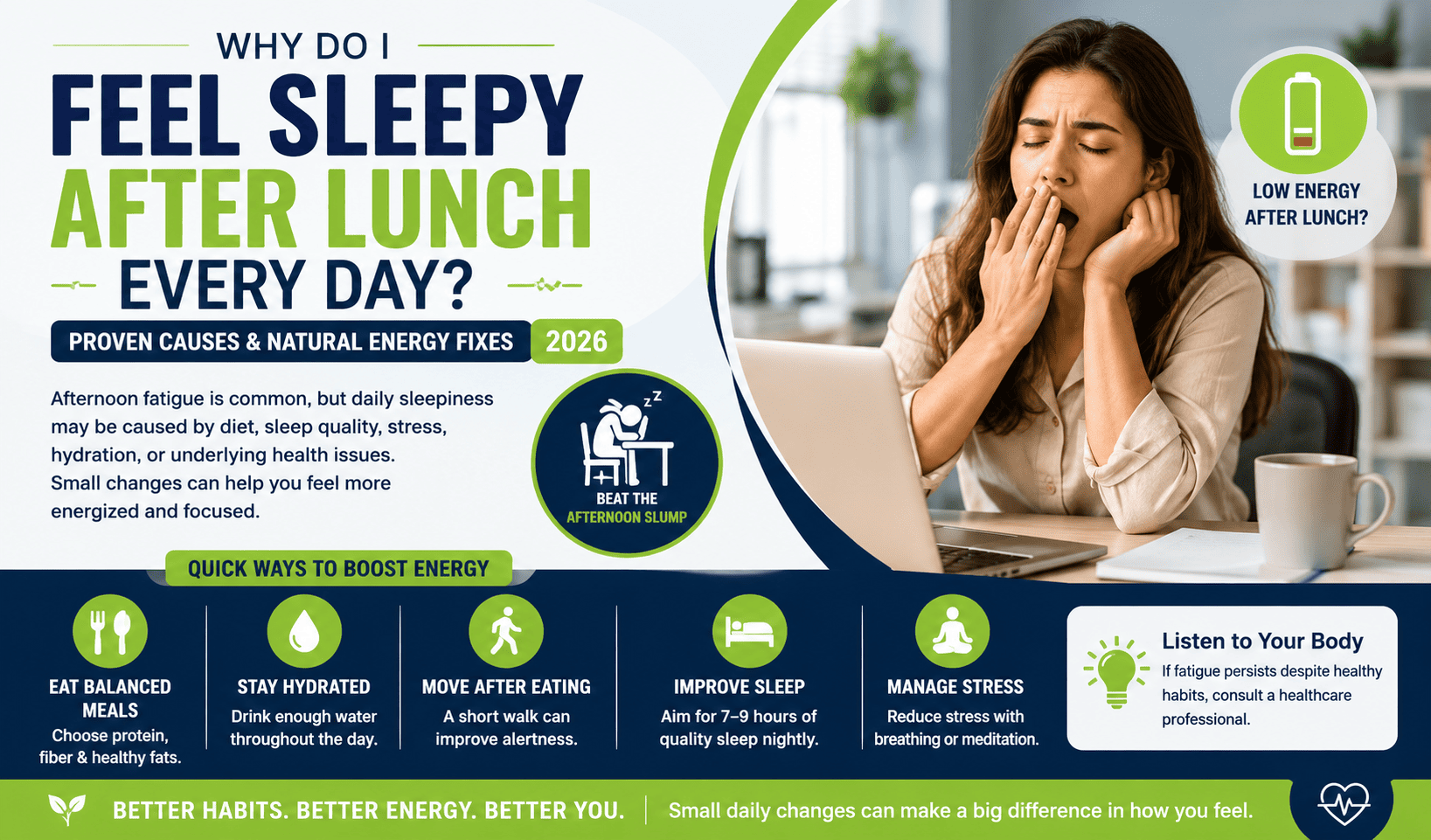
Have you ever finished lunch and suddenly felt like taking a nap? Maybe your eyes get heavy, your concentration drops, and your productivity takes a hit every afternoon. If this happens regularly, you’re not alone.
Millions of Americans experience an afternoon energy slump, often between 1 PM and 3 PM. While occasional sleepiness after lunch is normal, feeling excessively tired every day may signal issues related to diet, sleep quality, hydration, stress, or underlying health conditions.
Understanding why you feel sleepy after lunch can help you make smarter lifestyle choices and improve your daily energy levels naturally.
Quick Answer
Yes, feeling sleepy after lunch every day is common and may be caused by natural circadian rhythm changes, high-carbohydrate meals, dehydration, poor sleep, stress, blood sugar fluctuations, or certain medical conditions. Improving meal choices, sleep habits, hydration, and daily activity levels can help reduce afternoon fatigue naturally.
What Does It Mean If You Feel Sleepy After Lunch?
Feeling sleepy after lunch refers to a noticeable drop in alertness and energy during the early afternoon.
This often happens because:
- Your body’s internal clock naturally dips after midday
- Digestion requires energy
- Blood sugar levels change after eating
- Poor sleep from the previous night affects daytime alertness
For many people, the afternoon slump is mild. For others, it can interfere with work, school, driving, or daily responsibilities.
Also Read : How does stress affect REM sleep?
Symptoms of Afternoon Sleepiness
Early Symptoms
- Yawning frequently
- Difficulty concentrating
- Mild brain fog
- Heavy eyelids
- Reduced motivation
- Slower thinking
Advanced Symptoms
- Needing daily naps
- Falling asleep unintentionally
- Poor work performance
- Irritability
- Persistent fatigue
- Difficulty staying alert while driving
Causes & Risk Factors
Several factors may contribute to feeling sleepy after lunch every day.
1. Natural Circadian Rhythm Dip
Your body follows a 24-hour internal clock called the circadian rhythm.
Most people experience a natural decrease in alertness during the early afternoon, even after a good night’s sleep.
This biological process is completely normal.
2. High-Carbohydrate Lunches
Meals rich in refined carbohydrates may trigger rapid blood sugar spikes followed by crashes.
Common examples include:
- White bread sandwiches
- Pizza
- French fries
- Sugary drinks
- Desserts
These foods may leave you feeling sluggish within hours.
3. Poor Sleep Quality
One of the most common causes of daytime sleepiness is poor nighttime sleep.
Common sleep-related issues include:
- Insomnia
- Sleep apnea
- Restless sleep
- Late-night screen use
- Inconsistent sleep schedules
Even if you spend eight hours in bed, poor-quality sleep may leave you exhausted during the day.
4. Dehydration
Mild dehydration can reduce mental performance and energy levels.
Common signs include:
- Headaches
- Dry mouth
- Brain fog
- Fatigue
Many adults don’t drink enough water during the day, which can worsen afternoon sleepiness.
5. Stress and Mental Fatigue
Chronic stress affects both physical and mental energy.
When stress hormones remain elevated for long periods, the body may struggle to maintain steady energy levels.
Many office workers experience afternoon fatigue due to stress rather than lack of sleep.
6. Lack of Physical Activity
Sitting for long periods can reduce circulation and energy.
This is especially common among:
- Office workers
- Remote workers
- Students
- Drivers
Regular movement often improves alertness significantly.
7. Medical Conditions
Sometimes excessive daytime sleepiness may be linked to:
- Sleep apnea
- Iron deficiency
- Vitamin B12 deficiency
- Diabetes
- Thyroid disorders
- Depression
Persistent fatigue should be evaluated by a healthcare professional.
Also Read : Can magnesium deficiency affect sleep?
Comparison Table: Normal vs Concerning Sleepiness
| Feature | Normal Afternoon Slump | Concerning Fatigue |
|---|---|---|
| Timing | 1 PM–3 PM | Any time of day |
| Duration | Short-term | Persistent |
| Severity | Mild drowsiness | Extreme fatigue |
| Impact | Minor productivity drop | Major daily disruption |
| Medical concern | Usually no | Possible |
Best Treatment Options
Improve Sleep Quality
Sleep is the foundation of daytime energy.
Helpful strategies include:
- Maintaining a consistent bedtime
- Limiting screens before bed
- Keeping your room cool and dark
- Following healthy sleep habits
Eat a Balanced Lunch
A healthier lunch may help prevent energy crashes.
Try including:
- Lean protein
- Vegetables
- Healthy fats
- Whole grains
Examples:
- Grilled chicken salad
- Turkey and avocado wrap
- Salmon with vegetables
- Greek yogurt with nuts
Stay Hydrated
Aim to drink water consistently throughout the day.
Helpful tips:
- Start your morning with water
- Carry a reusable bottle
- Limit sugary beverages
Move After Eating
A short walk after lunch can improve circulation and reduce sleepiness.
Even 10–15 minutes of movement may help increase alertness.
Manage Stress
Stress management techniques include:
- Meditation
- Deep breathing
- Journaling
- Exercise
- Relaxation routines
Reducing stress often improves both sleep and daytime energy.
Diet & Lifestyle Tips
What to Eat
Choose foods that support stable energy:
- Lean proteins
- Eggs
- Fish
- Nuts
- Fruits
- Vegetables
- Oatmeal
- Greek yogurt
What to Avoid
Limit foods that may worsen afternoon fatigue:
- Sugary drinks
- Candy
- Fast food
- Excess alcohol
- Large portions
Daily Routine Improvements
- Get sunlight exposure in the morning
- Exercise regularly
- Sleep 7–9 hours nightly
- Take short movement breaks
- Maintain consistent meal times
These habits can significantly improve energy levels.
When to See a Doctor
Consult a healthcare professional if you experience:
- Severe daytime sleepiness
- Falling asleep unexpectedly
- Loud snoring
- Morning headaches
- Persistent fatigue lasting weeks
- Difficulty concentrating daily
- Shortness of breath
These symptoms may indicate an underlying health issue.
Also Read : Why do I feel more tired on weekends?
Who Is Most at Risk?
1. Office Workers
Long hours of sitting and screen exposure often contribute to fatigue.
2. Students
Academic stress and irregular sleep schedules increase daytime sleepiness.
3. Adults Over 40
Changes in sleep quality may affect daytime energy.
4. Shift Workers
Disrupted circadian rhythms increase fatigue risk.
5. People with Sleep Disorders
Sleep apnea and insomnia are major contributors to excessive daytime sleepiness.
FAQs
1. Why do I feel sleepy after lunch every day?
Common causes include circadian rhythm changes, poor sleep, high-carbohydrate meals, dehydration, stress, and inactivity.
2. Is it normal to feel tired after eating?
Mild sleepiness can be normal, but excessive fatigue every day may require lifestyle changes or medical evaluation.
3. What foods cause afternoon sleepiness?
Sugary foods, refined carbohydrates, fried foods, and large meals may contribute to energy crashes.
4. Can poor sleep cause afternoon fatigue?
Yes. Poor sleep quality is one of the most common causes of daytime sleepiness.
5. How can I stay awake after lunch naturally?
Choose balanced meals, stay hydrated, take a short walk, manage stress, and prioritize quality sleep.
👉 Deep rest techniques like meditation and relaxation may improve sleep naturally.
Conclusion
Feeling sleepy after lunch every day is often linked to natural body rhythms, meal choices, poor sleep, stress, dehydration, or inactivity. While mild afternoon drowsiness is common, excessive fatigue should not be ignored.
Simple changes such as improving sleep quality, eating balanced meals, staying hydrated, and moving regularly can make a noticeable difference in your energy levels.
If sleepiness persists despite healthy habits, consult a healthcare professional to identify possible underlying causes and receive appropriate guidance.
Medically reviewed information sourced from trusted health organizations.
References
- National Institutes of Health (NIH). Sleep and Sleep Disorders.
https://www.nhlbi.nih.gov/health/sleep - Sleep Foundation. Sleep Health Resources.
https://www.sleepfoundation.org/ - Centers for Disease Control and Prevention (CDC). Sleep and Sleep Disorders.
https://www.cdc.gov/sleep/ - Mayo Clinic. Sleep Disorders Overview.
https://www.mayoclinic.org/
Reviewed by: Dzarro Editorial Team
Fact-checked using trusted medical and scientific sources.
Last Updated: June 13, 2026

Sandip Choudhary is a Health & Wellness Researcher and Content Creator specializing in sleep, digestive health, preventive wellness, and evidence-based health education. He has been creating online content and researching health-related topics for several years, focusing on translating complex medical information into practical guidance for everyday readers.
With a strong background in SEO and content strategy, Sandip ensures that every article is optimized for both search engines and real users. His goal is to provide reliable, clear, and helpful information that supports healthier living.
Disclaimer: The content published is for informational purposes only and is not a substitute for professional medical advice.