
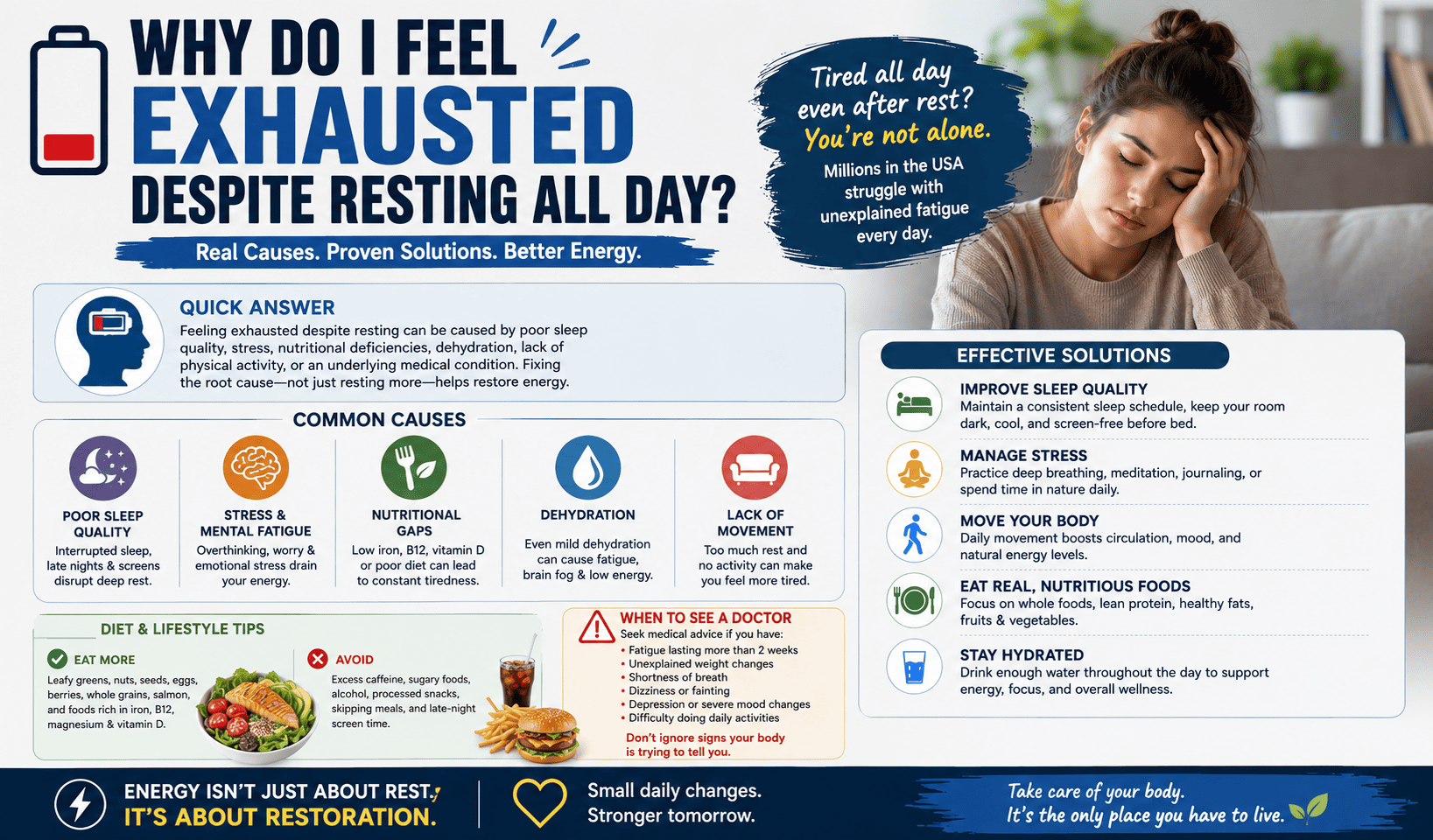
Have you ever spent an entire day resting, taking it easy, and avoiding strenuous activities, only to feel completely exhausted by evening? It can be confusing and frustrating. Many people assume that more rest automatically leads to more energy, but that isn’t always the case.
Across the United States, persistent fatigue is one of the most common wellness complaints among adults. Some people feel drained despite sleeping enough, avoiding exercise, or spending most of the day relaxing. If you’re wondering why you feel exhausted despite resting all day, the answer often involves factors beyond physical activity, including sleep quality, stress, nutrition, hydration, mental health, and underlying health conditions.
This guide explains the most common reasons behind unexplained fatigue and practical ways to regain your energy naturally.
Quick Answer
If you feel exhausted despite resting all day, the cause may be poor sleep quality, chronic stress, dehydration, nutritional deficiencies, mental fatigue, lack of physical activity, or an underlying medical condition. True energy restoration depends on quality sleep, balanced nutrition, movement, and overall health—not simply spending more time resting.
What Does It Mean to Feel Exhausted Despite Resting?
Feeling exhausted despite resting means your body and mind are not recovering properly, even though you’re spending less energy physically.
Many people assume fatigue is always caused by overwork. However, the body relies on multiple systems working together to create energy, including:
- Sleep quality
- Hormone balance
- Brain function
- Nutrition
- Hydration
- Stress regulation
When one or more of these systems are disrupted, fatigue can persist regardless of how much you rest.
In many cases, excessive rest without movement may actually worsen feelings of sluggishness and low energy.
Also Read : Can overthinking cause insomnia?
Common Symptoms Associated With Persistent Fatigue
Fatigue often affects more than just physical energy.
Early Symptoms
People commonly experience:
- Low motivation
- Mild brain fog
- Difficulty concentrating
- Reduced productivity
- Frequent yawning
- Feeling tired shortly after waking
Advanced Symptoms
As fatigue continues, symptoms may become more noticeable:
- Ongoing exhaustion
- Poor memory
- Mood changes
- Irritability
- Lack of interest in daily activities
- Sleep disturbances
- Difficulty completing routine tasks
Persistent fatigue can affect work performance, relationships, and overall quality of life.
Also Read : Why do I wake up multiple times to urinate?
Why Do I Feel Exhausted Despite Resting All Day?
Several factors can contribute to this frustrating experience.
Poor Sleep Quality
One of the most common reasons is poor sleep quality rather than insufficient sleep duration.
You may spend eight or nine hours in bed, but if your sleep is frequently interrupted, your body may not complete enough deep sleep and REM sleep cycles.
Common sleep disruptors include:
- Stress
- Sleep apnea
- Room temperature issues
- Late-night screen use
- Alcohol consumption
Many people who report chronic fatigue actually struggle with poor sleep recovery.
Mental Fatigue and Emotional Exhaustion
The brain consumes a significant amount of energy throughout the day.
Even if you’re physically resting, your mind may still be working hard through:
- Worry
- Anxiety
- Overthinking
- Decision-making
- Emotional stress
Mental exhaustion can create feelings of fatigue that are just as powerful as physical tiredness.
This is especially common among professionals, caregivers, students, and people dealing with chronic stress.
Chronic Stress
Stress affects multiple body systems simultaneously.
When stress remains elevated for long periods, cortisol and other stress hormones may disrupt:
- Sleep quality
- Energy production
- Mood
- Focus
- Recovery
Many Americans live with chronic stress without realizing how strongly it impacts energy levels.
Lack of Physical Activity
While it may seem counterintuitive, too much inactivity can increase fatigue.
The body benefits from regular movement because exercise helps:
- Improve circulation
- Support metabolism
- Increase oxygen delivery
- Boost mood
Spending an entire day sitting or lying down may actually leave you feeling more sluggish.
Nutritional Deficiencies
Your body requires vitamins and minerals to produce energy efficiently.
Common deficiencies associated with fatigue include:
- Vitamin D
- Vitamin B12
- Iron
- Magnesium
These deficiencies may develop gradually and often go unnoticed until symptoms become significant.
Dehydration
Even mild dehydration can reduce energy levels.
When hydration levels drop, the body may struggle to:
- Deliver nutrients efficiently
- Maintain blood pressure
- Regulate temperature
- Support cognitive function
Many adults underestimate how much water they need throughout the day.
Also Read : What sleeping position is best for health?
Comparison: Physical Fatigue vs Mental Fatigue
| Factor | Physical Fatigue | Mental Fatigue |
|---|---|---|
| Main Cause | Physical exertion | Stress, concentration, emotions |
| Symptoms | Muscle weakness | Brain fog |
| Recovery | Physical rest | Mental relaxation |
| Exercise Response | May need recovery | Often improves symptoms |
| Sleep Impact | Usually improves with sleep | May persist despite sleep |
Understanding the difference helps identify the root cause of exhaustion.
Best Treatment Options
The most effective approach depends on the underlying cause of fatigue.
Improve Sleep Quality
Focus on sleep quality rather than simply increasing sleep duration.
Helpful strategies include:
- Consistent bedtime
- Dark bedroom
- Comfortable room temperature
- Limiting screens before bed
Quality sleep often restores energy more effectively than extra hours in bed.
Manage Stress Naturally
Reducing stress can significantly improve energy levels.
Many people benefit from:
- Meditation
- Deep breathing
- Journaling
- Spending time outdoors
- Mindfulness practices
Stress management is often overlooked but can have a major impact on fatigue.
Increase Daily Movement
Even light exercise can improve energy.
Walking, stretching, and gentle strength training may:
- Improve circulation
- Support mood
- Enhance sleep quality
You don’t need intense workouts to see benefits.
Address Nutritional Gaps
A balanced diet supports healthy energy production.
Focus on nutrient-rich foods rather than relying on caffeine or sugar for temporary energy boosts.
If deficiencies are suspected, professional evaluation may be appropriate.
Stay Properly Hydrated
Hydration plays an essential role in maintaining energy.
A simple habit such as drinking water consistently throughout the day can improve focus and reduce fatigue.
Also Read : Can alcohol reduce sleep quality?
Diet & Lifestyle Tips
Nutrition and lifestyle habits strongly influence energy levels.
What to Eat
Choose foods that support steady energy:
- Lean proteins
- Fruits
- Vegetables
- Whole grains
- Nuts and seeds
- Healthy fats
These foods help maintain stable blood sugar and support overall wellness.
What to Avoid
Certain habits may worsen fatigue:
- Excess sugar
- Energy drinks
- Heavy processed foods
- Excess alcohol
- Skipping meals
These choices can lead to energy crashes and poor recovery.
Daily Routine Improvements
Simple routine adjustments often make a noticeable difference.
Try:
- Getting morning sunlight
- Maintaining regular sleep schedules
- Taking movement breaks during work
- Limiting excessive screen time
- Staying hydrated consistently
Small habits practiced daily often produce the biggest long-term improvements.
When to See a Doctor
While occasional fatigue is normal, persistent exhaustion should not be ignored.
Consider speaking with a healthcare professional if you experience:
- Fatigue lasting several weeks
- Unexplained weight changes
- Severe daytime sleepiness
- Shortness of breath
- Frequent dizziness
- Chest pain
- Depression symptoms
- Difficulty performing daily activities
A medical evaluation may help identify underlying causes.
Who Is Most at Risk?
Certain groups experience fatigue more frequently than others.
1. Office Workers
Long hours of sitting, screen exposure, and mental stress contribute to energy problems.
2. Students
Academic pressure, poor sleep habits, and irregular schedules often affect energy levels.
3. Parents and Caregivers
Physical responsibilities combined with emotional stress may lead to exhaustion.
4. Older Adults
Changes in sleep patterns, medications, and health conditions can increase fatigue risk.
5. People With Chronic Stress
Ongoing stress remains one of the strongest contributors to persistent fatigue.
Frequently Asked Questions
1. Why am I tired even though I did nothing all day?
Mental fatigue, poor sleep quality, dehydration, stress, and inactivity can all cause exhaustion even without physical exertion.
2. Can resting too much make you feel tired?
Yes. Excessive inactivity may reduce circulation and contribute to sluggishness and fatigue.
3. Can stress make you feel physically exhausted?
Absolutely. Chronic stress affects hormones, sleep, and energy production, often causing significant fatigue.
4. What vitamin deficiency causes fatigue?
Low levels of vitamin D, vitamin B12, iron, and magnesium are commonly associated with fatigue.
5. How can I increase my energy naturally?
Improving sleep quality, staying hydrated, managing stress, exercising regularly, and eating a balanced diet may help increase energy naturally.

Sleep recovery strategies may improve both physical and mental performance.
Conclusion
If you’re asking yourself, “Why do I feel exhausted despite resting all day?” you’re not alone. Fatigue often stems from factors that go far beyond physical activity. Poor sleep quality, stress, mental exhaustion, nutritional deficiencies, dehydration, and inactivity can all contribute to persistent low energy.
Rather than focusing only on rest, consider improving sleep quality, nutrition, hydration, movement, and stress management. These changes often work together to restore energy more effectively than simply spending more time resting.
If fatigue persists despite healthy lifestyle improvements, speaking with a healthcare professional can help identify potential underlying causes and support a personalized path toward better health.
Medically reviewed information sourced from trusted health organizations.
References
- National Institutes of Health (NIH). Sleep and Sleep Disorders.
https://www.nhlbi.nih.gov/health/sleep - Sleep Foundation. Sleep Health Resources.
https://www.sleepfoundation.org/ - Centers for Disease Control and Prevention (CDC). Sleep and Sleep Disorders.
https://www.cdc.gov/sleep/ - Mayo Clinic. Sleep Disorders Overview.
https://www.mayoclinic.org/
Reviewed by: Dzarro Editorial Team
Fact-checked using trusted medical and scientific sources.
Last Updated: June 13, 2026

Sandip Choudhary is a Health & Wellness Researcher and Content Creator specializing in sleep, digestive health, preventive wellness, and evidence-based health education. He has been creating online content and researching health-related topics for several years, focusing on translating complex medical information into practical guidance for everyday readers.
With a strong background in SEO and content strategy, Sandip ensures that every article is optimized for both search engines and real users. His goal is to provide reliable, clear, and helpful information that supports healthier living.
Disclaimer: The content published is for informational purposes only and is not a substitute for professional medical advice.