
Introduction
Many Americans believe that a glass of wine, beer, or another alcoholic drink helps them sleep better. After all, alcohol can make you feel relaxed and sleepy shortly after drinking. However, if you’ve ever fallen asleep quickly after drinking but still woken up tired, restless, or groggy the next morning, you may have experienced alcohol’s hidden effects on sleep.
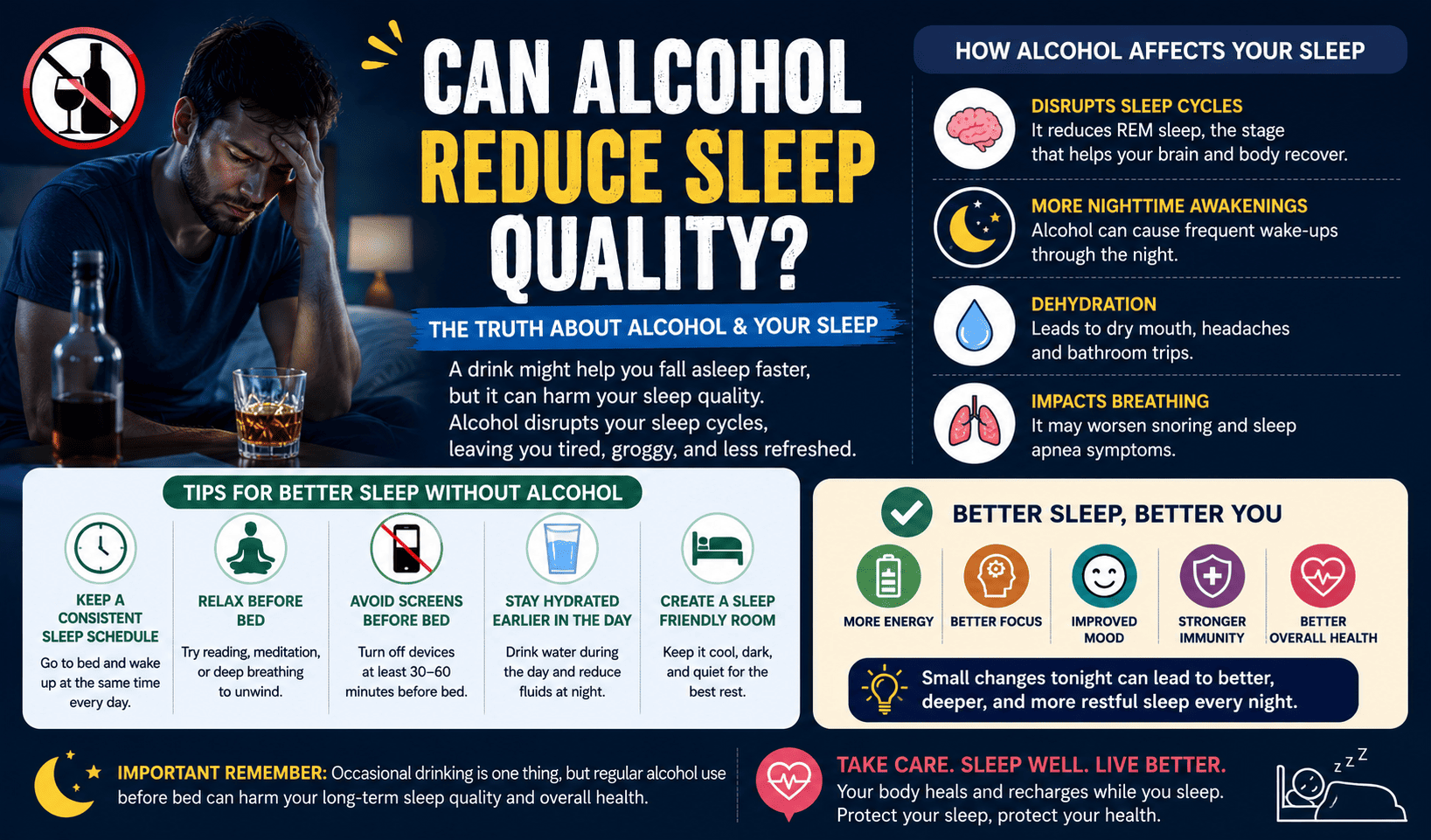
Sleep problems affect millions of adults across the United States, and alcohol is often overlooked as a contributing factor. While it may initially promote drowsiness, alcohol can interfere with deep sleep, disrupt normal sleep cycles, and reduce overall sleep quality. Understanding this connection can help you make healthier choices and improve your long-term sleep health.
Quick Answer
Yes, alcohol can reduce sleep quality. Although alcohol may help you fall asleep faster, it often disrupts deep sleep and REM sleep later in the night. This can lead to frequent waking, poor recovery, daytime fatigue, brain fog, and reduced overall sleep quality, even after a full night’s rest.
What Is the Connection Between Alcohol and Sleep Quality?
Sleep quality refers to how restorative and uninterrupted your sleep is throughout the night. Good sleep allows your body and brain to recover, regulate hormones, support immune function, and maintain energy levels.
Alcohol affects the central nervous system and can temporarily create feelings of relaxation and drowsiness. However, as the body metabolizes alcohol, sleep becomes lighter and more fragmented. This means that while you may fall asleep faster, the quality of that sleep often decreases.
Sleep experts generally agree that alcohol can negatively impact important stages of sleep, especially REM sleep, which plays a major role in memory, emotional processing, and mental recovery.
Also Read : How to stop checking your phone at night?
Symptoms of Alcohol-Related Sleep Problems
Many people don’t immediately connect their sleep issues to alcohol consumption.
Early Symptoms
- Falling asleep quickly but waking up tired
- Mild morning grogginess
- Dry mouth upon waking
- Restless sleep
- Increased nighttime awakenings
Advanced Symptoms
- Chronic fatigue
- Poor concentration
- Brain fog
- Irritability
- Daytime sleepiness
- Frequent waking during the night
- Reduced mental performance
These symptoms may become more noticeable when alcohol consumption becomes a regular part of a nighttime routine.
Can Alcohol Reduce Sleep Quality? Understanding the Science
Alcohol affects sleep in several different ways.
Reduced REM Sleep
REM (Rapid Eye Movement) sleep is one of the most important stages of the sleep cycle. During REM sleep, the brain processes memories, emotions, and learning.
Alcohol can suppress REM sleep during the first half of the night. As alcohol leaves the system, the body often experiences REM rebound, which may lead to vivid dreams, restless sleep, and frequent waking.
Increased Nighttime Awakenings
Many people notice they wake up more often after drinking alcohol.
This happens because alcohol disrupts normal sleep architecture. As blood alcohol levels decline, the body becomes more alert, making it harder to remain asleep.
Dehydration and Sleep Disruption
Alcohol has a diuretic effect, meaning it increases fluid loss through urination.
This can lead to:
- Dehydration
- Dry mouth
- Headaches
- Nighttime bathroom trips
These factors can further reduce sleep quality.
Breathing Problems During Sleep
Alcohol may relax muscles in the throat and airway.
For some people, this can worsen:
- Snoring
- Sleep-disordered breathing
- Sleep apnea symptoms
This can lead to reduced oxygen levels and poorer sleep quality.
Also Read : Why do I feel exhausted after vivid dreams?
Comparison: Falling Asleep vs Sleeping Well
| Factor | With Alcohol | Without Alcohol |
|---|---|---|
| Time to Fall Asleep | Often Faster | Normal |
| REM Sleep | Reduced | Normal |
| Deep Sleep Quality | Often Disrupted | Better |
| Nighttime Waking | More Common | Less Common |
| Morning Energy | Often Lower | Usually Better |
| Sleep Recovery | Reduced | Improved |
This comparison helps explain why feeling sleepy is not the same as getting quality sleep.
Causes & Risk Factors
Several factors can increase alcohol-related sleep problems.
Regular Evening Drinking
People who drink alcohol close to bedtime may experience greater sleep disruption because alcohol remains active during important sleep cycles.
Stress and Anxiety
Many adults use alcohol to relax after stressful days. While alcohol may temporarily reduce tension, it does not address the root cause of stress and may worsen sleep quality over time.
Poor Sleep Habits
Combining alcohol with other sleep-disrupting habits such as excessive screen time, inconsistent bedtimes, or caffeine use may increase sleep problems.
Existing Sleep Disorders
Individuals with sleep apnea, insomnia, or chronic sleep difficulties may experience greater negative effects from alcohol consumption.
Aging
Older adults often process alcohol differently, making them more vulnerable to sleep disruption and nighttime waking.
Also Read : What causes sudden insomnia in adults?
Best Treatment Options
Improving sleep quality often requires reducing the factors that interfere with healthy sleep.
Limit Alcohol Before Bed
One of the most effective steps is avoiding alcohol several hours before bedtime. This allows the body more time to metabolize alcohol before sleep begins.
Establish a Consistent Sleep Schedule
Going to bed and waking up at the same time each day helps regulate the body’s internal clock and supports healthier sleep cycles.
Improve Sleep Environment
A comfortable bedroom can support better sleep quality.
Focus on:
- Cooler room temperatures
- Minimal noise
- Dark sleeping conditions
- Comfortable bedding
Address Stress Naturally
Healthy stress-management strategies may include:
- Walking
- Meditation
- Deep breathing
- Journaling
- Reading
These activities support relaxation without disrupting sleep.
Seek Professional Help When Needed
Individuals experiencing chronic sleep issues or alcohol dependence should consult qualified healthcare professionals for personalized guidance.
Also Read : Why do I wake up tired after naps?
Diet & Lifestyle Tips
Nutrition and daily habits can significantly influence sleep quality.
A balanced diet rich in fruits, vegetables, lean proteins, and whole grains supports overall health and sleep function.
Foods containing magnesium and potassium may support relaxation and healthy sleep patterns. Examples include bananas, almonds, spinach, and oatmeal.
Hydration is equally important. Drinking enough water throughout the day may help reduce dehydration-related sleep disruptions.
At the same time, it’s wise to avoid heavy meals, excessive caffeine, and alcohol close to bedtime. These habits can interfere with the body’s natural sleep processes.
Creating a relaxing evening routine can also be helpful. Many people benefit from reducing screen exposure, dimming lights, and engaging in calming activities before bed.
When to See a Doctor
Occasional sleep disruption after drinking alcohol is common. However, persistent symptoms may require medical evaluation.
Consider speaking with a healthcare professional if you experience:
- Chronic insomnia
- Severe daytime fatigue
- Loud snoring
- Breathing pauses during sleep
- Frequent nighttime waking
- Morning headaches
- Ongoing sleep difficulties despite lifestyle improvements
These symptoms may indicate an underlying sleep disorder or another health condition that requires attention.
Also Read : Can poor sleep weaken the immune system?
Who Is at Risk?
Certain groups may be more vulnerable to alcohol-related sleep problems.
1. Adults With High Stress Levels
Work pressure, financial concerns, and daily responsibilities may increase reliance on alcohol as a sleep aid.
2. Office Workers
Sedentary lifestyles, long screen exposure, and evening alcohol consumption can contribute to poor sleep quality.
3. Shift Workers
Irregular schedules already challenge the body’s sleep rhythms, and alcohol may further disrupt recovery.
4. Older Adults
Age-related changes in sleep and alcohol metabolism can increase sensitivity to alcohol’s effects.
5. Individuals With Sleep Disorders
People with insomnia, sleep apnea, or other sleep conditions may experience greater sleep disruption after drinking alcohol.
FAQs
1. Does alcohol help you sleep better?
Alcohol may help you fall asleep faster, but it generally reduces overall sleep quality and can increase nighttime awakenings.
2. How long before bed should I avoid alcohol?
Many sleep specialists recommend avoiding alcohol at least several hours before bedtime to minimize sleep disruption.
3. Can alcohol cause insomnia?
Yes. Alcohol can contribute to insomnia by disrupting normal sleep cycles and increasing nighttime waking.
4. Why do I wake up tired after drinking alcohol?
Alcohol can reduce REM sleep, increase dehydration, and fragment sleep, leaving you less rested in the morning.
5. Can alcohol worsen sleep apnea?
Yes. Alcohol may relax airway muscles and potentially worsen snoring and sleep apnea symptoms in some individuals.

Restful sleep habits support deeper sleep and improved morning energy.
Conclusion
So, can alcohol reduce sleep quality? The evidence strongly suggests that it can. While alcohol may help you fall asleep faster, it often interferes with deep sleep, REM sleep, and overall recovery throughout the night.
Improving sleep quality doesn’t necessarily require dramatic lifestyle changes. Small adjustments such as reducing alcohol before bedtime, maintaining a consistent sleep schedule, managing stress naturally, and creating a healthier sleep environment can make a significant difference.
If sleep problems continue despite these changes, speaking with a healthcare professional can help identify underlying causes and provide personalized recommendations for better sleep and long-term wellness.
Medically reviewed information sourced from trusted health organizations.
References
- National Institutes of Health (NIH). Sleep and Sleep Disorders.
https://www.nhlbi.nih.gov/health/sleep - Sleep Foundation. Sleep Health Resources.
https://www.sleepfoundation.org/ - Centers for Disease Control and Prevention (CDC). Sleep and Sleep Disorders.
https://www.cdc.gov/sleep/ - Mayo Clinic. Sleep Disorders Overview.
https://www.mayoclinic.org/
Reviewed by: Dzarro Editorial Team
Fact-checked using trusted medical and scientific sources.
Last Updated: June 13, 2026

Sandip Choudhary is a Health & Wellness Researcher and Content Creator specializing in sleep, digestive health, preventive wellness, and evidence-based health education. He has been creating online content and researching health-related topics for several years, focusing on translating complex medical information into practical guidance for everyday readers.
With a strong background in SEO and content strategy, Sandip ensures that every article is optimized for both search engines and real users. His goal is to provide reliable, clear, and helpful information that supports healthier living.
Disclaimer: The content published is for informational purposes only and is not a substitute for professional medical advice.