
You take a nap hoping to feel refreshed, energized, and ready to tackle the rest of your day. Instead, you wake up feeling groggy, disoriented, and even more tired than before. If you’ve ever wondered, “Why do I wake up tired after naps?”, you’re not alone.
Many Americans experience post-nap fatigue, often called “sleep inertia.” While naps can be beneficial, the timing, duration, and quality of your sleep can determine whether a nap helps or hurts your energy levels.
In this guide, you’ll learn why naps sometimes leave you feeling worse, what causes post-nap grogginess, and how to nap effectively for better energy and productivity.
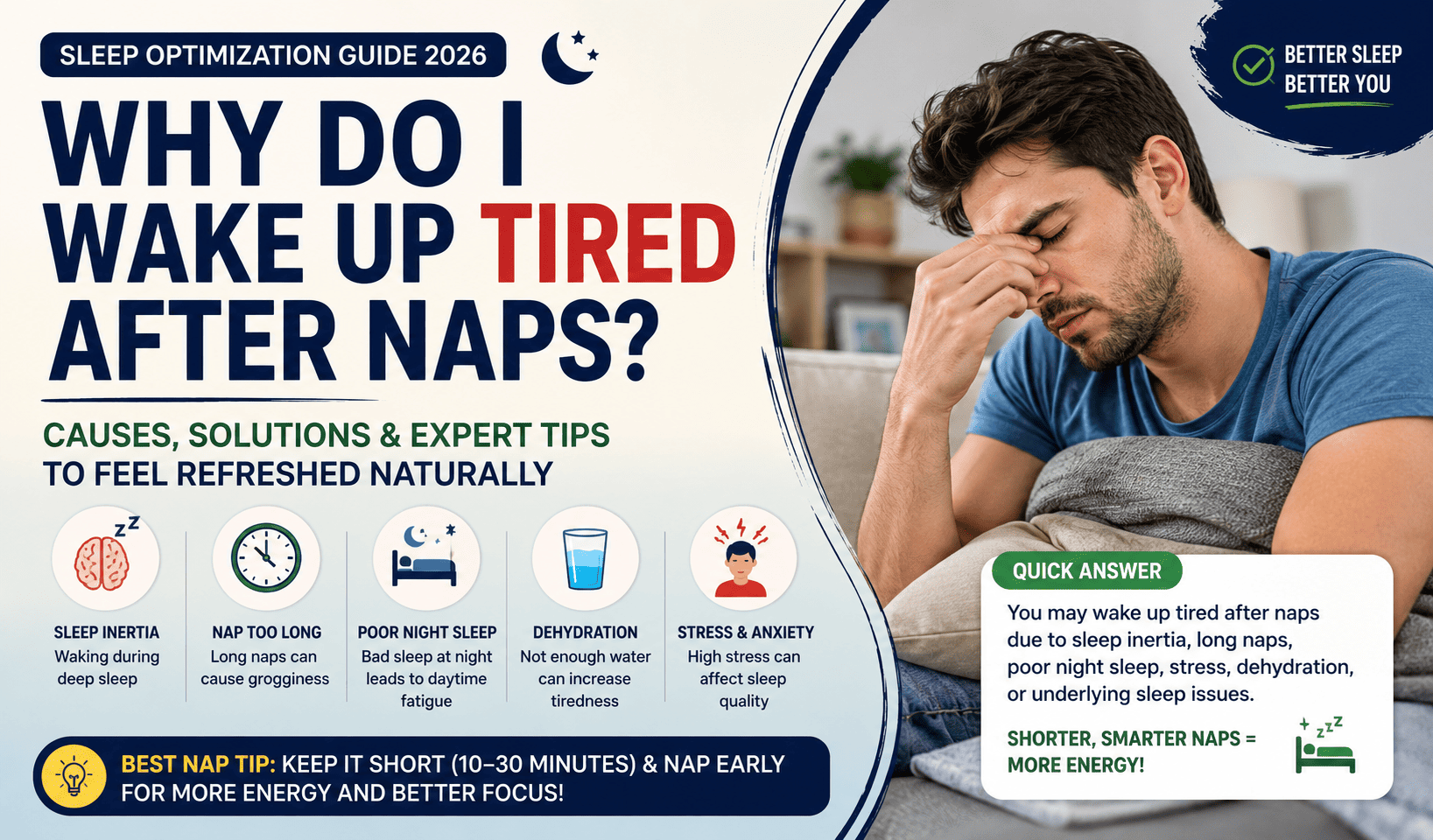
Quick Answer
If you wake up tired after naps, you may be experiencing sleep inertia, which occurs when you wake up during deep sleep. Long naps, poor nighttime sleep, stress, dehydration, irregular sleep schedules, or underlying sleep disorders can also contribute to post-nap fatigue. Short naps of 10–30 minutes are often the most refreshing.
Quick Answer Summary
| If You Wake Up Tired After Naps… | Here’s What It May Mean |
|---|---|
| Wake up groggy | Sleep inertia |
| Nap more than 30 minutes | Deep sleep interruption |
| Poor nighttime sleep | Body hasn’t fully recovered |
| Stress or anxiety | Higher cortisol levels |
| Dehydration | Reduced energy production |
| Sleep disorder | May require medical evaluation |
Also Read : Can Seasonal Changes Affect Your Sleep Cycle?
What Does It Mean to Wake Up Tired After Naps?
A nap is meant to provide a brief period of recovery and improve alertness. However, waking up tired after a nap usually means your body was interrupted during a deeper stage of sleep.
Sleep occurs in cycles. During a nap, you may enter:
- Light sleep
- Deep sleep
- REM sleep
If you’re awakened during deep sleep, your brain may struggle to transition back to full alertness immediately. This temporary state is known as sleep inertia.
The result can be:
- Grogginess
- Brain fog
- Slow thinking
- Reduced energy
- Temporary confusion
Why Does Sleep Inertia Happen?
Explain:
- Brain wakes before body
- Blood flow is still reduced
- Deep sleep interruption
Also Read : How long should a healthy nap be?
Common Symptoms of Post-Nap Fatigue
1. Grogginess
Grogginess is the most common symptom of post-nap fatigue. It usually occurs when you wake up during deep sleep, causing a temporary condition known as sleep inertia. During this period, your brain needs time to fully transition from sleep to wakefulness, leaving you feeling sluggish, mentally slow, and less alert. For most people, grogginess improves within 15 to 30 minutes, but it may last longer after extended naps.
2. Heavy Eyelids
Heavy eyelids after a nap can make it difficult to keep your eyes open, even if you’ve just slept. This often happens because your body is still in a relaxed sleep state and hasn’t completely adjusted to being awake. Poor nighttime sleep, long naps, or waking from deep sleep can make this feeling more noticeable. Walking around, drinking water, and getting natural light may help you feel more alert.
3. Low Energy
Instead of feeling refreshed, some people wake up from a nap with even less energy than before. Low energy after a nap may result from sleeping too long, poor sleep quality at night, dehydration, stress, or an underlying sleep disorder. If post-nap fatigue occurs frequently despite getting enough rest, it may be worth evaluating your overall sleep habits and lifestyle.
4. Difficulty Focusing
Difficulty focusing is another common symptom of sleep inertia. Your attention span, memory, and decision-making ability may temporarily decline after waking from a deep nap. You might find it harder to complete tasks, study, or work efficiently until your brain fully wakes up. Short naps of 10–20 minutes are generally less likely to cause concentration problems.
5. Mild Headaches
Some people experience mild headaches after waking from a nap. These headaches can be linked to dehydration, poor sleep posture, interrupted deep sleep, stress, or even changes in blood flow after waking. While occasional headaches are usually harmless, frequent or severe headaches after naps should be discussed with a healthcare provider, especially if they occur alongside other symptoms.
6. Slow Reaction Time
A slower reaction time is common immediately after waking from a long nap. During sleep inertia, your brain processes information more slowly, which can affect coordination, driving, work performance, or athletic activities. This temporary slowdown usually improves as your body becomes fully alert, but it highlights why you should avoid driving or operating machinery immediately after waking from a long nap.
7. Brain Fog Lasting Several Hours
If post-nap grogginess continues for several hours, it may indicate prolonged sleep inertia, poor nighttime sleep, or an underlying sleep disorder. Persistent brain fog can affect memory, concentration, and overall productivity.
8. Irritability
Feeling unusually irritable or emotionally sensitive after a nap may be linked to interrupted deep sleep or insufficient restorative sleep at night. Mood changes that occur regularly may also be associated with stress or sleep deprivation.
9. Reduced Productivity
Post-nap fatigue can make it difficult to complete daily tasks efficiently. Reduced alertness, slower thinking, and poor concentration may lower productivity at work or school.
10. Difficulty Concentrating
When your brain hasn’t fully transitioned from sleep to wakefulness, focusing on conversations, reading, or problem-solving becomes more challenging. This symptom usually improves as sleep inertia wears off.
11. Feeling More Tired Than Before the Nap
Instead of feeling refreshed, you may wake up even more exhausted after a long nap. This often happens when you wake during deep sleep or nap for more than 30–60 minutes.
12. Increased Caffeine Dependence
People who frequently experience post-nap fatigue may rely on coffee or energy drinks to stay awake. While caffeine provides temporary alertness, excessive intake can interfere with nighttime sleep and create a cycle of poor sleep quality.
Also Read : Why Do I Wake Up at the Same Time Every Night?
Why Do I Wake Up Tired After Naps?
Several factors may contribute to waking up tired after sleeping during the day.
1. Sleep Inertia
Sleep inertia is the most common cause of post-nap grogginess.
When you wake during deep sleep, your brain needs time to fully reactivate.
Signs of Sleep Inertia
- Feeling mentally sluggish
- Difficulty making decisions
- Poor concentration
- Temporary fatigue
Sleep inertia can last anywhere from a few minutes to over an hour.
Did You Know? Most adults feel most refreshed after a 10–20 minute power nap because they usually wake before entering deep sleep, reducing the risk of sleep inertia.
2. Taking Naps That Are Too Long
Many people assume longer naps are better, but that’s not always true.
Recommended Nap Lengths
| Nap Duration | Typical Effect |
|---|---|
| 10–20 minutes | Refreshing and energizing |
| 20–30 minutes | Improved alertness |
| 30–60 minutes | Higher risk of grogginess |
| 60–90 minutes | May improve memory but can cause sleep inertia |
Long naps often increase the likelihood of waking during deep sleep.
Also Read : How much sleep do adults over 40 need?
3. Poor Nighttime Sleep
Frequent fatigue after naps may signal poor sleep quality at night.
Common reasons include:
- Insomnia
- Sleep apnea
- Stress
- Restless sleep
- Irregular schedules
If your body isn’t recovering overnight, daytime naps may not fully compensate.
4. Napping Too Late in the Day
Late afternoon or evening naps can interfere with your natural sleep-wake cycle.
This may:
- Reduce nighttime sleep quality
- Delay bedtime
- Increase morning fatigue
For most adults, early afternoon is the best time to nap.
5. Dehydration
Dehydration can contribute to:
- Fatigue
- Headaches
- Brain fog
If you’re already dehydrated before your nap, you may wake up feeling sluggish rather than refreshed.
6. Stress and Anxiety
High stress levels may affect both nighttime sleep and daytime recovery.
Stress increases cortisol levels, making it harder for the body to fully relax and recharge.
Common Symptoms
- Racing thoughts
- Restless sleep
- Waking up tired
- Daytime exhaustion
Also Read : What are the symptoms of chronic stress?
7. Sleep Disorders
Persistent post-nap fatigue could indicate an underlying sleep disorder.
Possible conditions include:
- Sleep apnea
- Insomnia
- Circadian rhythm disorders
- Restless legs syndrome
If fatigue occurs regularly despite healthy sleep habits, medical evaluation may be beneficial.
Also Read : Can dehydration wake you up at night?
Which Cause Is Most Common?
Although several factors can make you feel tired after a nap, sleep inertia, long naps, and poor nighttime sleep are the three most common causes. Understanding these factors can help you identify why your naps leave you feeling groggy and what you can do to prevent post-nap fatigue.
1. Sleep Inertia (Most Common Cause)
Sleep inertia is the leading cause of waking up tired after a nap. It occurs when you’re awakened during deep sleep, before your brain has completed its natural sleep cycle. As a result, your brain needs time to transition from sleep to full alertness, leaving you feeling groggy, mentally sluggish, and less focused.
Sleep inertia usually lasts 15–30 minutes, but it may continue for an hour or longer after long naps or if you’re already sleep deprived.
Signs of Sleep Inertia
- Grogginess after waking
- Brain fog
- Slow thinking
- Difficulty concentrating
- Reduced alertness
2. Long Naps
Naps lasting more than 30–60 minutes increase the likelihood of entering deep sleep. If you’re awakened during this stage, you’re much more likely to experience sleep inertia and wake up feeling more tired than before your nap.
While longer naps may sometimes support memory and learning, they also increase the risk of post-nap fatigue, especially if they become a regular habit.
How to Prevent It
- Keep naps between 10 and 30 minutes
- Set an alarm before you fall asleep
- Avoid sleeping for more than one hour during the day
3. Poor Nighttime Sleep
If you’re not getting enough high-quality sleep at night, a daytime nap cannot fully compensate for that sleep loss. Poor nighttime sleep reduces your body’s ability to recover, making it more likely that you’ll wake up feeling tired even after resting during the day.
Common reasons for poor nighttime sleep include stress, insomnia, sleep apnea, irregular sleep schedules, excessive caffeine, and late-night screen use.
Signs Your Nighttime Sleep May Be the Problem
- Waking up tired every morning
- Needing naps almost every day
- Frequent nighttime awakenings
- Feeling sleepy throughout the afternoon
- Difficulty staying alert despite regular naps
Key Takeaway
For most people, sleep inertia is the primary reason they wake up tired after a nap. However, long naps and poor nighttime sleep often make the problem worse. Keeping naps short (10–30 minutes), maintaining a consistent sleep schedule, and improving nighttime sleep quality are the most effective ways to reduce post-nap fatigue.
Also Read : Why do I wake up sweating at night?
Comparison Table: Refreshing Nap vs Fatiguing Nap
| Factor | Refreshing Nap | Fatiguing Nap |
|---|---|---|
| Duration | 10–30 minutes | More than 30–60 minutes |
| Wake-up Feeling | Alert and refreshed | Groggy and sluggish |
| Sleep Stage | Light sleep | Interrupted deep sleep |
| Productivity | Improved focus and efficiency | Reduced concentration and performance |
| Impact on Nighttime Sleep | Minimal disruption | May delay bedtime and reduce sleep quality |
| Brain Function | Clear thinking, faster decision-making, and better memory | Brain fog, slower thinking, and temporary confusion |
| Mood | Improved mood, motivation, and energy | Irritability, frustration, or low motivation |
| Alertness | Increased alertness throughout the afternoon | Persistent drowsiness and daytime sleepiness |
| Sleep Quality | Supports healthy sleep when timed correctly | Often linked to poor nighttime sleep or sleep inertia |
| Ideal Duration | 10–20 minutes (Power Nap) or up to 30 minutes | More than 30 minutes without completing a full sleep cycle |
| Risk of Sleep Inertia | Low | High, especially after waking from deep sleep |
Best Treatment Options for Post-Nap Fatigue
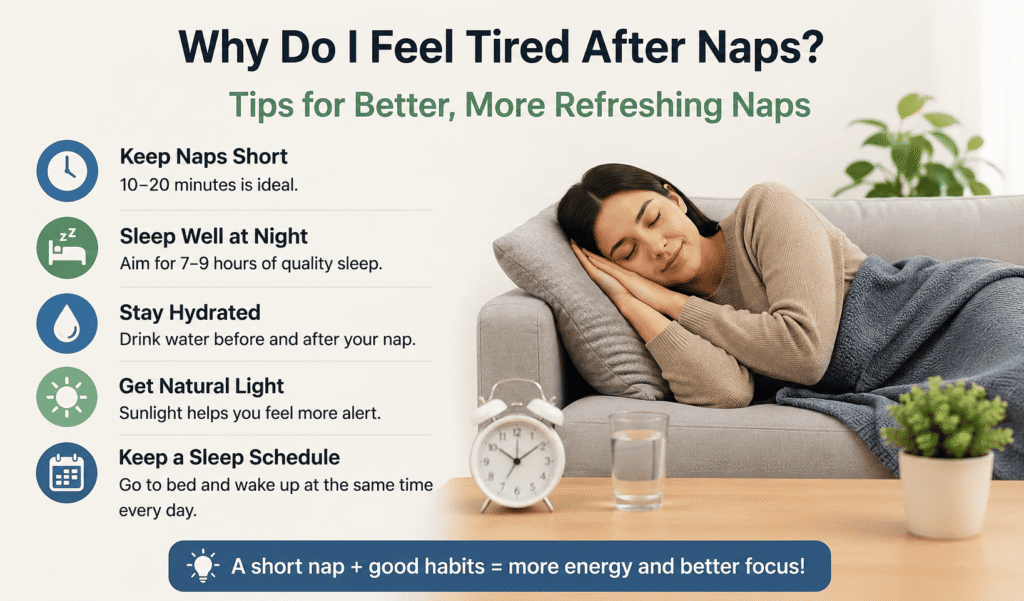
1. Keep Your Naps Short
Keeping your naps short is one of the most effective ways to prevent waking up tired. Most sleep experts recommend limiting naps to 10–20 minutes, or no longer than 30 minutes, because shorter naps usually keep you in the lighter stages of sleep. This allows you to wake up feeling refreshed instead of groggy.
Why It Works
Short naps reduce the likelihood of entering deep sleep, where waking up can trigger sleep inertia. Since your brain remains in lighter sleep stages, it’s easier to wake up feeling alert and mentally refreshed.
Expected Results
If you consistently keep your naps between 10 and 20 minutes, you may notice:
- Improved alertness after waking
- Better concentration and mental clarity
- Less grogginess and brain fog
- Increased productivity during the afternoon
Practical Example
If you usually take a one-hour afternoon nap and wake up feeling exhausted, try setting a timer for 20 minutes instead. Lie down around 1:30 PM, relax, and allow yourself a short power nap. Many people find they wake up with more energy and without the heavy feeling associated with longer naps.
Pro Tip
Set an alarm before you fall asleep so your nap doesn’t unintentionally extend into deep sleep.
2. Improve Your Nighttime Sleep
If you’re constantly waking up tired after naps, the problem may not be the nap itself—it could be poor-quality sleep at night. Naps are meant to supplement healthy sleep, not replace it. Improving your nighttime sleep often reduces the need for long daytime naps and helps you feel more refreshed throughout the day.
Why It Works
When you get enough high-quality sleep at night, your body completes multiple sleep cycles, including deep sleep and REM sleep. This improves physical recovery, brain function, and daytime energy, making naps less necessary.
Expected Results
Improving your nighttime sleep may lead to:
- Fewer daytime energy crashes
- Less dependence on naps
- Better mood and concentration
- Reduced sleep inertia after occasional naps
Practical Example
Aim for 7–9 hours of sleep each night. Go to bed and wake up at the same time every day, avoid caffeine late in the evening, and create a quiet, dark, and cool sleep environment.
Pro Tip
Focus on improving your nighttime sleep before increasing the length or frequency of your daytime naps.
3. Stay Hydrated
Even mild dehydration can leave you feeling tired, sluggish, and mentally foggy after waking from a nap. Drinking enough water throughout the day supports healthy brain function, circulation, and energy production.
Why It Works
Water helps maintain blood flow and delivers oxygen and nutrients to your brain and muscles. When you’re dehydrated, fatigue may become more noticeable after a nap because your body is already operating with reduced energy.
Expected Results
Maintaining good hydration may help:
- Improve energy levels
- Reduce headaches after naps
- Enhance concentration and alertness
- Decrease feelings of sluggishness
Practical Example
Drink a glass of water before your nap and another after waking up. Carry a reusable water bottle throughout the day to remind yourself to stay hydrated, especially during hot weather or after exercise.
Pro Tip
If your urine is consistently dark yellow, you may need to increase your water intake unless your healthcare provider has advised otherwise.
4. Get Natural Light After Waking Up
Exposure to natural light after a nap can help your brain switch from sleep mode to wakefulness more quickly. Morning or afternoon sunlight is one of the most effective natural signals for regulating your circadian rhythm.
Why It Works
Natural light reduces melatonin levels and signals your brain that it’s time to be awake. This helps reduce grogginess, improve alertness, and shorten the effects of sleep inertia.
Expected Results
Within 10–20 minutes of light exposure, many people notice:
- Increased alertness
- Better mood
- Improved concentration
- Faster recovery from post-nap grogginess
Practical Example
After your nap, open the curtains, step outside for a short walk, or spend 10–15 minutes on a balcony or near a sunny window. Combining sunlight with light movement can be even more effective.
Pro Tip
Avoid staying in a dark room after waking, as this may prolong feelings of sleepiness.
5. Maintain a Consistent Sleep Schedule
Going to bed and waking up at different times every day can confuse your body’s internal clock and increase the chances of feeling tired after naps. A consistent sleep schedule helps regulate your circadian rhythm and supports better-quality sleep.
Why It Works
Your body functions best when it follows a predictable routine. Regular sleep and wake times strengthen your natural sleep-wake cycle, making it easier to fall asleep at night and wake up feeling refreshed.
Expected Results
After one to two weeks of following a consistent sleep schedule, many people experience:
- More refreshing naps
- Better nighttime sleep quality
- Higher daytime energy levels
- Improved focus and mood
- Reduced need for long naps
Practical Example
Choose a bedtime, such as 10:30 PM, and a wake-up time, such as 6:30 AM, and follow this schedule every day—including weekends. Over time, your body will naturally begin to feel sleepy and wake up at these times.
Pro Tip
Even if you have a poor night’s sleep, avoid sleeping in the next morning. Returning to your regular schedule as soon as possible helps your body recover more effectively.
Also Read : Why do I feel groggy after naps?
Best Time to Take a Nap
Choosing the right time for a nap can make the difference between waking up refreshed and feeling even more tired. Most sleep experts recommend taking naps during the early afternoon, when your body’s natural energy levels temporarily decline. Napping too late in the day or sleeping for too long can interfere with your nighttime sleep and increase the risk of sleep inertia.
For most healthy adults, the ideal nap window is between 1:00 PM and 3:00 PM. During this time, your circadian rhythm naturally dips, making it easier to fall asleep without significantly affecting your ability to sleep at night.
Why Timing Matters
Your body follows an internal clock known as the circadian rhythm, which controls when you feel awake and when you feel sleepy. In the early afternoon, many people experience a natural drop in alertness, even after a good night’s sleep. Taking a short nap during this period can restore energy, improve concentration, and enhance mood.
On the other hand, napping too late in the afternoon or evening may delay your bedtime, reduce nighttime sleep quality, and leave you feeling groggy after waking.
Also Read : Can low vitamin D affect sleep?
Best Nap Schedule
| Nap Type | Recommended Time | Ideal Duration | Best For |
|---|---|---|---|
| Power Nap | 1:00–3:00 PM | 10–20 minutes | Boosting alertness, focus, and energy |
| Recovery Nap | Early afternoon (only after sleep loss) | 30–60 minutes | Recovering from a poor night’s sleep |
| Long Nap | Earlier in the day if necessary | 60–90 minutes | Completing a full sleep cycle (only occasionally) |
1. Power Nap (10–20 Minutes)
A power nap is the best choice for most adults because it provides a quick energy boost without allowing you to enter deep sleep. Since you remain in the lighter stages of sleep, you are more likely to wake up feeling refreshed rather than groggy.
Why It Works
Power naps improve alertness, attention, reaction time, and mental performance while minimizing the risk of sleep inertia.
Expected Results
A well-timed power nap may help you:
- Feel more awake and energized
- Improve focus and memory
- Increase productivity during the afternoon
- Reduce temporary fatigue
Practical Example
If you work a traditional daytime schedule, try taking a 15–20 minute nap around 1:30 PM. Set an alarm before lying down so your nap doesn’t extend into deep sleep.
2. Recovery Nap (30–60 Minutes)
A recovery nap can be helpful after a night of insufficient sleep, such as after working late or caring for a young child. Because this type of nap is longer, it may include some deeper stages of sleep, making it more restorative—but also increasing the chance of waking up groggy.
Why It Works
A recovery nap helps reduce sleep pressure and partially compensates for sleep loss when getting a full night’s sleep isn’t immediately possible.
Expected Results
A recovery nap may:
- Reduce extreme daytime sleepiness
- Improve mood and concentration
- Support learning and memory
- Provide temporary relief from fatigue
Practical Example
If you slept only five hours the previous night, a 30–45 minute nap early in the afternoon may help improve alertness until you can get adequate sleep that night.
3. Long Nap (60–90 Minutes)
A 60–90 minute nap allows your body to complete a full sleep cycle, including deep sleep and REM sleep. While this type of nap may benefit some people, it is generally not recommended as a daily habit because it can delay bedtime and make it harder to fall asleep at night.
Why It Works
Completing an entire sleep cycle reduces the chance of waking during deep sleep, which may lower the risk of severe sleep inertia compared with waking halfway through the cycle.
Expected Results
When used occasionally, a long nap may:
- Improve creativity and problem-solving
- Support memory consolidation
- Aid physical recovery after intense activity or sleep deprivation
Practical Example
Someone recovering from overnight travel or temporary sleep deprivation may benefit from a 90-minute nap taken before mid-afternoon, followed by returning to a regular sleep schedule that evening.
Also Read : What causes sleep anxiety before workdays?
When Should You Avoid Napping?
Although naps can be beneficial, they are not appropriate in every situation. You may want to avoid daytime naps if you:
- Frequently struggle to fall asleep at night
- Have chronic insomnia
- Regularly nap after 4:00 PM
- Sleep for more than one hour almost every day
- Wake up feeling worse after nearly every nap
If these issues continue despite healthy sleep habits, consider discussing your symptoms with a healthcare professional to rule out an underlying sleep disorder.
Expert Tips for Better Naps
Following a few simple strategies can make your naps more refreshing and reduce the risk of post-nap fatigue:
- Nap between 1:00 PM and 3:00 PM whenever possible.
- Keep most naps between 10 and 20 minutes.
- Set an alarm before you fall asleep.
- Nap in a quiet, cool, and dark environment.
- Drink a glass of water after waking up.
- Get natural sunlight or take a short walk to improve alertness.
- Avoid caffeine within several hours of bedtime if it interferes with your nighttime sleep.
Diet & Lifestyle Tips to Reduce Post-Nap Fatigue
What you eat and drink throughout the day can influence how refreshed you feel after a nap. A balanced diet, proper hydration, and healthy lifestyle habits help support stable energy levels, better brain function, and improved sleep quality. While no single food can eliminate post-nap fatigue, making healthier choices may reduce grogginess and improve overall alertness.
1. Drink Plenty of Water
Dehydration is a common but often overlooked cause of daytime fatigue. Even mild dehydration can affect brain function, reduce concentration, and make you feel sluggish after waking from a nap.
Why It Helps
Water supports healthy blood circulation and helps deliver oxygen and nutrients throughout the body. Staying hydrated also reduces the risk of headaches and improves mental performance.
Best Sources
- Plain water
- Coconut water
- Herbal tea
- Water-rich fruits like watermelon and oranges
Practical Tip
Drink one glass of water before your nap and another after waking up to help your body feel refreshed.
2. Eat Foods Rich in Protein
Protein helps provide steady energy and supports muscle repair. Unlike sugary snacks, protein-rich foods help keep your blood sugar more stable, reducing energy crashes later in the day.
Why It Helps
Protein slows digestion and promotes sustained energy, making you less likely to feel sleepy after eating or waking from a nap.
Good Choices
- Eggs
- Greek yogurt
- Chicken breast
- Fish
- Cottage cheese
- Tofu
- Lentils and beans
Practical Tip
Pair protein with complex carbohydrates for a balanced afternoon snack.
3. Choose Complex Carbohydrates
Complex carbohydrates provide a gradual release of energy instead of causing a rapid spike and crash in blood sugar.
Why It Helps
Whole grains and fibre-rich foods help maintain consistent energy levels and reduce afternoon fatigue.
Good Choices
- Oatmeal
- Brown rice
- Whole-grain bread
- Sweet potatoes
- Quinoa
Practical Tip
Avoid large portions immediately before a nap, as heavy meals may leave you feeling sluggish after waking.
4. Eat Fruits Rich in Vitamins
Fresh fruits provide vitamins, minerals, antioxidants, and natural carbohydrates that help support brain function and energy production.
Why It Helps
Many fruits contain vitamin C, potassium, and other nutrients that support hydration and reduce fatigue.
Good Choices
- Bananas
- Apples
- Berries
- Oranges
- Kiwi
Practical Tip
A banana with a handful of nuts makes a balanced pre-nap or post-nap snack.
5. Include Healthy Fats
Healthy fats support brain health and provide long-lasting energy throughout the day.
Why It Helps
Unsaturated fats help maintain steady energy levels and may improve cognitive function without causing sudden blood sugar fluctuations.
Good Choices
- Almonds
- Walnuts
- Pistachios
- Avocados
- Chia seeds
- Flaxseeds
Practical Tip
Keep portions moderate because healthy fats are calorie-dense.
6. Limit Sugary Foods and Drinks
Foods high in added sugar can provide a quick burst of energy followed by a rapid crash, leaving you feeling more tired after a nap.
Why It Helps
Reducing sugar intake helps stabilize blood glucose levels and prevents sudden energy drops.
Try to Limit
- Candy
- Cakes
- Sweet pastries
- Sugary soft drinks
- Energy drinks with high sugar content
Better Alternative
Choose fresh fruit or plain yogurt instead of processed sweets.
7. Be Smart About Caffeine
Caffeine can temporarily increase alertness, but consuming it too late in the day may interfere with your nighttime sleep.
Why It Helps
When used in moderation, caffeine may improve concentration and reduce temporary fatigue.
Best Sources
- Coffee
- Green tea
- Black tea
Practical Tip
Avoid caffeine within 6–8 hours of bedtime if it affects your ability to fall asleep.
Also Read : How to reset sleep schedule naturally?
Healthy Lifestyle Habits That Support Better Naps
Along with healthy eating, simple lifestyle habits can improve the quality of your naps and reduce post-nap grogginess.
- Exercise regularly, but avoid intense workouts immediately before a nap.
- Maintain a consistent sleep schedule every day.
- Get natural sunlight in the morning and after waking from a nap.
- Keep your bedroom cool, quiet, and dark.
- Manage stress through meditation, deep breathing, or light stretching.
- Avoid heavy meals immediately before napping.
- Keep most naps between 10 and 20 minutes.
Foods That May Help vs Foods That May Worsen Post-Nap Fatigue
| May Help You Feel Refreshed | May Increase Post-Nap Fatigue |
|---|---|
| Water | Sugary soft drinks |
| Greek yogurt | Candy |
| Eggs | Cakes and pastries |
| Oatmeal | Fried foods |
| Bananas | Heavy fast food meals |
| Nuts and seeds | Excess alcohol |
| Whole grains | Large high-fat meals |
Key Takeaway
A balanced diet cannot replace healthy sleep, but it can help reduce post-nap fatigue. Staying hydrated, eating protein-rich foods, choosing complex carbohydrates, limiting added sugar, and maintaining healthy daily habits can improve your energy levels and make your naps feel more refreshing. Combining these nutrition strategies with 10–20 minute naps and a consistent sleep schedule offers the best chance of waking up alert and energized.
Common Mistakes That Make You Feel More Tired After Naps
Even if you take naps regularly, certain habits can make you feel more tired instead of refreshed. Avoiding these common mistakes can help reduce sleep inertia, improve alertness, and make your naps more effective.
1. Sleeping Longer Than 30 Minutes
One of the biggest mistakes is taking naps that last longer than 30 minutes. Extended naps increase the likelihood of entering deep sleep. If you’re awakened during this stage, you may experience sleep inertia, leaving you feeling groggy, mentally sluggish, and less productive.
Why It’s a Problem
Long naps make it harder for your brain to transition back to full alertness and may also reduce your ability to fall asleep at your normal bedtime.
What to Do Instead
Set an alarm and keep most naps between 10 and 20 minutes. If you need additional rest because of sleep deprivation, limit longer naps to occasional use rather than making them a daily habit.
2. Napping After 5 PM
Taking a nap late in the afternoon or evening can interfere with your body’s natural sleep-wake cycle. Since your bedtime is only a few hours away, a late nap may reduce your sleep drive, making it more difficult to fall asleep at night.
Why It’s a Problem
Late naps can delay bedtime, shorten nighttime sleep, and create a cycle of poor sleep followed by increased daytime fatigue.
What to Do Instead
Try to nap between 1:00 PM and 3:00 PM, when your body naturally experiences a temporary drop in alertness.
3. Sleeping in a Dark Room for Too Long
A quiet, dark room is ideal for falling asleep, but staying in a completely dark environment for an extended period after waking can prolong feelings of drowsiness.
Why It’s a Problem
Darkness encourages your brain to remain in sleep mode by supporting melatonin production, making it harder to become fully alert.
What to Do Instead
After waking, open the curtains, turn on the lights, or step outside for a few minutes of natural sunlight to help your brain recognize that it’s time to be awake.
4. Using Your Phone Immediately After Waking
Many people instinctively reach for their phone after waking from a nap. While this habit may seem harmless, immediately scrolling through social media or reading emails can increase mental fatigue and delay the transition to full alertness.
Why It’s a Problem
Your brain is still adjusting after sleep. Information overload and prolonged screen use immediately after waking may reduce focus and make you feel mentally drained.
What to Do Instead
Spend the first few minutes after waking by stretching, drinking water, walking around, or exposing yourself to natural light before checking your phone.
5. Drinking Too Much Caffeine Before a Nap
Although some people benefit from a coffee nap, consuming large amounts of caffeine immediately before resting isn’t always helpful. Excess caffeine may make it difficult to fall asleep quickly and can interfere with your nighttime sleep if consumed later in the day.
Why It’s a Problem
High caffeine intake may reduce sleep quality, increase restlessness, and contribute to ongoing daytime fatigue.
What to Do Instead
If you choose to try a coffee nap, limit yourself to one moderate cup of coffee before a 15–20 minute nap, and avoid caffeine during the late afternoon or evening if it affects your nighttime sleep.
6. Skipping Water Intake
Many people overlook hydration before and after a nap. Even mild dehydration can contribute to tiredness, headaches, and poor concentration, making you feel less refreshed after waking.
Why It’s a Problem
Dehydration can worsen fatigue and make the effects of sleep inertia more noticeable.
What to Do Instead
Drink a glass of water after waking up and maintain adequate hydration throughout the day. Staying hydrated supports normal brain function and energy levels.
Key Takeaway
Small habits can have a significant impact on how you feel after a nap. Sleeping too long, napping late in the day, staying in a dark room after waking, checking your phone immediately, consuming too much caffeine, and neglecting hydration are common mistakes that can increase post-nap fatigue. By avoiding these habits and following healthy napping practices, you can wake up feeling more refreshed, alert, and ready for the rest of your day.
Daily Routine to Prevent Feeling Tired After Naps
A healthy daily routine plays an important role in preventing post-nap fatigue. While short naps can temporarily boost your energy, they cannot replace healthy sleep habits. Following a consistent daily routine helps regulate your body’s internal clock, improves nighttime sleep quality, and reduces the likelihood of waking up feeling groggy after a nap.
If you frequently wake up tired after naps, making small adjustments to your daily schedule may have a significant impact on your energy levels.
1. Wake Up at the Same Time Every Day
Waking up at a consistent time—even on weekends—helps regulate your circadian rhythm. A regular wake-up schedule trains your body to expect sleep and wakefulness at predictable times, making naps more refreshing and improving nighttime sleep.
Why It Works
A consistent wake-up time strengthens your internal body clock, making it easier to fall asleep at night and wake up feeling rested.
Expected Results
- Better morning energy
- More refreshing naps
- Improved sleep quality
- Reduced daytime fatigue
Practical Example
Set your alarm for 6:30 AM every day, including weekends. Avoid sleeping in for several hours, even after a poor night’s sleep.
2. Eat Balanced Meals Throughout the Day
Skipping meals or eating foods high in sugar can cause rapid changes in blood sugar levels, leading to fatigue and low energy. A balanced diet helps maintain steady energy throughout the day.
Why It Works
Protein, fiber, healthy fats, and complex carbohydrates provide sustained energy and reduce the afternoon energy crash that often leads to long naps.
Expected Results
- Stable energy levels
- Less afternoon sleepiness
- Better concentration
- Reduced cravings for sugary snacks
Practical Example
For lunch, choose grilled chicken or beans, brown rice, vegetables, and fruit instead of fast food or sugary snacks.
3. Stay Physically Active
Regular physical activity improves sleep quality, circulation, and overall energy. Even light exercise during the day can reduce fatigue and help you wake up more refreshed after naps.
Why It Works
Exercise promotes deeper nighttime sleep while improving oxygen delivery to your brain and muscles.
Expected Results
- Higher daytime energy
- Better mood
- Improved sleep quality
- Reduced grogginess after naps
Practical Example
Take a 30-minute walk, cycle, or perform light stretching at least five days a week. Avoid vigorous exercise within two hours of bedtime.
4. Limit Caffeine Late in the Day
Caffeine can improve alertness, but consuming it too late may interfere with nighttime sleep, making you more dependent on naps the following day.
Why It Works
Avoiding late-day caffeine allows your body to produce melatonin naturally and improves sleep quality at night.
Expected Results
- Easier time falling asleep
- Better nighttime rest
- Reduced need for daytime naps
- More refreshing mornings
Practical Example
Enjoy coffee in the morning if desired, but try to avoid caffeine after 2:00 PM, especially if you have trouble sleeping.
5. Get Natural Sunlight Every Day
Exposure to natural daylight helps regulate your circadian rhythm and keeps your sleep-wake cycle aligned.
Why It Works
Sunlight suppresses melatonin during the day, increases alertness, and helps your body know when it’s time to be awake.
Expected Results
- Increased daytime alertness
- Better mood
- Improved sleep schedule
- Less daytime drowsiness
Practical Example
Spend 15–30 minutes outdoors each morning or during your lunch break, even if it’s just a short walk.
6. Avoid Long or Late Afternoon Naps
The timing and duration of your nap are just as important as the nap itself. Long naps or naps taken late in the afternoon can disrupt nighttime sleep.
Why It Works
Short naps taken earlier in the day reduce sleep inertia and are less likely to interfere with your regular bedtime.
Expected Results
- Easier bedtime
- Better sleep quality
- Less grogginess after naps
- More consistent energy levels
Practical Example
Take a 15–20 minute nap between 1:00 PM and 3:00 PM instead of sleeping for an hour at 5:00 PM.
7. Create a Relaxing Bedtime Routine
A calming bedtime routine signals your brain that it’s time to sleep. Consistency helps improve sleep quality and reduces the need for long daytime naps.
Why It Works
Relaxing activities lower stress levels and prepare your body for restful sleep.
Expected Results
- Faster sleep onset
- Better sleep quality
- More refreshing mornings
- Reduced daytime fatigue
Practical Example
Spend the last 30–60 minutes before bed reading a book, listening to calming music, or practicing deep breathing instead of using your phone.
Sample Daily Routine for Better Energy
| Time | Activity |
|---|---|
| 6:30 AM | Wake up and drink a glass of water |
| 7:00 AM | Spend 15–20 minutes in natural sunlight or take a short walk |
| 8:00 AM | Eat a balanced breakfast |
| 1:00–3:00 PM | Take a 10–20 minute power nap if needed |
| 3:30 PM | Stay hydrated and avoid excessive caffeine |
| 6:00 PM | Light exercise or a walk |
| 10:00 PM | Begin a relaxing bedtime routine |
| 10:30 PM | Go to bed at a consistent time |
Key Takeaway
A healthy daily routine is one of the most effective long-term strategies for preventing post-nap fatigue. Waking up at the same time each day, eating balanced meals, staying active, getting enough sunlight, limiting late-day caffeine, and taking short early-afternoon naps all work together to improve your energy levels and sleep quality. Over time, these habits can help you wake up feeling refreshed after naps and reduce your dependence on daytime sleep.
Also Read : Can poor sleep weaken the immune system?
When Should You See a Doctor?
Occasional post-nap grogginess is normal.
However, seek medical advice if you experience:
- Extreme daytime fatigue
- Loud snoring
- Frequent morning headaches
- Difficulty staying awake
- Persistent exhaustion despite adequate sleep
- Memory or concentration problems
These symptoms may indicate a sleep disorder or other health condition.
Who Should See a Sleep Specialist?
Occasionally feeling tired after a nap is common and usually isn’t a cause for concern. However, if you regularly wake up feeling exhausted, experience excessive daytime sleepiness, or your fatigue begins affecting your work, relationships, or daily activities, it may be time to consult a sleep specialist.
A sleep specialist can evaluate your symptoms, identify possible underlying sleep disorders, and recommend the most appropriate treatment. Persistent post-nap fatigue is sometimes a sign of an undiagnosed medical condition rather than simply taking naps that are too long.
When Should You See a Sleep Specialist?
Consider scheduling an appointment if you experience any of the following:
You Wake Up Tired After Every Nap
If nearly every nap leaves you feeling groggy, sluggish, or mentally foggy—even when you limit your naps to 10–20 minutes—there may be an underlying sleep problem that needs evaluation.
You Feel Sleepy Throughout the Day
Excessive daytime sleepiness despite getting 7–9 hours of sleep each night is not considered normal. Constant fatigue can reduce productivity, increase accident risk, and affect your overall quality of life.
Your Symptoms Last for Several Weeks
If post-nap fatigue continues for two to four weeks or longer despite improving your sleep habits, it’s a good idea to seek medical advice.
Your Nighttime Sleep Is Poor
Difficulty falling asleep, waking up multiple times during the night, or waking too early every morning may indicate a sleep disorder such as insomnia or another condition affecting sleep quality.
You Snore Loudly or Stop Breathing During Sleep
Loud snoring, gasping, choking, or pauses in breathing during sleep are common warning signs of obstructive sleep apnea. This condition reduces sleep quality and often causes severe daytime fatigue.
Fatigue Is Affecting Your Daily Life
Seek medical evaluation if tiredness is making it difficult to:
- Stay focused at work or school
- Drive safely
- Exercise regularly
- Complete everyday activities
- Maintain normal productivity
Persistent fatigue should never be ignored when it begins interfering with normal life.
You Have Other Concerning Symptoms
See a healthcare professional if tiredness after naps is accompanied by symptoms such as:
- Chest pain
- Shortness of breath
- Unexplained weight loss
- Persistent headaches
- Frequent dizziness or fainting
- Memory problems
- Depression or significant mood changes
- Night sweats or recurrent fever
These symptoms may indicate an underlying medical condition that requires prompt evaluation.
What Will a Sleep Specialist Check?
During your appointment, the specialist may ask about:
- Your bedtime and wake-up schedule
- Nap frequency and duration
- Snoring or breathing problems during sleep
- Caffeine, alcohol, and medication use
- Stress levels and lifestyle habits
- Medical conditions and family history
- Symptoms such as insomnia, restless legs, or excessive daytime sleepiness
Depending on your symptoms, additional testing may be recommended to better understand your sleep patterns.
Possible Conditions That May Be Evaluated
A sleep specialist may assess you for conditions such as:
- Obstructive sleep apnea
- Chronic insomnia
- Restless legs syndrome
- Circadian rhythm sleep-wake disorders
- Narcolepsy
- Periodic limb movement disorder
- Anxiety or depression affecting sleep
- Medical conditions such as thyroid disorders or anemia that can contribute to fatigue
Identifying the underlying cause allows treatment to focus on the problem rather than simply managing symptoms.
How to Prepare for Your Appointment?
Before visiting a sleep specialist, it can be helpful to:
- Keep a 1–2 week sleep diary
- Record your bedtime and wake-up time
- Note how long your naps last
- Track caffeine and alcohol intake
- Write down your symptoms and when they occur
- List any medications or supplements you take
This information helps the specialist identify patterns that may be affecting your sleep.
Key Takeaway
Feeling tired after an occasional nap is usually normal, especially after a long nap or poor night’s sleep. However, if post-nap fatigue becomes frequent, lasts for several weeks, or is accompanied by excessive daytime sleepiness, loud snoring, breathing pauses, or other concerning symptoms, consult a sleep specialist. Early evaluation can help identify treatable sleep disorders and improve both your daytime energy and overall health.
Who Is Most at Risk?
Although anyone can wake up feeling tired after a nap, some people are more likely to experience post-nap fatigue because of their lifestyle, sleep habits, work schedules, or underlying health conditions. Understanding whether you belong to a high-risk group can help you take steps to improve your sleep quality and reduce daytime tiredness.
1. People Who Don’t Get Enough Sleep
Adults who regularly sleep less than the recommended 7–9 hours per night are among the highest-risk groups for post-nap fatigue. Chronic sleep deprivation increases your body’s sleep pressure, making it more likely that you’ll enter deep sleep during a daytime nap. Waking up from deep sleep often triggers sleep inertia, leaving you feeling groggy instead of refreshed.
People with poor nighttime sleep may also rely on long daytime naps, which can create a cycle of daytime sleepiness and disrupted nighttime sleep.
Common Signs
- Frequent daytime sleepiness
- Waking up tired every morning
- Needing naps almost every day
- Difficulty concentrating at work or school
How to Reduce Your Risk
Aim for 7–9 hours of quality sleep each night, maintain a regular sleep schedule, and limit naps to 10–20 minutes whenever possible.
2. Shift Workers
People who work night shifts, rotating shifts, or irregular schedules often struggle with disrupted circadian rhythms. Because their internal body clock is constantly adjusting, they may find it difficult to get restorative sleep. As a result, naps may be longer, less refreshing, and more likely to cause grogginess.
Healthcare workers, emergency responders, factory employees, transportation workers, and security personnel commonly experience this problem.
Common Signs
- Sleeping at different times every day
- Difficulty falling asleep after work
- Excessive daytime fatigue
- Needing multiple naps during the day
How to Reduce Your Risk
Keep your sleep schedule as consistent as possible, create a dark and quiet sleeping environment, and take short naps before or during long shifts if appropriate.
3. Older Adults
As people age, normal sleep patterns often change. Older adults may sleep more lightly, wake up several times during the night, or experience medical conditions that reduce sleep quality. These changes can increase daytime fatigue and the need for naps.
While occasional naps can be beneficial, frequent or prolonged naps may sometimes indicate an underlying sleep disorder or health condition.
Common Signs
- Frequent nighttime awakenings
- Early morning waking
- Daytime sleepiness
- Longer recovery time after naps
How to Reduce Your Risk
Stay physically active, spend time outdoors in natural daylight, maintain a consistent sleep schedule, and speak with your healthcare provider if daytime sleepiness becomes persistent.
4. People With Sleep Disorders
Individuals with untreated sleep disorders often wake up feeling tired regardless of how long they sleep. Conditions such as obstructive sleep apnea, insomnia, restless legs syndrome, narcolepsy, and circadian rhythm disorders can prevent restorative sleep, making daytime naps less effective.
In many cases, post-nap fatigue improves only after the underlying sleep disorder is properly treated.
Common Signs
- Loud snoring or breathing pauses during sleep
- Difficulty falling asleep or staying asleep
- Excessive daytime sleepiness
- Waking with headaches
- Feeling unrefreshed after sleeping
How to Reduce Your Risk
Seek medical evaluation if symptoms persist. Proper diagnosis and treatment can significantly improve both nighttime sleep quality and daytime energy levels.
5. People With Chronic Medical or Mental Health Conditions
Certain medical conditions can contribute to persistent fatigue, making naps feel less refreshing. Conditions such as diabetes, thyroid disorders, anemia, chronic pain, depression, anxiety, and some neurological disorders may interfere with normal sleep or reduce energy levels throughout the day.
In addition, some prescription medications can cause drowsiness or increase the likelihood of daytime fatigue.
Common Signs
- Constant tiredness despite adequate sleep
- Low energy throughout the day
- Frequent need for naps
- Difficulty concentrating or remembering information
- Fatigue that does not improve after resting
How to Reduce Your Risk
Work with your healthcare provider to manage any underlying medical conditions, review medications that may cause drowsiness, and maintain healthy sleep habits alongside your treatment plan.
Key Takeaway
The people most likely to wake up tired after naps include those who don’t get enough sleep, shift workers, older adults, people with sleep disorders, and individuals with chronic medical or mental health conditions. If you belong to one of these groups and regularly experience post-nap fatigue despite practicing healthy sleep habits, consider speaking with a healthcare professional or sleep specialist to identify the underlying cause and receive appropriate treatment.
Also Read : How to calm nighttime anxiety naturally?
Frequently Asked Questions (FAQs)
The most common reason is sleep inertia, which occurs when you wake up during deep sleep. Instead of feeling refreshed, you may experience grogginess, brain fog, and low energy for 15 to 30 minutes or longer. Other causes include taking naps that are too long, poor nighttime sleep, dehydration, stress, or an underlying sleep disorder.
Most sleep experts recommend keeping naps between 10 and 20 minutes, or no longer than 30 minutes. Short naps help improve alertness and concentration without allowing you to enter deep sleep, reducing the risk of waking up groggy.
Yes. Feeling groggy for a short period after waking from a nap is common, especially if you wake up during deep sleep. However, if grogginess lasts for several hours or happens after nearly every nap, it may indicate poor sleep habits or an underlying sleep problem that should be evaluated.
Yes. If you’re not getting enough quality sleep at night, your body builds up sleep debt. As a result, daytime naps may become longer and less refreshing, increasing the likelihood of sleep inertia and persistent fatigue.
You should consider seeing a healthcare professional if you frequently wake up tired after naps despite healthy sleep habits, experience excessive daytime sleepiness, snore loudly, stop breathing during sleep, or if fatigue interferes with your work, driving, or daily activities. Persistent symptoms may require evaluation for an underlying sleep disorder.
The best time to nap is usually between 1:00 PM and 3:00 PM, when your body’s natural circadian rhythm causes a temporary dip in alertness. Napping during this period is less likely to interfere with nighttime sleep and is more likely to leave you feeling refreshed.
Yes. Even mild dehydration can contribute to fatigue, headaches, and difficulty concentrating after waking. Drinking enough water throughout the day and rehydrating after a nap may help improve alertness and reduce sluggishness.
Long naps lasting more than 30–60 minutes often allow you to enter deep sleep. If you’re awakened during this stage, you may experience sleep inertia, which can leave you feeling more tired than before your nap. Keeping naps shorter can help prevent this problem.
It can. Some people benefit from a “coffee nap,” where they drink a cup of coffee immediately before taking a 15–20 minute nap. Because caffeine usually takes about 20–30 minutes to start working, you may wake up feeling more alert as the caffeine begins to take effect. However, this strategy isn’t suitable for everyone, especially those sensitive to caffeine or those who have trouble sleeping at night.
Sometimes. Frequent post-nap fatigue, excessive daytime sleepiness, loud snoring, breathing pauses during sleep, or difficulty staying awake during the day may be signs of conditions such as obstructive sleep apnea, insomnia, narcolepsy, or other sleep disorders. If these symptoms persist, consult a healthcare professional or sleep specialist for a proper evaluation.

A better sleep routine can support consistent energy levels throughout the day.
Conclusion
Waking up tired after naps is often caused by sleep inertia, poor nighttime sleep, long naps, dehydration, stress, or irregular sleep habits. While naps can be a valuable tool for improving energy, timing and duration matter.
For most adults, short naps of 10–30 minutes taken early in the afternoon provide the greatest benefits without causing grogginess.
If post-nap fatigue becomes frequent or severe, it may be worth evaluating your sleep habits and speaking with a healthcare professional to rule out underlying sleep disorders.
Improving sleep quality, hydration, stress management, and daily routines can help you wake up feeling refreshed and energized naturally.
Key Takeaways
✔ Keep naps between 10–30 minutes.
✔ Nap between 1 PM and 3 PM.
✔ Stay hydrated.
✔ Improve nighttime sleep.
✔ Reduce stress.
✔ Get sunlight after waking.
✔ Avoid long evening naps.
Medically reviewed information sourced from trusted health organizations.
References
- National Institutes of Health (NIH). Sleep and Sleep Disorders.
https://www.nhlbi.nih.gov/health/sleep - Sleep Foundation. Sleep Health Resources.
https://www.sleepfoundation.org/ - Centers for Disease Control and Prevention (CDC). Sleep and Sleep Disorders.
https://www.cdc.gov/sleep/ - Mayo Clinic. Sleep Disorders Overview.
https://www.mayoclinic.org/ - American Academy of Sleep Medicine (AASM). Healthy Sleep Resources and Clinical Guidance. Available at: American Academy of Sleep Medicine – Sleep Education.
- National Sleep Foundation. Napping: Benefits and Tips.
Available at: National Sleep Foundation – Napping: Benefits and Tips - MedlinePlus. Healthy Sleep. U.S. National Library of Medicine.
Available at: MedlinePlus – Healthy Sleep.
Reviewed by: Dzarro Editorial Team
Fact-checked using trusted medical and scientific sources.
Last Updated: July 30, 2026

Sandip Choudhary is a Health & Wellness Researcher and Content Creator specializing in sleep, digestive health, preventive wellness, and evidence-based health education. He has been creating online content and researching health-related topics for several years, focusing on translating complex medical information into practical guidance for everyday readers.
With a strong background in SEO and content strategy, Sandip ensures that every article is optimized for both search engines and real users. His goal is to provide reliable, clear, and helpful information that supports healthier living.
Disclaimer: The content published is for informational purposes only and is not a substitute for professional medical advice.