
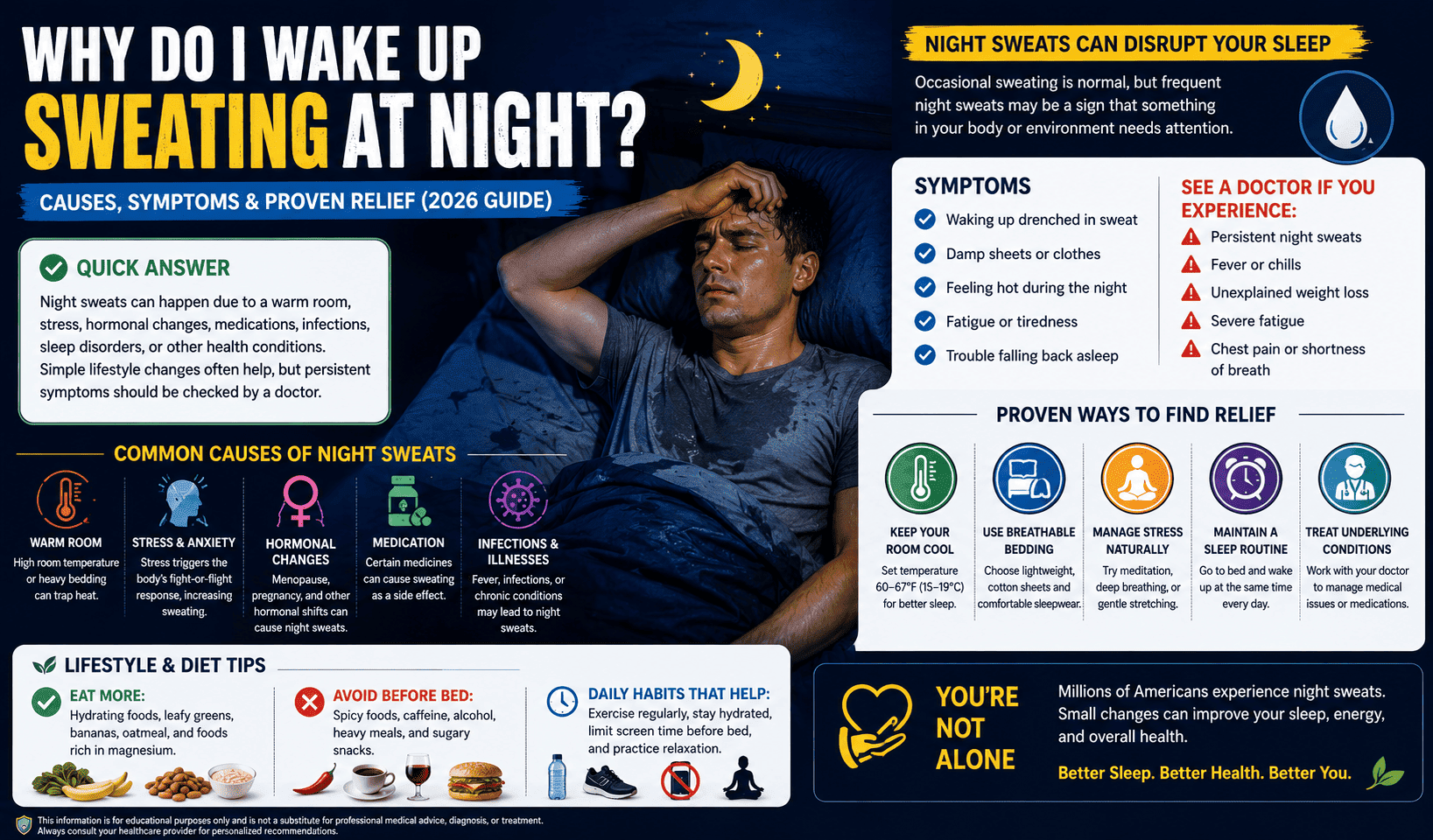
Waking up in the middle of the night drenched in sweat can be uncomfortable, confusing, and sometimes even alarming. You may go to bed feeling perfectly fine, only to wake up with damp sheets, wet clothing, or a racing mind. If this sounds familiar, you’re not alone.
Many Americans experience night sweats occasionally, while others deal with them regularly. In some cases, the cause is as simple as a warm bedroom or heavy blankets. In others, stress, hormones, medications, or underlying health conditions may play a role.
Understanding why you wake up sweating at night is the first step toward improving sleep quality and overall well-being.
Quick Answer
Night sweats can occur due to a warm sleep environment, stress, hormonal changes, infections, medications, or certain medical conditions. Occasional sweating at night is often harmless, but persistent or severe night sweats may require medical evaluation—especially if they occur with fever, weight loss, or fatigue.
What Does It Mean to Wake Up Sweating at Night?
Night sweats refer to excessive sweating during sleep that is significant enough to dampen clothing or bedding. This goes beyond feeling slightly warm under a blanket.
Your body naturally regulates temperature during sleep. When this system becomes disrupted by environmental factors, stress, hormones, or health conditions, excessive sweating may occur.
Occasional night sweats are common and often temporary. However, frequent episodes may indicate that something in your sleep environment, lifestyle, or health needs attention.
Also Read : Why do I wake up with a dry mouth?
Common Symptoms Associated With Night Sweats
Night sweats often occur alongside other symptoms. The accompanying symptoms can sometimes provide clues about the underlying cause.
Early Symptoms
- Waking up feeling hot
- Damp pajamas or sheets
- Mild sleep disruption
- Feeling thirsty during the night
- Difficulty falling back asleep
Advanced Symptoms
- Chronic fatigue
- Frequent nighttime waking
- Morning headaches
- Weight changes
- Fever or chills
- Persistent sleep disturbances
If night sweats occur regularly and interfere with sleep quality, it may be worth discussing them with a healthcare professional.
Also Read : Why do I feel anxious before bedtime?
What Causes Night Sweats?
There is no single explanation for why people wake up sweating at night. In many cases, several factors may contribute.
1. A Warm Sleep Environment
One of the most common reasons for night sweating is a bedroom that is too warm.
Factors that may increase body heat during sleep include:
- Heavy blankets
- Poor ventilation
- Warm indoor temperatures
- Non-breathable bedding
Sleep experts generally recommend keeping bedrooms cool, often around 60–67°F (15–19°C), to support healthy sleep.
2. Stress and Anxiety
Stress activates the body’s fight-or-flight response, increasing heart rate and body temperature.
People under chronic stress may notice:
- Night sweating
- Racing thoughts
- Difficulty relaxing
- Frequent waking
Anxiety can also contribute to nighttime sweating, especially during periods of emotional strain.
3. Hormonal Changes
Hormones play a major role in body temperature regulation.
Night sweats are commonly associated with:
- Menopause
- Perimenopause
- Pregnancy
- Hormonal fluctuations
Women experiencing hot flashes often report waking up sweating during the night.
4. Medications
Certain medications may increase sweating as a side effect.
Examples include some:
- Antidepressants
- Fever-reducing medications
- Hormone therapies
If symptoms begin after starting a new medication, discuss concerns with a healthcare provider before making any changes.
5. Infections and Illnesses
The body may sweat more while fighting infections.
Night sweats accompanied by fever or chills may sometimes occur during:
- Viral infections
- Bacterial infections
- Flu-like illnesses
Persistent symptoms should be evaluated by a medical professional.
6. Sleep Disorders
Some sleep disorders may contribute to nighttime sweating.
Examples include:
- Sleep apnea
- Insomnia
- Restless sleep
Interrupted breathing during sleep may trigger stress responses that increase sweating.
Also Read : Can dehydration wake you up at night?
Comparison Table: Common Causes of Night Sweats
| Cause | Other Common Symptoms | Typical Pattern |
|---|---|---|
| Warm bedroom | Feeling overheated | Improves with cooler room |
| Stress or anxiety | Racing thoughts | Worse during stressful periods |
| Hormonal changes | Hot flashes | Common during menopause |
| Infection | Fever, fatigue | Temporary |
| Medication side effects | Varies | May begin after new medication |
| Sleep disorders | Poor sleep quality | Ongoing |
Best Treatment Options for Night Sweats
The best approach depends on the underlying cause.
Improve Your Sleep Environment
Small environmental changes often help significantly.
Consider:
- Lowering bedroom temperature
- Using breathable bedding
- Wearing lightweight sleepwear
- Improving air circulation
These changes may help regulate body temperature overnight.
Manage Stress Naturally
Relaxation techniques may help reduce stress-related sweating.
Helpful strategies include:
- Meditation
- Deep breathing exercises
- Gentle stretching
- Reading before bed
- Limiting screen time
Reducing stress may improve both sleep quality and overall health.
Review Medications With Your Doctor
If you suspect medication side effects, speak with your healthcare provider.
Never stop prescription medications without medical guidance.
Treat Underlying Conditions
If sleep apnea, infections, or hormonal conditions contribute to night sweats, treating the underlying issue may improve symptoms.
Also Read : Why do I feel dizzy after waking up?
Diet & Lifestyle Tips
Lifestyle habits can affect body temperature and sleep quality.
Foods That May Support Better Sleep
A balanced diet supports healthy sleep and temperature regulation.
Some sleep-friendly foods include:
- Bananas
- Oatmeal
- Almonds
- Tart cherries
- Kiwi fruit
Staying hydrated throughout the day may also help regulate body temperature.
What to Avoid Before Bed
Certain habits may worsen night sweats:
- Alcohol
- Excess caffeine
- Spicy foods
- Heavy late-night meals
These factors may raise body temperature and disrupt sleep.
Daily Routine Improvements
Building consistent habits can support better sleep.
Helpful practices include:
- Maintaining a regular sleep schedule
- Exercising regularly
- Limiting screen exposure before bed
- Keeping your bedroom cool and dark
Even small changes can make a noticeable difference over time.
Also Read : What causes restless sleep every night?
When Should You See a Doctor?
Occasional night sweats are often harmless. However, medical evaluation may be appropriate if night sweats occur frequently or are accompanied by other symptoms.
Seek medical attention if you experience:
- Persistent night sweats
- Fever
- Unexplained weight loss
- Severe fatigue
- Chest pain
- Difficulty breathing
These symptoms do not always indicate a serious condition, but they deserve professional evaluation.
Also Read : Why do I keep waking up in the middle of the night?
Who Is Most at Risk?
Certain groups may be more likely to experience night sweats.
1. Women During Menopause
Hormonal changes often contribute to hot flashes and sweating.
2. Adults Under Chronic Stress
High stress levels may increase nighttime body temperature.
3. Office Workers
Sedentary lifestyles and stress can affect sleep quality.
4. Individuals With Sleep Disorders
People with sleep apnea or insomnia may experience disrupted sleep and sweating.
5. Older Adults
Age-related changes in hormones and temperature regulation may increase the likelihood of night sweats.
Also Read : What causes sleep anxiety at night?
Frequently Asked Questions
1. Why do I wake up sweating but feel cold?
This may happen when sweat evaporates from the skin, creating a cooling sensation. Temperature changes, stress, or illness may contribute.
2. Can stress cause night sweats?
Yes. Stress and anxiety can activate the body’s stress response, which may increase sweating during sleep.
3. Is waking up sweating at night serious?
Occasional night sweats are usually not serious. However, persistent symptoms or night sweats with fever, weight loss, or fatigue should be evaluated by a healthcare professional.
4. Can room temperature cause night sweats?
Yes. A warm bedroom, heavy blankets, or poor ventilation are common causes of nighttime sweating.
5. Do night sweats mean you are sick?
Not always. Night sweats can occur for many reasons, including stress, hormones, medications, and environmental factors.

Sleep enhancement techniques may help support deeper and more restorative sleep.
Conclusion
Waking up sweating at night can be frustrating and disruptive, but it is often manageable once the underlying cause is identified. Factors such as room temperature, stress, hormones, medications, and sleep disorders can all contribute to nighttime sweating.
Simple lifestyle changes—like improving bedroom temperature, reducing stress, and maintaining healthy sleep habits—may help improve sleep quality and reduce night sweats. If symptoms persist or occur alongside concerning signs such as fever or unexplained weight loss, seeking medical advice is the safest next step.
Better sleep starts with understanding what your body may be trying to tell you.
Medically reviewed information sourced from trusted health organizations.
References
- National Institutes of Health (NIH). Sleep and Sleep Disorders.
https://www.nhlbi.nih.gov/health/sleep - Sleep Foundation. Sleep Health Resources.
https://www.sleepfoundation.org/ - Centers for Disease Control and Prevention (CDC). Sleep and Sleep Disorders.
https://www.cdc.gov/sleep/ - Mayo Clinic. Sleep Disorders Overview.
https://www.mayoclinic.org/
Reviewed by: Dzarro Editorial Team
Fact-checked using trusted medical and scientific sources.
Last Updated: June 13, 2026

Sandip Choudhary is a Health & Wellness Researcher and Content Creator specializing in sleep, digestive health, preventive wellness, and evidence-based health education. He has been creating online content and researching health-related topics for several years, focusing on translating complex medical information into practical guidance for everyday readers.
With a strong background in SEO and content strategy, Sandip ensures that every article is optimized for both search engines and real users. His goal is to provide reliable, clear, and helpful information that supports healthier living.
Disclaimer: The content published is for informational purposes only and is not a substitute for professional medical advice.
1 thought on “Why do I wake up sweating at night?”
Comments are closed.