
Have you been sleeping for 7–8 hours but still wake up tired, groggy, or mentally drained? Maybe you struggle to fall asleep, wake up frequently during the night, or feel exhausted during the day despite getting enough rest. If this sounds familiar, low vitamin D could be one factor worth discussing with your healthcare provider.
Vitamin D is best known for supporting bone health, but growing research suggests it may also play a role in sleep regulation, mood, and overall well-being. In the United States, vitamin D deficiency is surprisingly common, especially among people who spend most of their time indoors or get limited sunlight exposure.
This guide explores whether low vitamin D can affect sleep, potential symptoms, risk factors, and practical ways to support healthy sleep naturally.
Quick Answer
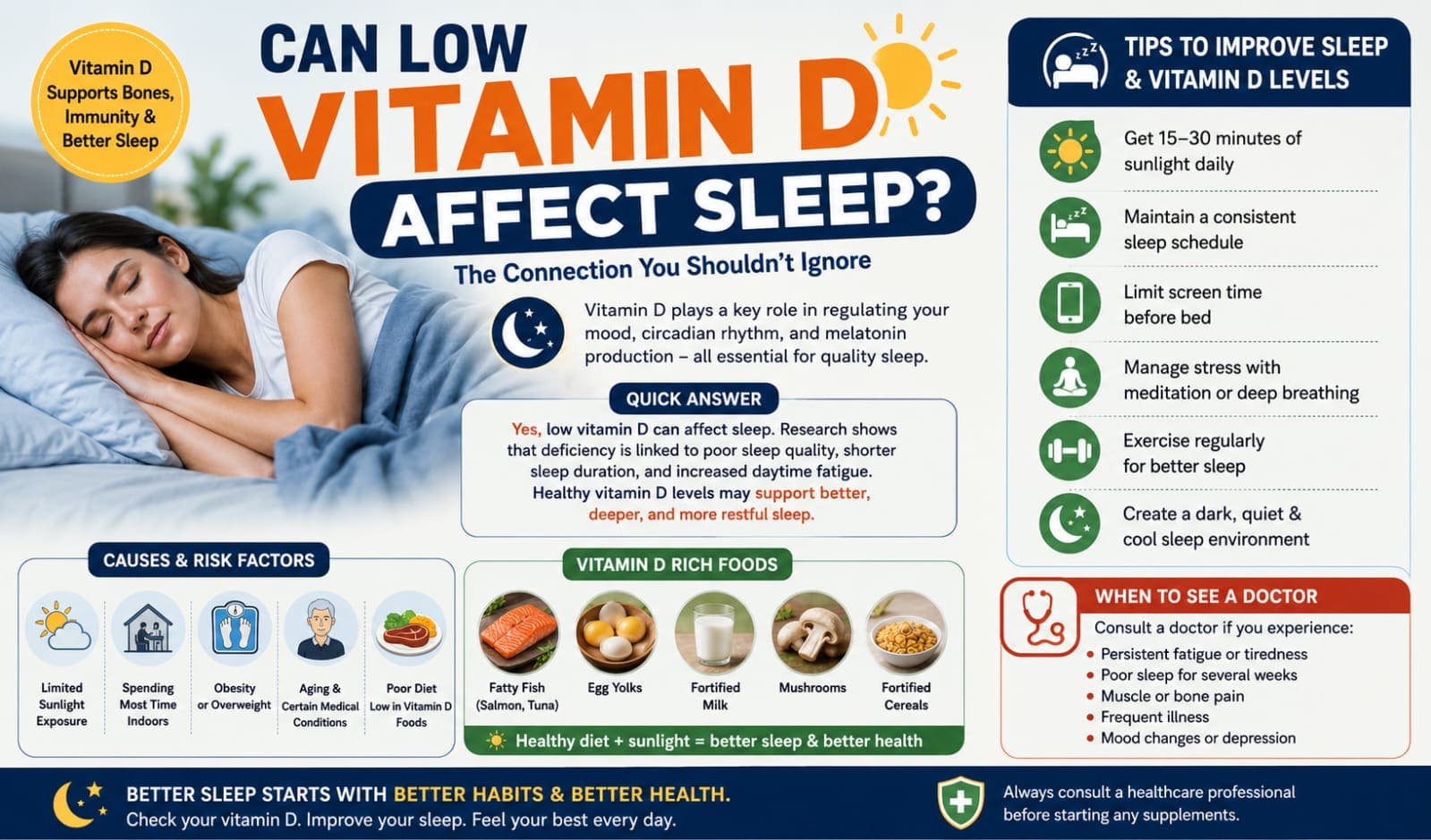
Yes, low vitamin D may affect sleep quality in some people. Research suggests vitamin D may play a role in sleep regulation, circadian rhythm, and mood. Low vitamin D levels have been associated with poor sleep quality, shorter sleep duration, daytime fatigue, and increased sleep disturbances. However, sleep problems often have multiple causes and should be evaluated holistically.
What Is Vitamin D and Why Does It Matter for Sleep?
Vitamin D is a fat-soluble vitamin that helps the body absorb calcium and maintain healthy bones. Your body naturally produces vitamin D when skin is exposed to sunlight.
Scientists have also found vitamin D receptors in areas of the brain involved in sleep regulation. This has led researchers to investigate whether vitamin D influences sleep patterns, melatonin production, and circadian rhythm.
While researchers continue to study this connection, evidence suggests that adequate vitamin D levels may support healthy sleep and overall wellness.
Also Read : Why do I wake up tired even after 8 hours of sleep?
How Sleep Works
Sleep is controlled by several systems working together, including:
- Circadian rhythm (your internal body clock)
- Sleep hormones like melatonin
- Brain signaling pathways
- Environmental cues such as light exposure
Vitamin D may interact with some of these systems, which could explain why deficiency is sometimes linked with sleep disturbances.
Symptoms That May Be Associated With Low Vitamin D
Vitamin D deficiency does not always cause obvious symptoms. When symptoms occur, they can vary from person to person.
Early Symptoms
- Persistent fatigue
- Feeling tired despite adequate sleep
- Low energy levels
- Mild muscle aches
- Difficulty concentrating
- Mood changes
More Advanced Symptoms
- Bone discomfort
- Muscle weakness
- Increased daytime sleepiness
- Frequent illness
- Poor sleep quality
- Difficulty maintaining regular sleep patterns
These symptoms are not specific to vitamin D deficiency and can occur for many reasons.
Also Read : What foods improve sleep quality naturally?
Can Low Vitamin D Affect Sleep?
Several studies have found associations between low vitamin D levels and sleep problems.
Researchers have observed links between lower vitamin D levels and:
- Poor sleep quality
- Shorter sleep duration
- Increased nighttime waking
- Daytime fatigue
- Excessive daytime sleepiness
However, association does not always mean causation. Sleep issues can result from stress, anxiety, sleep disorders, lifestyle habits, or other medical conditions.
Vitamin D may be one piece of a larger puzzle.
How Vitamin D May Influence Sleep
1. Circadian Rhythm Regulation
Your circadian rhythm helps regulate when you feel awake and sleepy. Vitamin D may play a role in maintaining this internal clock.
Disruptions in circadian rhythm can lead to:
- Difficulty falling asleep
- Irregular sleep schedules
- Poor sleep quality
2. Mood and Mental Wellness
Low vitamin D has been associated with mood changes in some individuals.
Because stress and mood can influence sleep quality, vitamin D status may indirectly affect sleep by supporting overall mental wellness.
3. Inflammation and Sleep
Some research suggests vitamin D may help regulate inflammatory responses in the body.
Chronic inflammation has been linked with poor sleep quality and fatigue.
Also Read : Why do I feel sleepy after lunch every day?
Comparison Table: Low Vitamin D vs Poor Sleep Habits
| Factor | Low Vitamin D | Poor Sleep Habits |
|---|---|---|
| Daytime fatigue | Common | Common |
| Difficulty sleeping | Possible | Common |
| Muscle aches | More common | Less common |
| Irregular bedtime | Less common | Very common |
| Low sunlight exposure | Common | Variable |
| Excess screen time | Not directly related | Common |
This table shows why it can sometimes be difficult to determine the exact cause of fatigue or poor sleep.
Causes & Risk Factors for Low Vitamin D
Vitamin D deficiency is relatively common in the United States.
Limited Sun Exposure
People who spend most of their day indoors may produce less vitamin D naturally.
Office workers, remote workers, and students may be particularly affected.
Geographic Location
People living in northern regions may receive less sunlight during winter months.
Darker Skin Tones
Higher melanin levels can reduce vitamin D production from sunlight.
Aging
Older adults may produce vitamin D less efficiently.
Obesity
Body fat can affect vitamin D availability in the body.
Certain Medical Conditions
Some digestive conditions may interfere with vitamin D absorption.
Also Read : Why do I feel more tired on weekends?
Best Treatment Options
If you suspect low vitamin D levels, speak with a healthcare professional before starting supplements.
Increase Safe Sun Exposure
Short periods of sunlight exposure may help support natural vitamin D production.
Sun exposure recommendations vary depending on skin type, location, and season.
Improve Dietary Intake
Eating vitamin D-rich foods may help maintain healthy levels.
Discuss Testing With Your Doctor
A blood test can determine vitamin D status if deficiency is suspected.
Vitamin D Supplements
Some individuals may benefit from supplements under medical guidance.
Avoid taking high doses without professional advice.
Also Read : How to improve focus without caffeine?
Diet & Lifestyle Tips to Support Healthy Sleep
Sleep health depends on many factors beyond vitamin D.
Foods Rich in Vitamin D
Include foods such as:
- Fatty fish like salmon
- Egg yolks
- Fortified milk
- Fortified cereals
- Mushrooms exposed to UV light
Support Healthy Sleep Habits
Try to:
- Maintain a consistent sleep schedule
- Reduce screen time before bed
- Keep your bedroom cool and dark
- Exercise regularly
- Manage stress effectively
Limit Sleep Disruptors
Consider reducing:
- Excess caffeine late in the day
- Heavy meals before bedtime
- Alcohol close to bedtime
Small lifestyle improvements often have a larger impact on sleep than a single nutrient alone.
Also Read : What causes sleep anxiety before workdays?
When Should You See a Doctor?
Consider seeking medical advice if you experience:
- Persistent fatigue lasting several weeks
- Ongoing sleep problems
- Bone pain or muscle weakness
- Frequent illness
- Excessive daytime sleepiness
A healthcare professional can help identify whether vitamin D deficiency, sleep disorders, or other medical conditions may be contributing to symptoms.
Who Is at Risk?
1. Office Workers
People working indoors often receive limited sunlight exposure.
2. Older Adults
Vitamin D production naturally decreases with age.
3. Shift Workers
Irregular schedules may affect both sunlight exposure and sleep quality.
4. People Living in Northern States
Seasonal changes can reduce sun exposure.
5. Individuals With Limited Outdoor Activity
Less time outdoors may contribute to lower vitamin D levels.
Frequently Asked Questions
1. Can low vitamin D cause insomnia?
Some research suggests low vitamin D may be associated with sleep disturbances, but insomnia usually has multiple contributing factors.
2. Does vitamin D help you sleep better?
Vitamin D may support healthy sleep in people who are deficient, but it is not considered a universal sleep remedy.
3. What are signs of low vitamin D?
Common signs may include fatigue, muscle weakness, mood changes, and low energy levels.
4. Should I take vitamin D before bed?
Timing varies by individual. If considering supplements, discuss appropriate use with a healthcare professional.
5. How can I improve sleep naturally?
Consistent sleep schedules, stress management, exercise, and healthy sleep habits remain among the most effective strategies.

Creating a healthy sleep environment can significantly improve sleep quality.
Conclusion
Can low vitamin D affect sleep? Research suggests there may be a connection between vitamin D levels and sleep quality, but sleep is complex and influenced by many factors.
If you experience persistent fatigue or poor sleep, it may be helpful to discuss vitamin D testing with your healthcare provider while also focusing on healthy sleep habits, stress management, nutrition, and regular physical activity.
Better sleep often comes from a combination of lifestyle improvements rather than a single solution.
Medically reviewed information sourced from trusted health organizations.
References
- National Institutes of Health (NIH). Sleep and Sleep Disorders.
https://www.nhlbi.nih.gov/health/sleep - Sleep Foundation. Sleep Health Resources.
https://www.sleepfoundation.org/ - Centers for Disease Control and Prevention (CDC). Sleep and Sleep Disorders.
https://www.cdc.gov/sleep/ - Mayo Clinic. Sleep Disorders Overview.
https://www.mayoclinic.org/
Reviewed by: Dzarro Editorial Team
Fact-checked using trusted medical and scientific sources.
Last Updated: June 13, 2026

Sandip Choudhary is a Health & Wellness Researcher and Content Creator specializing in sleep, digestive health, preventive wellness, and evidence-based health education. He has been creating online content and researching health-related topics for several years, focusing on translating complex medical information into practical guidance for everyday readers.
With a strong background in SEO and content strategy, Sandip ensures that every article is optimized for both search engines and real users. His goal is to provide reliable, clear, and helpful information that supports healthier living.
Disclaimer: The content published is for informational purposes only and is not a substitute for professional medical advice.
3 thoughts on “Can low vitamin D affect sleep?”
Comments are closed.