
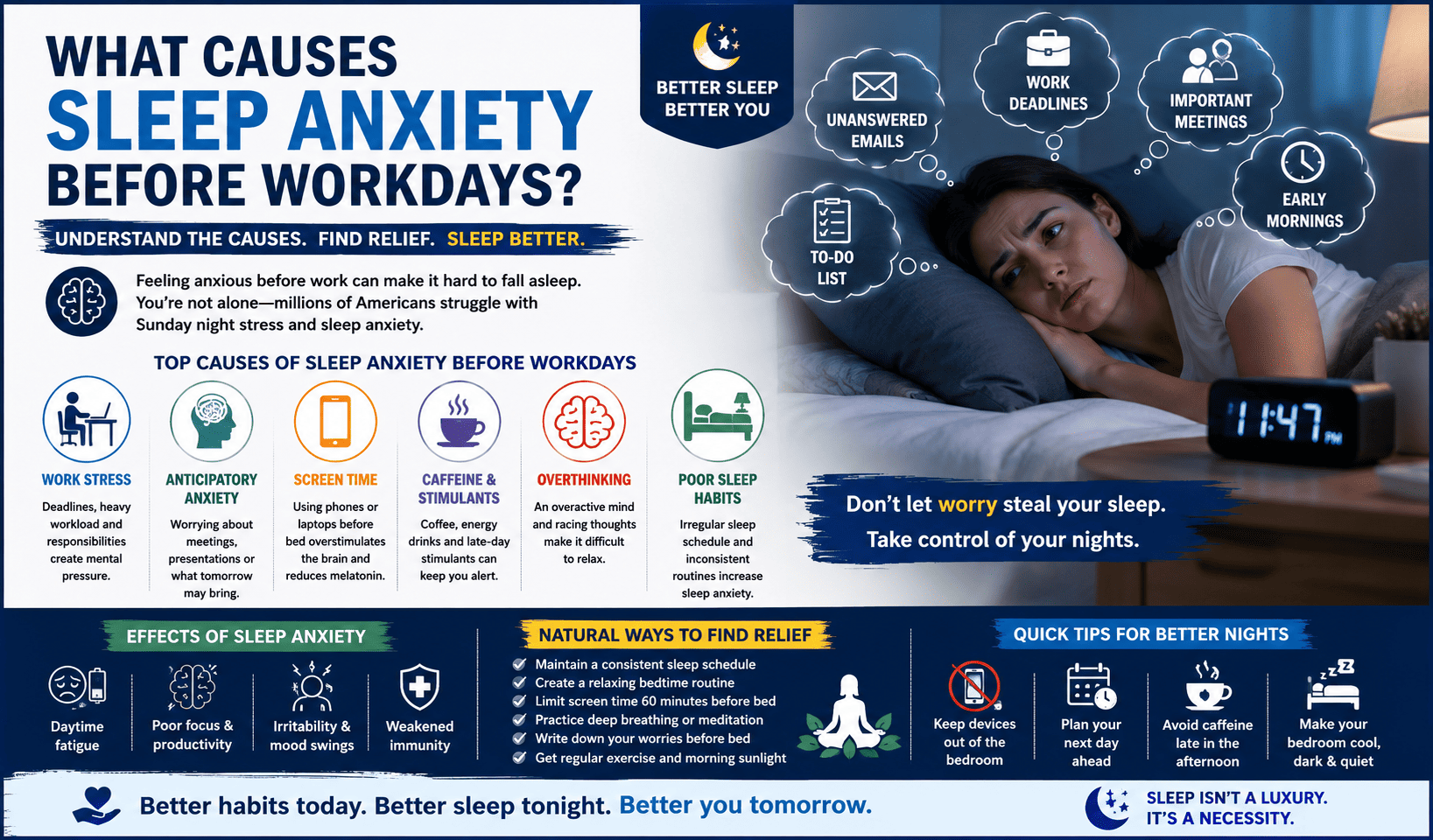
Have you ever noticed that Sunday nights or evenings before work feel unusually stressful? You get into bed at a reasonable hour, but your mind refuses to slow down. You start thinking about meetings, deadlines, emails, or the next day’s responsibilities. Before you know it, you’re tossing and turning, checking the clock, and worrying about not getting enough sleep.
If this sounds familiar, you’re not alone. Millions of Americans experience sleep anxiety before workdays, especially in today’s fast-paced and always-connected world. Sleep anxiety can make it difficult to fall asleep, stay asleep, or wake up feeling refreshed. Over time, this cycle can affect energy, mood, productivity, and overall health.
The good news is that understanding the causes of sleep anxiety before workdays can help you take practical steps to improve sleep and reduce stress naturally.
Quick Answer
Sleep anxiety before workdays is often caused by stress, anticipatory anxiety, work pressure, poor sleep habits, excessive screen time, and an overactive mind. Worrying about the next day can trigger the body’s stress response, making it harder to relax and fall asleep. Improving sleep habits and managing stress can help reduce work-related sleep anxiety.
What Is Sleep Anxiety Before Workdays?
Sleep anxiety before workdays refers to feelings of stress, worry, or nervousness that occur before sleep on nights preceding work or school. Many people experience this on Sunday nights, which is sometimes called the “Sunday Scaries.”
Unlike occasional stress, sleep anxiety can create a cycle where worrying about sleep itself makes it even harder to sleep. The brain stays alert instead of entering a restful state, causing delayed sleep onset and fragmented sleep.
Sleep anxiety doesn’t necessarily mean someone has an anxiety disorder. Often, it reflects how the brain responds to stress, uncertainty, or pressure related to work responsibilities.
Also Read : How to reset sleep schedule naturally?
Symptoms of Sleep Anxiety Before Workdays
Sleep anxiety may look different from person to person.
Early Symptoms
- Difficulty falling asleep before workdays
- Racing thoughts at bedtime
- Feeling tense or restless
- Checking the clock repeatedly
- Mild morning fatigue
- Worrying about the next day’s tasks
Advanced Symptoms
- Chronic insomnia
- Frequent nighttime waking
- Daytime exhaustion
- Increased irritability
- Reduced concentration
- Feeling anxious throughout the workweek
- Dependence on caffeine to stay alert
When these symptoms occur repeatedly, they can affect both mental and physical well-being.
Also Read : Why does my body feel heavy after waking up?
What Causes Sleep Anxiety Before Workdays?
Several factors can contribute to work-related sleep anxiety.
1. Work Stress and Job Pressure
One of the most common causes is workplace stress. Deadlines, presentations, heavy workloads, or difficult interactions with coworkers can create mental strain.
Even after work ends, the brain may continue processing unresolved tasks. This makes it harder to transition into a relaxed state before bed.
People who feel a strong sense of responsibility may be especially vulnerable to bedtime worry.
2. Anticipatory Anxiety
Anticipatory anxiety occurs when people worry about future events.
Examples include:
- Important meetings
- Performance reviews
- Interviews
- Presentations
- Early morning schedules
The brain begins preparing for tomorrow’s challenges, which can trigger stress hormones that interfere with sleep.
3. Poor Sleep Habits
Irregular sleep schedules can disrupt the body’s internal clock.
Common habits that worsen sleep anxiety include:
- Going to bed at different times
- Using phones in bed
- Working late into the evening
- Sleeping in on weekends
These habits may increase difficulty falling asleep before workdays.
4. Excessive Screen Time
Many Americans use phones or laptops before bed.
Blue light from screens may suppress melatonin production, making it harder for the body to recognize that it’s time to sleep.
Additionally, checking emails or social media can increase mental stimulation and stress.
5. Caffeine and Late-Day Stimulants
Coffee, energy drinks, and certain supplements can remain in the body for several hours.
Consuming caffeine late in the day may lead to:
- Difficulty falling asleep
- Lighter sleep
- Increased anxiety symptoms
People sensitive to caffeine may notice stronger effects.
6. General Anxiety or Stress
Work-related sleep anxiety may be more common in people who already experience stress or anxiety in daily life.
Financial concerns, family responsibilities, or health worries can add to bedtime stress.
Also Read : Can sleep problems affect mental health?
Comparison Table: Normal Stress vs Sleep Anxiety
| Factor | Normal Stress | Sleep Anxiety |
|---|---|---|
| Frequency | Occasional | Repeated |
| Sleep Impact | Mild | Significant |
| Bedtime Worry | Temporary | Persistent |
| Daytime Fatigue | Minimal | Common |
| Sleep Quality | Mostly normal | Often reduced |
Best Treatment Options
The goal is not only to improve sleep but also to reduce the stress response before bedtime.
Create a Consistent Sleep Schedule
Going to bed and waking up at the same time every day helps regulate the circadian rhythm.
Consistency teaches the body when it’s time to sleep and wake.
Build a Relaxing Bedtime Routine
Creating a wind-down routine signals the brain that sleep is approaching.
Helpful activities include:
- Reading a book
- Gentle stretching
- Deep breathing exercises
- Meditation
- Listening to calming music
Even 15–30 minutes of relaxation before bed may help improve sleep quality.
Limit Work Before Bed
Try setting boundaries between work and personal time.
Avoid:
- Answering work emails late at night
- Checking notifications in bed
- Planning tomorrow’s tasks immediately before sleep
Creating separation between work and sleep can reduce mental stimulation.
Consider Professional Support
If sleep anxiety becomes severe or persistent, a healthcare professional may recommend:
- Cognitive behavioral strategies
- Stress management techniques
- Sleep evaluation
Seeking support is appropriate when sleep difficulties affect daily life.
Also Read : What are the best nighttime habits for deep sleep?
Diet & Lifestyle Tips
Lifestyle choices can strongly influence sleep quality.
Foods That May Support Better Sleep
Foods rich in magnesium and complex carbohydrates may support relaxation.
Examples include:
- Almonds
- Oatmeal
- Bananas
- Kiwi
- Yogurt
Hydration also plays an important role in overall wellness and sleep.
What to Avoid
Late in the evening, consider limiting:
- Excess caffeine
- Alcohol
- Heavy meals
- Sugary snacks
These may interfere with the body’s natural sleep process.
Daily Routine Improvements
Small changes often create meaningful results.
Helpful habits include:
- Getting morning sunlight
- Exercising regularly
- Taking breaks during work
- Practicing stress management techniques
Consistency is often more important than perfection.
Also Read : Why do I feel exhausted despite resting all day?
When to See a Doctor
Occasional sleep difficulties are common, but persistent symptoms deserve attention.
Consider speaking with a healthcare professional if you experience:
- Sleep problems lasting several weeks
- Severe daytime fatigue
- Loud snoring or breathing pauses
- Depression symptoms
- Anxiety that interferes with daily life
Addressing sleep issues early may help prevent long-term health effects.
Who Is at Risk?
Certain groups may experience higher levels of work-related sleep anxiety.
1. Office Workers
Long hours, deadlines, and digital connectivity can increase stress levels.
2. Students and Young Professionals
Academic pressure and career uncertainty may contribute to bedtime worry.
3. Shift Workers
Irregular schedules can disrupt circadian rhythm and sleep quality.
4. Women
Hormonal changes and caregiving responsibilities may influence sleep patterns.
5. Individuals With Anxiety
People who naturally worry more may be at greater risk of sleep anxiety.
Frequently Asked Questions
1. Why do I get anxious before work even when I like my job?
Even enjoyable jobs can involve responsibilities, deadlines, and performance expectations that trigger stress.
2. Is sleep anxiety before work normal?
Occasional work-related sleep anxiety is common, but frequent sleep disruption may require lifestyle changes or professional guidance.
3. Can stress cause insomnia before workdays?
Yes. Stress activates the body’s alert system, making it harder to relax and fall asleep.
4. How can I calm my mind before bed?
Relaxation techniques such as deep breathing, meditation, journaling, and reading may help calm the mind.
5. Why is Sunday night anxiety so common?
Many people anticipate the upcoming workweek, which can increase stress and interfere with sleep.

These sleep quality tips may help improve overall sleep satisfaction.
Conclusion
Sleep anxiety before workdays is more common than many people realize. Work stress, anticipatory anxiety, poor sleep habits, and excessive screen time can all contribute to bedtime worry and disrupted sleep.
Fortunately, small lifestyle changes—such as maintaining a consistent sleep schedule, reducing screen time, managing stress, and creating healthy bedtime routines—can make a significant difference.
If sleep anxiety continues despite healthy habits, speaking with a healthcare professional may help identify underlying causes and improve long-term sleep health.
Medically reviewed information sourced from trusted health organizations.
References
- National Institutes of Health (NIH). Sleep and Sleep Disorders.
https://www.nhlbi.nih.gov/health/sleep - Sleep Foundation. Sleep Health Resources.
https://www.sleepfoundation.org/ - Centers for Disease Control and Prevention (CDC). Sleep and Sleep Disorders.
https://www.cdc.gov/sleep/ - Mayo Clinic. Sleep Disorders Overview.
https://www.mayoclinic.org/
Reviewed by: Dzarro Editorial Team
Fact-checked using trusted medical and scientific sources.
Last Updated: June 13, 2026

Sandip Choudhary is a Health & Wellness Researcher and Content Creator specializing in sleep, digestive health, preventive wellness, and evidence-based health education. He has been creating online content and researching health-related topics for several years, focusing on translating complex medical information into practical guidance for everyday readers.
With a strong background in SEO and content strategy, Sandip ensures that every article is optimized for both search engines and real users. His goal is to provide reliable, clear, and helpful information that supports healthier living.
Disclaimer: The content published is for informational purposes only and is not a substitute for professional medical advice.
2 thoughts on “What causes sleep anxiety before workdays?”
Comments are closed.