
Have you ever found yourself lying awake at 2 AM, knowing you need to wake up early the next morning? Maybe you stayed up late for a few nights, worked irregular shifts, traveled across time zones, or spent too much time scrolling on your phone before bed. Now your sleep schedule feels completely off, and no matter how hard you try, you can’t seem to fall asleep at the right time.
If this sounds familiar, you’re not alone. Millions of Americans struggle with disrupted sleep schedules due to busy lifestyles, work demands, stress, and technology use. The good news is that most sleep schedules can be reset naturally with consistent habits and a strategic approach.
This guide explains how to reset your sleep schedule naturally, why sleep rhythms get disrupted, and what practical steps can help you get back on track.
Quick Answer
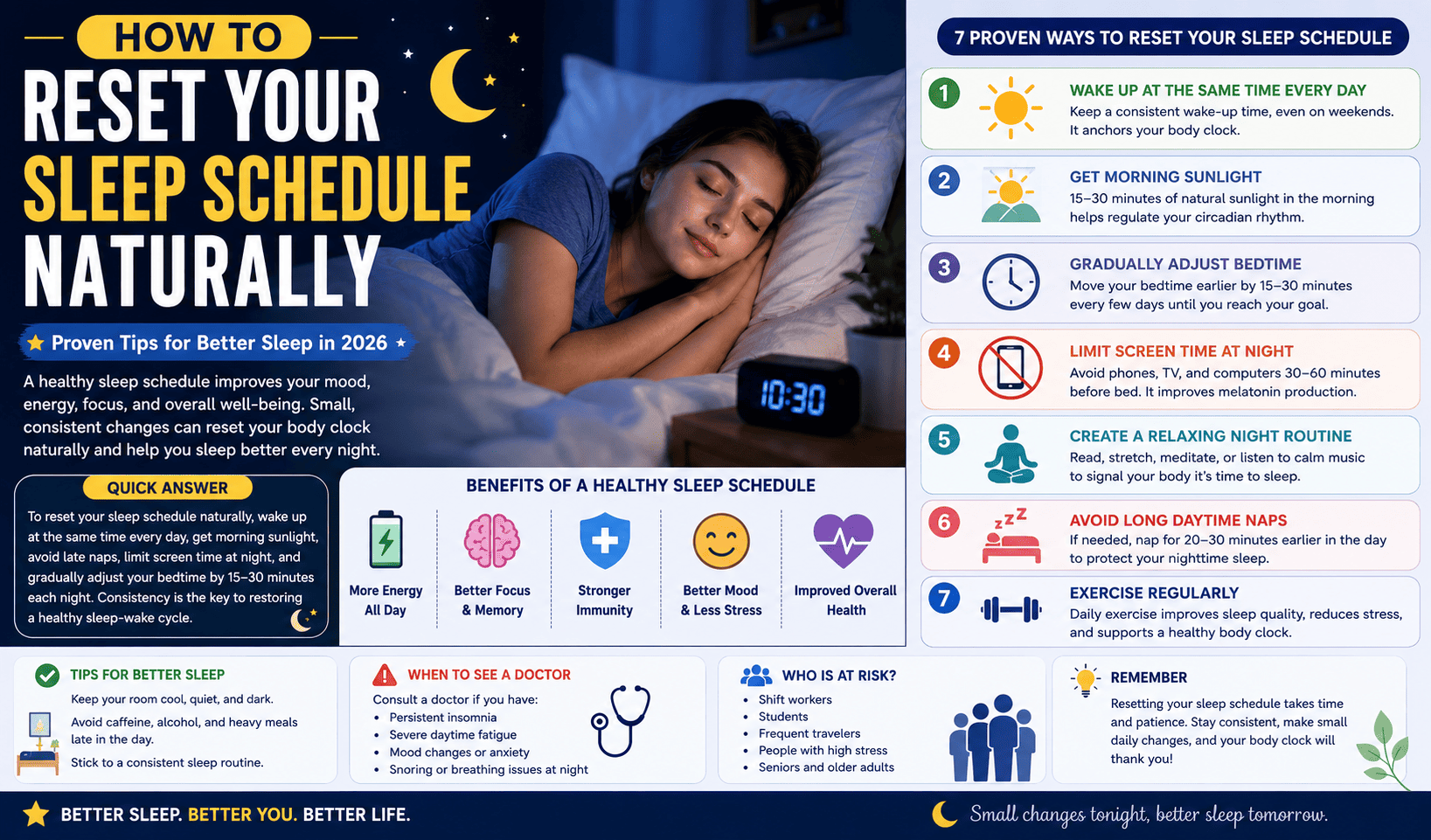
If you’re wondering how to reset your sleep schedule naturally, the most effective approach is to gradually retrain your body’s internal clock rather than making sudden changes. Most people can improve their sleep schedule within 1–2 weeks by following consistent daily habits.
The Best Ways to Reset Your Sleep Schedule
✅ Wake up at the same time every day
✅ Get 15–30 minutes of morning sunlight
✅ Gradually adjust your bedtime by 15–30 minutes
✅ Avoid long daytime naps
✅ Limit screen time at least 1 hour before bed
✅ Exercise regularly (earlier in the day)
✅ Create a relaxing bedtime routine
Consistency is the key. Small daily improvements usually produce better long-term results than trying to change your sleep schedule overnight.
Also Read : Can Seasonal Changes Affect Your Sleep Cycle?
Quick Sleep Reset Guide
| Problem | Natural Solution |
|---|---|
| Sleeping too late | Move bedtime earlier by 15–30 minutes every few days |
| Trouble waking up | Wake up at the same time every morning |
| Jet lag | Get morning sunlight and avoid daytime naps |
| Shift work | Maintain a consistent routine whenever possible |
| Too much phone use | Stop using screens at least 60 minutes before bed |
| Poor sleep quality | Create a relaxing bedtime routine and exercise regularly |
What Is a Sleep Schedule?
A sleep schedule refers to the timing of when you go to bed and when you wake up each day.
Your body follows an internal clock called the circadian rhythm. This biological system helps regulate:
- Sleep and wake cycles
- Hormone production
- Body temperature
- Energy levels
- Mental alertness
When your sleep schedule becomes inconsistent, your circadian rhythm can become misaligned. As a result, you may struggle to fall asleep, wake up feeling tired, or experience poor sleep quality.
Resetting your sleep schedule means helping your body return to a consistent and healthy sleep pattern.
Also Read : Why does my body feel heavy after waking up?
Symptoms of an Irregular Sleep Schedule
Sleep schedule problems often develop gradually.
Brain Fog
Brain fog is one of the most common symptoms of an irregular sleep schedule. You may struggle to concentrate, remember information, or stay productive throughout the day.
Mood Changes
Poor sleep timing can affect emotional health, making you feel irritable, anxious, or overwhelmed. Consistently getting quality sleep helps regulate mood and emotional well-being.
Daytime Sleepiness
If you frequently feel sleepy during meetings, while driving, or during daily activities, your circadian rhythm may be out of sync.
Reduced Productivity
An inconsistent sleep schedule can lower focus, decision-making ability, creativity, and overall work or academic performance.
Many people mistake these symptoms for laziness or lack of motivation when they may actually be experiencing circadian rhythm disruption.
Also Read : Why Do I Wake Up at the Same Time Every Night?
Why Do Sleep Schedules Become Disrupted?
Several lifestyle and environmental factors can interfere with your body’s natural sleep cycle.
Inconsistent Bedtimes
One of the biggest causes of sleep schedule problems is going to bed at different times every night.
For example:
- Sleeping at 10 PM one night
- Sleeping at 1 AM the next night
- Staying awake until 3 AM on weekends
These variations confuse your body’s internal clock.
Excessive Screen Time
Phones, tablets, computers, and televisions expose you to blue light.
This light may delay melatonin release, making it harder to feel sleepy when you want to go to bed.
Late-night scrolling has become one of the most common causes of sleep schedule disruption in the United States.
Stress and Anxiety
Stress affects sleep in multiple ways.
When stress hormones remain elevated, the body may stay alert even when you’re physically tired. This often leads to:
- Racing thoughts
- Delayed sleep
- Night waking
- Poor sleep quality
Shift Work
Millions of Americans work:
- Night shifts
- Rotating schedules
- Early morning shifts
These work patterns often conflict with natural circadian rhythms.
Travel and Jet Lag
Traveling across multiple time zones can temporarily disrupt the body’s internal clock, making it difficult to sleep and wake at local times.
Also Read : Can sleep problems affect mental health?
Healthy vs Disrupted Sleep Schedule
| Healthy Sleep Schedule | Disrupted Sleep Schedule |
|---|---|
| Consistent bedtime | Irregular bedtime |
| Consistent wake-up time | Oversleeping or waking up late |
| High energy levels | Morning fatigue |
| Good concentration | Brain fog |
| Stable mood | Mood swings and irritability |
| Better memory | Forgetfulness |
| Strong immune function | Frequent illness |
| Better work productivity | Reduced productivity |
| Better physical recovery | Constant tiredness |
| Restful sleep | Frequent nighttime waking |
Best Natural Ways to Reset Your Sleep Schedule
Fortunately, many sleep schedule problems can be improved naturally.

1. Wake Up at the Same Time Every Day
Maintaining a consistent wake-up time is one of the most effective ways to reset your sleep schedule naturally. Waking up at the same time every morning—even on weekends—helps train your body’s internal clock, making it easier to fall asleep at night and wake up feeling refreshed.
Why It Works
Your body follows a natural 24-hour cycle known as the circadian rhythm. A fixed wake-up time strengthens this rhythm by signaling your brain when it’s time to be awake and when it’s time to sleep. Over time, your body will naturally start feeling sleepy at the right bedtime.
Expected Results
Most people begin noticing improvements in sleep quality and morning alertness within 7–14 days of maintaining a consistent wake-up schedule. Long-term consistency may also improve energy levels, focus, and overall health.
Practical Example
If your goal is to wake up at 7:00 AM, set an alarm for the same time every day, including weekends. Even if you didn’t sleep well the previous night, avoid sleeping in. Instead, stay awake during the day so your body naturally becomes tired earlier that evening.
Pro Tip: If you miss your bedtime one night, don’t try to “catch up” by sleeping in the next morning. Wake up at your usual time and return to your regular routine that evening.
2. Get Morning Sunlight
Morning sunlight is one of the most powerful natural tools for regulating your sleep-wake cycle. Exposure to natural light shortly after waking helps your brain recognize that it’s daytime, making it easier to stay alert and fall asleep at night.
Why It Works
Sunlight suppresses melatonin, the hormone responsible for sleep, while increasing alertness and helping reset your circadian rhythm. It also supports healthy vitamin D production and improves mood.
Expected Results
Getting 15–30 minutes of sunlight within the first hour after waking may improve sleep timing in as little as 3–7 days. Consistent exposure often leads to better nighttime sleep within two weeks.
Practical Example
After waking up, spend 15–30 minutes outdoors by taking a morning walk, sitting on your porch, or enjoying your coffee outside. If outdoor sunlight isn’t available, open your curtains and sit near a bright window.
Pro Tip: If you miss your bedtime one night, don’t try to “catch up” by sleeping in the next morning. Wake up at your usual time and return to your regular routine that evening.
3. Gradually Adjust Your Bedtime
Trying to fall asleep several hours earlier than usual rarely works. Instead, shifting your bedtime gradually allows your body to adapt without disrupting your natural sleep rhythm.
Why It Works
Small bedtime adjustments reduce stress on your internal clock and help your brain adapt more comfortably. Gradual changes are more sustainable and less likely to cause frustration or insomnia.
Expected Results
Moving your bedtime earlier by 15–30 minutes every few days can help reset your sleep schedule within 2–4 weeks, depending on how disrupted your routine has become.
Practical Example
If you usually sleep at 1:00 AM but want to sleep by 10:30 PM, move your bedtime to 12:45 AM for several nights, then 12:30 AM, continuing until you reach your target bedtime.
Also Read : How much sleep do adults over 40 need?
Pro Tip: If you miss your bedtime one night, don’t try to “catch up” by sleeping in the next morning. Wake up at your usual time and return to your regular routine that evening.
4. Avoid Long Daytime Naps
Although naps can provide temporary energy, long or late-afternoon naps often make it more difficult to fall asleep at night.
Why It Works
Your body builds sleep pressure throughout the day. Long naps reduce this pressure, making you feel less sleepy at bedtime and delaying your sleep schedule.
Expected Results
Limiting naps to 20–30 minutes and avoiding naps after 3:00 PM can improve nighttime sleep within a few days to one week.
Practical Example
If you’re tired during the afternoon, take a 20-minute power nap before 3 PM instead of sleeping for an hour or longer. If possible, go for a short walk or drink water to boost your energy naturally.
Pro Tip: If you miss your bedtime one night, don’t try to “catch up” by sleeping in the next morning. Wake up at your usual time and return to your regular routine that evening.
5. Limit Evening Screen Exposure
Using smartphones, tablets, laptops, or watching television before bedtime can interfere with your body’s natural sleep signals.
Why It Works
Electronic devices emit blue light, which suppresses melatonin production and delays your body’s ability to feel sleepy. Reducing screen exposure allows your brain to prepare for restful sleep.
Expected Results
Avoiding screens for 30–60 minutes before bedtime may improve sleep quality and help you fall asleep faster within one week.
Practical Example
Replace scrolling through social media before bed with relaxing activities such as reading a book, listening to calming music, practicing meditation, or writing in a journal.
Also Read : Why do I wake up sweating at night?
Pro Tip: If you miss your bedtime one night, don’t try to “catch up” by sleeping in the next morning. Wake up at your usual time and return to your regular routine that evening.
6. Create a Consistent Night Routine
A relaxing bedtime routine tells your brain that it’s time to slow down and prepare for sleep. Following the same routine every night creates healthy sleep habits over time.
Why It Works
Repeating calming activities before bed reduces stress, lowers heart rate, and helps your brain associate these habits with sleep. This makes falling asleep feel more natural and effortless.
Expected Results
Following a consistent bedtime routine every night may improve sleep quality within 1–2 weeks, while reducing nighttime awakenings and making it easier to fall asleep.
Practical Example
Start your bedtime routine 45–60 minutes before bed by dimming the lights, taking a warm shower, reading a book, practicing deep breathing, and avoiding work or stressful conversations.
Pro Tip: If you miss your bedtime one night, don’t try to “catch up” by sleeping in the next morning. Wake up at your usual time and return to your regular routine that evening.
7. Exercise During the Day
Regular physical activity supports better sleep by improving your body’s natural sleep drive and reducing stress levels.
Why It Works
Exercise helps regulate your circadian rhythm, reduces anxiety, improves mood, and increases the amount of deep sleep your body gets each night. However, intense workouts too close to bedtime may make it harder for some people to fall asleep.
Expected Results
People who exercise regularly often notice better sleep quality, improved energy, and easier sleep onset within 1–2 weeks. Long-term exercise also supports heart health, weight management, and overall well-being.
Practical Example
Aim for at least 30 minutes of moderate exercise such as brisk walking, cycling, swimming, or yoga on most days of the week. Try to finish vigorous workouts at least 2–3 hours before bedtime for the best results.
Pro Tip: If you miss your bedtime one night, don’t try to “catch up” by sleeping in the next morning. Wake up at your usual time and return to your regular routine that evening.
Also Read : What are the best nighttime habits for deep sleep?
How Long Does It Take to Reset a Sleep Schedule?
The amount of time needed depends on how disrupted your sleep schedule is and how consistently you follow healthy sleep habits. Most people begin noticing improvements within one to two weeks.
| Healthy Habit | Estimated Time to Notice Improvement |
|---|---|
| Morning sunlight | 2–5 days |
| Consistent wake-up time | 1–2 weeks |
| Gradual bedtime adjustment | 1–3 weeks |
| Reduced screen time | 3–7 days |
| Regular exercise | 1–2 weeks |
| Complete circadian rhythm reset | 2–4 weeks |
Patience is important. Small, consistent improvements usually lead to long-lasting results.
Also Read : Can low vitamin D affect sleep?
Diet & Lifestyle Tips
Your daily habits play a major role in sleep regulation.
What to Eat
Foods that support healthy sleep may include:
- Oatmeal
- Bananas
- Almonds
- Walnuts
- Kiwi
- Greek yogurt
These foods may support relaxation and overall sleep quality.
Stay Hydrated
Mild dehydration may contribute to:
- Fatigue
- Headaches
- Poor recovery
Drink water consistently throughout the day, but avoid excessive fluids right before bed.
What to Avoid
Several habits may delay sleep onset:
- Excess caffeine late in the day
- Heavy meals close to bedtime
- Alcohol before sleep
- Energy drinks
- Excess sugar
These factors can interfere with both sleep quality and sleep timing.
Also Read : What causes sleep anxiety before workdays?
Common Mistakes That Prevent Your Sleep Schedule From Resetting
Many people unknowingly delay their progress by following habits that interfere with their body’s natural circadian rhythm. Avoiding these mistakes can help you reset your sleep schedule more effectively.
Sleeping in on weekends
Sleeping several hours later on weekends creates “social jet lag,” making it harder to fall asleep on Sunday night and wake up on Monday morning.
Taking long daytime naps
Naps longer than 30 minutes or taken late in the afternoon reduce your body’s natural sleep pressure, making it difficult to fall asleep at night.
Using electronic devices before bed
Phones, tablets, and computers emit blue light, which suppresses melatonin production and delays sleep onset.
Drinking caffeine too late
Coffee, tea, energy drinks, and some soft drinks can stay in your system for several hours. Avoid caffeine within 6–8 hours of bedtime.
Trying to change your schedule overnight
Gradually adjusting your bedtime by 15–30 minutes every few days is far more effective than making drastic changes.
Improve Your Sleep Environment
Your bedroom should support relaxation.
Consider:
- Cooler room temperatures
- Comfortable bedding
- Reduced noise
- Minimal light exposure
A sleep-friendly environment can make falling asleep easier.
Also Read : Why do I feel exhausted despite resting all day?
When to See a Doctor
Occasional sleep schedule disruptions are common.
However, consider seeking medical advice if you experience:
- Persistent insomnia
- Severe daytime fatigue
- Loud snoring
- Breathing interruptions during sleep
- Ongoing sleep difficulties lasting weeks
- Symptoms affecting work or daily activities
Underlying sleep disorders may require professional evaluation.
Also Read : Can overthinking cause insomnia?
Who Should Consider Seeing a Sleep Specialist?
Most sleep schedule problems improve with healthy lifestyle changes. However, you should consider seeing a sleep specialist if:
- Your sleep problems last longer than three weeks.
- You regularly struggle to fall asleep or stay asleep.
- Loud snoring or breathing pauses occur during sleep.
- You experience excessive daytime sleepiness despite getting enough sleep.
- Your sleep problems interfere with work, school, or daily activities.
- You suspect a sleep disorder such as insomnia, sleep apnea, restless legs syndrome, or narcolepsy.
A healthcare professional can identify underlying medical conditions and recommend the most appropriate treatment.
Who Is Most at Risk?
Certain groups are more likely to struggle with sleep schedule problems.
1. Shift Workers
Night shifts and rotating schedules frequently disrupt circadian rhythms.
2. College Students
Irregular schedules, late studying, and social activities often contribute to sleep disruption.
3. Office Workers
Long screen exposure and work-related stress can delay sleep.
4. Frequent Travelers
Jet lag commonly affects sleep timing.
5. People With Anxiety
Stress and racing thoughts may make maintaining a consistent sleep schedule difficult.
Also Read : Why do I wake up multiple times to urinate?
Frequently Asked Question (FAQ)
Many people notice improvements within several days to two weeks, depending on how disrupted their sleep schedule is.
Usually not. Gradual changes and consistency tend to be more effective than attempting dramatic adjustments.
Yes. Morning sunlight is one of the most effective natural tools for regulating circadian rhythm.
This approach is generally difficult and may increase fatigue. Gradual adjustments are often more sustainable.
Yes. Excessive nighttime screen exposure may delay melatonin production and make it harder to fall asleep.
Melatonin supplements may help some people adjust their sleep schedule, particularly after jet lag or shift work. However, they should only be used under the guidance of a healthcare provider.
Short naps of 20–30 minutes may be helpful, but avoid long or late-afternoon naps because they can make it harder to fall asleep at night.
Yes. Caffeine blocks adenosine, a chemical that promotes sleepiness. Avoid caffeinated beverages within six to eight hours of bedtime.
Yes. Regular physical activity helps regulate your circadian rhythm, improves sleep quality, and makes it easier to fall asleep. However, vigorous exercise close to bedtime may keep some people awake.
The fastest and healthiest approach is to wake up at the same time every day, get morning sunlight, gradually shift your bedtime, avoid screens before bed, and follow a consistent nighttime routine.

Many people optimize sleep naturally through better routines and stress management.
Conclusion
If you’re wondering how to reset your sleep schedule naturally, the key is consistency. While it may be tempting to look for quick fixes, healthy sleep habits tend to produce the most reliable results.
Waking up at the same time each day, getting morning sunlight, reducing screen time before bed, and creating a predictable nighttime routine can help restore your body’s natural rhythm.
Most importantly, be patient. Small daily improvements often lead to long-term sleep success and better overall health.
Medically reviewed information sourced from trusted health organizations.
References
- National Institutes of Health (NIH). Sleep and Sleep Disorders.
https://www.nhlbi.nih.gov/health/sleep - Sleep Foundation. Sleep Health Resources.
https://www.sleepfoundation.org/ - Centers for Disease Control and Prevention (CDC). Sleep and Sleep Disorders.
https://www.cdc.gov/sleep/ - Mayo Clinic. Sleep Disorders Overview.
https://www.mayoclinic.org/ - American Academy of Sleep Medicine (AASM).
https://aasm.org/
Reviewed by: Dzarro Editorial Team
Fact-checked using trusted medical and scientific sources.
Last Updated: July 28, 2026

Sandip Choudhary is a Health & Wellness Researcher and Content Creator specializing in sleep, digestive health, preventive wellness, and evidence-based health education. He has been creating online content and researching health-related topics for several years, focusing on translating complex medical information into practical guidance for everyday readers.
With a strong background in SEO and content strategy, Sandip ensures that every article is optimized for both search engines and real users. His goal is to provide reliable, clear, and helpful information that supports healthier living.
Disclaimer: The content published is for informational purposes only and is not a substitute for professional medical advice.