
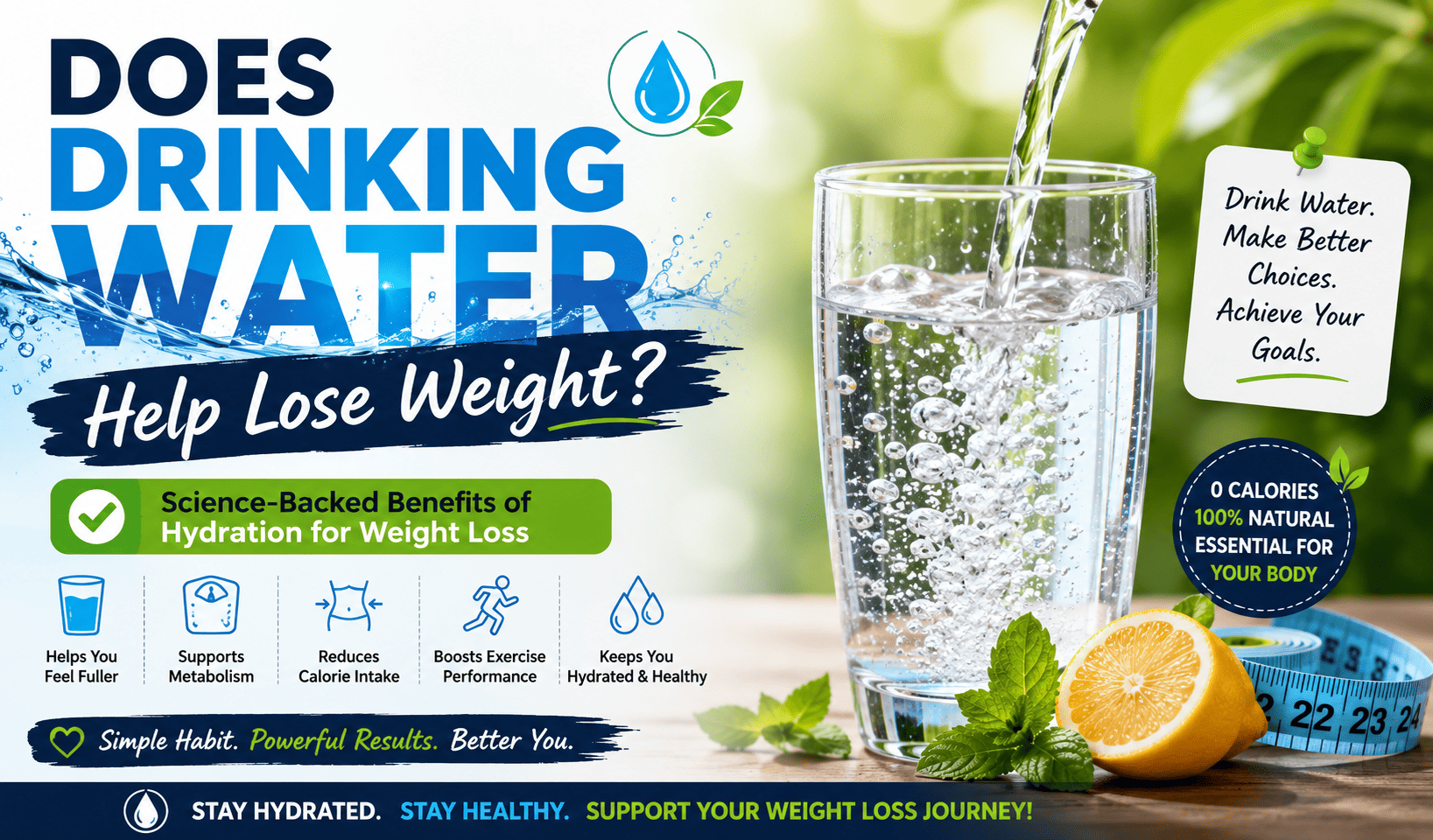
If you’ve ever searched “Does drinking water help lose weight?”, you’re not alone. Millions of Americans are looking for simple, natural ways to support healthy weight management without relying on restrictive diets or expensive supplements. Water is often promoted as a “weight loss secret,” but how much of that is actually backed by science?
The short answer is yes—drinking water can support weight loss, but it is not a magic solution. Water helps by reducing calorie intake, improving feelings of fullness, supporting metabolism, replacing sugary beverages, and enhancing exercise performance. However, sustainable weight loss still depends on maintaining a healthy calorie balance through nutritious eating, regular physical activity, adequate sleep, and consistent lifestyle habits.
In this article, we’ll explore what research says about hydration and weight loss, how much water you should drink, common myths, and practical ways to use water as part of a healthy weight management plan.
Does Drinking Water Help Lose Weight?
Yes, drinking water can help with weight loss when combined with a healthy lifestyle. Water contains zero calories, making it an excellent replacement for high-calorie beverages like soda, sweetened coffee drinks, sports drinks, and fruit juices.
Although drinking water alone won’t burn large amounts of body fat, it can make healthy eating easier by reducing unnecessary calorie intake and supporting your body’s natural functions.
People who consistently stay hydrated may also find it easier to maintain energy levels during exercise and avoid confusing thirst with hunger.
Also Read : Best morning habits for weight loss?
How Water Supports Weight Loss
Water contributes to healthy weight management in several ways rather than through one dramatic effect.
Water Helps You Feel Fuller
One of the biggest reasons water may support weight loss is that it can increase feelings of fullness before meals. Drinking a glass of water about 20 to 30 minutes before eating may reduce appetite for some individuals, helping them naturally consume fewer calories during the meal.
This strategy appears to be especially helpful for middle-aged and older adults, although younger adults may also benefit depending on their eating habits.
Feeling satisfied sooner can reduce overeating without requiring complicated dieting techniques.
Water Replaces High-Calorie Drinks
Many Americans consume hundreds of calories every day from beverages alone.
Common high-calorie drinks include:
- Regular soda
- Sweet tea
- Energy drinks
- Sweetened coffee beverages
- Flavored lattes
- Fruit punches
- Sugary sports drinks
Replacing these drinks with plain water can significantly reduce daily calorie intake without changing the foods you eat.
For example, replacing one 20-ounce sugary soft drink each day with water may eliminate well over 200 calories daily, which can contribute to gradual weight loss over time.
Also Read : What causes slow metabolism?
Water Supports Healthy Metabolism
Some studies suggest that drinking water may cause a small temporary increase in energy expenditure, a process sometimes called water-induced thermogenesis.
While this effect exists, it’s relatively modest and should not be viewed as a major fat-burning strategy.
Instead, hydration helps ensure your body’s metabolic processes function efficiently, including digestion, circulation, temperature regulation, and nutrient transport.
Staying Hydrated Can Improve Exercise Performance
Exercise is an important part of healthy weight management.
Even mild dehydration can lead to:
- Reduced endurance
- Increased fatigue
- Lower strength
- Poor concentration
- Reduced workout performance
When you’re properly hydrated, you’re more likely to perform better during physical activity, allowing you to burn more calories and recover more effectively.
Whether you’re walking, strength training, cycling, or participating in sports, hydration plays an important role.
Also Read : Can poor sleep cause weight gain?
Water May Reduce Mindless Snacking
Sometimes people mistake thirst for hunger.
When you’re slightly dehydrated, your body may send signals that feel similar to hunger, causing unnecessary snacking.
Before reaching for a snack, try drinking a glass of water and waiting about 15 minutes.
If you’re still hungry afterward, it’s probably time for a balanced meal or healthy snack.
Does Drinking Cold Water Burn More Calories?
This is one of the most common internet claims.
Technically, drinking cold water requires your body to warm the water to body temperature, which uses a very small amount of energy.
However, the number of calories burned is extremely small and is not enough to produce meaningful weight loss on its own.
Choosing cold water is perfectly fine if you enjoy it, but don’t expect it to dramatically increase fat burning.
Also Read : Why is belly fat hard to lose?
How Much Water Should You Drink for Weight Loss?
There isn’t a universal recommendation that guarantees weight loss.
Daily hydration needs depend on many factors, including:
- Age
- Sex
- Body size
- Physical activity
- Climate
- Overall health
- Pregnancy or breastfeeding
Many health experts suggest letting thirst guide your intake while aiming for adequate hydration throughout the day.
A practical approach includes:
- Drinking water when you wake up
- Having water before meals
- Carrying a reusable water bottle
- Drinking more during exercise
- Increasing fluids during hot weather
Urine that is pale yellow generally indicates good hydration for most healthy adults.
Can Drinking Too Much Water Help You Lose More Weight?
No.
More water is not always better.
Excessive water consumption does not accelerate fat loss and, in rare cases, can cause a dangerous condition called hyponatremia, where sodium levels in the blood become dangerously low.
Healthy hydration means drinking enough—not excessive amounts.
Best Times to Drink Water
Timing alone won’t determine whether you lose weight, but certain habits may support healthy eating.
Many people benefit from drinking water:
- Shortly after waking up
- About 20–30 minutes before meals
- Before, during, and after exercise
- When feeling thirsty
- During hot weather
- When increasing physical activity
Creating consistent hydration habits is generally more important than focusing on exact timing.
Also Read : What foods burn belly fat naturally?
Water and Digestion
Water plays an essential role in healthy digestion.
Adequate hydration helps:
- Move food through the digestive tract
- Prevent constipation
- Support nutrient absorption
- Maintain healthy bowel function
Although water supports digestion, it does not “flush away fat” or directly melt body fat, despite popular myths found online.
Can Water Reduce Belly Fat?
Many people specifically ask whether drinking water targets belly fat.
Unfortunately, no food or beverage can selectively reduce fat from one area of the body.
Body fat decreases gradually across the body when you consistently maintain a calorie deficit through healthy eating and physical activity.
Water supports this process but does not specifically burn abdominal fat.
Also Read : How to boost metabolism naturally?
Healthy Drinks That Support Weight Management
Besides plain water, several low-calorie beverages can fit into a healthy eating plan.
These include:
- Sparkling water without added sugar
- Unsweetened herbal tea
- Black coffee in moderation
- Unsweetened green tea
- Infused water with cucumber, lemon, mint, or berries
Avoid adding excessive sugar, syrups, whipped cream, or sweetened creamers if your goal is weight management.
Common Myths About Water and Weight Loss
Many misconceptions circulate online regarding hydration.
One common myth is that drinking gallons of water every day melts fat. Scientific evidence does not support this claim.
Another myth suggests that drinking water immediately after eating causes weight gain or slows digestion. For healthy individuals, there is little evidence supporting this idea.
Some people also believe that detox waters dramatically accelerate fat loss. While fruit-infused water can encourage better hydration, it does not detoxify the body or produce rapid weight loss.
Your liver and kidneys naturally perform your body’s detoxification processes.
Tips to Drink More Water Every Day
If you struggle to stay hydrated, simple habits can make a big difference.
Carry a reusable water bottle wherever you go so water is always available. Drink a glass of water before every meal to establish a consistent routine. Flavor your water naturally with lemon slices, cucumber, strawberries, oranges, or fresh mint if you dislike plain water. Replace one sugary beverage each day with water and gradually increase that number over time. Set reminders on your phone if you frequently forget to drink during busy workdays.
Small habits practiced consistently often produce better long-term results than dramatic short-term changes.
Also Read : Why am I gaining weight without eating more?
Who Should Be Careful About Fluid Intake?
Although adequate hydration is important, some individuals need personalized fluid recommendations.
People living with kidney disease, heart failure, liver disease, or certain endocrine disorders should follow guidance from their healthcare provider regarding daily fluid intake.
Athletes participating in prolonged endurance events may also require individualized hydration strategies based on sweat loss.
If you have a medical condition affecting fluid balance, consult your healthcare provider before making significant changes to your water intake.
The Bottom Line
So, does drinking water help lose weight? The answer is yes—but indirectly.
Water is one of the healthiest beverages you can choose because it contains no calories, helps you stay hydrated, may reduce appetite before meals, replaces sugary drinks, supports physical activity, and contributes to overall health. However, drinking water alone will not cause significant weight loss without healthy eating and regular exercise.
Think of water as an important tool in your overall weight management strategy rather than a standalone solution. Combined with balanced nutrition, regular movement, quality sleep, and consistent habits, staying hydrated can support long-term success and overall well-being.

Cardio workouts help burn calories and improve heart health.
Frequently Asked Questions (FAQ)
1. Does drinking water help lose weight without exercising?
Drinking water may help reduce calorie intake and replace sugary beverages, but meaningful and sustainable weight loss is more likely when combined with regular physical activity and a balanced diet.
2. How much water should I drink daily to lose weight?
There is no specific amount guaranteed to cause weight loss. Most healthy adults should aim to stay adequately hydrated based on thirst, activity level, climate, and overall health.
3. Is drinking water before meals good for weight loss?
Yes. Drinking water about 20 to 30 minutes before meals may help some people feel fuller, which can reduce calorie intake during meals.
4. Can drinking water burn belly fat?
No. Water does not specifically burn belly fat. Fat loss occurs throughout the body when you consistently maintain a calorie deficit through healthy eating and exercise.
5. Does warm water help lose weight better than cold water?
Current evidence does not show that warm water causes greater weight loss than cold water. The most important factor is staying consistently hydrated.
6. Can I lose weight by replacing soda with water?
Yes. Replacing sugar-sweetened beverages with water can significantly reduce daily calorie intake and support gradual, sustainable weight loss.
7. Does drinking more water speed up metabolism?
Drinking water may cause a small temporary increase in energy expenditure, but the effect is modest and should not be considered a primary weight loss strategy.
8. Can drinking too much water be harmful?
Yes. Excessive water intake can, in rare cases, lead to dangerously low sodium levels (hyponatremia). Drink enough to stay hydrated, but avoid excessive consumption unless directed by a healthcare professional.
Reviewed by: Dzarro Editorial Team
Fact-checked using trusted medical and scientific sources.

Sandip Choudhary is a Health & Wellness Researcher and Content Creator specializing in sleep, digestive health, preventive wellness, and evidence-based health education. He has been creating online content and researching health-related topics for several years, focusing on translating complex medical information into practical guidance for everyday readers.
With a strong background in SEO and content strategy, Sandip ensures that every article is optimized for both search engines and real users. His goal is to provide reliable, clear, and helpful information that supports healthier living.
Disclaimer: The content published is for informational purposes only and is not a substitute for professional medical advice.