
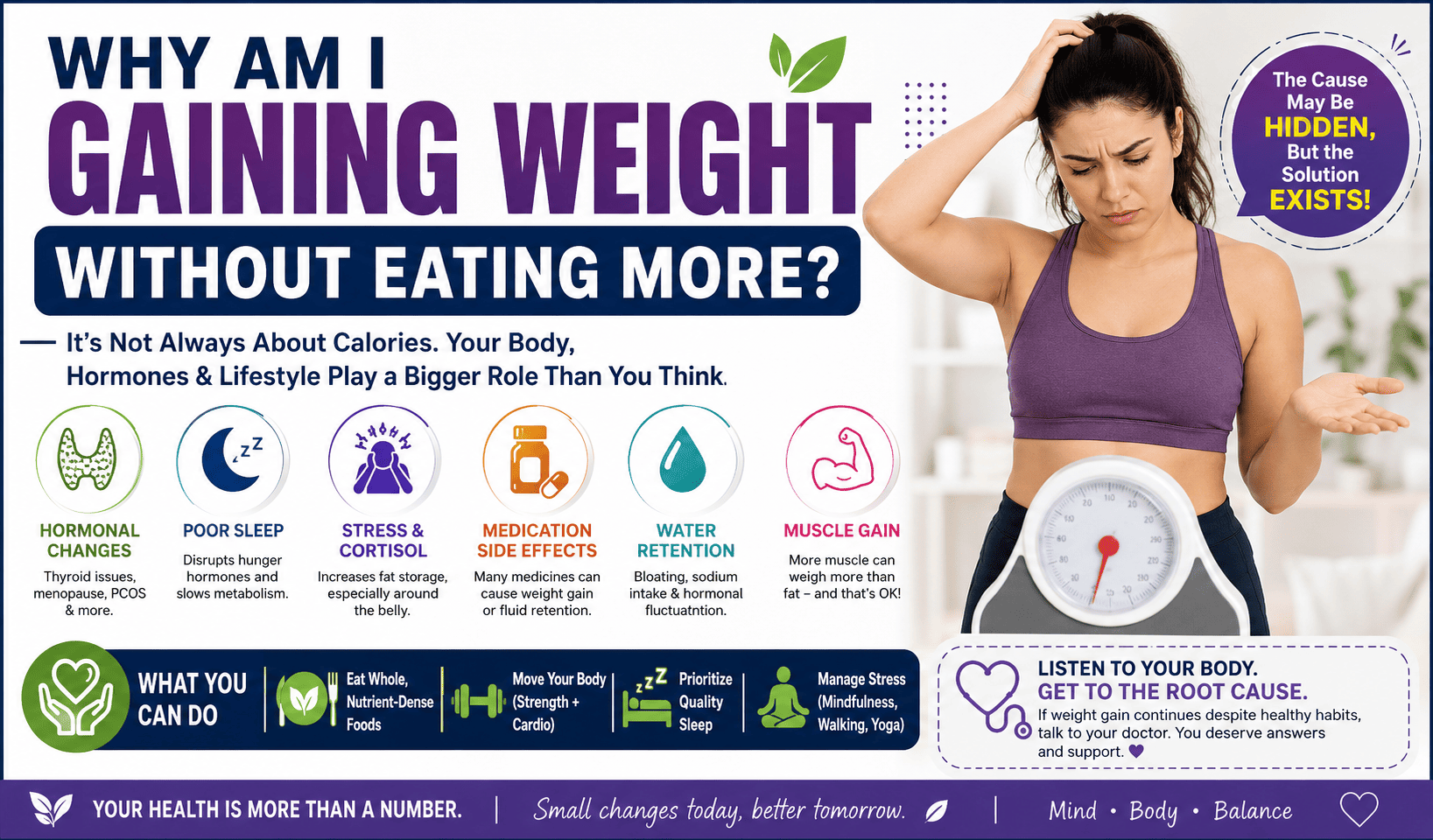
If you’ve stepped on the scale and noticed the numbers climbing despite eating the same amount—or even less—you may be wondering, “Why am I gaining weight without eating more?” It can feel confusing, frustrating, and even discouraging when your efforts to maintain a healthy weight don’t seem to match the results.
The truth is that body weight is influenced by much more than calorie intake alone. Hormonal changes, aging, stress, sleep quality, medications, medical conditions, muscle gain, water retention, and even gut health can all affect the number on the scale. In many cases, unexplained weight gain isn’t caused by overeating at all.
This guide explores the most common reasons behind unexpected weight gain, what warning signs to watch for, and practical steps you can take to improve your health. If you’re asking yourself, “Why am I gaining weight without eating more?”, understanding the underlying causes is the first step toward finding the right solution.
Why Am I Gaining Weight Without Eating More?
Weight gain happens when your body stores more energy than it burns. However, this process isn’t always as simple as eating too many calories. Your metabolism, hormones, physical activity, muscle mass, sleep patterns, stress levels, and overall health all play major roles in determining how your body uses and stores energy.
Even if your eating habits haven’t changed, your body may be burning fewer calories than before. Alternatively, your body may be retaining water instead of gaining fat, making the scale increase without a noticeable change in body composition.
Understanding these hidden factors helps explain why unexpected weight gain is more common than many people realize.
Also Read : How to boost metabolism naturally?
Your Metabolism Naturally Changes Over Time
One of the biggest reasons people gain weight without increasing food intake is a slowing metabolism.
As people enter their 30s, 40s, and beyond, muscle mass naturally declines unless regular strength training is maintained. Since muscle burns more calories than fat, losing muscle reduces your daily calorie needs.
For example, someone who required 2,200 calories daily at age 25 may only need around 2,000 calories years later while maintaining the same lifestyle. Continuing to eat the same amount can gradually result in weight gain.
Hormonal Changes Can Increase Body Fat
Hormones regulate hunger, metabolism, fat storage, and energy use. Even small hormonal shifts can make weight management much more difficult.
Thyroid Disorders
Hypothyroidism occurs when the thyroid gland doesn’t produce enough hormones. This slows metabolism and commonly causes:
- Weight gain
- Fatigue
- Dry skin
- Cold intolerance
- Constipation
- Depression
Many people with hypothyroidism gain weight despite maintaining their usual diet.
Menopause
Women often experience hormonal fluctuations during menopause that encourage fat storage around the abdomen. Declining estrogen levels may also reduce muscle mass and lower calorie burning.
Also Read : What foods burn belly fat naturally?
Polycystic Ovary Syndrome (PCOS)
PCOS affects millions of women and commonly causes insulin resistance, making it easier to gain weight while making weight loss more difficult.
Elevated Cortisol
Chronic stress raises cortisol levels, encouraging fat storage—particularly around the midsection—and increasing cravings for sugary, high-fat foods.
Water Retention May Be Mistaken for Fat Gain
Not every increase on the scale represents body fat.
Water retention can cause sudden weight increases of several pounds over just a few days.
Common causes include:
- High sodium intake
- Menstrual cycle changes
- Hot weather
- Standing for long periods
- Certain medications
- Heart, kidney, or liver disease
Water weight often fluctuates throughout the day and may improve after reducing sodium intake or staying hydrated.
Poor Sleep Can Lead to Unexpected Weight Gain
Sleep plays a powerful role in regulating body weight.
People who consistently sleep fewer than seven hours often experience changes in hormones that control hunger.
Sleep deprivation increases:
- Ghrelin (the hunger hormone)
- Cortisol
- Cravings for sugary foods
It also reduces leptin, the hormone responsible for signaling fullness.
Even if you aren’t intentionally eating more, poor sleep can reduce daily energy expenditure and slow metabolism over time.
Also Read : Why is belly fat hard to lose?
Chronic Stress Changes the Way Your Body Stores Fat
Long-term stress affects more than mental health.
When stress becomes chronic, cortisol remains elevated for extended periods. This can:
- Slow metabolism
- Increase abdominal fat
- Promote emotional eating
- Reduce motivation for exercise
- Disrupt sleep
Many people underestimate how significantly chronic stress contributes to unexplained weight gain.
Certain Medications Can Cause Weight Gain
Many commonly prescribed medications list weight gain as a side effect.
Examples include:
- Antidepressants
- Steroids
- Diabetes medications
- Beta blockers
- Certain seizure medications
- Antipsychotic medications
- Hormonal birth control in some individuals
Medication-related weight gain may result from increased appetite, fluid retention, slower metabolism, or changes in fat storage.
Never stop taking prescribed medication without consulting your healthcare provider.
Also Read : Can poor sleep cause weight gain?
Reduced Physical Activity Matters More Than You Think
You may not be eating more, but you may unknowingly be moving less.
Working from home, driving instead of walking, fewer household chores, or recovering from illness can significantly reduce daily calorie burning.
Even small decreases in movement over months or years can contribute to gradual weight gain.
Activities outside formal exercise—known as Non-Exercise Activity Thermogenesis (NEAT)—account for hundreds of calories burned each day.
Building Muscle Can Increase Body Weight
If you’ve recently started strength training, the scale may increase despite losing body fat.
Muscle tissue is denser than fat, meaning your clothes may fit better even while your weight increases slightly.
This is actually a healthy form of weight gain.
Instead of focusing only on body weight, consider:
- Waist circumference
- Body fat percentage
- Progress photos
- Clothing fit
- Strength improvements
Also Read : What causes slow metabolism?
Digestive Problems Can Affect Your Weight
Gut health influences metabolism, inflammation, and nutrient absorption.
Constipation can temporarily increase body weight because waste remains in the digestive tract longer.
Changes in the gut microbiome may also influence metabolism and body composition, although research continues to explore these relationships.
Insulin Resistance Makes Weight Gain Easier
Insulin helps move sugar from the bloodstream into cells.
When the body becomes resistant to insulin, more insulin is produced, encouraging fat storage.
People with insulin resistance often notice:
- Increased belly fat
- Fatigue after meals
- Difficulty losing weight
- Sugar cravings
Insulin resistance commonly develops before Type 2 diabetes and is closely associated with obesity.
Medical Conditions That May Cause Weight Gain
Several health conditions can contribute to unexplained weight gain.
These include hypothyroidism, Cushing’s syndrome, depression, heart failure, kidney disease, liver disease, sleep apnea, and hormonal disorders.
If weight gain occurs rapidly or is accompanied by swelling, fatigue, shortness of breath, severe constipation, or other concerning symptoms, medical evaluation is important.
Also Read : Best morning habits for weight loss?
Could It Simply Be Normal Aging?
Yes.
Healthy aging naturally changes body composition.
Adults gradually lose muscle while gaining fat, even if their body weight remains stable.
Without regular resistance training and adequate protein intake, metabolism slows, making gradual weight gain increasingly common.
How to Tell If It’s Fat or Water Weight
Fat gain usually develops gradually over weeks or months.
Water retention often appears suddenly within a few days.
Signs suggesting water retention include:
- Swollen ankles
- Puffy fingers
- Tight shoes
- Rapid weight fluctuations
- Temporary bloating
Keeping track of weight over several weeks provides a clearer picture than focusing on daily changes.
Also Read : Does drinking water help lose weight?
What You Can Do If You’re Gaining Weight Without Eating More?
The first step is avoiding the assumption that you’re simply eating too much. Instead, look at your overall health.
Track your food intake honestly for one to two weeks, since portion sizes can gradually increase without being noticed. Ensure you’re getting enough protein, fiber, fruits, vegetables, and whole grains while limiting highly processed foods.
Aim for at least 150 minutes of moderate physical activity each week, along with two or more strength-training sessions to preserve muscle mass and support metabolism.
Prioritize seven to nine hours of quality sleep each night, since sleep strongly affects hunger hormones, metabolism, and energy levels.
Stress management can also make a significant difference. Activities such as walking, meditation, yoga, breathing exercises, or spending time outdoors may help lower cortisol levels.
If weight gain continues despite healthy habits, schedule an appointment with your healthcare provider. Blood tests may help identify thyroid disorders, diabetes, hormonal imbalances, or other underlying medical conditions.
When Should You See a Doctor?
Occasional weight fluctuations are normal.
However, seek medical evaluation if you experience:
- Rapid unexplained weight gain
- Swelling in the legs or abdomen
- Persistent fatigue
- Hair loss
- Severe constipation
- Shortness of breath
- Menstrual irregularities
- Weight gain after starting a new medication
- Difficulty losing weight despite healthy habits
Early diagnosis often makes treatment more effective.
Frequently Asked Questions
1. Why am I gaining weight without eating more?
Your weight may increase due to hormonal changes, slower metabolism, stress, poor sleep, medications, water retention, aging, or underlying medical conditions rather than increased food intake.
2. Can stress cause weight gain even if I don’t eat more?
Yes. Chronic stress raises cortisol levels, which can slow metabolism, increase fat storage, and affect how your body uses energy, even without a large increase in calorie intake.
3. Does hypothyroidism cause unexplained weight gain?
Yes. An underactive thyroid slows metabolism and commonly causes gradual weight gain along with fatigue, dry skin, constipation, and sensitivity to cold.
4. Can lack of sleep make me gain weight?
Absolutely. Poor sleep disrupts hormones that regulate hunger and metabolism, making weight gain more likely over time.
5. Why am I gaining belly fat without changing my diet?
Abdominal fat often increases due to aging, menopause, insulin resistance, chronic stress, hormonal changes, or reduced physical activity rather than increased calorie intake alone.
6. Is sudden weight gain always fat?
No. Sudden weight gain over a few days is often caused by water retention, bloating, or medication side effects rather than an increase in body fat.
7. Should I get blood tests for unexplained weight gain?
If weight gain continues despite healthy eating and exercise or is accompanied by other symptoms, your healthcare provider may recommend blood tests to evaluate thyroid function, blood sugar levels, hormone balance, and other possible medical conditions.

A healthy metabolism helps your body convert food into energy efficiently.
Final Thoughts
If you’ve been wondering, “Why am I gaining weight without eating more?”, remember that weight is influenced by far more than calories alone. Hormones, metabolism, aging, sleep, stress, medications, muscle mass, hydration, and medical conditions all affect how your body stores and burns energy.
Rather than focusing only on the number on the scale, pay attention to your overall health, body composition, energy levels, and lifestyle habits. Healthy nutrition, regular exercise, quality sleep, and stress management remain the foundation of long-term wellness. If unexplained weight gain persists or is accompanied by other symptoms, seeking medical advice can help identify and address any underlying cause before it becomes a more serious health concern.
Medical Disclaimer: This article is for educational purposes only and does not replace professional medical advice, diagnosis, or treatment. Always consult a qualified healthcare provider before making significant changes to your diet, exercise routine, medications, or health management plan.
Medically reviewed information sourced from trusted health organizations.
References
- NIDDK (National Institute of Diabetes and Digestive and Kidney Diseases)
https://www.niddk.nih.gov/health-information/weight-management/adult-overweight-obesity/factors-affecting-weight-health - NIH (National Institutes of Health)
https://www.nih.gov/news-events/nih-research-matters/eating-highly-processed-foods-linked-weight-gain - Mayo Clinic
https://www.mayoclinic.org/symptoms/unexplained-weight-gain/basics/causes/sym-20050753 - Cleveland Clinic
https://my.clevelandclinic.org/health/symptoms/24637-weight-gain - MedlinePlus
https://medlineplus.gov/weightcontrol.html
Reviewed by: Dzarro Editorial Team
Fact-checked using trusted medical and scientific sources.
Last Updated : July 29, 2026

Sandip Choudhary is a Health & Wellness Researcher and Content Creator specializing in sleep, digestive health, preventive wellness, and evidence-based health education. He has been creating online content and researching health-related topics for several years, focusing on translating complex medical information into practical guidance for everyday readers.
With a strong background in SEO and content strategy, Sandip ensures that every article is optimized for both search engines and real users. His goal is to provide reliable, clear, and helpful information that supports healthier living.
Disclaimer: The content published is for informational purposes only and is not a substitute for professional medical advice.