
Your metabolism is the engine that keeps your body functioning every second of the day. It determines how efficiently your body converts food into energy, influences how many calories you burn at rest, and plays an important role in maintaining a healthy weight. If you’ve ever wondered how to boost metabolism naturally, you’re not alone. Millions of Americans search for safe, sustainable ways to increase calorie burning without relying on fad diets or questionable supplements.
The good news is that while genetics do influence metabolism, your daily habits have a significant impact as well. Eating nutrient-rich foods, staying physically active, getting quality sleep, managing stress, and building muscle can all support a healthier metabolism. Rather than chasing quick fixes, the most effective strategy is creating a lifestyle that helps your body function at its best.
In this comprehensive guide, you’ll learn what metabolism really is, what affects it, and the most effective natural ways to improve it based on current scientific evidence.
What Is Metabolism?
Metabolism refers to all the chemical processes that occur in your body to keep you alive. These processes include converting food into energy, repairing cells, supporting breathing, regulating body temperature, and maintaining organ function.
Your metabolism consists of three main components. The first is your Basal Metabolic Rate (BMR), which is the number of calories your body burns while resting. The second is the energy used during physical activity. The third is the Thermic Effect of Food (TEF), which represents the calories burned while digesting and processing the food you eat.
Many people believe metabolism is simply “fast” or “slow,” but in reality, it is influenced by age, muscle mass, hormones, genetics, physical activity, and overall health.
Can You Really Boost Your Metabolism Naturally?
Yes, but it’s important to have realistic expectations.
No food, drink, or supplement will permanently transform your metabolism overnight. However, healthy lifestyle habits can gradually improve metabolic efficiency and increase the number of calories your body burns each day.
Instead of looking for miracle solutions, focus on long-term habits that support overall health while naturally encouraging a higher calorie burn.
Prioritize Strength Training
One of the most effective ways to naturally increase metabolism is by building lean muscle mass.
Muscle tissue burns more calories than fat tissue, even when you’re resting. As you gain muscle through resistance training, your resting metabolic rate may gradually increase. This means your body uses more energy throughout the day, even when you’re sitting or sleeping.
Strength training doesn’t require expensive gym memberships. Bodyweight exercises such as push-ups, squats, lunges, and resistance band workouts can be highly effective. Aim for strength-training sessions at least two to three times per week to maintain and build muscle.
Eat Enough Protein Every Day
Protein plays a major role in supporting metabolism because digesting protein requires more energy than digesting carbohydrates or fats. This is known as the thermic effect of food.
Protein also helps preserve lean muscle during weight loss, supports recovery after exercise, and promotes fullness, making it easier to avoid overeating.
Healthy protein sources include chicken, turkey, fish, eggs, Greek yogurt, cottage cheese, beans, lentils, tofu, edamame, lean beef, nuts, and seeds.
Including protein in every meal may help support a healthy metabolism while improving appetite control.
Stay Physically Active Throughout the Day
Many people focus only on scheduled workouts, but overall daily movement also matters.
Activities such as walking, climbing stairs, gardening, standing more often, cleaning your home, and taking regular movement breaks contribute to what’s known as Non-Exercise Activity Thermogenesis (NEAT).
Increasing daily movement can significantly improve calorie expenditure over time. Simple habits like parking farther away, walking during phone calls, or taking short walks after meals can make a noticeable difference.
Don’t Skip Breakfast If You’re Hungry
Breakfast isn’t mandatory for everyone, but regularly skipping meals may lead to overeating later in the day for some individuals.
A balanced breakfast containing protein, healthy fats, fiber, and complex carbohydrates provides steady energy and helps maintain stable blood sugar levels.
Examples include oatmeal with berries and nuts, eggs with whole-grain toast, Greek yogurt with fruit, or a vegetable omelet.
The key isn’t necessarily eating early but consuming balanced meals consistently throughout the day.
Drink Plenty of Water
Hydration supports many metabolic processes throughout the body.
Even mild dehydration may reduce physical performance and make you feel fatigued, decreasing overall activity levels.
Some research suggests drinking water before meals may help with appetite regulation, while replacing sugary beverages with water reduces unnecessary calorie intake.
Adults should aim to drink water consistently throughout the day, adjusting intake based on activity level, climate, and personal needs.
Get Quality Sleep Every Night
Sleep is often overlooked when discussing metabolism.
Poor sleep can disrupt hormones that regulate hunger and fullness, including ghrelin and leptin. Sleep deprivation may also reduce insulin sensitivity and increase cravings for high-calorie foods.
Most adults benefit from seven to nine hours of quality sleep per night.
Creating a consistent bedtime routine, limiting screen exposure before bed, avoiding heavy meals late at night, and maintaining a cool, dark sleeping environment can improve sleep quality.
Reduce Chronic Stress
Long-term stress affects metabolism through increased production of cortisol, a hormone that influences appetite, fat storage, and energy regulation.
Chronic stress may encourage emotional eating, poor sleep, and reduced physical activity, all of which negatively affect metabolic health.
Healthy stress-management techniques include meditation, yoga, deep breathing exercises, spending time outdoors, regular exercise, journaling, and connecting with supportive friends and family.
Managing stress supports both mental well-being and overall metabolic function.
Include High-Fiber Foods
Fiber slows digestion, supports gut health, and helps maintain stable blood sugar levels.
Foods rich in soluble and insoluble fiber also promote fullness, reducing excessive calorie intake.
Excellent fiber sources include vegetables, fruits, beans, lentils, oats, whole grains, chia seeds, flaxseeds, and nuts.
A healthy digestive system contributes to efficient nutrient absorption and overall metabolic health.
Drink Coffee and Green Tea in Moderation
Coffee and green tea contain natural compounds that may temporarily increase calorie burning.
Caffeine stimulates the central nervous system, while green tea contains catechins that may provide a modest metabolic benefit when combined with regular exercise and healthy eating.
However, these effects are generally small and should not replace healthy lifestyle habits.
People who are sensitive to caffeine or have certain medical conditions should consult a healthcare provider before increasing caffeine intake.
Avoid Crash Diets
Very low-calorie diets often slow metabolism rather than improve it.
When calorie intake becomes extremely low, the body adapts by conserving energy. This can make long-term weight loss more difficult and increase the likelihood of regaining lost weight.
Instead of extreme dieting, choose balanced nutrition that supports gradual, sustainable weight management.
A realistic goal is usually losing one to two pounds per week if weight loss is recommended by your healthcare provider.
Eat Regular, Balanced Meals
Eating nutritious meals throughout the day provides your body with a consistent energy supply.
Each meal should ideally include lean protein, fiber-rich carbohydrates, healthy fats, and colorful vegetables.
Rather than focusing on eating every few hours, prioritize overall dietary quality and choose meal timing that fits your lifestyle while helping you maintain energy and avoid excessive hunger.
Try High-Intensity Interval Training (HIIT)
High-Intensity Interval Training alternates short bursts of intense exercise with recovery periods.
HIIT workouts may increase calorie burning during exercise and create a temporary increase in post-exercise oxygen consumption, sometimes called the “afterburn effect.”
Walking intervals, cycling, swimming, rowing, or sprinting can all be adapted into HIIT workouts.
If you’re new to exercise or have health concerns, consult your healthcare provider before starting vigorous exercise.
Support Gut Health
Emerging research suggests the gut microbiome may influence metabolism, appetite regulation, and overall health.
While research continues, maintaining a diverse gut microbiome through fiber-rich foods, fermented foods, and a varied diet appears beneficial.
Yogurt with live cultures, kefir, kimchi, sauerkraut, and fermented vegetables may support digestive health when included as part of a balanced diet.
Limit Added Sugars and Ultra-Processed Foods
Highly processed foods often contain excessive added sugars, refined carbohydrates, unhealthy fats, and calories with relatively low nutritional value.
Replacing sugary drinks, packaged snacks, and highly processed desserts with whole foods can improve overall dietary quality and support long-term metabolic health.
Whole foods also provide vitamins, minerals, antioxidants, and fiber that support numerous metabolic processes.
Does Age Slow Metabolism?
Metabolism naturally changes with age, but lifestyle remains extremely important.
Many adults become less physically active over time and gradually lose muscle mass, both of which contribute to lower calorie expenditure.
Regular strength training, adequate protein intake, consistent physical activity, and healthy eating can help reduce age-related metabolic decline.
Common Myths About Boosting Metabolism
One of the biggest myths is that certain “fat-burning foods” can dramatically increase metabolism. While spicy peppers, coffee, or green tea may produce small temporary effects, no single food causes significant long-term metabolic changes.
Another myth is that eating every two hours dramatically speeds metabolism. Research suggests total calorie intake and food quality matter more than meal frequency for most people.
Many supplements also claim to increase metabolism rapidly. Unfortunately, many lack strong scientific evidence, and some may cause harmful side effects. Always consult a healthcare professional before taking weight-loss supplements.
A Sustainable Daily Routine for Better Metabolism
A metabolism-friendly lifestyle begins with getting enough sleep each night and starting the day well hydrated. Eating protein-rich meals, staying physically active throughout the day, performing strength training several times each week, choosing whole foods over processed foods, managing stress, and remaining consistent over months—not days—provides the greatest long-term benefit.
Remember that improving metabolism isn’t just about burning more calories. It’s about supporting your body’s overall health, maintaining energy, preserving muscle, and reducing the risk of chronic diseases.
Final Thoughts
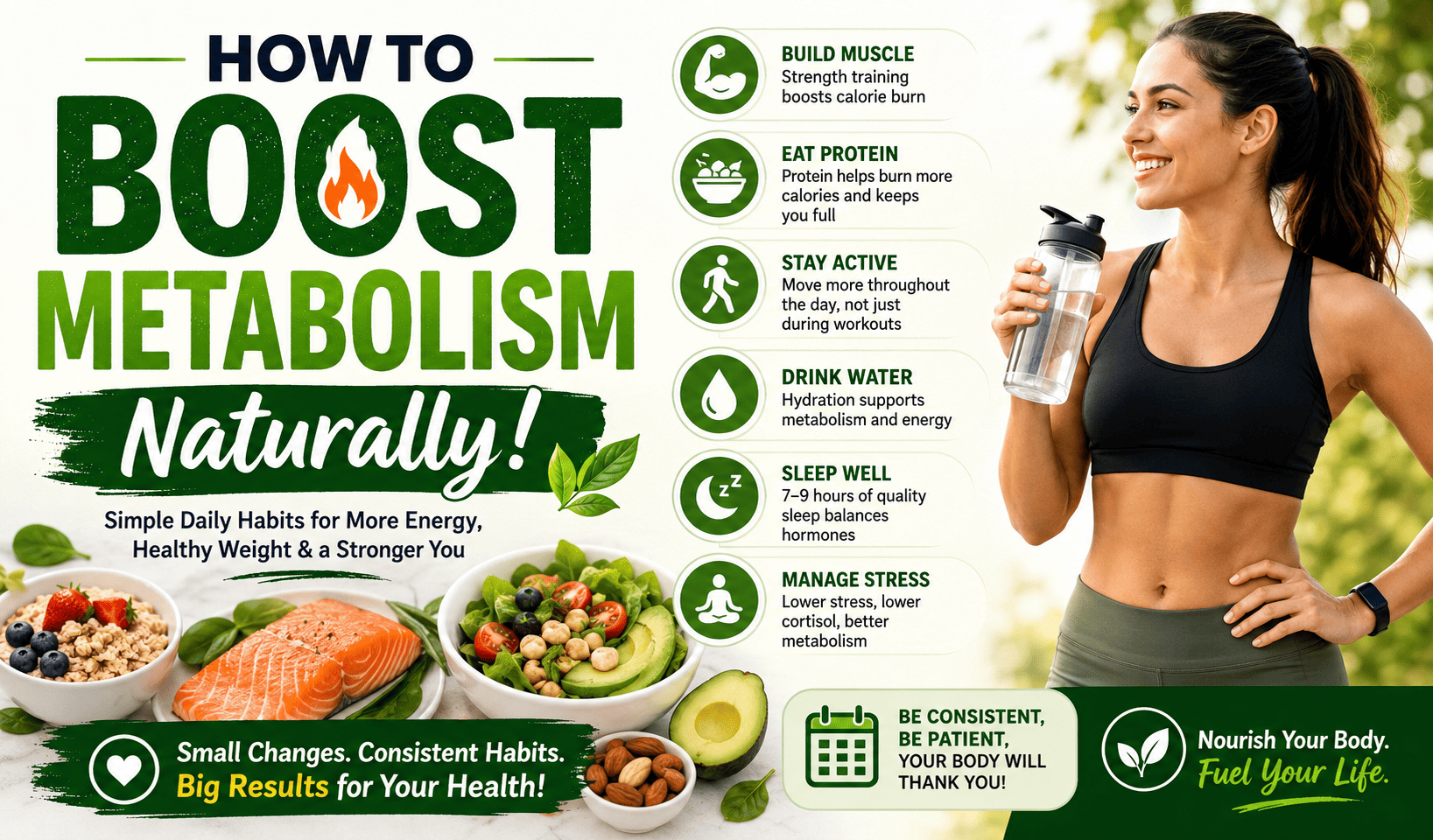
If you’re searching for how to boost metabolism naturally, the answer isn’t found in expensive supplements or trendy detoxes. The most effective approach is surprisingly simple: build muscle through strength training, stay active every day, eat enough protein, prioritize quality sleep, drink enough water, reduce chronic stress, and choose nutrient-dense whole foods.
These habits work together to support your body’s natural metabolic processes while improving energy levels, maintaining a healthy weight, and promoting long-term wellness. Small, consistent lifestyle changes often produce the greatest and most lasting results.
If you have thyroid disease, diabetes, hormonal disorders, or unexplained weight changes, consult your healthcare provider or a registered dietitian for personalized guidance before making significant dietary or exercise changes.

Sustainable weight loss requires healthy eating and regular exercise.
Frequently Asked Questions (FAQs)
1. How can I boost metabolism naturally without supplements?
The best natural methods include strength training, eating adequate protein, staying active throughout the day, drinking enough water, getting quality sleep, managing stress, and following a balanced diet rich in whole foods.
2. Does drinking water increase metabolism?
Drinking enough water supports normal metabolic processes and overall health. While water may temporarily increase energy expenditure slightly, its biggest benefit is supporting hydration and replacing high-calorie sugary beverages.
3. Which foods help boost metabolism?
Protein-rich foods such as lean meats, fish, eggs, beans, Greek yogurt, and tofu have a higher thermic effect of food. Fiber-rich vegetables, fruits, whole grains, and legumes also support healthy metabolism.
4. Can walking improve metabolism?
Yes. Regular walking increases daily calorie expenditure, improves cardiovascular health, and supports weight management. Combining walking with strength training provides even greater metabolic benefits.
5. Does coffee boost metabolism?
Caffeine may temporarily increase calorie burning and improve exercise performance. However, the effect is modest and should complement—not replace—a healthy lifestyle.
6. Why does metabolism slow with age?
Loss of muscle mass, reduced physical activity, hormonal changes, and lifestyle factors all contribute to a gradual decline in metabolism. Regular exercise and adequate protein intake can help reduce this decline.
7. Is it possible to permanently speed up metabolism?
There is no permanent shortcut to dramatically increasing metabolism. However, maintaining more muscle, staying active, and following healthy lifestyle habits can support a higher metabolic rate over the long term.
8. What is the fastest natural way to improve metabolism?
Building lean muscle through resistance training, increasing daily movement, consuming enough protein, staying hydrated, and getting consistent sleep are among the most effective evidence-based strategies for naturally supporting metabolism.
Reviewed by: Dzarro Editorial Team
Fact-checked using trusted medical and scientific sources.

Sandip Choudhary is a Health & Wellness Researcher and Content Creator specializing in sleep, digestive health, preventive wellness, and evidence-based health education. He has been creating online content and researching health-related topics for several years, focusing on translating complex medical information into practical guidance for everyday readers.
With a strong background in SEO and content strategy, Sandip ensures that every article is optimized for both search engines and real users. His goal is to provide reliable, clear, and helpful information that supports healthier living.
Disclaimer: The content published is for informational purposes only and is not a substitute for professional medical advice.