
If you’re over 40 and finding it harder to wake up refreshed, stay energized during the day, or sleep through the night, you’re not alone. Many adults notice changes in their sleep patterns as they age. You may fall asleep earlier, wake up more often, or feel tired even after spending enough time in bed.
Sleep changes are common after 40, but poor sleep is not an inevitable part of aging. Understanding how much sleep your body truly needs—and how to improve sleep quality—can help support energy, mood, metabolism, and long-term health.
This guide explains how much sleep adults over 40 need, why sleep changes with age, and practical ways to improve sleep naturally.
Quick Answer
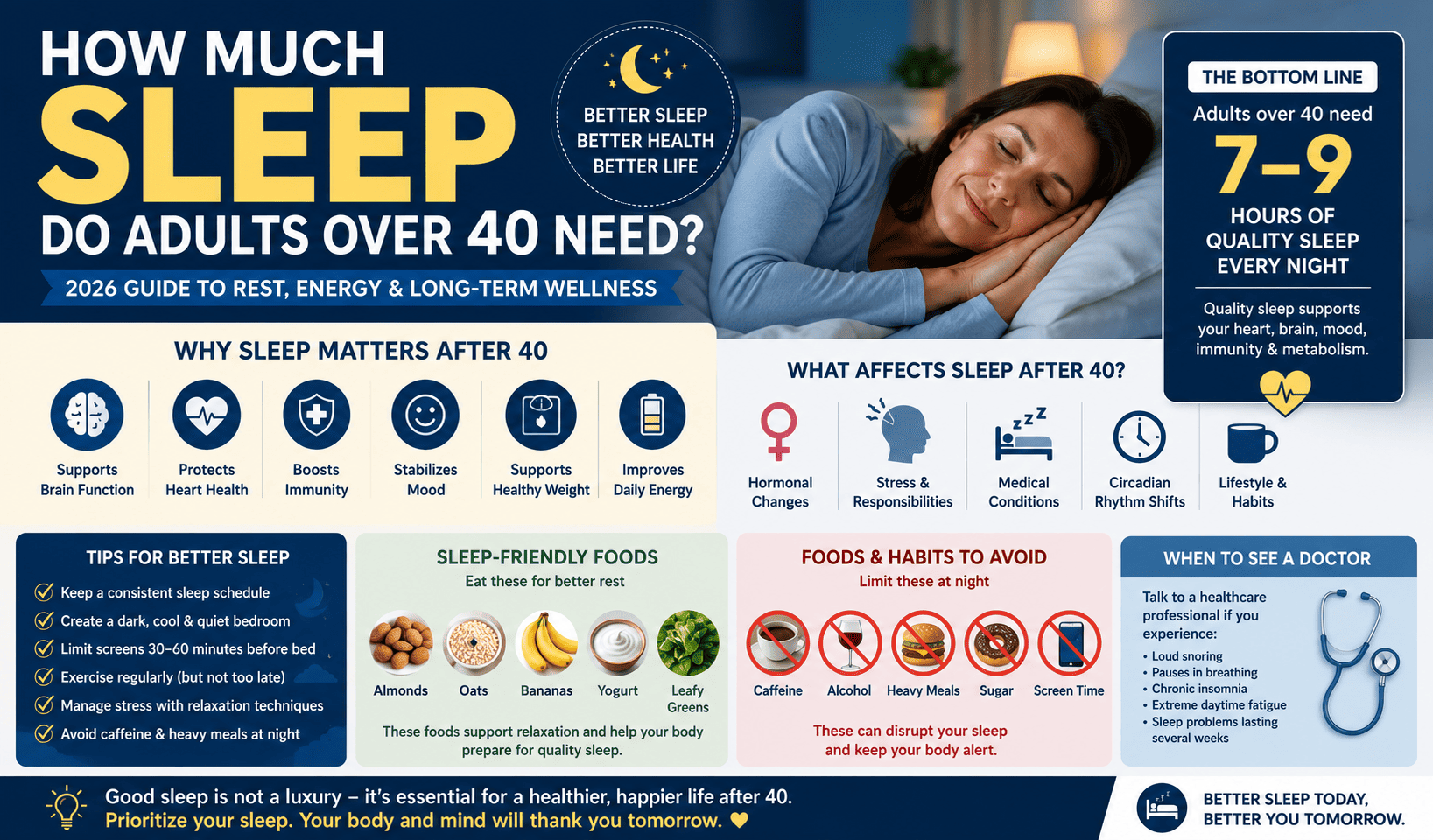
Most adults over 40 need 7–9 hours of sleep per night, according to sleep experts. However, sleep quality becomes just as important as sleep duration. Hormonal changes, stress, medical conditions, and lifestyle habits can affect sleep after 40, making consistent and restorative sleep essential for overall health.
What Does Sleep Need Mean After 40?
Sleep need refers to the amount of quality sleep your body requires to function properly.
After age 40, many people experience natural changes in sleep patterns due to shifts in hormones, metabolism, and circadian rhythms. This does not necessarily mean you need less sleep. In fact, most adults still require approximately the same amount of sleep as younger adults.
The key difference is that adults over 40 may spend less time in deep sleep and become more sensitive to sleep disruptions.
Good sleep supports:
- Brain health
- Heart health
- Immune function
- Metabolism
- Mood regulation
- Memory and concentration
Also Read : Why do I wake up sweating at night?
Common Signs You May Not Be Getting Enough Sleep
Sleep deprivation doesn’t always mean sleeping only a few hours. Poor sleep quality can have similar effects.
Early Signs
- Waking up tired
- Difficulty concentrating
- Increased irritability
- Afternoon energy crashes
- Dependence on caffeine
Advanced Signs
- Persistent fatigue
- Memory problems
- Mood changes
- Reduced productivity
- Frequent nighttime waking
- Increased stress levels
If these symptoms occur regularly, your sleep quality may need attention.
How Much Sleep Do Adults Over 40 Need by Age?
While individual needs vary, experts generally recommend:
| Age Group | Recommended Sleep |
|---|---|
| 40–64 years | 7–9 hours nightly |
| 65+ years | 7–8 hours nightly |
Sleeping significantly less than seven hours on a regular basis may increase the risk of fatigue and long-term health problems.
Sleeping much longer than needed may also sometimes be associated with poor sleep quality or underlying health concerns.
Also Read : Can low vitamin D affect sleep?
Why Does Sleep Change After 40?
Sleep patterns naturally evolve with age.
Several factors contribute to these changes.
1. Hormonal Changes
Hormones help regulate sleep.
Women may experience sleep disruptions during perimenopause and menopause due to fluctuating estrogen levels. Men may also experience hormonal changes that affect sleep quality over time.
Hormonal shifts can contribute to:
- Night sweats
- Difficulty staying asleep
- Early morning waking
2. Increased Stress and Responsibilities
Adults over 40 often balance careers, finances, family responsibilities, and caregiving roles.
Chronic stress increases cortisol levels, making it harder to relax and fall asleep.
Stress-related sleep problems may include:
- Racing thoughts
- Insomnia
- Frequent waking
3. Medical Conditions
Sleep quality may be affected by common health conditions such as:
- Acid reflux
- Chronic pain
- Sleep apnea
- Arthritis
- Anxiety
These conditions become more common with age and may interfere with restorative sleep.
4. Circadian Rhythm Changes
Your internal body clock can shift with age.
Many adults over 40 notice they:
- Feel sleepy earlier
- Wake up earlier
- Sleep more lightly
These changes are often a normal part of aging.
Also Read : What causes sleep anxiety before workdays?
Sleep Quality vs Sleep Quantity
Getting enough hours of sleep is important, but quality matters too.
| Sleep Quantity | Sleep Quality |
|---|---|
| Total hours slept | How restful sleep feels |
| 7–9 hours recommended | Deep and uninterrupted sleep |
| Easy to measure | More difficult to assess |
| Necessary for health | Essential for recovery |
Someone sleeping eight hours with frequent awakenings may feel less rested than someone sleeping seven hours of uninterrupted sleep.
Best Ways to Improve Sleep Naturally After 40
Improving sleep after 40 often involves small but consistent lifestyle changes.
Maintain a Consistent Sleep Schedule
Going to bed and waking up at the same time each day helps regulate your circadian rhythm.
Consistency trains your body to expect sleep at certain times and may improve sleep quality naturally.
Even on weekends, try to keep your schedule relatively stable.
Optimize Your Sleep Environment
The bedroom environment significantly affects sleep.
Most experts recommend keeping the bedroom:
- Cool
- Dark
- Quiet
Comfortable bedding and proper room temperature may support deeper sleep.
Reduce Evening Screen Time
Phones, tablets, and televisions emit blue light that may interfere with melatonin production.
Consider limiting screens 30–60 minutes before bedtime.
Instead, try:
- Reading
- Stretching
- Meditation
- Listening to calming music
Exercise Regularly
Physical activity supports:
- Better sleep quality
- Stress reduction
- Weight management
- Heart health
Walking, strength training, and yoga are often beneficial.
Avoid vigorous exercise too close to bedtime if it affects your sleep.
Manage Stress Effectively
Stress management is important at every age, especially after 40.
Helpful practices include:
- Deep breathing
- Journaling
- Mindfulness exercises
- Relaxation techniques
Reducing stress may help lower nighttime cortisol levels.
Also Read : How to reset sleep schedule naturally?
Diet & Lifestyle Tips for Better Sleep After 40
Nutrition can play a role in healthy sleep patterns.
Foods that support sleep include magnesium-rich and nutrient-dense options.
Examples include:
- Almonds
- Bananas
- Oats
- Leafy greens
- Fatty fish
- Yogurt
Staying hydrated throughout the day also supports overall health and sleep quality.
However, avoid drinking large amounts of fluids right before bed if nighttime bathroom trips disrupt sleep.
Foods and Habits to Avoid
Certain habits may worsen sleep quality.
Limiting the following may help:
- Excess caffeine late in the day
- Alcohol before bedtime
- Heavy late-night meals
- Excess sugar
- Irregular sleep schedules
Even small adjustments can lead to noticeable improvements over time.
Also Read : Why does my body feel heavy after waking up?
When Should You See a Doctor?
Occasional sleep problems are common.
However, speak with a healthcare professional if you experience:
- Loud snoring
- Breathing pauses during sleep
- Severe daytime fatigue
- Chronic insomnia
- Frequent night waking
- Sleep problems lasting several weeks
Persistent sleep disturbances may indicate an underlying condition such as sleep apnea or another medical issue.
Who Is Most at Risk for Sleep Problems After 40?
Some groups may be more vulnerable to sleep difficulties.
1. Women in Perimenopause or Menopause
Hormonal fluctuations can affect sleep quality and temperature regulation.
2. Office Workers
Long hours, screen exposure, and stress may contribute to poor sleep.
3. Caregivers
Balancing responsibilities for children or aging parents may increase stress and reduce sleep time.
4. Shift Workers
Irregular schedules can disrupt circadian rhythms and sleep quality.
5. Adults with Chronic Health Conditions
Medical conditions may interfere with sleep and recovery.
Frequently Asked Questions
1. Is 6 hours of sleep enough after age 40?
For most adults, six hours is generally below the recommended range. Most adults over 40 benefit from 7–9 hours of quality sleep.
2. Why do I wake up more often after 40?
Hormonal changes, lighter sleep stages, stress, and medical conditions may contribute to frequent waking.
3. Can poor sleep affect weight gain after 40?
Yes. Poor sleep may influence appetite hormones, energy levels, and metabolism.
4. Does sleep quality matter more than sleep duration?
Both matter. Sleeping enough hours is important, but restorative sleep quality is essential for recovery and health.
5. How can I improve sleep naturally after 40?
Maintaining a consistent routine, reducing stress, exercising regularly, and optimizing your sleep environment may help improve sleep quality.

Natural deep sleep support often begins with consistent sleep habits.
Conclusion
Most adults over 40 still need 7–9 hours of quality sleep each night, but aging can make restorative sleep more difficult. Hormonal changes, stress, medical conditions, and lifestyle habits all play a role in sleep quality.
The good news is that healthy habits—such as maintaining a consistent schedule, managing stress, limiting screen time, and creating a comfortable sleep environment—can support better sleep naturally.
Prioritizing sleep is not just about feeling rested tomorrow. It’s an important investment in long-term health, energy, and quality of life.
Medically reviewed information sourced from trusted health organizations.
References
- National Institutes of Health (NIH). Sleep and Sleep Disorders.
https://www.nhlbi.nih.gov/health/sleep - Sleep Foundation. Sleep Health Resources.
https://www.sleepfoundation.org/ - Centers for Disease Control and Prevention (CDC). Sleep and Sleep Disorders.
https://www.cdc.gov/sleep/ - Mayo Clinic. Sleep Disorders Overview.
https://www.mayoclinic.org/
Reviewed by: Dzarro Editorial Team
Fact-checked using trusted medical and scientific sources.
Last Updated: June 13, 2026

Sandip Choudhary is a Health & Wellness Researcher and Content Creator specializing in sleep, digestive health, preventive wellness, and evidence-based health education. He has been creating online content and researching health-related topics for several years, focusing on translating complex medical information into practical guidance for everyday readers.
With a strong background in SEO and content strategy, Sandip ensures that every article is optimized for both search engines and real users. His goal is to provide reliable, clear, and helpful information that supports healthier living.
Disclaimer: The content published is for informational purposes only and is not a substitute for professional medical advice.
5 thoughts on “How much sleep do adults over 40 need?”
Comments are closed.