
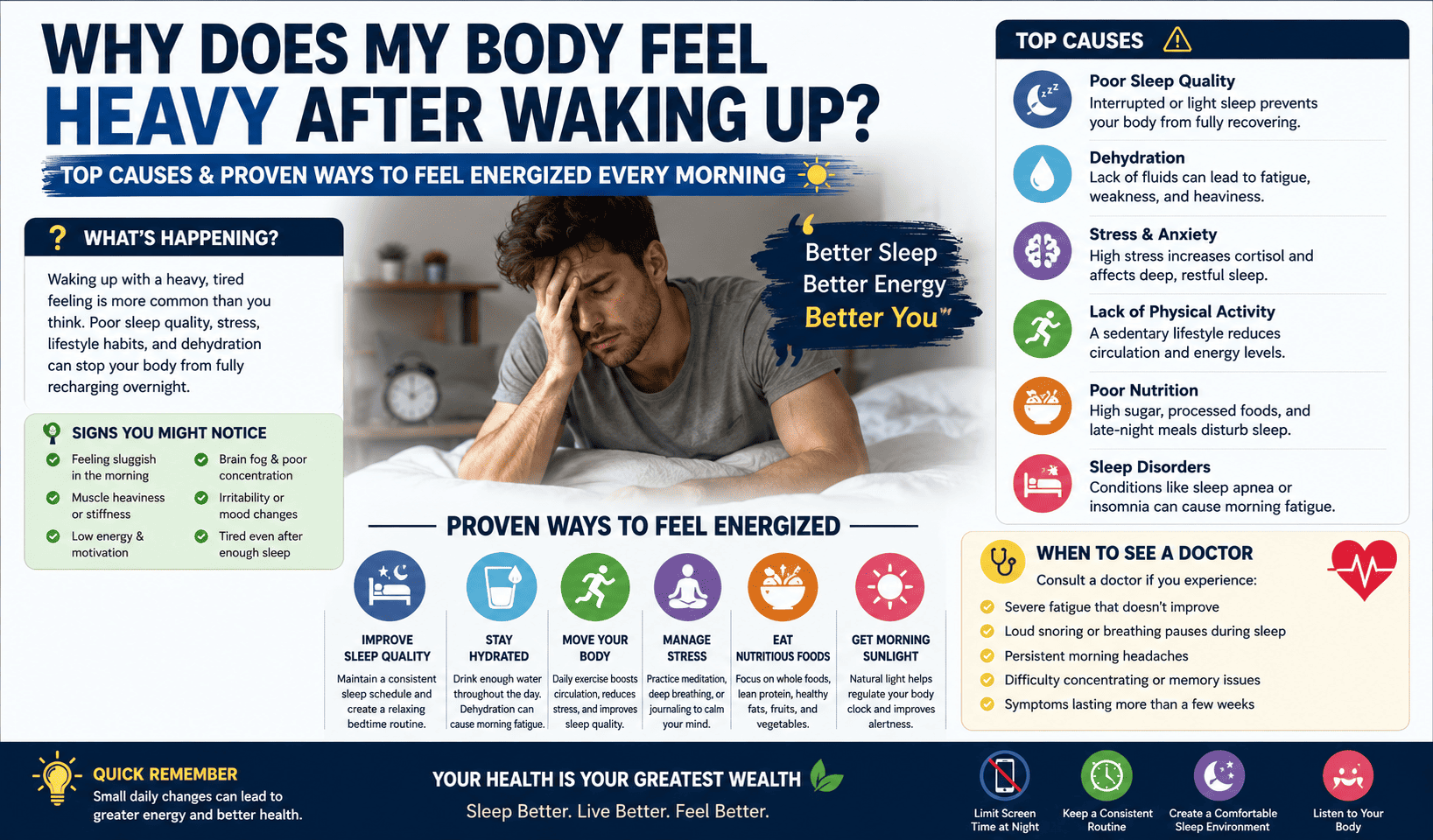
Have you ever woken up after what seemed like a full night’s sleep, only to feel like your body weighs twice as much as it should? Your arms feel sluggish, your legs feel tired, and even getting out of bed feels like a challenge. Many Americans experience this frustrating sensation and often wonder why they feel exhausted despite spending enough time in bed.
Feeling physically heavy after waking up is more common than many people realize. In some cases, it may be linked to poor sleep quality, stress, dehydration, lack of physical activity, or unhealthy lifestyle habits. Understanding the root cause can help you improve your energy levels and start your day feeling refreshed.
Quick Answer
If your body feels heavy after waking up, the most common causes include poor sleep quality, sleep inertia, dehydration, stress, lack of physical activity, poor nutrition, or underlying sleep disorders. Improving sleep habits, hydration, stress management, and overall lifestyle can often reduce morning heaviness and improve energy levels.
What Does It Mean When Your Body Feels Heavy After Waking Up?
Feeling heavy after waking up refers to a sensation of physical sluggishness, fatigue, or difficulty moving comfortably when you first get out of bed. Some people describe it as feeling weighed down, while others experience muscle stiffness, mental fog, or overall exhaustion.
This feeling is often associated with how well your body recovered overnight. Sleep is supposed to restore energy, repair tissues, regulate hormones, and prepare the body for the day ahead. When any part of this recovery process is disrupted, you may wake up feeling tired instead of refreshed.
For some people, the sensation lasts only a few minutes. For others, it can continue for several hours and interfere with work, exercise, and daily activities.
Also Read : Can sleep problems affect mental health?
Symptoms of Morning Body Heaviness
Morning heaviness can present differently from person to person.
Early Symptoms
- Feeling sluggish when getting out of bed
- Mild muscle stiffness
- Low energy in the morning
- Difficulty concentrating
- Feeling unmotivated
- Slight brain fog
Advanced Symptoms
- Persistent fatigue throughout the day
- Frequent morning headaches
- Reduced physical performance
- Difficulty completing routine tasks
- Increased irritability
- Poor focus and productivity
- Needing excessive caffeine to function
If symptoms occur regularly, it may indicate an issue affecting sleep quality or overall wellness.
Common Causes & Risk Factors
Several factors may contribute to waking up with a heavy body.
1. Sleep Inertia
One of the most common causes is sleep inertia.
Sleep inertia is the temporary period of grogginess and reduced alertness that occurs immediately after waking up. During this time, the brain transitions from sleep mode to full wakefulness.
People who wake up suddenly from deep sleep often experience:
- Physical heaviness
- Slow thinking
- Mental fog
- Reduced coordination
In most cases, sleep inertia improves within 15 to 60 minutes.
2. Poor Sleep Quality
You may spend eight hours in bed but still get poor-quality sleep.
Frequent awakenings, excessive noise, room temperature problems, or stress can prevent your body from reaching restorative sleep stages.
Poor sleep quality often results in:
- Morning fatigue
- Muscle heaviness
- Lack of energy
- Difficulty focusing
This is one reason why sleep quality matters more than simply counting hours.
3. Dehydration
Your body loses fluids while you sleep.
If you go to bed dehydrated or don’t drink enough water throughout the day, you may wake up feeling:
- Weak
- Tired
- Dizzy
- Physically sluggish
Even mild dehydration can affect circulation, energy production, and cognitive function.
4. Chronic Stress
Stress affects the body long after the stressful event occurs.
When stress levels remain high, the body continues producing cortisol and other stress hormones. Over time, this may interfere with sleep recovery and contribute to feelings of heaviness upon waking.
People under chronic stress often report:
- Restless sleep
- Morning fatigue
- Muscle tension
- Mental exhaustion
5. Lack of Physical Activity
A sedentary lifestyle can contribute to low energy and poor circulation.
People who spend long hours sitting often experience:
- Stiff muscles
- Reduced mobility
- Poor circulation
- Morning sluggishness
Regular movement helps improve sleep quality and energy levels.
6. Poor Nutrition
Food choices can significantly affect sleep and recovery.
Diets high in:
- Processed foods
- Excess sugar
- Alcohol
- Late-night meals
may contribute to inflammation, poor sleep quality, and reduced energy levels.
7. Sleep Disorders
In some cases, a sleep disorder may be responsible.
Examples include:
- Sleep apnea
- Chronic insomnia
- Restless leg syndrome
These conditions may interrupt restorative sleep without the person fully realizing it.
Also Read : What are the best nighttime habits for deep sleep?
Comparison Table: Temporary vs Persistent Morning Heaviness
| Feature | Temporary Morning Heaviness | Persistent Morning Heaviness |
|---|---|---|
| Duration | Minutes to 1 hour | Several hours or all day |
| Cause | Sleep inertia | Lifestyle or health factors |
| Energy Recovery | Improves quickly | Remains low |
| Frequency | Occasional | Frequent |
| Medical Evaluation Needed | Usually not | Sometimes |
Best Treatment Options
The best treatment depends on the underlying cause.
Improve Sleep Quality
One of the most effective solutions is improving sleep quality.
Focus on:
- Consistent sleep schedules
- Comfortable sleep environments
- Limiting screen time before bed
- Managing stress
Quality sleep supports better recovery and energy production.
Stay Hydrated
Hydration plays an important role in how you feel when you wake up.
Many people notice improvements simply by:
- Drinking more water during the day
- Avoiding excessive alcohol
- Staying hydrated before bedtime without overdoing fluids
Increase Daily Movement
Exercise helps improve:
- Sleep quality
- Circulation
- Mood
- Energy production
You don’t need intense workouts. Walking, stretching, and moderate exercise can make a noticeable difference.
Manage Stress Effectively
Stress reduction often improves both sleep quality and energy levels.
Helpful approaches include:
- Deep breathing exercises
- Meditation
- Journaling
- Relaxation techniques
- Spending time outdoors
Managing stress supports healthier sleep and recovery.
Review Medications With a Healthcare Professional
Some medications may contribute to fatigue or morning grogginess.
Never stop medications without medical guidance, but discussing symptoms with a healthcare provider may be helpful.
Also Read : Why do I feel exhausted despite resting all day?
Diet & Lifestyle Tips
Healthy habits play a major role in reducing morning heaviness.
What to Eat
Focus on nutrient-dense foods that support energy production and recovery.
Examples include:
- Lean protein
- Fruits
- Vegetables
- Whole grains
- Healthy fats
- Magnesium-rich foods
Balanced nutrition supports better sleep and overall health.
What to Avoid
Try limiting:
- Excess sugar
- Alcohol before bed
- Heavy late-night meals
- Energy drinks late in the day
These habits may interfere with sleep quality and next-day energy.
Daily Routine Improvements
Morning sunlight exposure can help regulate your body’s internal clock and improve alertness.
Creating a consistent bedtime schedule, staying active during the day, and limiting screen time before bed may also improve sleep quality and reduce feelings of heaviness.
Small changes often lead to significant long-term improvements.
When to See a Doctor
Occasional morning heaviness is usually not a cause for concern.
However, you should seek medical advice if you experience:
- Severe daytime fatigue
- Loud snoring
- Difficulty breathing during sleep
- Persistent exhaustion
- Frequent morning headaches
- Symptoms lasting several weeks
- Significant changes in energy levels
These symptoms may indicate an underlying sleep or health condition requiring professional evaluation.
Who Is at Risk?
Certain groups may be more likely to experience morning body heaviness.
1. Office Workers
Long periods of sitting and high stress levels may contribute to poor recovery.
2. Students
Irregular schedules and late-night screen use can affect sleep quality.
3. Shift Workers
Changing sleep schedules often disrupt normal sleep cycles.
4. Older Adults
Age-related sleep changes may affect recovery and energy levels.
5. People Experiencing Chronic Stress
Stress remains one of the most common contributors to poor sleep and morning fatigue.
Frequently Asked Questions
1. Why do I wake up feeling heavy and tired?
Poor sleep quality, dehydration, stress, sleep inertia, or lifestyle factors are among the most common causes.
2. Can dehydration make your body feel heavy?
Yes. Even mild dehydration can contribute to fatigue, weakness, and reduced energy levels.
3. Why do I feel weak after sleeping all night?
You may be experiencing poor sleep quality, disrupted sleep cycles, or insufficient overnight recovery.
4. Can stress cause body heaviness in the morning?
Yes. Chronic stress can affect sleep quality, increase muscle tension, and contribute to fatigue.
5. How can I feel more energized after waking up?
Improving sleep quality, staying hydrated, getting morning sunlight, exercising regularly, and managing stress can help improve energy levels.

Healthy rest and recovery habits are essential for long-term wellness.
Conclusion
If you’ve ever wondered, “Why does my body feel heavy after waking up?” the answer often lies in sleep quality, lifestyle habits, stress levels, hydration, or overall recovery.
While occasional morning heaviness is common, persistent symptoms may signal that your body is not fully recovering overnight. Improving sleep habits, staying active, eating a balanced diet, and managing stress can often make a significant difference.
The goal is not just to sleep longer but to sleep better. By focusing on quality rest and healthy daily habits, you can wake up feeling lighter, more energized, and ready for the day ahead.
Medically reviewed information sourced from trusted health organizations.
References
- National Institutes of Health (NIH). Sleep and Sleep Disorders.
https://www.nhlbi.nih.gov/health/sleep - Sleep Foundation. Sleep Health Resources.
https://www.sleepfoundation.org/ - Centers for Disease Control and Prevention (CDC). Sleep and Sleep Disorders.
https://www.cdc.gov/sleep/ - Mayo Clinic. Sleep Disorders Overview.
https://www.mayoclinic.org/
Reviewed by: Dzarro Editorial Team
Fact-checked using trusted medical and scientific sources.
Last Updated: June 13, 2026

Sandip Choudhary is a Health & Wellness Researcher and Content Creator specializing in sleep, digestive health, preventive wellness, and evidence-based health education. He has been creating online content and researching health-related topics for several years, focusing on translating complex medical information into practical guidance for everyday readers.
With a strong background in SEO and content strategy, Sandip ensures that every article is optimized for both search engines and real users. His goal is to provide reliable, clear, and helpful information that supports healthier living.
Disclaimer: The content published is for informational purposes only and is not a substitute for professional medical advice.
3 thoughts on “Why does my body feel heavy after waking up?”
Comments are closed.