
Have you ever climbed into bed feeling exhausted, only to find your mind racing the moment your head hits the pillow? You replay conversations, worry about tomorrow, think about work deadlines, finances, family responsibilities, or random situations from years ago. Before you know it, hours have passed and you’re still awake.
If this sounds familiar, you’re not alone. Millions of Americans struggle with overthinking at night, and it is one of the most common reasons people have difficulty falling asleep. While occasional nighttime worry is normal, chronic overthinking can interfere with sleep quality and contribute to insomnia.
This guide explains the connection between overthinking and insomnia, common symptoms, causes, treatment options, and practical ways to quiet your mind before bedtime.
Quick Answer
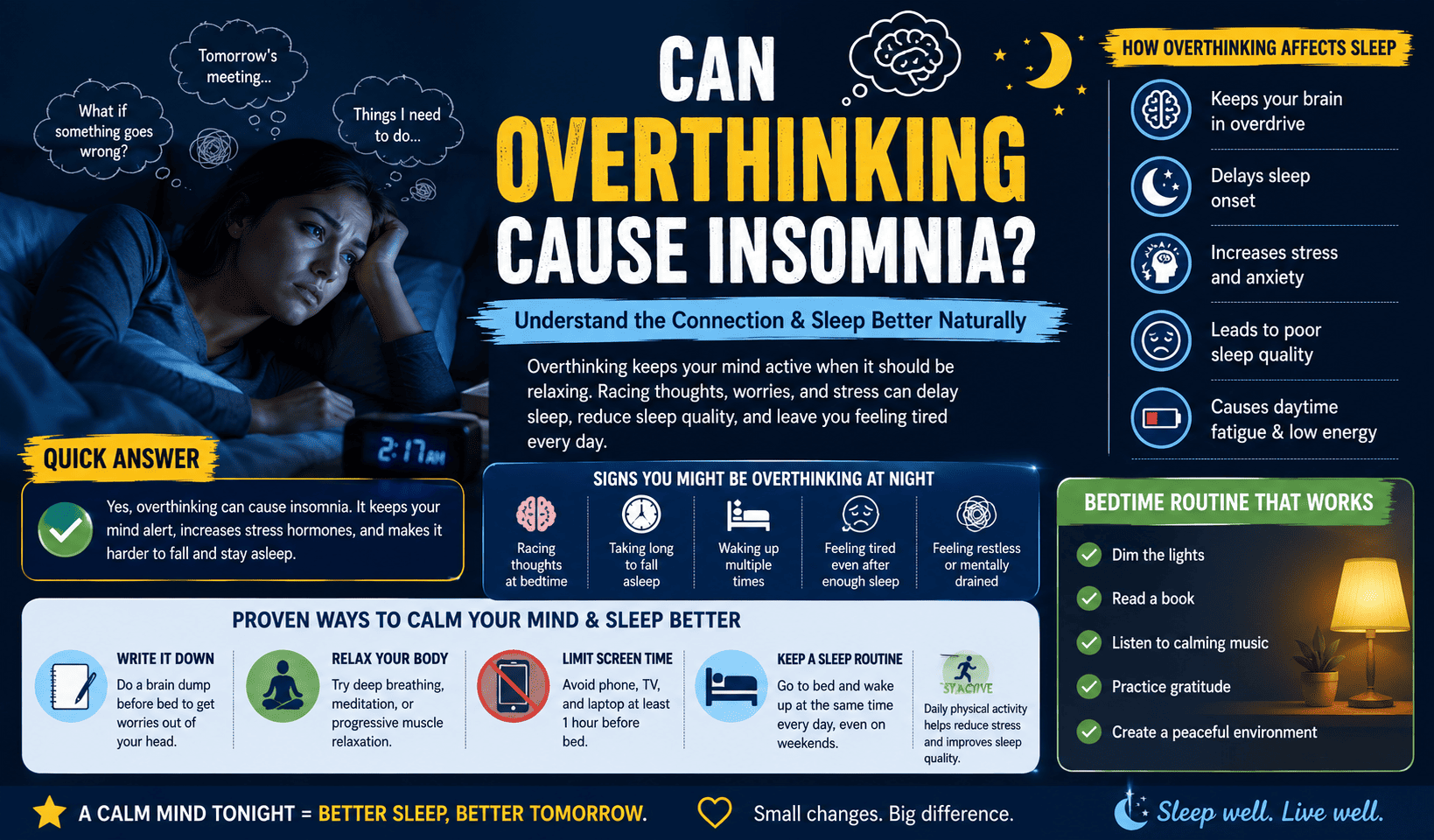
Yes, overthinking can cause insomnia by keeping the brain in a heightened state of alertness when it should be preparing for sleep. Racing thoughts, excessive worry, mental replaying of events, and anxiety can delay sleep onset, reduce sleep quality, and increase nighttime awakenings. Managing stress and creating healthy sleep habits can often help improve sleep naturally.
What Is Overthinking and How Does It Affect Sleep?
Overthinking refers to repetitive, excessive thinking that is difficult to control. Instead of allowing the mind to relax, the brain remains focused on worries, future events, mistakes, or hypothetical situations.
Sleep requires the body and mind to gradually transition into a relaxed state. When someone is overthinking, the nervous system often remains active, making it harder to fall asleep.
The brain may continue processing information long after bedtime, creating a cycle where stress leads to poor sleep and poor sleep increases stress.
For many people, insomnia begins not because they aren’t tired, but because they cannot mentally switch off.
Also Read : What causes sleep anxiety at night?
Symptoms of Overthinking-Related Insomnia
The signs of overthinking-related sleep problems can vary from person to person.
Early Symptoms
- Difficulty falling asleep
- Racing thoughts at bedtime
- Frequently checking the clock
- Feeling mentally restless
- Trouble relaxing before sleep
- Mild morning fatigue
Advanced Symptoms
- Chronic insomnia
- Frequent nighttime waking
- Anxiety about sleep itself
- Daytime exhaustion
- Brain fog
- Difficulty concentrating
- Irritability
- Reduced work performance
Over time, poor sleep may begin affecting physical health, emotional well-being, and daily productivity.
Why Can Overthinking Cause Insomnia?
The connection between overthinking and insomnia is largely driven by how the brain responds to stress.
When you are worried or mentally engaged, your body often releases stress hormones that increase alertness. This response is useful during emergencies but can become problematic at bedtime.
Instead of entering a relaxed state, the brain remains active and vigilant. Even when the body feels tired, the mind continues processing thoughts.
This mental activity can delay sleep, reduce deep sleep quality, and increase nighttime awakenings.
Also Read : How to calm nighttime anxiety naturally?
Main Causes & Risk Factors
Several factors may contribute to overthinking and insomnia.
Chronic Stress
Stress is one of the most common triggers.
Work pressure, financial concerns, family responsibilities, and health worries can all keep the brain active late into the night.
Many adults find that stressful periods are accompanied by worsening sleep quality.
Anxiety
People with anxiety often experience excessive worry that extends into bedtime.
The mind may focus on:
- Future events
- Worst-case scenarios
- Social interactions
- Health concerns
This pattern can make it difficult to relax and fall asleep naturally.
Excessive Phone Use Before Bed
Many Americans spend time scrolling through social media, reading news, or checking emails before sleep.
This habit can increase mental stimulation and make overthinking worse.
Exposure to stressful information or constant notifications may keep the brain alert when it should be winding down.
Poor Sleep Habits
Irregular schedules can make sleep problems more noticeable.
Examples include:
- Going to bed at different times each night
- Sleeping in on weekends
- Working late at night
- Consuming caffeine too late in the day
Perfectionism
People who place extremely high expectations on themselves may be more likely to overanalyze situations.
This can result in:
- Replaying conversations
- Obsessing over mistakes
- Constant self-evaluation
These thought patterns often become more noticeable during quiet nighttime hours.
Lack of Stress Management
Without healthy coping mechanisms, stress can accumulate throughout the day.
The brain may finally attempt to process everything at bedtime, leading to racing thoughts and insomnia.
Also Read : Why do I wake up multiple times to urinate?
Comparison Table: Normal Thinking vs Overthinking
| Normal Thinking | Overthinking |
|---|---|
| Helps solve problems | Repeats problems without solutions |
| Temporary | Persistent |
| Easy to control | Difficult to stop |
| Usually productive | Often unproductive |
| Does not affect sleep significantly | Frequently disrupts sleep |
Understanding this difference can help identify whether overthinking may be contributing to insomnia.
Best Treatment Options
Fortunately, overthinking-related insomnia often improves with consistent lifestyle changes and stress-management techniques.
Create a Brain Dump Routine
One of the simplest strategies is writing down thoughts before bed.
Spend 5–10 minutes writing:
- Tasks for tomorrow
- Concerns
- Ideas
- Reminders
This can reduce the need to mentally hold onto information overnight.
Establish a Consistent Sleep Schedule
The brain responds well to routine.
Going to bed and waking up at the same time every day may help regulate the body’s internal clock and improve sleep quality.
Consistency is often more important than sleeping in on weekends.
Practice Relaxation Techniques
Relaxation exercises can help calm an overactive mind.
Popular options include:
- Deep breathing
- Meditation
- Progressive muscle relaxation
- Guided sleep audio
These techniques encourage the body to shift into a more restful state.
Reduce Evening Screen Time
Phones, tablets, and laptops can contribute to mental stimulation before sleep.
Consider creating a screen-free period during the final hour before bed.
Many people notice improvements in sleep quality when they replace scrolling with reading, stretching, or journaling.
Exercise Regularly
Physical activity can help reduce stress and improve sleep.
Moderate exercise may:
- Lower anxiety levels
- Improve mood
- Support deeper sleep
However, intense exercise too close to bedtime may make it harder for some individuals to relax.
Cognitive Behavioral Therapy for Insomnia (CBT-I)
For persistent insomnia, healthcare professionals may recommend CBT-I.
This evidence-based approach helps identify and change thoughts and behaviors that contribute to sleep problems.
Many sleep specialists consider CBT-I one of the most effective long-term treatments for chronic insomnia.
Also Read : What sleeping position is best for health?
Diet & Lifestyle Tips
Daily habits can significantly affect both overthinking and sleep quality.
Foods rich in magnesium, healthy fats, and complex carbohydrates may support relaxation and stable energy levels.
Examples include:
- Oatmeal
- Bananas
- Almonds
- Salmon
- Leafy greens
Hydration is also important, although excessive fluid intake right before bed may increase nighttime bathroom trips.
Try limiting:
- Excess caffeine
- Energy drinks
- Heavy late-night meals
- Alcohol before bed
While alcohol may initially cause drowsiness, it often disrupts sleep quality later in the night.
Developing a calming evening routine can also help signal the brain that it’s time to rest.
When to See a Doctor
Occasional sleep difficulties are common. However, professional guidance may be appropriate if:
- Insomnia lasts several weeks or longer
- Sleep problems affect daily functioning
- Anxiety feels overwhelming
- Fatigue interferes with work or relationships
- Depression symptoms are present
- Sleep issues continue despite healthy lifestyle changes
Persistent insomnia can sometimes be linked to underlying sleep disorders or mental health conditions that require professional evaluation.
Who Is at Risk?
Certain groups may be more vulnerable to overthinking-related insomnia.
1. Office Workers
High workloads, deadlines, and work-related stress often contribute to nighttime rumination.
2. College Students
Academic pressure and uncertain schedules can increase anxiety and sleep difficulties.
3. Parents
Balancing responsibilities, finances, and family concerns may contribute to excessive nighttime thinking.
4. Individuals With Anxiety Disorders
People with anxiety are more likely to experience racing thoughts at bedtime.
5. Perfectionists
Those who constantly analyze their performance or decisions may find it difficult to mentally disengage at night.
Frequently Asked Questions
1. Can overthinking keep you awake all night?
Yes. Overthinking can activate the brain’s stress response, making it difficult to relax and fall asleep.
2. Why do my thoughts race when I try to sleep?
Bedtime often provides fewer distractions, allowing worries and unresolved thoughts to become more noticeable.
3. How do I stop overthinking before bed?
Journaling, meditation, deep breathing, reducing screen time, and following a consistent sleep routine may help calm the mind.
4. Is overthinking a form of anxiety?
Overthinking can occur with anxiety, but not everyone who overthinks has an anxiety disorder.
5. Can poor sleep make overthinking worse?
Yes. Sleep deprivation may increase emotional sensitivity, stress, and repetitive thinking patterns.

A healthy evening routine prepares the body and mind for quality sleep.
Conclusion
If you’ve ever wondered, “Can overthinking cause insomnia?” the answer is yes. Persistent worry, racing thoughts, and mental overstimulation can make it difficult for the brain to transition into sleep mode.
The good news is that many people can improve sleep naturally through healthier routines, stress-management strategies, reduced screen time, and consistent sleep habits.
By addressing both the mental and lifestyle factors that contribute to overthinking, you can create a calmer bedtime routine and improve your chances of getting the restorative sleep your body and mind need.
Medically reviewed information sourced from trusted health organizations.
References
- National Institutes of Health (NIH). Sleep and Sleep Disorders.
https://www.nhlbi.nih.gov/health/sleep - Sleep Foundation. Sleep Health Resources.
https://www.sleepfoundation.org/ - Centers for Disease Control and Prevention (CDC). Sleep and Sleep Disorders.
https://www.cdc.gov/sleep/ - Mayo Clinic. Sleep Disorders Overview.
https://www.mayoclinic.org/
Reviewed by: Dzarro Editorial Team
Fact-checked using trusted medical and scientific sources.
Last Updated: June 13, 2026

Sandip Choudhary is a Health & Wellness Researcher and Content Creator specializing in sleep, digestive health, preventive wellness, and evidence-based health education. He has been creating online content and researching health-related topics for several years, focusing on translating complex medical information into practical guidance for everyday readers.
With a strong background in SEO and content strategy, Sandip ensures that every article is optimized for both search engines and real users. His goal is to provide reliable, clear, and helpful information that supports healthier living.
Disclaimer: The content published is for informational purposes only and is not a substitute for professional medical advice.