
Have you ever planned to sleep early, only to spend another hour scrolling through social media, watching videos, checking emails, or reading notifications? You’re not alone. Millions of Americans struggle with nighttime phone use, often sacrificing sleep without realizing its impact on health.
What starts as a quick check can easily turn into late-night scrolling that affects sleep quality, energy levels, focus, and mental wellness. If you wake up tired, experience brain fog, or find it difficult to fall asleep, your phone may be part of the problem.
This guide explains why nighttime phone use is so addictive, how it affects sleep, and practical ways to stop checking your phone at night.
Quick Answer
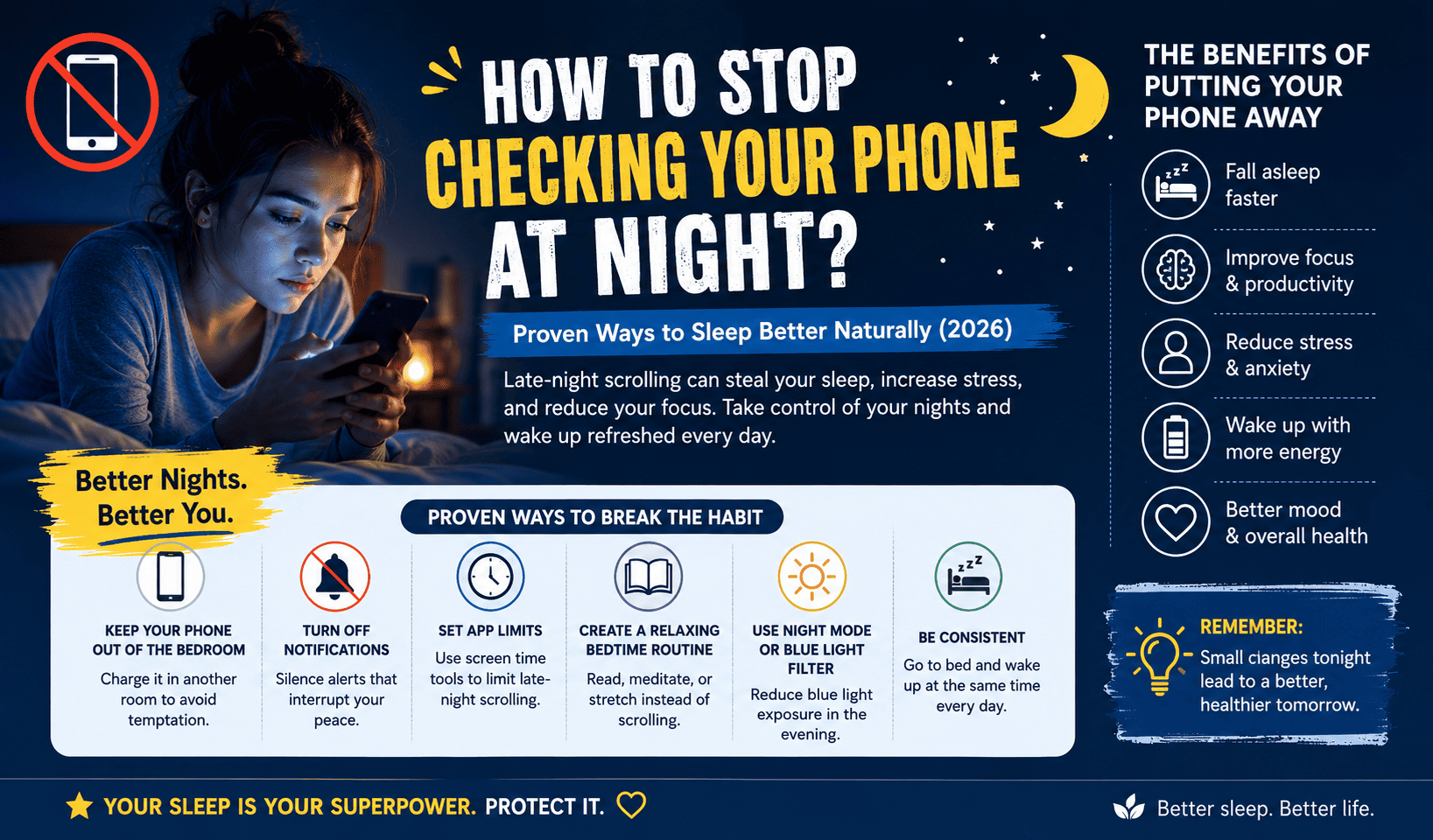
To stop checking your phone at night, create a screen-free bedtime routine, place your phone outside the bedroom, disable non-essential notifications, use app limits, and replace screen time with relaxing activities like reading or meditation. Reducing nighttime phone use can improve sleep quality, reduce stress, and help you fall asleep faster.
What Is Nighttime Phone Checking?
Nighttime phone checking refers to repeatedly looking at your smartphone before bed or during the night.
This may include:
- Social media scrolling
- Watching videos
- Reading news
- Checking emails
- Responding to messages
- Looking at notifications
While these habits seem harmless, they can interfere with your brain’s ability to prepare for sleep.
Many people don’t realize they’re caught in a cycle where phone use delays sleep and poor sleep increases daytime stress, leading to even more screen time.
Also Read : Why do I feel exhausted after vivid dreams?
Symptoms of Excessive Phone Use at Night
Early Symptoms
- Difficulty falling asleep
- Taking longer to feel sleepy
- Mild morning fatigue
- Reduced sleep quality
- Increased stress before bed
- Constant urge to check notifications
Advanced Symptoms
- Chronic sleep deprivation
- Morning brain fog
- Daytime fatigue
- Irritability
- Reduced concentration
- Anxiety
- Poor productivity
- Waking up tired despite enough sleep
Why Is It So Hard to Stop Checking Your Phone?
Smartphones are designed to capture attention.
Every notification, message, like, or video creates anticipation and stimulation in the brain.
Several factors contribute to nighttime phone use:
Instant Gratification
Social media and apps provide constant entertainment and rewards.
Fear of Missing Out (FOMO)
Many people worry about missing important updates, messages, or news.
Stress Relief
Some individuals use phones to escape stress or anxiety.
Habit Formation
Checking the phone becomes automatic after repeated use.
Also Read : What causes sudden insomnia in adults?
Causes & Risk Factors
Several factors increase the likelihood of excessive nighttime phone use.
1. Stress and Anxiety
Many people turn to their phones when they feel stressed.
Unfortunately, excessive screen time often increases:
- Mental stimulation
- Anxiety
- Sleep disruption
Instead of relaxing, the brain remains active.
2. Blue Light Exposure
Phone screens emit blue light.
Blue light may suppress melatonin production, the hormone responsible for helping the body prepare for sleep.
This can delay:
- Sleep onset
- Deep sleep
- Sleep quality
3. Poor Sleep Habits
Inconsistent bedtime routines often lead to increased phone use.
Examples include:
- No set bedtime
- Watching videos in bed
- Using phones until sleep
4. Social Media Dependency
Social platforms are designed to keep users engaged.
Endless scrolling makes it difficult to stop.
5. Work-Related Pressure
Many office workers continue checking:
- Emails
- Work messages
- Notifications
late into the evening, making it harder to disconnect mentally.
Also Read : Why do I wake up tired after naps?
Comparison Table: Healthy vs Unhealthy Bedtime Habits
| Habit | Better Sleep | Poor Sleep |
|---|---|---|
| Reading a book | ✔ | |
| Meditation | ✔ | |
| Phone scrolling | ✔ | |
| Watching short videos | ✔ | |
| Consistent bedtime | ✔ | |
| Checking notifications | ✔ | |
| Relaxation exercises | ✔ |
Best Treatment Options
Stopping nighttime phone use often requires behavioral and lifestyle changes.
1. Keep Your Phone Out of the Bedroom
This is one of the most effective strategies.
Try:
- Charging your phone in another room
- Using a traditional alarm clock
When the phone is not within reach, temptation decreases significantly.
2. Create a Screen-Free Wind-Down Routine
Give your brain time to relax.
Better Alternatives
- Reading
- Journaling
- Stretching
- Meditation
- Breathing exercises
A relaxing routine signals the body that it’s time for sleep.
3. Set App Limits
Most smartphones allow:
- Screen time monitoring
- App timers
- Usage restrictions
These tools can reduce automatic scrolling habits.
4. Turn Off Notifications
Notifications create interruptions and increase curiosity.
Disable:
- Social media alerts
- News alerts
- Non-essential app notifications
Your sleep environment should be as distraction-free as possible.
5. Use Night Mode
Many devices offer:
- Blue light filters
- Night shift settings
- Dark mode
While not a complete solution, these features may reduce some sleep disruption.
6. Replace the Habit
Breaking habits becomes easier when replacing them.
Instead of scrolling:
- Read a book
- Listen to calming music
- Practice mindfulness
- Write tomorrow’s to-do list
Also Read : Can poor sleep weaken the immune system?
Diet & Lifestyle Tips
Sleep quality is influenced by more than just screen time.
Foods That May Support Better Sleep
- Bananas
- Almonds
- Oatmeal
- Kiwi
- Herbal tea
- Greek yogurt
These foods may help support relaxation and healthy sleep patterns.
What to Avoid Before Bed
- Energy drinks
- Excess caffeine
- Alcohol
- Heavy meals
- Sugary snacks
These habits can increase alertness and worsen sleep quality.
Daily Routine Improvements
Morning
- Get sunlight exposure
- Limit early-morning scrolling
- Stay hydrated
During the Day
- Reduce stress
- Exercise regularly
- Take screen breaks
Evening
- Dim lights
- Set a phone cutoff time
- Follow a consistent bedtime routine
When Should You See a Doctor?
Consider speaking with a healthcare professional if you experience:
- Severe insomnia
- Persistent sleep difficulties
- Extreme daytime fatigue
- Anxiety affecting sleep
- Depression symptoms
- Chronic sleep deprivation
Sleep problems that continue despite healthy habits may require professional evaluation.
Also Read : How to calm nighttime anxiety naturally?
Who Is Most at Risk?
1. Teenagers and Young Adults
Heavy social media use increases nighttime screen exposure.
2. Office Workers
Work-related notifications often extend into personal time.
3. College Students
Irregular schedules and digital habits can affect sleep quality.
4. People With Anxiety
Anxiety may increase the urge to seek distraction through phones.
5. Remote Workers
Working from home can blur boundaries between work and rest.
Frequently Asked Questions
1. Why can’t I stop checking my phone at night?
Phone apps are designed to keep users engaged through notifications, rewards, and endless content, making the habit difficult to break.
2. Does phone use before bed affect sleep?
Yes. Screen exposure and mental stimulation may delay sleep and reduce sleep quality.
3. How long before bed should I stop using my phone?
Many sleep experts recommend avoiding screens for at least 30–60 minutes before bedtime.
4. Can blue light really affect sleep?
Blue light may reduce melatonin production, making it harder to fall asleep naturally.
5. What can I do instead of scrolling at night?
Reading, journaling, stretching, meditation, and listening to calming music are healthier alternatives.

Learning how to improve nighttime recovery may enhance overall well-being.
Conclusion
If you’re wondering how to stop checking your phone at night, the solution starts with creating healthier bedtime habits and reducing dependence on screens before sleep.
Simple changes such as keeping your phone outside the bedroom, turning off notifications, setting app limits, and following a relaxing nighttime routine can improve sleep quality, energy levels, and overall well-being.
The goal isn’t to eliminate technology completely—it’s to use it intentionally so that it supports your health instead of interfering with your sleep.
Medically reviewed information sourced from trusted health organizations.
References
- National Institutes of Health (NIH). Sleep and Sleep Disorders.
https://www.nhlbi.nih.gov/health/sleep - Sleep Foundation. Sleep Health Resources.
https://www.sleepfoundation.org/ - Centers for Disease Control and Prevention (CDC). Sleep and Sleep Disorders.
https://www.cdc.gov/sleep/ - Mayo Clinic. Sleep Disorders Overview.
https://www.mayoclinic.org/
Reviewed by: Dzarro Editorial Team
Fact-checked using trusted medical and scientific sources.
Last Updated: June 13, 2026

Sandip Choudhary is a Health & Wellness Researcher and Content Creator specializing in sleep, digestive health, preventive wellness, and evidence-based health education. He has been creating online content and researching health-related topics for several years, focusing on translating complex medical information into practical guidance for everyday readers.
With a strong background in SEO and content strategy, Sandip ensures that every article is optimized for both search engines and real users. His goal is to provide reliable, clear, and helpful information that supports healthier living.
Disclaimer: The content published is for informational purposes only and is not a substitute for professional medical advice.