
Do you constantly feel tired even after sleeping well? Maybe your energy crashes after meals, your brain feels foggy during work, or you struggle with bloating and fatigue at the same time. Many Americans assume low energy is only caused by stress or lack of sleep — but your gut health may also play a major role.
The digestive system does far more than process food. Your gut helps absorb nutrients, regulate inflammation, support immune function, and even communicate with your brain. When gut health becomes imbalanced, energy levels can drop significantly.
Understanding this gut-energy connection can help you identify hidden causes of fatigue and improve your overall wellness naturally.
Quick Answer
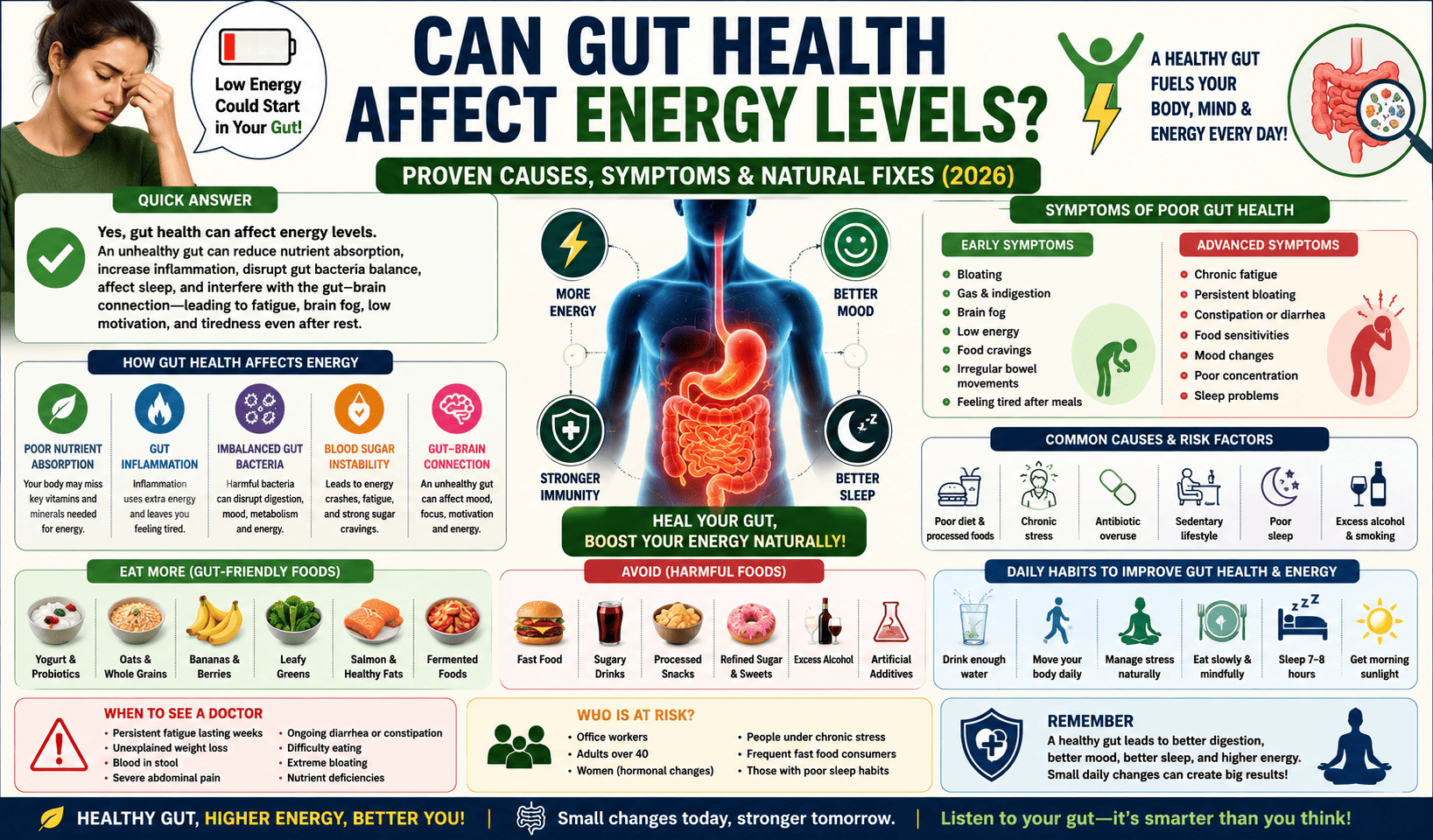
Yes, gut health can affect energy levels. Poor gut health may reduce nutrient absorption, increase inflammation, disrupt sleep, affect gut bacteria balance, and interfere with the gut-brain connection. This can lead to fatigue, brain fog, low motivation, bloating, and reduced physical or mental energy. Improving gut health often helps improve daily energy naturally.
What Does It Mean When Gut Health Affects Energy?
Your gut contains trillions of bacteria and plays a central role in how your body produces and uses energy.
A healthy digestive system helps:
- Break down food properly
- Absorb vitamins and minerals
- Support hormone balance
- Reduce inflammation
- Maintain stable energy levels
When gut health becomes disrupted, your body may struggle to get the nutrients and balance it needs for optimal energy production.
This is why some people feel:
- Exhausted after eating
- Mentally drained
- Bloated and fatigued together
- Low on motivation despite resting
Common Symptoms of Poor Gut Health and Low Energy
Gut-related fatigue often develops gradually.
Early Symptoms
- Low energy during the day
- Bloating after meals
- Brain fog
- Frequent gas
- Mild constipation or diarrhea
- Sugar cravings
- Feeling sleepy after eating
Advanced Symptoms
- Chronic fatigue
- Difficulty concentrating
- Food sensitivities
- Mood changes
- Poor sleep quality
- Inflammation-related discomfort
- Ongoing digestive issues
Many people notice symptoms worsening during stress, poor diet periods, or after consuming processed foods.
Also Read : What are the signs of poor gut health?
How Gut Health Affects Energy Levels
Several biological processes connect gut health and fatigue.
1. Poor Nutrient Absorption
Your gut absorbs nutrients needed for energy production.
If digestion becomes impaired, the body may struggle to absorb:
- Iron
- Vitamin B12
- Magnesium
- Vitamin D
- Protein
Deficiencies in these nutrients are strongly linked to fatigue and weakness.
2. Gut Inflammation
An unhealthy gut may trigger chronic low-grade inflammation.
Inflammation forces the body to use extra energy, which may leave you feeling:
- Physically tired
- Mentally exhausted
- Sluggish throughout the day
Inflammation may also affect sleep and recovery.
3. Imbalanced Gut Bacteria
Your microbiome influences:
- Digestion
- Immune system function
- Mood
- Metabolism
- Energy production
When harmful bacteria outnumber beneficial bacteria, symptoms like fatigue, bloating, and brain fog may appear.
4. Blood Sugar Instability
Poor gut health may contribute to unstable blood sugar levels.
This can cause:
- Energy crashes
- Irritability
- Hunger spikes
- Afternoon fatigue
Many Americans experience this after consuming high-sugar or highly processed meals.
5. Gut-Brain Connection
Your gut and brain constantly communicate through the gut-brain axis.
An unhealthy gut may affect:
- Mood
- Motivation
- Focus
- Mental clarity
This explains why digestive problems often occur alongside stress, anxiety, and fatigue.
Symptoms Comparison Table
| Symptom | Poor Gut Health | Lack of Sleep |
|---|---|---|
| Bloating | Common | Rare |
| Brain fog | Common | Common |
| Fatigue after meals | Common | Less common |
| Constipation or diarrhea | Common | Rare |
| Low motivation | Possible | Common |
| Nutrient deficiencies | Common | Less common |
| Morning grogginess | Possible | Common |
Common Causes & Risk Factors
Several lifestyle habits can damage gut health and reduce energy levels.
1. Poor Diet
Highly processed foods may disrupt gut bacteria and increase inflammation.
2. Common Trigger Foods
- Sugary snacks
- Soda
- Fried foods
- Fast food
- Artificial sweeteners
- Excess alcohol
These foods may negatively affect digestion and long-term energy balance.
3. Chronic Stress
Stress can disrupt digestion and gut bacteria balance.
Many people experience:
- Stress-related bloating
- Fatigue
- Stomach discomfort
- Appetite changes
Long-term stress is one of the biggest contributors to gut imbalance.
Also Read : What are the symptoms of chronic stress?
4. Lack of Sleep
Poor sleep may weaken gut health and worsen inflammation.
This creates a cycle:
Poor sleep → gut imbalance → fatigue → worse sleep
5. Antibiotic Overuse
Antibiotics can reduce healthy gut bacteria, especially when used frequently.
Some people notice:
- Digestive changes
- Low energy
- Bloating
- Food sensitivities after antibiotics
6. Sedentary Lifestyle
Physical inactivity may slow digestion and negatively affect metabolism.
Long sitting hours are especially common among office workers in the United States.
Best Treatment Options for Improving Gut Health & Energy
The best approach usually combines nutrition, stress management, and healthy daily habits.
1. Improve Gut-Friendly Nutrition
A healthy diet supports beneficial bacteria and stable energy.
Best Foods for Gut Health & Energy
- Yogurt with probiotics
- Kefir
- Oatmeal
- Bananas
- Berries
- Leafy greens
- Salmon
- Chia seeds
- Bone broth
- Fermented vegetables
Fiber-rich foods help feed beneficial gut bacteria naturally.
2. Reduce Processed Foods
Reducing processed foods may improve:
- Digestion
- Energy stability
- Inflammation
- Gut bacteria balance
Avoid excessive:
- Sugar
- Alcohol
- Artificial additives
- Fast food
3. Manage Stress Naturally
Stress management supports both gut health and energy levels.
Helpful Strategies
- Meditation
- Walking outdoors
- Deep breathing
- Journaling
- Therapy or counseling
- Limiting excessive screen time
Even small reductions in stress may improve digestion noticeably.
4. Exercise Regularly
Movement supports:
- Digestion
- Blood circulation
- Metabolism
- Mood
- Sleep quality
Simple activities like walking after meals can improve digestion naturally.
5. Improve Sleep Quality
Your gut repairs itself during sleep.
Healthy Sleep Habits
- Sleep on a consistent schedule
- Avoid heavy meals late at night
- Reduce blue light exposure before bed
- Limit caffeine late in the day
Better sleep often improves gut function and energy simultaneously.
Also Read : Does fasting improve gut health?
Diet & Lifestyle Tips for Better Gut Health
Morning Routine
- Drink water after waking up
- Eat a protein-rich breakfast
- Get sunlight exposure
Daily Habits
- Eat slowly
- Stay hydrated
- Include fiber daily
- Move regularly during work hours
Evening Routine
- Avoid large late-night meals
- Limit alcohol
- Reduce stress before bed
Small consistent habits usually work better than extreme diet changes.
When Should You See a Doctor?
You should seek medical advice if you experience:
- Persistent fatigue
- Blood in stool
- Severe stomach pain
- Rapid unexplained weight loss
- Ongoing diarrhea or constipation
- Difficulty eating
- Extreme bloating lasting weeks
Fatigue and digestive symptoms should not be ignored if they become chronic.
Who Is Most at Risk?
1. Office Workers
Stress, sitting for long hours, and poor eating habits may affect gut health.
2. Adults Over 40
Digestive efficiency and metabolism may naturally slow with age.
3. Women
Hormonal changes may influence digestion and energy levels.
4. People Under Chronic Stress
Stress strongly affects the gut-brain connection.
5. Frequent Fast Food Consumers
Highly processed diets may negatively affect gut bacteria balance.
FAQs
1. Can poor gut health make you tired?
Yes. Poor gut health may reduce nutrient absorption, increase inflammation, and affect gut bacteria balance, all of which can contribute to fatigue.
2. Why do I feel tired after eating?
Blood sugar spikes, poor digestion, inflammation, or gut imbalance may contribute to post-meal fatigue.
Also Read : Why do I feel tired after eating?
3. Can probiotics improve energy levels?
Some people experience improved digestion and energy after supporting healthy gut bacteria with probiotics and diet changes.
4. What foods help improve gut health naturally?
Fiber-rich foods, yogurt, kefir, bananas, berries, leafy greens, and fermented foods may support healthy digestion.
5. Can stress damage gut health?
Yes. Chronic stress may disrupt digestion, increase inflammation, and negatively affect gut bacteria.
Conclusion
Gut health and energy levels are closely connected. When digestion, nutrient absorption, inflammation, or gut bacteria balance become disrupted, fatigue and low energy often follow.
The good news is that improving gut health naturally may also improve:
- Energy
- Mental clarity
- Mood
- Digestion
- Sleep quality
Simple lifestyle changes like eating gut-friendly foods, managing stress, improving sleep, and reducing processed foods can create meaningful long-term improvements in overall wellness.
If symptoms persist despite healthy habits, it’s important to consult a healthcare professional to identify any underlying digestive or medical conditions.
Reviewed by: Dzarro Editorial Team
Fact-checked using trusted medical and scientific sources.

Sandip Choudhary is a Health & Wellness Researcher and Content Creator specializing in sleep, digestive health, preventive wellness, and evidence-based health education. He has been creating online content and researching health-related topics for several years, focusing on translating complex medical information into practical guidance for everyday readers.
With a strong background in SEO and content strategy, Sandip ensures that every article is optimized for both search engines and real users. His goal is to provide reliable, clear, and helpful information that supports healthier living.
Disclaimer: The content published is for informational purposes only and is not a substitute for professional medical advice.
1 thought on “Can gut health affect energy levels?”