
After a long workday, do you feel mentally drained even if you didn’t do intense physical activity? Maybe your brain feels foggy, your motivation disappears, and even simple tasks feel overwhelming. If this happens regularly, you’re not alone.
Mental exhaustion has become extremely common in the United States, especially among office workers, remote employees, healthcare professionals, students, and people juggling work-life stress. Long screen time, constant notifications, poor sleep, stress, and emotional pressure can overload the brain and leave you feeling mentally exhausted by the end of the day.
The good news is that mental fatigue is often manageable with the right lifestyle habits, stress management techniques, and recovery strategies.
Quick Answer
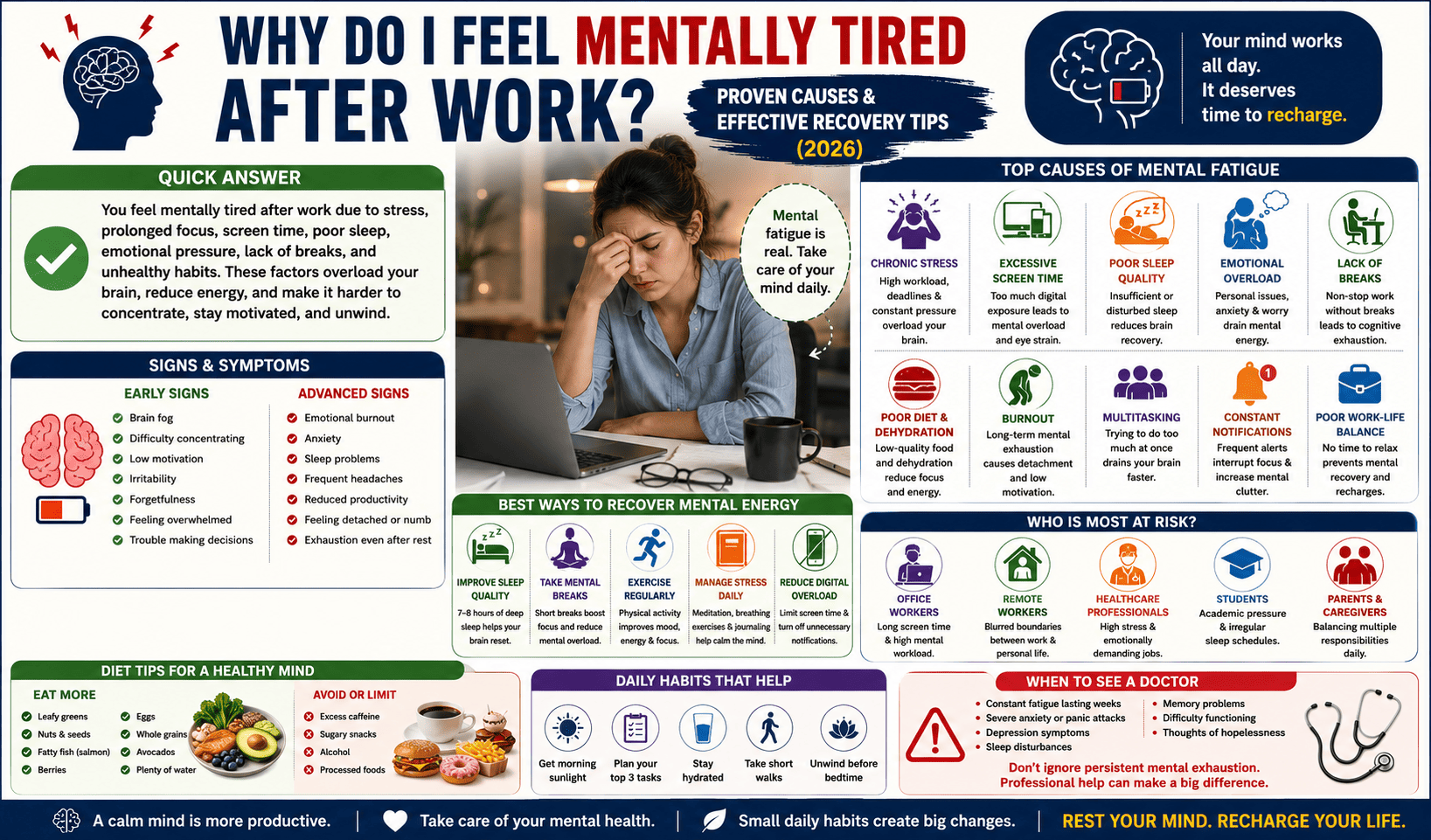
Feeling mentally tired after work is often caused by stress, prolonged screen time, lack of sleep, emotional overload, poor work-life balance, or mental burnout. Mental fatigue can affect focus, mood, motivation, and energy levels. Improving sleep, reducing stress, taking breaks, eating nutrient-rich foods, and setting healthier routines may help restore mental energy naturally.
What Does It Mean to Feel Mentally Tired?
Mental fatigue happens when your brain becomes overloaded from prolonged concentration, stress, emotional pressure, or decision-making.
Unlike physical exhaustion, mental tiredness mainly affects:
- Focus
- Motivation
- Emotional energy
- Productivity
- Memory
You may feel:
- Drained
- Irritable
- Unmotivated
- Foggy
- Emotionally exhausted
In many cases, people continue functioning outwardly while internally feeling overwhelmed and mentally depleted.
Common Symptoms of Mental Fatigue
Mental exhaustion can build gradually over time.
Early Symptoms
- Brain fog
- Difficulty concentrating
- Low motivation
- Irritability
- Forgetfulness
- Feeling overwhelmed after work
- Trouble making decisions
Advanced Symptoms
- Emotional burnout
- Anxiety
- Sleep problems
- Frequent headaches
- Reduced productivity
- Feeling detached or numb
- Chronic stress
- Exhaustion even after resting
Some people also notice:
- Digestive problems
- Muscle tension
- Increased caffeine dependence
- Loss of interest in hobbies
Why Do I Feel Mentally Tired After Work?
There is rarely just one cause. Mental fatigue usually develops from multiple lifestyle, emotional, and health-related factors.
1. Chronic Work Stress
Long-term stress is one of the biggest causes of mental exhaustion.
High workloads, deadlines, meetings, and constant pressure can overstimulate the brain and increase cortisol levels.
Also Read : What are the symptoms of chronic stress?
Common Work Stress Triggers
- Tight deadlines
- Multitasking
- Workplace conflict
- Long hours
- Job insecurity
- Constant notifications
Over time, this can lead to emotional burnout and reduced mental recovery.
2. Excessive Screen Time
Most Americans spend hours daily looking at:
- Computers
- Smartphones
- Tablets
- TVs
Too much screen exposure may contribute to:
- Mental overload
- Eye strain
- Reduced focus
- Sleep disruption
Digital fatigue is especially common among remote workers.
3. Poor Sleep Quality
Your brain recovers during deep sleep. If sleep quality is poor, mental energy suffers the next day.
Poor Sleep Can Cause
- Brain fog
- Slow thinking
- Irritability
- Emotional sensitivity
Even 7–8 hours of sleep may not feel refreshing if the quality is poor.
Also Read : What are the signs of poor gut health?
4. Emotional Overload
Mental exhaustion is not always work-related.
Emotional stress from:
- Family issues
- Financial pressure
- Anxiety
- Relationship problems
can quietly drain mental energy throughout the day.
5. Lack of Breaks During Work
Continuous work without mental breaks overloads the brain.
Your mind needs periodic recovery to maintain:
- Focus
- Creativity
- Attention span
Skipping breaks may reduce productivity instead of improving it.
6. Poor Diet and Dehydration
Your brain needs proper nutrition to function effectively.
Low-quality diets may worsen:
- Mental fatigue
- Mood swings
- Brain fog
- Low concentration
Dehydration alone can significantly reduce mental clarity and energy.
7. Burnout
Burnout is deeper than ordinary tiredness.
It often includes:
- Emotional exhaustion
- Detachment
- Loss of motivation
- Feeling mentally “empty”
Burnout is increasingly common in high-pressure work environments across the USA.
👉 If you’re struggling with stress, anxiety, or emotional exhaustion, explore our complete Mental Wellness Guide for practical daily improvement tips.
Comparison Table: Mental Fatigue vs Physical Fatigue
| Mental Fatigue | Physical Fatigue |
|---|---|
| Brain fog | Muscle weakness |
| Trouble focusing | Body exhaustion |
| Emotional exhaustion | Physical soreness |
| Low motivation | Reduced stamina |
| Irritability | Heavy body feeling |
| Decision fatigue | Physical tiredness |
Best Treatment Options for Mental Fatigue
Mental recovery requires consistent lifestyle improvements rather than quick fixes.
1. Improve Sleep Quality
Better sleep supports:
- Brain recovery
- Memory
- Mood balance
- Stress reduction
Helpful Sleep Habits
- Consistent bedtime
- Reduced screen time before bed
- Cooler bedroom temperature
- Avoid caffeine late at night
2. Take Mental Breaks During Work
Short breaks improve mental performance.
Helpful Strategies
- 5–10 minute walks
- Stretching
- Deep breathing
- Looking away from screens
- Stepping outside for sunlight
Even brief breaks help reduce cognitive overload.
3. Reduce Digital Overload
Too much information processing exhausts the brain.
Helpful Digital Habits
- Turn off unnecessary notifications
- Limit multitasking
- Reduce social media usage
- Schedule screen-free time
Mental clarity often improves when digital stimulation decreases.
4. Exercise Regularly
Physical movement improves:
- Brain circulation
- Mood
- Stress management
- Energy levels
Walking, yoga, cycling, and strength training may help reduce mental exhaustion naturally.
5. Stress Management Techniques
Stress recovery is essential for mental wellness.
Helpful Options
- Meditation
- Journaling
- Therapy
- Mindfulness
- Deep breathing exercises
Managing stress daily often improves emotional resilience over time.
6. Seek Professional Support if Needed
Persistent mental exhaustion may sometimes be linked to:
- Anxiety disorders
- Depression
- ADHD
- Sleep disorders
Professional guidance can help identify underlying causes.
Diet & Lifestyle Tips for Better Mental Energy
Best Foods for Brain Energy
- Fatty fish
- Eggs
- Nuts
- Leafy greens
- Oats
- Berries
- Avocados
Stay Hydrated
Even mild dehydration may reduce focus and concentration.
Foods & Habits to Avoid
Reduce:
- Excess caffeine
- Energy drinks
- Sugary snacks
- Late-night screen exposure
- Alcohol dependence
These habits may temporarily boost energy but often worsen mental fatigue later.
Daily Routine Improvements
Morning
- Get sunlight exposure
- Drink water
- Avoid immediately checking emails
During Work
- Take movement breaks
- Practice task prioritization
- Avoid excessive multitasking
Evening
- Disconnect from work mentally
- Reduce blue light exposure
- Create a calming bedtime routine
Small daily adjustments can improve long-term mental recovery.
When Should You See a Doctor?
Seek medical advice if you experience:
- Constant exhaustion lasting weeks
- Severe anxiety
- Depression symptoms
- Panic attacks
- Memory problems
- Sleep disturbances
- Difficulty functioning daily
- Thoughts of hopelessness
Persistent mental fatigue should not be ignored.
Who Is Most at Risk?
Office Workers
Long screen time and high mental workloads increase burnout risk.
Remote Workers
Lack of boundaries between work and personal life may worsen mental exhaustion.
Healthcare Professionals
Emotionally demanding jobs can quickly drain mental energy.
Students
Heavy academic pressure often contributes to cognitive fatigue.
Parents & Caregivers
Balancing responsibilities may create chronic emotional stress.
Read More : Why Am I So Tired After Work?
FAQs
1. Why do I feel mentally exhausted after work?
Mental exhaustion is commonly caused by stress, prolonged concentration, poor sleep, emotional pressure, or burnout.
2. Can stress cause mental fatigue?
Yes. Chronic stress overloads the brain and may reduce focus, energy, motivation, and emotional resilience.
3. How do I recover from mental exhaustion?
Improving sleep, reducing stress, taking breaks, exercising, and limiting screen overload may help restore mental energy.
4. Is mental fatigue a sign of burnout?
Sometimes. Persistent mental exhaustion combined with emotional detachment and low motivation may indicate burnout.
5. Can dehydration affect mental energy?
Yes. Even mild dehydration may cause brain fog, headaches, fatigue, and poor concentration.
Conclusion
Feeling mentally tired after work has become increasingly common in today’s fast-paced, high-pressure lifestyle. Long screen time, stress, emotional overload, poor sleep, and unhealthy routines can slowly drain mental energy and reduce overall well-being.
The good news is that mental fatigue often improves with consistent lifestyle changes:
- Better sleep
- Reduced stress
- Healthier routines
- Proper nutrition
- Regular mental breaks
If symptoms continue or worsen, seeking professional support is an important step toward protecting both mental and physical health.
Reviewed by: Dzarro Editorial Team
Fact-checked using trusted medical and scientific sources.

Sandip Choudhary is a Health & Wellness Researcher and Content Creator specializing in sleep, digestive health, preventive wellness, and evidence-based health education. He has been creating online content and researching health-related topics for several years, focusing on translating complex medical information into practical guidance for everyday readers.
With a strong background in SEO and content strategy, Sandip ensures that every article is optimized for both search engines and real users. His goal is to provide reliable, clear, and helpful information that supports healthier living.
Disclaimer: The content published is for informational purposes only and is not a substitute for professional medical advice.