
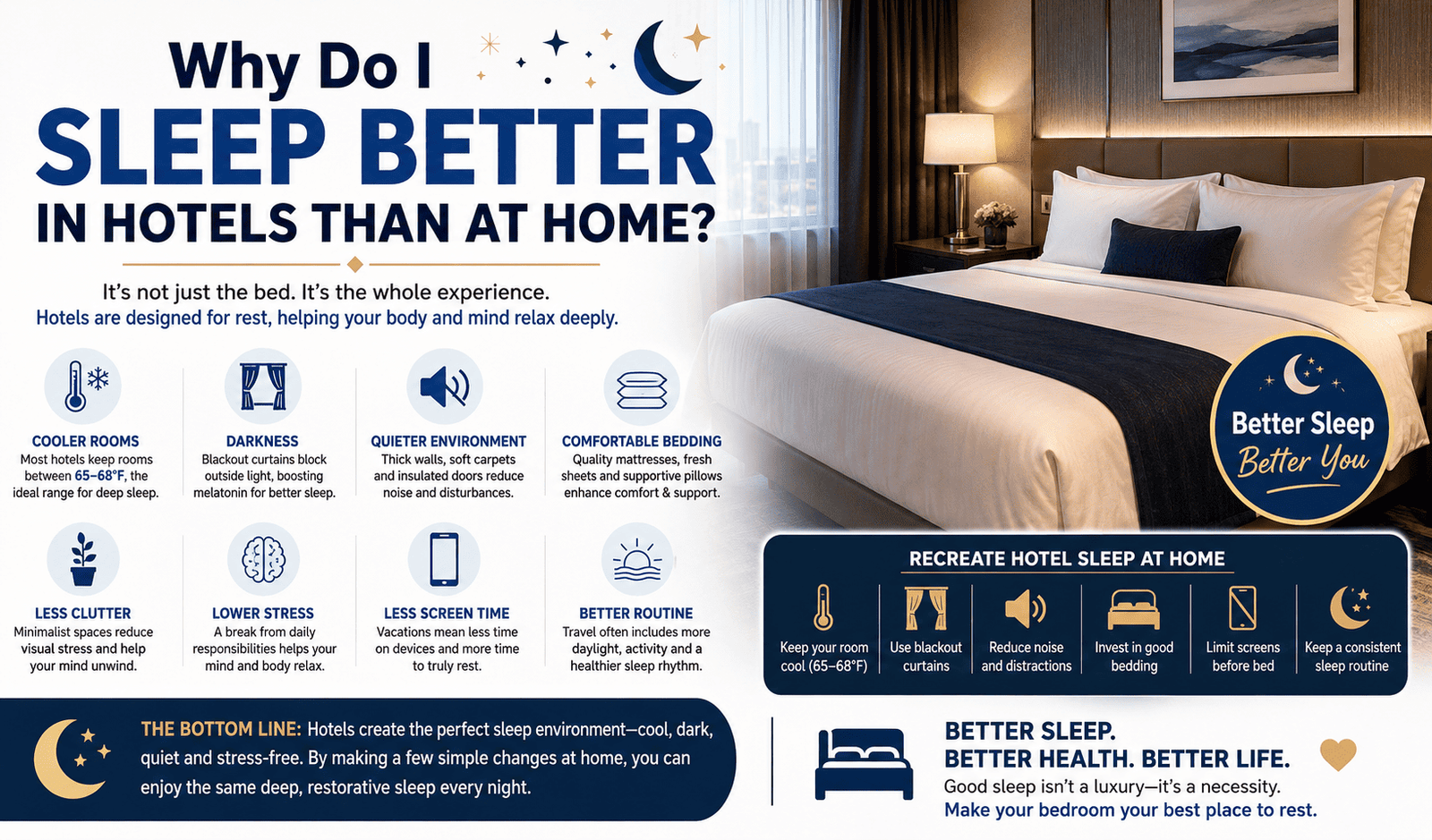
If you’ve ever asked yourself, “Why do I sleep better in hotels than at home?”, you’re not alone. The reason is usually a combination of psychology, bedroom design, temperature, lighting, noise control, and reduced daily stress. Hotel rooms are intentionally created to help guests relax, making it easier to fall asleep faster and enjoy deeper, more restorative sleep. The encouraging news is that many of these hotel sleep benefits can be recreated in your own bedroom.
Why Do Hotels Feel More Relaxing?

The moment you walk into a well-designed hotel room, your brain notices something different. The space is clean, organized, calm, and free from everyday distractions. Unlike your home, there are usually no piles of laundry, work documents, or household chores waiting for your attention.
Hotels are designed around guest comfort. Everything from the mattress to the lighting and room temperature is selected to create a peaceful atmosphere. This carefully controlled environment helps your mind transition from being alert to feeling relaxed, which naturally supports better sleep.
Also Read : How Often Should You Replace Your Pillow for Better Sleep?
The Psychology of Sleeping Better Away from Home

One of the strongest reasons people sleep better in hotels is psychological separation from daily responsibilities. At home, your bedroom may double as an office, storage room, or entertainment space. Your brain unconsciously associates that environment with unfinished tasks and responsibilities.
A hotel room changes that mental pattern. Since you’re temporarily removed from work, chores, and routine obligations, your stress levels often decrease. This reduction in cognitive load allows your nervous system to relax more easily, making it easier to enter deep sleep.
Even people who travel for business sometimes report sleeping well after settling into the hotel because the room provides a clear mental boundary between work and rest.
Also Read : Can Your Mattress Be Causing Poor Sleep?
Cooler Temperatures Help You Sleep Deeper
Your body naturally lowers its core temperature before falling asleep. If your bedroom is too warm, this cooling process becomes less efficient, leading to lighter sleep and frequent awakenings.
Most hotels maintain guestrooms between 65°F and 68°F, which is considered an ideal range for many adults. The cooler environment helps regulate body temperature throughout the night and encourages longer periods of restorative sleep.
If your home bedroom feels warm, lowering the thermostat or using a ceiling fan can make a noticeable difference in sleep quality.
Also Read : Does Sleeping Naked Help You Sleep Better?
Blackout Curtains Improve Your Circadian Rhythm

Light has a powerful influence on your body’s internal clock. Hotel rooms often feature heavy blackout curtains that eliminate streetlights, sunrise glare, and outdoor lighting.
Darkness signals the brain to produce melatonin, the hormone responsible for preparing your body for sleep. Even small amounts of artificial light can interrupt this natural process and reduce sleep quality.
If you regularly wake up too early because sunlight enters your room, blackout curtains may be one of the most effective bedroom upgrades you can make.
Also Read : Why Do I Feel More Awake at Night Than During the Day?
Why Hotel Rooms Usually Feel Quieter

Noise is one of the most overlooked causes of poor sleep. Many hotels reduce sound through thicker walls, insulated windows, carpeted hallways, and solid doors that minimize outside disturbances.
At home, unexpected noises such as traffic, barking dogs, appliances, or neighbors can repeatedly interrupt your sleep cycle. The brain reacts more strongly to sudden sounds than to consistent background noise.
Creating a quieter bedroom with white noise, rugs, or better window insulation can help recreate the peaceful atmosphere of a hotel.
Also Read : Can Sleeping With a Fan Improve Sleep Quality?
Hotel Beds Are Designed for Universal Comfort

Many people assume hotels have magical mattresses, but the secret is often the complete bedding system rather than the mattress alone.
Hotels commonly use medium-firm mattresses, breathable cotton sheets, supportive pillows, and layered blankets that allow guests to adjust their comfort throughout the night. Freshly washed bedding also contributes to the feeling of cleanliness and relaxation.
Instead of replacing your mattress immediately, upgrading your pillows and choosing high-quality cotton sheets may provide a surprisingly similar experience.
Also Read : Why Do My Legs Twitch When I’m Trying to Sleep?
A Clutter-Free Bedroom Calms the Mind

Visual clutter creates mental clutter. Every object in your bedroom competes for your attention, even when you’re not consciously thinking about it.
Hotel rooms intentionally keep furniture and decorations simple. Clear surfaces and organized layouts reduce sensory stimulation, making the space feel peaceful and inviting.
Keeping your bedroom tidy doesn’t require perfection. Removing unnecessary items from visible areas can make the room feel significantly more relaxing before bedtime.
Also Read : Is It Better to Sleep With Socks On?
You’re Probably Using Your Phone Less

During vacations or hotel stays, many people naturally reduce late-night screen time. Instead of scrolling social media for hours, they may read a book, watch television briefly, or simply go to sleep earlier.
Blue light from phones and tablets delays melatonin production, making it harder to fall asleep. Reducing screen exposure during the hour before bed often improves both sleep onset and overall sleep quality.
A simple habit like charging your phone outside the bedroom can have a meaningful impact.
Also Read : Can Seasonal Changes Affect Your Sleep Cycle?
The Vacation Mindset Reduces Stress Hormones

Sleep is deeply connected to emotional well-being. Vacations often involve more walking, natural daylight, enjoyable experiences, and fewer work-related pressures. These lifestyle changes help lower stress and support healthier sleep patterns.
Natural sunlight during the day strengthens your circadian rhythm, while physical activity increases sleep drive at night. Together, these factors create ideal conditions for restorative rest.
This is one reason many people wake up feeling unusually refreshed after a hotel stay.
Also Read : Why Do I Wake Up at the Same Time Every Night?
Could Better Hotel Sleep Mean Something Is Wrong at Home?

Not necessarily. Sleeping better in hotels usually reflects differences in environment rather than a medical problem. However, if you consistently struggle to sleep at home despite maintaining good sleep habits, it’s worth evaluating your bedroom conditions and bedtime routine.
Persistent insomnia, loud snoring, gasping during sleep, or excessive daytime fatigue should be discussed with a healthcare professional, as they may indicate an underlying sleep disorder rather than an environmental issue.
Improving your sleep environment is important, but ongoing symptoms deserve proper medical evaluation.
Also Read : How much sleep do adults over 40 need?
How to Recreate the Hotel Sleep Experience at Home

You don’t need a five-star hotel budget to sleep like you’re on vacation. Start by keeping your bedroom cool, ideally between 65°F and 68°F. Install blackout curtains to block outside light, reduce visible clutter, and invest in breathable cotton bedding with supportive pillows.
Keep work materials, televisions, and bright screens out of your sleep space whenever possible. Creating a consistent bedtime routine, dimming lights before bed, and maintaining regular sleep and wake times can dramatically improve sleep quality.
The goal isn’t to copy hotel luxury—it’s to recreate the calm, distraction-free environment that allows your brain to fully relax.
Also Read : Why do I wake up sweating at night?
Hotel vs. Home Sleep Environment
| Sleep Factor | Typical Hotel | Typical Home |
|---|---|---|
| Room Temperature | 65–68°F | Often warmer |
| Lighting | Blackout curtains | Outside light exposure |
| Noise | Sound-insulated | Variable neighborhood noise |
| Bedding | Premium layered bedding | Mixed quality |
| Clutter | Minimal | Personal belongings |
| Stress Triggers | Very low | Daily responsibilities |
The biggest difference is consistency. Hotels are intentionally optimized for rest, while home bedrooms often accumulate distractions over time.
Also Read : Can low vitamin D affect sleep?
Final Thoughts
So, why do I sleep better in hotels than at home? The answer lies in a combination of environmental design and mental relaxation. Cooler temperatures, darkness, quieter surroundings, supportive bedding, reduced clutter, and freedom from daily responsibilities all work together to improve sleep quality.
The best part is that you don’t have to travel every weekend to enjoy these benefits. By making thoughtful changes to your bedroom and bedtime habits, you can create a hotel-like sleep experience that helps you wake up feeling refreshed every morning.
Also Read : What causes sleep anxiety before workdays?
Frequently Asked Questions (FAQ)
1. Why do I always sleep better in hotels?
Hotels provide a cooler, darker, quieter, and less stressful environment that naturally supports deeper sleep.
2. Is it common to sleep better away from home?
Yes. Many people experience improved sleep during hotel stays because they’re temporarily separated from daily responsibilities and distractions.
3. What room temperature is best for sleep?
Most adults sleep best in a bedroom maintained between 65°F and 68°F.
4. Do blackout curtains really make a difference?
Yes. Blocking artificial and early morning light helps your body maintain a healthy circadian rhythm and improves sleep quality.
5. Are hotel mattresses better than home mattresses?
Not always. The overall bedding system—including pillows, sheets, and layered blankets—often contributes more to comfort than the mattress alone.
6. Can bedroom clutter affect sleep?
Yes. A cluttered room can increase mental stimulation and make it more difficult to relax before bedtime.
7. Why are hotel rooms so quiet?
Many hotels use soundproofing materials, thicker doors, carpeted hallways, and insulated windows to reduce noise disturbances.
8. Does using my phone before bed reduce sleep quality?
Yes. Blue light from screens can delay melatonin production and make it harder to fall asleep.
9. Could poor sleep at home indicate a sleep disorder?
Possibly. If sleep problems persist despite improving your environment, consult a healthcare professional for evaluation.
10. How can I make my bedroom feel like a luxury hotel?
Keep it cool, dark, quiet, clutter-free, use breathable cotton bedding, supportive pillows, and maintain a consistent bedtime routine.

A short nap can improve focus and energy.
Medical Disclaimer: This article is for educational purposes only and does not replace professional medical advice, diagnosis, or treatment. Always consult a qualified healthcare provider before making significant changes to your diet, exercise routine, medications, or health management plan.
Medically reviewed information sourced from trusted health organizations.
References
- National Institutes of Health (NIH). Sleep and Sleep Disorders.
https://www.nhlbi.nih.gov/health/sleep - Sleep Foundation. Sleep Health Resources.
https://www.sleepfoundation.org/ - Centers for Disease Control and Prevention (CDC). Sleep and Sleep Disorders.
https://www.cdc.gov/sleep/ - Mayo Clinic. Sleep Disorders Overview.
https://www.mayoclinic.org/
Reviewed by: Dzarro Editorial Team
Fact-checked using trusted medical and scientific sources.

Sandip Choudhary is a Health & Wellness Researcher and Content Creator specializing in sleep, digestive health, preventive wellness, and evidence-based health education. He has been creating online content and researching health-related topics for several years, focusing on translating complex medical information into practical guidance for everyday readers.
With a strong background in SEO and content strategy, Sandip ensures that every article is optimized for both search engines and real users. His goal is to provide reliable, clear, and helpful information that supports healthier living.
Disclaimer: The content published is for informational purposes only and is not a substitute for professional medical advice.
2 thoughts on “Why Do I Sleep Better in Hotels Than at Home?”
Comments are closed.