
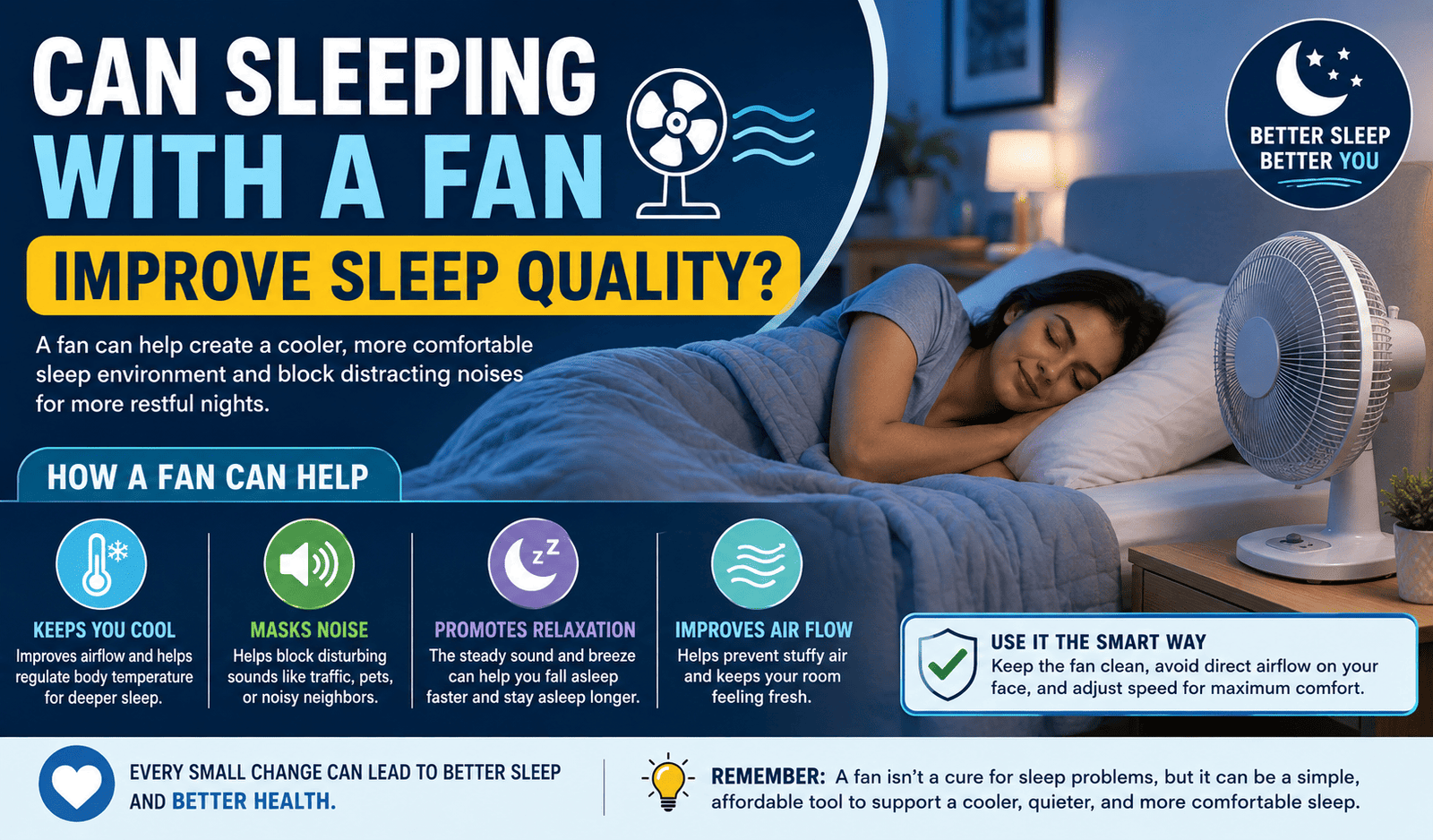
Yes, sleeping with a fan can improve sleep quality for some people, especially when it helps keep the bedroom comfortably cool or masks distracting background sounds. A cooler, quiet, comfortable sleep environment is generally associated with better sleep. However, a fan is not automatically beneficial for everyone. Direct airflow can contribute to dry eyes, dry mouth, nasal irritation, or discomfort, while circulating dust and allergens may bother people with allergies or sensitive airways.
Can Sleeping With a Fan Improve Sleep Quality?
Can sleeping with a fan improve sleep quality? For many people, yes. A fan can make the sleeping environment more comfortable by moving warm air around the room, reducing the sensation of heat, and creating consistent background noise. These effects may make it easier to fall asleep and remain asleep, particularly during hot weather.
Sleep quality depends on more than simply the number of hours spent in bed. The Centers for Disease Control and Prevention describes quality sleep as uninterrupted and refreshing sleep, with problems such as repeated nighttime awakenings, difficulty falling asleep, or feeling tired despite getting enough sleep being signs of poor sleep quality.
A fan does not directly treat insomnia or another sleep disorder. Instead, it can be one component of a sleep-friendly bedroom. The National Institute for Occupational Safety and Health recommends keeping the sleeping environment dark, quiet, cool, and comfortable, and specifically notes that a fan can be used to camouflage unwanted noises.
Also Read : Why Do My Legs Twitch When I’m Trying to Sleep?
Why Does a Fan Sometimes Help You Sleep Better?
One of the biggest reasons people prefer sleeping with a fan is temperature control. Your body naturally undergoes temperature changes as part of the sleep process, and an excessively warm bedroom can make it harder to feel comfortable at bedtime. A fan can improve perceived cooling by increasing airflow across the skin, which may reduce the sensation of heat even when the room temperature itself does not change dramatically.
The CDC recommends a comfortably cool bedroom, with one CDC resource giving a general range of about 60 to 67 degrees Fahrenheit, while another CDC sleep resource describes approximately 65 to 68 degrees Fahrenheit as comfortable for many people. Individual preferences vary, so the goal is not to force your room into one exact temperature but to avoid being uncomfortably hot or cold.
A fan may also help because of its steady sound. Traffic, neighbors, pets, household activity, or other unpredictable noises can cause nighttime awakenings. A continuous fan sound may mask some of these interruptions, creating a more consistent auditory environment. CDC guidance specifically mentions a fan or white-noise machine as an option for masking unwanted sounds.
For some sleepers, the predictable hum of a fan can also become part of a relaxing bedtime routine. This is a personal response rather than a guaranteed physiological effect. If the sound feels soothing rather than distracting, it may make the transition to sleep easier.
Also Read : Is It Better to Sleep With Socks On?
Does Sleeping With a Fan Cool Your Body?
A fan primarily creates a cooling sensation rather than functioning like an air conditioner. Moving air increases evaporation of moisture from the skin, which can make you feel cooler. This can be particularly useful when the bedroom feels warm or stuffy.
However, a fan should not be viewed as a substitute for adequate cooling during extreme heat. If indoor temperatures become dangerously high, especially during a heat wave, simply circulating hot air may not provide enough protection from heat-related illness. In those circumstances, appropriate cooling strategies and access to a safer, cooler environment are more important than relying on a fan alone.
For normal nighttime conditions, however, using a fan alongside comfortable bedding, ventilation, or air conditioning can help create a more comfortable sleep environment.
Also Read : Can Seasonal Changes Affect Your Sleep Cycle?
Can Fan Noise Help You Fall Asleep?
Yes, fan noise may help some people fall asleep by providing consistent background sound. A fan can mask sudden or intermittent noises that might otherwise capture your attention. This can be particularly useful for people who live near busy roads, apartments with shared walls, or areas where nighttime sounds are unpredictable.
The important point is that the fan’s sound should be comfortable. If the motor is loud, rattling, or irritating, it may have the opposite effect and interfere with sleep. The American Academy of Sleep Medicine recommends a dark, quiet and comfortable sleeping environment and notes that people can adjust their environment according to their individual temperature preferences.
If you like the sound of a fan but do not need its airflow, a white-noise machine or another consistent sound source may provide a similar auditory effect without creating continuous airflow across your face or body.
Also Read : Why Do I Wake Up at the Same Time Every Night?
Are There Downsides to Sleeping With a Fan On?
Sleeping with a fan is generally considered safe for most healthy adults, but there are some potential disadvantages. One concern is dryness. Continuous airflow may contribute to dryness or irritation of the eyes, mouth, nose, or throat, particularly when the fan is positioned very close to the bed or directed straight toward the sleeper.
People with allergies may also notice more symptoms if a fan circulates dust, pollen, pet dander, or other airborne particles. A dirty fan can accumulate dust on its blades and then redistribute some of that material into the room. Sleep Foundation notes that allergens can contribute to symptoms such as congestion, coughing, itching, and other discomfort that can interfere with sleep.
This does not mean that fans cause colds or respiratory infections. A fan moves air; it does not create the viruses responsible for common colds. However, if airflow dries or irritates your nasal passages, throat, or eyes, you may feel uncomfortable during the night.
Also Read : How much sleep do adults over 40 need?
Is It Better to Point a Fan at Yourself or Away From You?
There is no universal rule that a fan must point directly at you. If direct airflow causes dry eyes, congestion, a sore throat, or skin irritation, try positioning the fan farther away or pointing it across the room rather than directly at your face.
An oscillating fan can distribute airflow more broadly and may reduce the intensity of air hitting one part of your body continuously. Keeping the fan at a reasonable distance can also make the airflow feel gentler.
The best position is the one that keeps you comfortable without causing irritation. If you wake up feeling excessively dry or congested, changing the fan direction is a simple adjustment worth trying.
Also Read : Why do I wake up sweating at night?
How Can You Safely Sleep With a Fan?
Keeping the fan and bedroom clean is one of the easiest ways to make nighttime fan use more comfortable. Dust the fan blades regularly and keep bedding and surrounding surfaces clean. This is especially relevant if you have allergies or notice that your symptoms become worse when the fan is running.
You should also avoid making the room excessively cold. The goal is comfortable cooling rather than exposing yourself to an unpleasantly cold environment. The CDC recommends a cool and comfortable bedroom, while sleep experts emphasize that individual temperature preferences differ.
If direct airflow bothers you, position the fan farther from the bed, use an oscillating setting, or direct airflow toward a wall so that air circulates throughout the room rather than blowing continuously onto your face.
If you wake with dry eyes, a dry mouth, a sore throat, or nasal irritation, consider reducing the fan speed, changing its direction, increasing room humidity when appropriate, or using another cooling method.
Also Read : Can low vitamin D affect sleep?
Can a Fan Help With Hot Weather Sleep?
A fan can be especially useful during warm weather because overheating can make it difficult to relax and remain asleep. Using a fan together with lightweight bedding and a comfortably cool bedroom may make nighttime sleep more pleasant.
Recent guidance from Cleveland Clinic also recommends using a fan and lightweight bedding as part of a strategy for staying comfortable during warmer weather, while emphasizing a bedroom temperature around 60 to 67 degrees Fahrenheit as a commonly recommended range.
However, during periods of extreme heat, fans should not be treated as the only cooling strategy. If the surrounding air is extremely hot, airflow alone may not adequately reduce heat exposure. Pay attention to signs of heat-related illness and seek appropriate medical assistance when necessary.
Also Read : What causes sleep anxiety before workdays?
Does Sleeping With a Fan Improve Sleep for Everyone?
No. Sleep preferences vary considerably. One person may find a fan’s gentle hum relaxing, while another may find even low-level noise distracting. One person may sleep comfortably with strong airflow, while another may wake up with dry eyes or nasal irritation.
This is why the better question is not simply whether fans are “good” or “bad” for sleep. The more useful question is whether the fan helps create a bedroom that is cool, comfortable, quiet, and free from factors that interrupt your sleep.
If you consistently sleep better with a fan, there is generally no reason to stop using it simply because of myths about fans causing illness. If the fan makes you uncomfortable or aggravates allergy symptoms, however, another cooling or sound-management option may be better.
Also Read : How to reset sleep schedule naturally?
Fan vs. Air Conditioner for Sleep
Both fans and air conditioners can contribute to a comfortable sleep environment, but they work differently. An air conditioner actively lowers the room temperature, whereas a fan primarily moves air and increases the cooling sensation.
For moderately warm conditions, a fan may be enough to make the bedroom comfortable. During very hot weather, air conditioning or another effective cooling method may be more appropriate because it can reduce the actual room temperature.
Some people may find that combining moderate air conditioning with a fan provides comfortable airflow without requiring the room to become excessively cold. The right choice depends on the temperature, humidity, personal comfort, and any respiratory or allergy concerns.
Also Read : Why does my body feel heavy after waking up?
When Should You Talk to a Doctor About Poor Sleep?
If you regularly struggle to fall asleep, frequently wake during the night, or remain tired despite getting enough time in bed, changing your fan settings may not solve the underlying problem. Persistent sleep problems can sometimes be associated with insomnia, sleep apnea, restless legs syndrome, or other sleep disorders.
The CDC recommends speaking with a healthcare provider when sleep problems occur regularly or when symptoms of a sleep disorder are present.
Loud snoring, repeated gasping or choking during sleep, witnessed pauses in breathing, severe daytime sleepiness, or persistent insomnia are reasons to discuss your symptoms with a healthcare professional rather than relying solely on environmental changes.
Also Read : Can sleep problems affect mental health?
Final Verdict: Can Sleeping With a Fan Improve Sleep Quality?
Can sleeping with a fan improve sleep quality? Yes, it can for many people. A fan may improve comfort by helping you feel cooler and may also mask disruptive background noise with consistent sound. These benefits can support a sleep environment that is cool, quiet, and comfortable, which are important elements of good sleep hygiene.
However, a fan is not a sleep treatment and does not guarantee better sleep. Direct airflow can cause dryness or irritation, and fans can circulate dust and allergens that may disturb people with allergies or sensitive airways. Keeping the fan clean, avoiding excessive direct airflow, and adjusting the temperature and fan speed to your comfort can help reduce these problems.
Ultimately, if you sleep more comfortably and wake feeling refreshed when using a fan, it can be a useful part of your nighttime routine. If it causes congestion, dryness, irritation, or disrupted sleep, consider changing its position, reducing the speed, cleaning it more frequently, or using another method to maintain a comfortable sleeping environment.
Also Read : Can room temperature affect sleep quality?
Frequently Asked Questions
1. Is it healthy to sleep with a fan on all night?
For most healthy adults, sleeping with a fan on all night is generally considered safe. The main concerns are comfort-related, such as dryness, irritation, or increased exposure to dust and allergens. Keeping the fan clean and avoiding strong direct airflow can make nighttime use more comfortable.
2. Can sleeping with a fan cause a cold?
No. A fan does not cause the common cold because colds are caused by viruses. However, continuous airflow may dry or irritate your nose and throat, which can sometimes make you feel uncomfortable or worsen existing irritation.
3. Does fan noise help you sleep?
Fan noise can help some people sleep because its consistent sound may mask unpredictable background noises. However, other people may find fan noise distracting. If you find the sound relaxing and it does not interrupt your sleep, it can be a useful part of your sleep environment.
4. Can a fan help with insomnia?
A fan may improve comfort and reduce environmental distractions, but it does not treat insomnia itself. If you regularly have difficulty falling asleep or staying asleep, it is better to evaluate your overall sleep habits and discuss persistent symptoms with a healthcare professional.
5. Should I point my fan directly at my face while sleeping?
You do not need to point a fan directly at your face. If direct airflow causes dry eyes, a dry throat, nasal irritation, or congestion, move the fan farther away or point it across the room. The goal is comfortable airflow rather than maximum airflow.
6. Can sleeping with a fan worsen allergies?
It can for some people. Fans may circulate dust, pollen, pet dander, and other airborne particles, potentially aggravating allergy symptoms. Regularly cleaning the fan and bedroom can help reduce the amount of dust being circulated.
7. Is a fan better than air conditioning for sleeping?
Neither is universally better. A fan can be effective when you mainly need airflow and a cooling sensation, while air conditioning can lower the actual room temperature. During very hot weather, air conditioning or another effective cooling method may be more appropriate.
8. What is the best bedroom temperature for sleep?
Many sleep experts and health organizations commonly recommend a cool bedroom, often around 60 to 67 degrees Fahrenheit, although individual preferences vary. The most important factor is maintaining a temperature that allows you to remain comfortably cool without becoming too cold.
9. Can a fan help you stay asleep during hot weather?
Yes. A fan can make warm conditions more comfortable by increasing airflow and helping your body feel cooler. Combining a fan with lightweight bedding and a comfortably cool bedroom may be especially helpful during warmer nights. During extreme heat, however, a fan alone may not provide sufficient cooling.
10. When should I stop using a fan at night?
Consider changing your fan setup if you repeatedly wake with dry eyes, a dry throat, nasal irritation, congestion, or allergy symptoms, or if the noise itself disrupts your sleep. You can try lowering the speed, moving the fan farther away, changing its direction, cleaning it, or using another cooling method. If sleep problems continue despite improving your sleep environment, speak with a healthcare professional.

REM sleep is essential for memory and learning.
Medical Disclaimer: This article is for educational purposes only and does not replace professional medical advice, diagnosis, or treatment. Always consult a qualified healthcare provider before making significant changes to your diet, exercise routine, medications, or health management plan.
Medically reviewed information sourced from trusted health organizations.
References
- National Institutes of Health (NIH). Sleep and Sleep Disorders.
https://www.nhlbi.nih.gov/health/sleep - Sleep Foundation. Sleep Health Resources.
https://www.sleepfoundation.org/ - Centers for Disease Control and Prevention (CDC). Sleep and Sleep Disorders.
https://www.cdc.gov/sleep/ - Mayo Clinic. Sleep Disorders Overview.
https://www.mayoclinic.org/
Reviewed by: Dzarro Editorial Team
Fact-checked using trusted medical and scientific sources.

Sandip Choudhary is a Health & Wellness Researcher and Content Creator specializing in sleep, digestive health, preventive wellness, and evidence-based health education. He has been creating online content and researching health-related topics for several years, focusing on translating complex medical information into practical guidance for everyday readers.
With a strong background in SEO and content strategy, Sandip ensures that every article is optimized for both search engines and real users. His goal is to provide reliable, clear, and helpful information that supports healthier living.
Disclaimer: The content published is for informational purposes only and is not a substitute for professional medical advice.
5 thoughts on “Can Sleeping With a Fan Improve Sleep Quality?”
Comments are closed.