
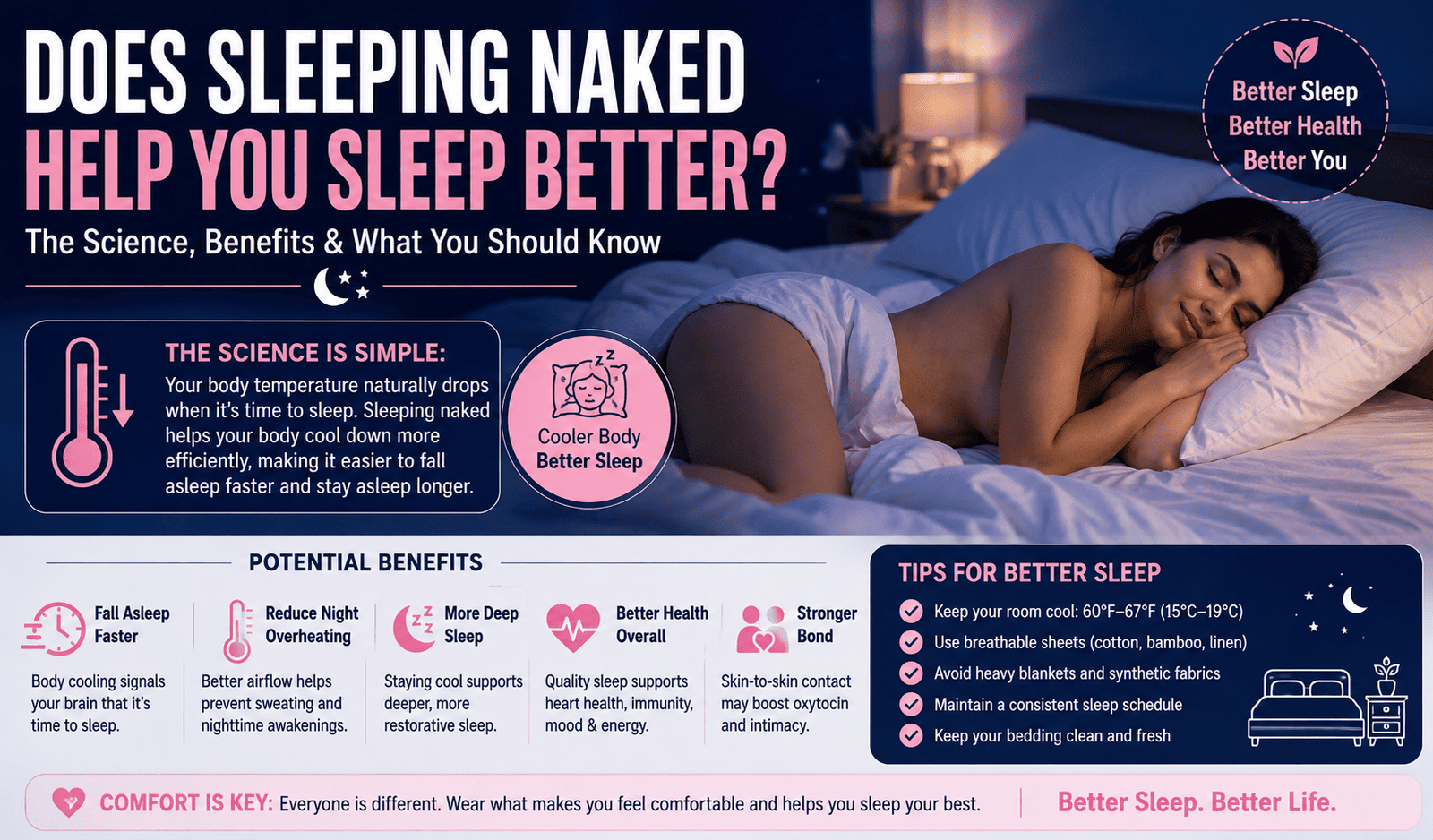
Yes, sleeping naked may help you sleep better by allowing your body to regulate its temperature more naturally. A cooler body temperature supports your natural sleep cycle, helping many people fall asleep faster, stay asleep longer, and wake up feeling more refreshed. However, the benefits depend on your bedroom temperature, bedding, and personal comfort.
Introduction
Quality sleep is one of the most important foundations of good health. It affects your immune system, heart health, mental well-being, energy levels, and even your metabolism. Despite this, millions of adults in the United States struggle with poor sleep caused by stress, overheating, inconsistent sleep schedules, or an uncomfortable sleeping environment.
One wellness habit that has gained popularity is sleeping naked. Some people claim it leads to deeper sleep, fewer night sweats, and better overall health. But is there any scientific truth behind it? The answer is more interesting than you might think.
This article explains how sleeping naked may improve sleep quality, the potential health benefits, possible drawbacks, and whether it is the right choice for you.
Also Read : Why Do I Feel More Awake at Night Than During the Day?
Why Your Body Temperature Affects Sleep?
Your body follows a natural internal clock known as the circadian rhythm. As bedtime approaches, your brain begins preparing you for sleep by releasing melatonin and gradually lowering your core body temperature. This cooling process signals that it is time to rest.
If your body becomes too warm during the night, it can interrupt this natural rhythm. Overheating often causes tossing and turning, frequent awakenings, and lighter sleep instead of deep restorative sleep. Sleeping without clothes may reduce heat retention, allowing your body to cool more efficiently and maintain a comfortable sleeping temperature throughout the night.
Also Read : Can Sleeping With a Fan Improve Sleep Quality?
Does Sleeping Naked Really Help You Sleep Better?
For many people, yes. The primary reason is improved temperature regulation rather than nudity itself. Removing layers of clothing allows excess body heat to escape, making it easier to stay within the ideal sleep temperature.
People who naturally sleep hot or wake up sweating may notice the biggest improvement. A cooler sleeping environment supports longer periods of deep sleep, which is essential for muscle recovery, memory, immune function, and overall physical health.
While sleeping naked is not a miracle cure for insomnia, it can be a simple lifestyle adjustment that contributes to better sleep hygiene.
Also Read : Why Do My Legs Twitch When I’m Trying to Sleep?
How Sleeping Naked Can Improve Sleep Quality?
Sleeping naked may help you fall asleep faster because your body cools more naturally. As your skin releases heat, your brain receives stronger signals that encourage sleep onset. Many people report feeling relaxed more quickly when they are not trapped inside heavy or restrictive sleepwear.
Another advantage is fewer nighttime awakenings. Excess heat is one of the leading causes of disrupted sleep. When your body remains comfortably cool, you are less likely to wake up because of sweating or discomfort. This means your sleep cycles remain more consistent, allowing you to spend more time in restorative deep sleep.
Better sleep also has a positive effect on daytime mood and concentration. When you experience uninterrupted sleep, your brain performs important overnight repair processes that improve memory, emotional regulation, and cognitive performance.
Also Read : Is It Better to Sleep With Socks On?
The Connection Between Deep Sleep and Recovery
Deep sleep is often called the body’s repair mode. During this stage, your muscles recover from daily activity, tissues heal, growth hormone is released, and the immune system becomes more active.
Although sleeping naked does not directly create deep sleep, maintaining a cooler body temperature supports the conditions needed for healthy sleep architecture. The fewer interruptions you experience during the night, the greater your opportunity to complete multiple deep sleep cycles before morning.
For athletes, busy professionals, and anyone recovering from physical or mental fatigue, optimizing sleep quality is often more valuable than simply increasing sleep duration.
Also Read : Can Seasonal Changes Affect Your Sleep Cycle?
Can Sleeping Naked Reduce Night Sweats?
Yes, it may help in many cases. Night sweats are commonly triggered by overheating beneath blankets or thick pajamas. Sleeping naked allows better airflow around the skin, reducing trapped heat and moisture.
However, if night sweats occur frequently without an obvious reason, they should not be ignored. Persistent night sweats can sometimes be related to medications, hormonal changes, infections, or underlying medical conditions. In those situations, consulting a healthcare professional is recommended.
Also Read : Why Do I Wake Up at the Same Time Every Night?
Benefits for Skin Health
Your skin works hard while you sleep. Overnight, it repairs damaged cells, restores hydration, and produces collagen. Better quality sleep supports these natural repair processes.
Sleeping naked may also reduce friction caused by tight clothing and decrease moisture buildup around the skin. When combined with breathable cotton or bamboo bedding, this can help improve overall skin comfort, particularly for people who experience irritation from synthetic sleepwear.
Also Read : How much sleep do adults over 40 need?
Benefits for Men’s Health
Body temperature plays an important role in male reproductive health. The testicles naturally remain slightly cooler than the rest of the body, which supports healthy sperm production. Tight underwear and excessive heat may increase testicular temperature.
Sleeping without underwear or pajamas may help maintain a cooler environment overnight. While this alone is not a fertility treatment, it may contribute to healthier reproductive conditions as part of an overall healthy lifestyle.
Also Read : Why do I wake up sweating at night?
Benefits for Women’s Health
Women may also experience benefits from improved airflow during sleep. Tight, non-breathable underwear can trap moisture, creating an environment where yeast may grow more easily. Sleeping without restrictive clothing may improve comfort by allowing better ventilation throughout the night.
This is especially beneficial during warmer months or for women who naturally experience increased nighttime sweating.
Also Read : Can low vitamin D affect sleep?
Does Sleeping Naked Help You Lose Weight?
This is one of the biggest myths on the internet. Sleeping naked does not directly cause weight loss.
What it may do is indirectly support healthier metabolism through improved sleep quality. Poor sleep is associated with increased hunger hormones, stronger cravings for high-calorie foods, and reduced motivation for physical activity. Better sleep can help support healthy eating habits and energy levels, but sleeping naked alone is not a weight-loss strategy.
Also Read : What causes sleep anxiety before workdays?
Is Sleeping Naked Good for Couples?
Many couples enjoy sleeping naked because it increases skin-to-skin contact. Physical touch encourages the release of oxytocin, a hormone associated with relaxation, trust, and emotional bonding.
While sleeping naked will not solve relationship problems, it may help some couples feel more connected and comfortable together, particularly when both partners enjoy the same sleeping temperature.
Also Read : How to reset sleep schedule naturally?
Are There Any Risks?
Sleeping naked is generally safe for healthy adults, but it is not ideal for everyone.
If your bedroom is too cold, your body may struggle to stay warm, resulting in restless sleep instead of better rest. People with poor circulation or those who frequently feel cold may sleep more comfortably in lightweight cotton pajamas.
Hygiene is another consideration. Since your skin has direct contact with your sheets, washing bedding regularly becomes more important. Clean, breathable bedding contributes to a healthier sleeping environment regardless of what you wear.
Also Read : Why does my body feel heavy after waking up?
What Is the Best Bedroom Temperature?
Experts generally recommend keeping your bedroom between 60°F and 67°F (15°C to 19°C). This temperature range supports the body’s natural cooling process and is considered ideal for most adults.
In addition to room temperature, choosing breathable sheets, avoiding heavy blankets, limiting caffeine before bed, and maintaining a consistent bedtime all contribute significantly to better sleep quality.
Also Read : Can sleep problems affect mental health?
Should You Try Sleeping Naked?
If you regularly wake up feeling hot, experience night sweats, or struggle with overheating, sleeping naked is worth trying for one or two weeks. Pay attention to how quickly you fall asleep, how often you wake during the night, and how energized you feel in the morning.
If you feel cold or uncomfortable, there is no reason to force the habit. The ultimate goal is comfortable, uninterrupted, restorative sleep—not following a trend.
Also Read : What are the best nighttime habits for deep sleep?
Conclusion
So, does sleeping naked help you sleep better? For many adults, the answer is yes. The biggest benefit comes from improved body temperature regulation, which supports faster sleep onset, fewer nighttime awakenings, and better overall sleep quality. Although it is not a cure for insomnia or other sleep disorders, it can be a simple and healthy habit when combined with good sleep hygiene and a cool sleeping environment.
The best sleep routine is the one that keeps you consistently comfortable, relaxed, and well-rested.
Also Read : Why do I feel exhausted despite resting all day?
Frequently Asked Questions (FAQ)
1. Does sleeping naked help you sleep better?
Yes. Sleeping naked may improve sleep by helping your body regulate temperature more effectively, leading to deeper and more comfortable sleep.
2. Is it healthy to sleep naked every night?
Yes. For most healthy adults, sleeping naked is perfectly safe as long as you maintain good hygiene and clean bedding.
3. Can sleeping naked help with insomnia?
It may help if overheating is contributing to poor sleep, but it is not a medical treatment for chronic insomnia.
4. What is the ideal room temperature for sleeping?
The recommended bedroom temperature is between 60°F and 67°F (15°C to 19°C).
5. Does sleeping naked reduce night sweats?
Yes. Better airflow around the body may reduce overheating and excessive sweating during sleep.
6. Is sleeping naked better than wearing pajamas?
It depends on personal preference. Hot sleepers often benefit from sleeping naked, while cold sleepers may prefer lightweight cotton pajamas.
7. Can sleeping naked improve skin health?
Potentially yes. Less friction and improved airflow may increase skin comfort and reduce moisture buildup.
8. Is sleeping naked good for fertility?
For men, cooler nighttime temperatures may support healthy sperm production, although many lifestyle factors influence fertility.
9. Should women sleep without underwear?
Many gynecologists consider sleeping without restrictive underwear a comfortable option because it allows better ventilation and reduces trapped moisture.
10. Who should avoid sleeping naked?
People who feel excessively cold, have poor circulation, or are uncomfortable without sleepwear may sleep better in breathable, lightweight pajamas.

A complete sleep cycle lasts about 90 minutes.
Medical Disclaimer: This article is for educational purposes only and does not replace professional medical advice, diagnosis, or treatment. Always consult a qualified healthcare provider before making significant changes to your diet, exercise routine, medications, or health management plan.
Medically reviewed information sourced from trusted health organizations.
References
- National Institutes of Health (NIH). Sleep and Sleep Disorders.
https://www.nhlbi.nih.gov/health/sleep - Sleep Foundation. Sleep Health Resources.
https://www.sleepfoundation.org/ - Centers for Disease Control and Prevention (CDC). Sleep and Sleep Disorders.
https://www.cdc.gov/sleep/ - Mayo Clinic. Sleep Disorders Overview.
https://www.mayoclinic.org/
Reviewed by: Dzarro Editorial Team
Fact-checked using trusted medical and scientific sources.

Sandip Choudhary is a Health & Wellness Researcher and Content Creator specializing in sleep, digestive health, preventive wellness, and evidence-based health education. He has been creating online content and researching health-related topics for several years, focusing on translating complex medical information into practical guidance for everyday readers.
With a strong background in SEO and content strategy, Sandip ensures that every article is optimized for both search engines and real users. His goal is to provide reliable, clear, and helpful information that supports healthier living.
Disclaimer: The content published is for informational purposes only and is not a substitute for professional medical advice.
2 thoughts on “Does Sleeping Naked Help You Sleep Better?”
Comments are closed.