
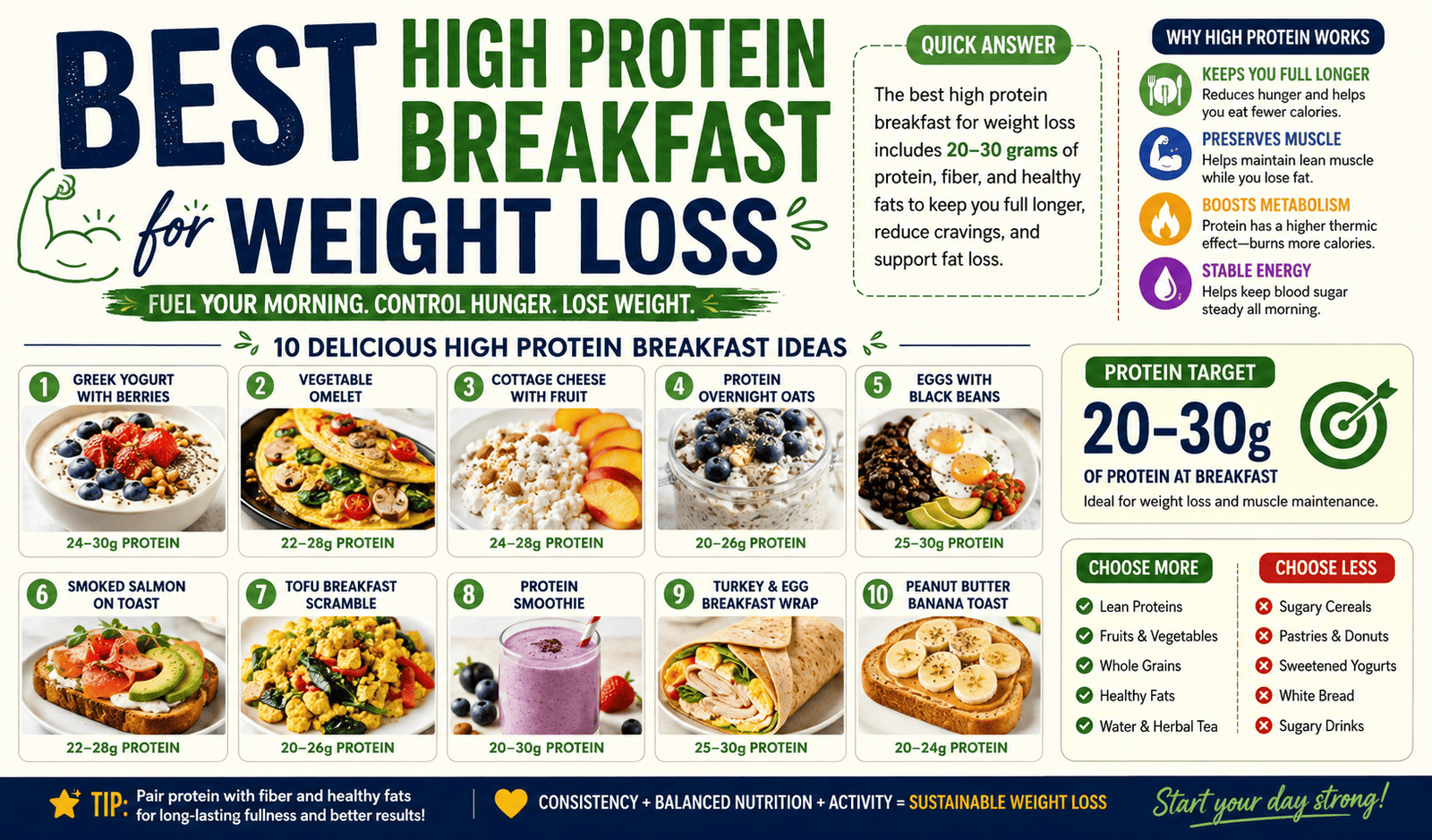
The best high protein breakfast for weight loss is a meal that contains 20–30 grams of protein, plenty of fiber, and healthy fats while remaining moderate in calories. Excellent options include Greek yogurt with berries, vegetable omelets, cottage cheese with fruit, protein oatmeal, and eggs with black beans. These breakfasts help reduce hunger, preserve muscle during weight loss, and keep you full longer.
Why Is a High Protein Breakfast Good for Weight Loss?
A high protein breakfast is one of the simplest ways to support healthy and sustainable weight loss. Protein takes longer to digest than refined carbohydrates, helping you feel satisfied for several hours after eating. It also helps maintain lean muscle mass while your body burns fat, which is important for keeping your metabolism healthy during a calorie deficit.
Many traditional American breakfasts, including sugary cereal, pastries, and sweet coffee drinks, are low in protein and high in added sugar. These meals often lead to energy crashes and increased cravings before lunch. Replacing them with protein-rich foods can improve appetite control and make it easier to stay within your daily calorie goals.
For most adults, consuming 20–30 grams of protein at breakfast is an ideal target for promoting fullness and supporting weight management.
Also Read : How to stop emotional eating?
What Makes the Best High Protein Breakfast?
The healthiest breakfast for weight loss should combine three important nutrients instead of focusing on protein alone. High-quality protein helps preserve muscle and reduce hunger, fiber slows digestion and supports gut health, and healthy fats provide longer-lasting energy and improve satisfaction after eating.
A balanced breakfast should also be low in added sugars and include minimally processed ingredients whenever possible.
Also Read : What is metabolic health?
Best High Protein Breakfasts for Weight Loss
1. Greek Yogurt with Berries and Chia Seeds
Plain Greek yogurt is one of the highest-protein breakfast foods available. It provides around 20–25 grams of protein per serving while also offering probiotics that support digestive health. Adding blueberries, strawberries, and chia seeds increases fiber and antioxidants without adding excessive calories.
This breakfast typically contains about 300 calories and nearly 30 grams of protein, making it one of the best choices for fat loss.
2. Vegetable Omelet with Avocado
Eggs contain complete protein with all essential amino acids. A three-egg vegetable omelet with spinach, tomatoes, mushrooms, and bell peppers provides excellent nutrition while remaining satisfying. Adding a few slices of avocado contributes heart-healthy monounsaturated fats that help keep you full.
This breakfast is especially beneficial for people following low-carb or Mediterranean-style eating patterns.
Also Read : Can stress cause belly fat?
3. Cottage Cheese with Fresh Fruit
Cottage cheese is naturally rich in casein protein, a slow-digesting protein that supports fullness throughout the morning. Pairing it with peaches, apples, or berries creates a naturally sweet breakfast without relying on refined sugar.
A single serving can provide over 25 grams of protein while remaining relatively low in calories.
4. Protein Overnight Oats
Overnight oats are perfect for busy mornings because they can be prepared the night before. Combining rolled oats with Greek yogurt, chia seeds, cinnamon, and berries creates a breakfast that’s rich in both protein and fiber.
Unlike instant flavored oatmeal, homemade overnight oats contain significantly less added sugar and offer much better nutritional value.
Also Read : What are signs of hormonal weight gain?
5. Eggs with Black Beans
Black beans add plant-based protein, fiber, and complex carbohydrates to a classic egg breakfast. This combination supports steady blood sugar levels and provides long-lasting energy, making it ideal for active adults.
Adding salsa instead of creamy sauces keeps calories lower while adding flavor.
6. Smoked Salmon on Whole-Grain Toast
Smoked salmon provides high-quality protein along with omega-3 fatty acids that support heart and brain health. Whole-grain bread contributes fiber, making this breakfast filling and nutritionally balanced.
Choose whole-grain or sprouted bread instead of white bread for better blood sugar control.
Also Read : Why am I always hungry?
7. Tofu Breakfast Scramble
For vegans and vegetarians, tofu is an outstanding protein source. Crumbled tofu cooked with turmeric, spinach, onions, and peppers resembles scrambled eggs while providing plenty of plant protein.
Nutritional yeast can be added for a cheesy flavor and additional B vitamins.
8. Protein Smoothie
A homemade protein smoothie made with unsweetened almond milk, Greek yogurt or protein powder, frozen berries, spinach, and peanut butter creates a convenient breakfast when you’re short on time.
Avoid bottled smoothies, as many contain large amounts of added sugar.
Also Read : Does drinking water help lose weight?
9. Turkey and Egg Breakfast Wrap
Using a whole-wheat tortilla with scrambled eggs, lean turkey breast, spinach, and salsa creates a portable breakfast with approximately 30 grams of protein. It’s an excellent option for people commuting to work.
10. Peanut Butter Banana Protein Toast
Whole-grain toast topped with natural peanut butter, sliced banana, and hemp seeds offers a balanced combination of protein, healthy fats, and complex carbohydrates. While slightly higher in calories, it’s a great pre-workout breakfast.
Also Read : Best morning habits for weight loss?
How Much Protein Should You Eat at Breakfast?
Nutrition experts generally recommend consuming 20–30 grams of protein during breakfast for weight loss and muscle maintenance. This amount helps stimulate muscle protein synthesis while improving satiety and reducing hunger later in the day.
Here’s a simple guide:
| Breakfast Goal | Protein Target |
|---|---|
| General health | 15–20 g |
| Weight loss | 20–30 g |
| Active adults | 25–35 g |
| Muscle building | 30–40 g |
Rather than eating most of your protein at dinner, spreading protein across all meals may provide better results for muscle preservation and appetite control.
High Protein Foods to Include in Breakfast
| Food | Protein |
|---|---|
| Greek yogurt (1 cup) | 20–23 g |
| Eggs (3 large) | 18 g |
| Cottage cheese (1 cup) | 25 g |
| Tofu (150 g) | 18 g |
| Smoked salmon (3 oz) | 17 g |
| Black beans (½ cup) | 8 g |
| Chia seeds (2 tbsp) | 5 g |
| Peanut butter (2 tbsp) | 8 g |
Combining several of these foods makes it easy to reach the recommended protein target.
Also Read : What causes slow metabolism?
Foods to Avoid for Weight Loss
Some breakfast foods appear healthy but contain very little protein and large amounts of refined carbohydrates. These options may increase hunger shortly after eating.
Instead of choosing donuts, muffins, sugary cereal, flavored yogurt, or white toast with jam, opt for whole foods that combine protein and fiber. Small changes in breakfast quality can significantly improve overall daily nutrition.
Can a High Protein Breakfast Reduce Belly Fat?
No single food specifically burns belly fat. However, a high protein breakfast supports the conditions needed for overall fat loss by reducing hunger, helping preserve muscle, and making it easier to maintain a calorie deficit consistently.
Losing belly fat ultimately depends on overall nutrition, physical activity, sleep quality, and long-term calorie balance.
Also Read : Can poor sleep cause weight gain?
Best High Protein Breakfast for Women
Women trying to lose weight often benefit from breakfasts that include protein, calcium, and fiber. Greek yogurt with berries, cottage cheese with fruit, or eggs with vegetables provide excellent nutrition while supporting hormone health and muscle maintenance.
These meals are filling without being excessively high in calories.
Best High Protein Breakfast for Men
Men generally require slightly more protein because of greater muscle mass. Breakfasts containing eggs, smoked salmon, black beans, turkey, or protein oatmeal can easily provide 25–35 grams of protein while supporting strength and fat loss goals.
Also Read : Why is belly fat hard to lose?
Sample 30-Gram Protein Breakfast Recipe
Mix one cup of plain Greek yogurt with half a cup of blueberries, one tablespoon of chia seeds, one tablespoon of chopped walnuts, and a sprinkle of cinnamon. This breakfast contains approximately 310 calories, 29 grams of protein, and 9 grams of fiber while requiring less than five minutes to prepare.
Final Thoughts
The best high protein breakfast for weight loss is one that you can enjoy consistently. Meals providing 20–30 grams of protein along with fiber-rich fruits, vegetables, or whole grains help control hunger, preserve lean muscle, and support sustainable fat loss. Whether you prefer Greek yogurt, eggs, cottage cheese, tofu, or salmon, choosing minimally processed, nutrient-dense foods is the smartest strategy for long-term success.
Also Read : What foods burn belly fat naturally?
Frequently Asked Questions (FAQs)
1. What is the best high protein breakfast for weight loss?
Greek yogurt with berries and chia seeds is one of the best options because it provides around 25–30 grams of protein along with fiber and probiotics.
2. How much protein should I eat for breakfast to lose weight?
Aim for 20–30 grams of protein to improve fullness and support muscle preservation during weight loss.
3. Are eggs good for weight loss?
Yes. Eggs are rich in complete protein and help keep you satisfied while being relatively low in calories.
4. Is Greek yogurt better than regular yogurt?
Yes. Plain Greek yogurt typically contains nearly twice as much protein and less sugar than regular yogurt.
5. Can I eat oatmeal while trying to lose weight?
Yes. Oatmeal becomes much more effective for weight loss when paired with Greek yogurt, protein powder, or chia seeds.
6. What is the healthiest vegetarian high protein breakfast?
A tofu scramble with vegetables or cottage cheese with fruit are excellent vegetarian protein-rich breakfasts.
7. Do protein smoothies help with weight loss?
Yes, if they’re made with whole ingredients and fit within your daily calorie goals. Avoid high-sugar bottled smoothies.
8. Is peanut butter good for breakfast?
Natural peanut butter is healthy in moderation because it provides protein and healthy fats, but portion control is important.
9. What breakfast keeps you full the longest?
Meals combining protein, fiber, and healthy fats—such as eggs with avocado or Greek yogurt with chia seeds—provide the longest-lasting fullness.
10. Can I lose weight without eating breakfast?
Yes. Weight loss depends on maintaining a calorie deficit. However, if skipping breakfast leads to overeating later, a high-protein breakfast may help improve consistency and appetite control.

Portion control prevents overeating without eliminating favorite foods.
Medical Disclaimer: This article is intended for general educational purposes and does not replace individualized medical, nutritional, or mental health advice. If you are experiencing recurrent binge eating, loss of control around food, severe distress, or symptoms of an eating disorder, speak with a qualified healthcare professional.
Medically reviewed information sourced from trusted health organizations.
Reviewed by: Dzarro Editorial Team
Fact-checked using trusted medical and scientific sources.

Sandip Choudhary is a Health & Wellness Researcher and Content Creator specializing in sleep, digestive health, preventive wellness, and evidence-based health education. He has been creating online content and researching health-related topics for several years, focusing on translating complex medical information into practical guidance for everyday readers.
With a strong background in SEO and content strategy, Sandip ensures that every article is optimized for both search engines and real users. His goal is to provide reliable, clear, and helpful information that supports healthier living.
Disclaimer: The content published is for informational purposes only and is not a substitute for professional medical advice.
3 thoughts on “Best high protein breakfast for weight loss?”
Comments are closed.