
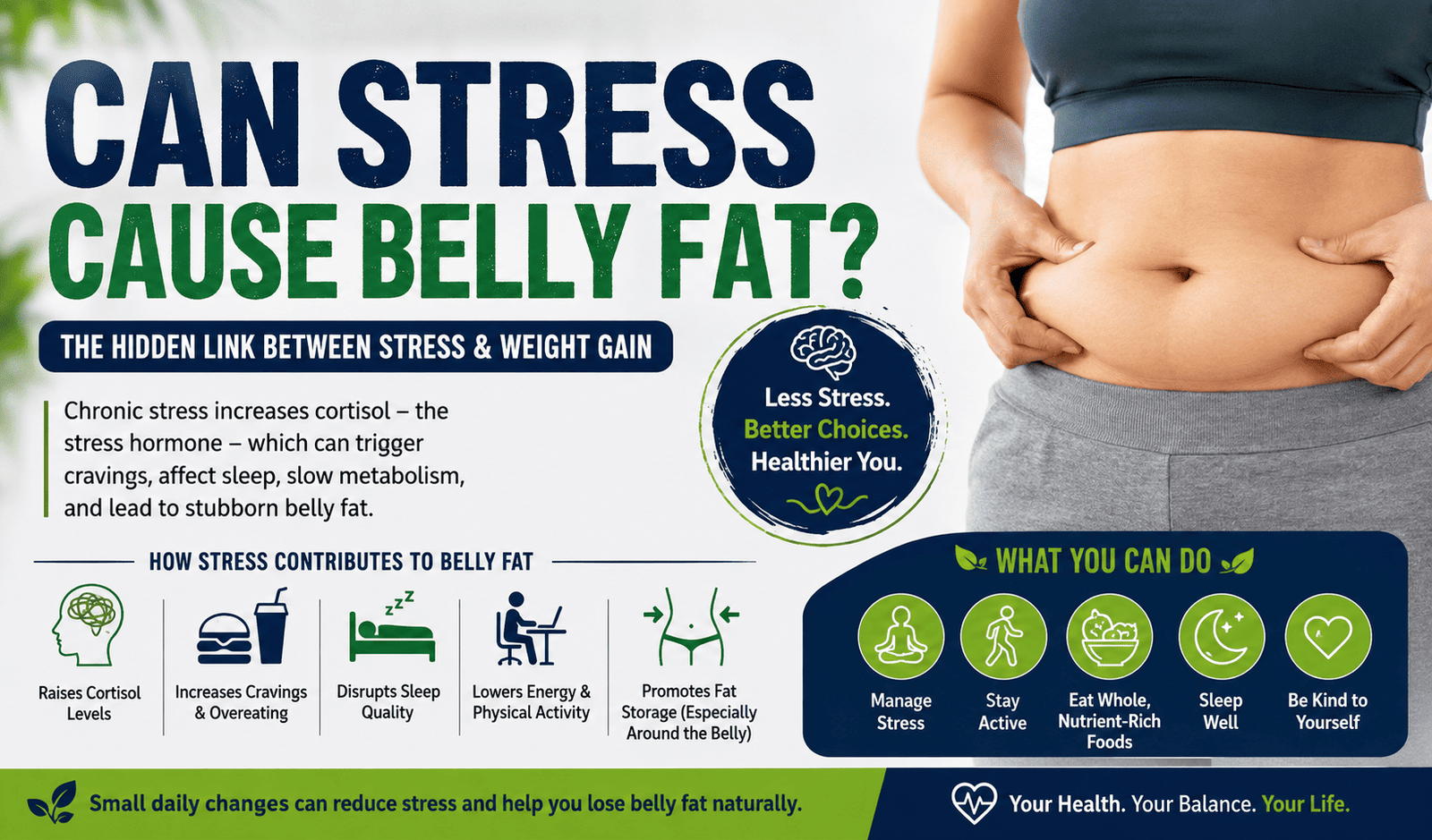
Yes, stress can contribute to belly fat, particularly when stress becomes chronic. Stress activates the body’s stress-response system and increases hormones such as cortisol. Cortisol helps regulate energy and appetite, but prolonged stress may influence hunger, food choices, sleep, physical activity, and how the body stores fat. Research has also found associations between chronic stress, cortisol activity, and abdominal fat. However, stress is only one possible contributor to belly fat. Genetics, diet, sleep, physical activity, age, medications, and certain medical conditions can also affect body weight and fat distribution.
Also Read : Why am I gaining weight without eating more?
Can Stress Cause Belly Fat?
If you have noticed that your waistline seems to increase during a particularly stressful period, you may wonder, “Can stress cause belly fat?” The answer is yes, stress can play a role, but it is more accurate to say that chronic stress can contribute to weight gain and abdominal fat rather than directly causing belly fat by itself.
When you experience stress, your body activates a system commonly called the hypothalamic-pituitary-adrenal, or HPA, axis. This response helps your body react to challenging situations. Cortisol is one of the hormones involved in this process. In the short term, cortisol is useful because it helps mobilize energy and supports the body during stressful situations. The problem can arise when stress is frequent or long-lasting.
The National Heart, Lung, and Blood Institute notes that both short-term and long-term stress can affect hormones involved in energy balance and hunger. These changes may increase eating and contribute to fat storage.
Research also suggests that cortisol and other glucocorticoids can influence where fat is stored. Abdominal fat, including visceral fat around internal organs, appears to be particularly responsive to glucocorticoid activity. However, the relationship between cortisol, stress, and obesity is complex, and research does not show that everyone with chronic stress will develop belly fat.
Also Read : What are signs of hormonal weight gain?
How Does Stress Lead to Belly Fat?
Stress can influence belly fat through several interconnected pathways. Cortisol is an important part of the story, but it is not the entire explanation.
One pathway involves appetite and eating behavior. When people are stressed, they may experience changes in hunger and cravings. Some people eat less when they are stressed, while others reach for highly palatable foods containing more calories, added sugars, or fats. Over time, regularly consuming more calories than the body uses can lead to weight gain.
Another pathway involves physical activity. Chronic stress can leave a person feeling mentally and physically exhausted. Someone who normally exercises may become less active when work pressure, financial concerns, family responsibilities, or other stressors become overwhelming. Lower physical activity means fewer calories are being used, which can make weight management more difficult. The CDC recommends regular physical activity as an important part of maintaining a healthy weight.
Sleep is another important factor. Stress can make it difficult to fall asleep, stay asleep, or get enough restorative sleep. Poor sleep can influence appetite and weight-management behaviors. The CDC also identifies adequate sleep as an important component of healthy weight management.
Stress can therefore create a cycle. A stressful day may increase cravings or reduce motivation to exercise. Poor food choices or inactivity can contribute to weight gain. Poor sleep can make the next day more difficult, potentially increasing stress and appetite again.
Also Read : Why am I always hungry?
What Does Cortisol Have to Do With Belly Fat?
Cortisol is often called the “stress hormone,” although it performs many normal and essential functions in the body. It participates in regulating metabolism, blood pressure, immune activity, and the body’s response to stress.
The connection between cortisol and abdominal fat is more complicated than many social media posts suggest. It is not accurate to say that every stressful situation automatically causes cortisol to “turn into belly fat.” Human research has found associations between altered HPA-axis activity, cortisol responses, and abdominal obesity, but the findings are not completely consistent.
Some research indicates that glucocorticoid activity can promote central fat accumulation. Reviews of the scientific literature describe greater responsiveness of certain abdominal fat depots to glucocorticoids and identify potential mechanisms involving local cortisol metabolism in adipose tissue.
This means cortisol may be one biological pathway connecting chronic stress and abdominal fat, but it should not be viewed as the sole explanation for belly fat.
Also Read : Does drinking water help lose weight?
Is Stress Belly Fat Different From Regular Belly Fat?
There is no separate medical category called “stress belly fat.” Belly fat is generally abdominal adipose tissue, which includes subcutaneous fat located beneath the skin and visceral fat located deeper inside the abdomen around organs.
Visceral fat is particularly important from a health perspective because excess visceral fat is associated with metabolic problems and cardiometabolic risk. Research examining glucocorticoids has found that central fat depots can be particularly responsive to glucocorticoid activity.
However, you cannot determine from appearance alone whether abdominal fat is primarily subcutaneous or visceral. A person can have a relatively flat stomach but still have visceral fat, while another person may have noticeable subcutaneous abdominal fat without having the same level of visceral fat.
Also Read : Best morning habits for weight loss?
Can Chronic Stress Make You Gain Weight?
Yes, chronic stress can make healthy weight management more difficult. The effect varies substantially from person to person.
Some people respond to stress by eating more, particularly calorie-dense comfort foods. Others lose their appetite. Stress may also affect sleep, physical activity, meal timing, and alcohol consumption. The CDC explains that long-term stress can contribute to changes in appetite, energy, sleep, and overall health.
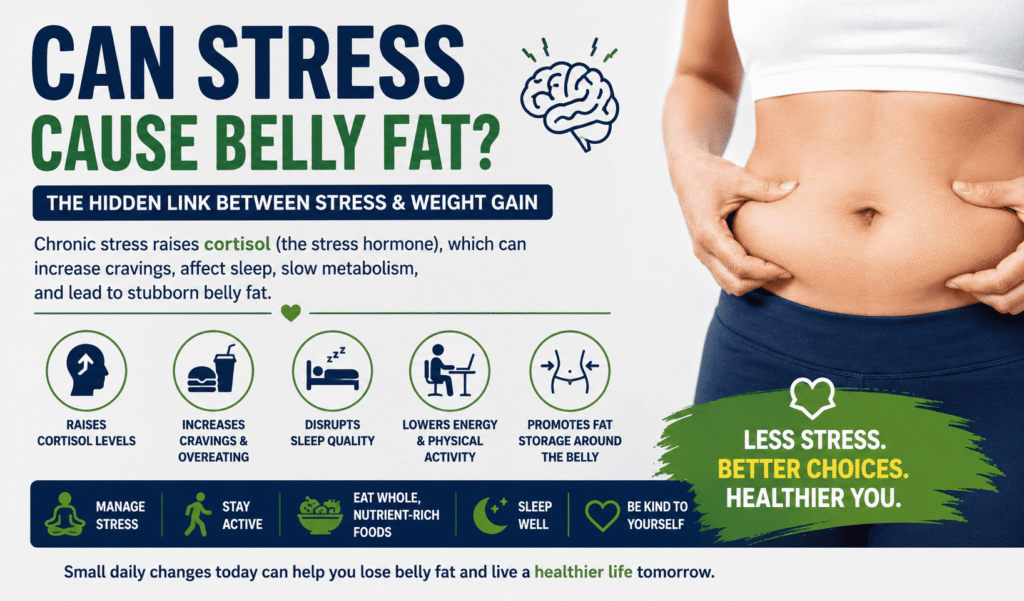
This is why blaming weight gain entirely on cortisol can be misleading. A person experiencing chronic stress may gain weight because several behaviors and biological processes change at the same time.
For example, someone working long hours may skip a balanced lunch, snack late at night, sleep five hours, stop exercising, and rely on convenience foods. Stress is involved, but the resulting weight gain reflects multiple factors rather than one hormone acting independently.
Also Read : What causes slow metabolism?
Does Stress Cause Belly Fat Without Eating More?
Stress may influence fat distribution through hormonal and metabolic pathways, but it would be misleading to claim that stress alone inevitably causes substantial belly fat without changes in energy intake, activity, sleep, or other factors.
Scientific research supports a relationship between chronic stress, cortisol-related pathways, and abdominal fat, but the mechanisms are complex and vary among individuals. A systematic review found that abdominal obesity is associated with differences in HPA-axis responsiveness, while also emphasizing inconsistencies across studies.
In practical terms, this means you should not assume that every increase in belly fat is caused by stress. Weight changes can result from many factors, including diet, activity, sleep, age, genetics, medications, and medical conditions.
Also Read : Can poor sleep cause weight gain?
How Can You Reduce Stress-Related Belly Fat?
If stress is contributing to weight gain, addressing the stress itself can be an important part of a healthier approach. There is no special exercise or food that selectively removes “cortisol belly fat.” Instead, focus on sustainable habits that support overall health and healthy weight management.
Regular physical activity is one of the most useful strategies. Adults generally should aim for at least 150 minutes of moderate-intensity aerobic activity each week, along with muscle-strengthening activity on at least two days per week. The CDC notes that physical activity supports healthy weight management and can also improve sleep and reduce anxiety.
Walking is a practical starting point if you have been inactive. You do not necessarily need an intense workout program immediately. Consistently increasing daily movement can be more sustainable than attempting an extreme exercise routine and abandoning it after a few weeks.
Nutrition also matters. Rather than following a highly restrictive “cortisol diet,” build meals around nutritious foods such as vegetables, fruits, whole grains, lean proteins, and other minimally processed foods. Limiting excessive added sugars and highly processed foods can make it easier to manage overall calorie intake while still providing adequate nutrition.
Sleep deserves equal attention. Adults generally need at least seven hours of sleep per night. Establishing a consistent bedtime and wake time, creating a relaxing evening routine, and addressing persistent sleep problems can support both stress management and healthy weight behaviors.
Stress-management techniques can also help. Deep breathing, meditation, journaling, spending time outdoors, taking breaks, connecting with trusted people, and other relaxing activities are among the approaches recommended by the CDC for managing stress.
The goal is not to eliminate every stressful event from your life. That is unrealistic. Instead, the goal is to improve how your body and daily routine respond to ongoing stress.
Also Read : Why is belly fat hard to lose?
Can Exercise Reduce Stress and Belly Fat?
Exercise can address two sides of the problem at once. Physical activity helps the body use energy and supports weight management, while regular movement can also improve sleep and reduce symptoms of anxiety.
However, it is important to have realistic expectations. You cannot reliably target fat loss from only your stomach by doing abdominal exercises. Strengthening your abdominal muscles can improve muscular fitness, but reducing overall body fat generally requires a broader approach involving nutrition, physical activity, sleep, and sustainable lifestyle habits.
If stress has made you inactive for months, start with manageable activity such as walking and gradually increase the duration or intensity. If you have a medical condition or have been inactive for a long time, consider talking with a healthcare professional about an appropriate exercise plan.
Also Read : What foods burn belly fat naturally?
When Should You Talk to a Doctor About Belly Fat?
Belly fat itself is common, but unexplained or rapid changes in body weight should not automatically be blamed on stress.
Talk with a healthcare professional if you experience unexplained weight gain, rapid changes in body composition, persistent fatigue, significant changes in appetite, sleep problems, or other unusual symptoms. Certain medical conditions and medications can contribute to weight gain, and conditions such as Cushing’s disease and polycystic ovary syndrome can affect body weight.
A healthcare professional can review your symptoms, medications, medical history, lifestyle factors, and relevant measurements to determine whether additional evaluation is appropriate.
Also Read : How to boost metabolism naturally?
Frequently Asked Questions
1. Can stress cause belly fat?
Yes. Chronic stress can contribute to belly fat through changes in cortisol-related pathways, appetite, eating behavior, sleep, and physical activity. However, stress is only one potential contributor to abdominal weight gain.
2. Does cortisol directly cause belly fat?
Cortisol does not automatically cause belly fat every time you experience stress. Cortisol has many normal functions, but prolonged or altered glucocorticoid activity may influence metabolism and abdominal fat distribution. The relationship is complex and varies between individuals.
3. How do I know if stress is causing my belly fat?
There is no simple test that can prove that stress is the cause of your belly fat. Consider whether your weight or waist size changed during a period of prolonged stress and whether your eating, sleep, physical activity, or alcohol intake also changed. Other causes should also be considered.
4. Can reducing stress help reduce belly fat?
Reducing stress may support healthy weight management, particularly when stress has been contributing to overeating, poor sleep, or inactivity. Stress reduction should be combined with nutritious eating, regular physical activity, adequate sleep, and other healthy habits.
5. Does poor sleep cause belly fat?
Poor sleep can make weight management more difficult by affecting appetite, energy, and daily behaviors. The CDC identifies adequate sleep as one factor that supports healthy weight management.
6. Can walking help with stress-related belly fat?
Walking can help increase physical activity and support healthy weight management. It can also provide mental-health benefits and may be easier to maintain consistently than an overly intense exercise program.
7. What foods should I eat to reduce stress belly fat?
There is no specific food that directly melts stress-related belly fat. A balanced eating pattern emphasizing vegetables, fruits, whole grains, lean protein, and nutrient-dense foods is a more evidence-based approach to healthy weight management than relying on a “cortisol-burning” food or supplement.
8. Can stress cause weight gain even if I exercise?
Yes. Exercise is beneficial, but weight is influenced by multiple factors, including food intake, sleep, stress, medications, genetics, age, and medical conditions. Physical activity remains an important component of healthy weight management.
9. Is stress belly fat dangerous?
Excess abdominal fat, particularly visceral fat, can be associated with increased metabolic and cardiovascular health risks. The concern is not simply how the abdomen looks but the amount and distribution of body fat and its effects on health. If you are concerned about your waist size or health risks, discuss it with a healthcare professional.
10. How long does it take to lose stress-related belly fat?
There is no universal timeline. Fat loss depends on factors such as calorie intake, physical activity, sleep, stress, starting body composition, genetics, age, and medical conditions. Sustainable changes are generally more appropriate than rapid weight-loss approaches. The CDC notes that healthy eating and regular physical activity are central to achieving and maintaining a healthy weight.

Drinking enough water supports metabolism and energy production.
Final Takeaway
So, can stress cause belly fat? It can contribute to it, especially when stress is chronic and accompanied by changes in appetite, eating patterns, sleep, and physical activity. Cortisol and other stress-related biological pathways may also influence abdominal fat distribution, but the science is more nuanced than the popular claim that “high cortisol automatically causes belly fat.”
If you are trying to reduce abdominal fat, focus on the bigger picture: eat a balanced diet, stay physically active, get adequate sleep, and develop practical ways to manage ongoing stress. Avoid extreme diets and “cortisol detox” claims that promise to specifically burn belly fat.
Most importantly, do not assume every change in your body is caused by stress. Weight gain can have many causes, including medications and medical conditions. If your weight changes unexpectedly or you have other concerning symptoms, a healthcare professional can help determine the underlying cause and recommend an appropriate approach.
Medical Disclaimer: This article is intended for general educational purposes and is not a substitute for individualized medical advice, diagnosis, or treatment. If you have concerns about unexplained weight gain, abdominal fat, hormonal symptoms, or another health problem, speak with a qualified healthcare professional.
Medically reviewed information sourced from trusted health organizations.
Reviewed by: Dzarro Editorial Team
Fact-checked using trusted medical and scientific sources.

Sandip Choudhary is a Health & Wellness Researcher and Content Creator specializing in sleep, digestive health, preventive wellness, and evidence-based health education. He has been creating online content and researching health-related topics for several years, focusing on translating complex medical information into practical guidance for everyday readers.
With a strong background in SEO and content strategy, Sandip ensures that every article is optimized for both search engines and real users. His goal is to provide reliable, clear, and helpful information that supports healthier living.
Disclaimer: The content published is for informational purposes only and is not a substitute for professional medical advice.
2 thoughts on “Can stress cause belly fat?”
Comments are closed.