
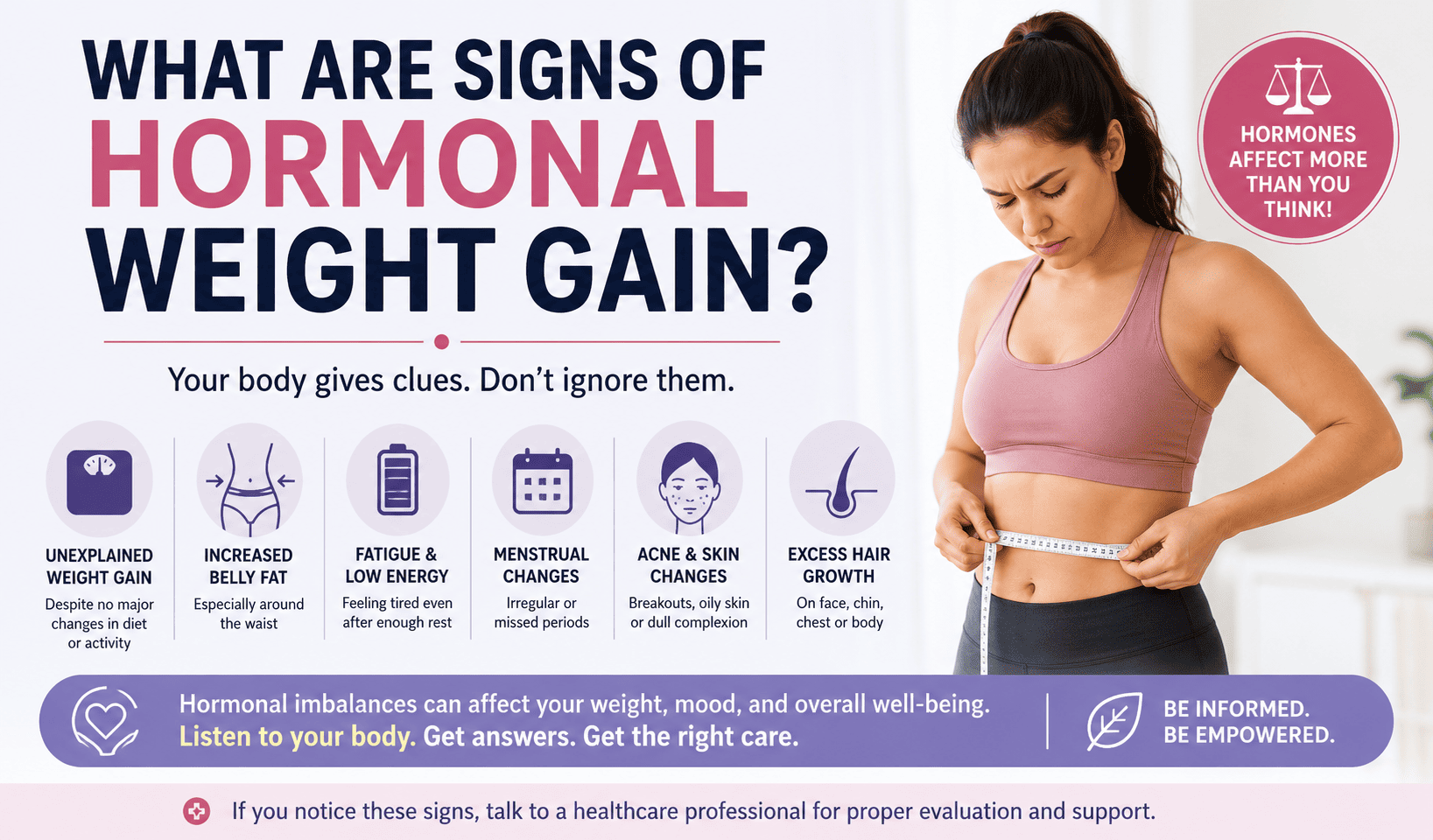
What are signs of hormonal weight gain? Common signs may include unexplained weight gain despite no major changes in eating habits, increased abdominal fat, difficulty losing weight, persistent fatigue, feeling unusually cold, menstrual changes, acne, increased facial or body hair, changes in appetite, and other symptoms that point toward a hormonal or metabolic condition. Hormonal conditions associated with weight gain can include hypothyroidism, polycystic ovary syndrome (PCOS), Cushing syndrome, menopause-related hormone changes, and insulin-related metabolic problems. However, weight gain alone cannot confirm a hormone imbalance, because sleep, medications, activity, diet, genetics, stress, and other health conditions can also affect body weight.
What Is Hormonal Weight Gain?
Hormonal weight gain refers to weight gain that is associated with changes in hormones or endocrine function that influence metabolism, appetite, fluid balance, fat distribution, or how the body uses energy. Hormones help regulate many processes involved in body weight, so certain medical conditions can contribute to unexplained or difficult-to-manage weight gain.
It is important to understand that “hormonal weight gain” is not a diagnosis by itself. A person may gain weight because of many overlapping factors, including calorie intake, physical activity, sleep, medications, genetics, stress, aging, and underlying health conditions. The National Institute of Diabetes and Digestive and Kidney Diseases notes that endocrine disorders such as hypothyroidism, PCOS, and Cushing syndrome can contribute to weight gain.
Also Read : Why am I always hungry?
What Are the Signs of Hormonal Weight Gain?
One potential sign is unexplained weight gain. If your weight increases without a clear change in your eating pattern or activity level, it may be worth discussing with a healthcare professional. Unintentional weight gain has numerous possible causes, including hormone-related conditions, medications, fluid retention, and lifestyle changes that may not always be obvious.
Another possible sign is increased abdominal weight gain. Some hormonal and metabolic conditions can affect where the body stores fat. For example, PCOS may be associated with weight gain around the waist, particularly when insulin resistance is present. The Endocrine Society notes that insulin resistance in PCOS can be associated with increased waist weight, skin changes such as acanthosis nigricans, and skin tags.
Difficulty losing weight can also occur when an underlying medical condition affects metabolism, but it should not automatically be interpreted as evidence of a hormone imbalance. Weight management is influenced by multiple biological and environmental factors. If someone consistently follows a healthy eating and activity pattern but experiences unexpected weight changes, a healthcare professional can help determine whether an underlying condition should be evaluated.
Persistent fatigue combined with weight gain may be another reason to consider a medical evaluation. Hypothyroidism, for example, occurs when the thyroid does not produce enough hormones for the body’s needs. NIH explains that hypothyroidism can cause tiredness and weight gain and may also cause symptoms such as feeling cold and having a slower heart rate.
Also Read : Does drinking water help lose weight?
Hormonal Weight Gain and Hypothyroidism
The thyroid gland produces hormones that help regulate how the body uses energy. When the thyroid becomes underactive, the condition is called hypothyroidism. Weight gain can occur, although the amount varies from person to person.
Possible symptoms of hypothyroidism can include fatigue, feeling unusually cold, weight gain, and a slowed heart rate. Because these symptoms can overlap with many other health conditions, symptoms alone cannot establish a diagnosis. Healthcare professionals can evaluate thyroid function with blood tests, commonly including thyroid-stimulating hormone (TSH) testing.
If weight gain occurs alongside significant fatigue, cold intolerance, constipation, dry skin, hair changes, or other persistent symptoms, discussing thyroid testing with a healthcare professional may be appropriate.
Also Read : Best morning habits for weight loss?
Hormonal Weight Gain and PCOS
Polycystic ovary syndrome, commonly called PCOS, is a hormonal disorder that can affect people with ovaries during their reproductive years. It can involve androgen excess, irregular menstrual cycles, insulin resistance, and metabolic problems.
Weight gain is one possible sign of PCOS, but it is not present in every person with the condition. The Endocrine Society notes that PCOS may be associated with irregular periods, facial or male-pattern body hair growth, acne, thinning scalp hair, and weight gain. Insulin resistance may also contribute to weight gain around the waist and certain skin changes.
For someone experiencing unexplained weight gain together with irregular periods, increased facial hair, persistent acne, or other signs of androgen excess, PCOS may be one condition a healthcare professional considers. Diagnosis requires a proper medical evaluation rather than relying on weight gain alone.
Also Read : Why am I gaining weight without eating more?
Hormonal Weight Gain and Cushing Syndrome
Cushing syndrome is a relatively uncommon hormonal disorder caused by prolonged exposure to excessive cortisol or cortisol-like medications. Although uncommon, it can cause a distinctive pattern of weight gain and other physical changes.
Possible signs include weight gain concentrated around the upper body, a rounded face, increased fat around the neck or upper back, relatively thin arms and legs, muscle weakness, and skin changes. Purple or reddish stretch marks, fragile skin, and easy bruising can also occur. Some people may develop high blood pressure or elevated blood glucose.
Cushing syndrome can have several causes, but medications containing glucocorticoids are a major cause. Because the condition requires specific testing and treatment, people with several characteristic symptoms should speak with a healthcare professional rather than attempting to treat cortisol levels on their own.
Also Read : What causes slow metabolism?
Can Menopause Cause Hormonal Weight Gain?
Hormonal changes associated with menopause can contribute to changes in body weight and fat distribution. However, weight gain during midlife is not necessarily caused by hormones alone. Aging, reduced physical activity, changes in muscle mass, sleep, diet, medications, and other factors can also contribute.
A person going through menopause may notice changes in where body fat is stored, particularly around the abdomen. If weight changes occur alongside hot flashes, night sweats, sleep difficulties, menstrual changes, or other menopausal symptoms, discussing these changes with a healthcare professional can help distinguish normal hormonal transitions from other medical causes.
Also Read : What are symptoms of high cortisol?
Is Belly Fat Always a Sign of Hormonal Imbalance?
No. Belly fat does not automatically mean you have a hormone imbalance. Abdominal fat can be influenced by overall calorie intake, physical activity, age, genetics, sleep, stress, metabolic health, and other factors.
Certain endocrine conditions can influence fat distribution, but a particular body shape or location of fat cannot diagnose a hormonal disorder. For example, Cushing syndrome can produce upper-body weight gain, while PCOS can be associated with increased weight around the waist in people with insulin resistance.
Also Read : Can poor sleep cause weight gain?
Why Hormonal Weight Gain Can Be Difficult to Identify?
Hormonal conditions can be difficult to recognize because their symptoms often overlap with ordinary changes in weight and energy. Fatigue, appetite changes, sleep problems, stress, and weight gain can have many different causes.
The most useful approach is to look at the overall pattern of symptoms rather than focusing on weight alone. For example, weight gain combined with feeling cold and persistent fatigue may prompt consideration of thyroid problems, while weight gain combined with irregular periods and increased facial hair may prompt evaluation for PCOS. Weight gain accompanied by easy bruising, muscle weakness, purple stretch marks, and upper-body fat accumulation may require evaluation for Cushing syndrome.
Also Read : Why do I wake up feeling dehydrated?
When Should You Talk to a Doctor About Hormonal Weight Gain?
Consider talking with a healthcare professional if you experience unexplained or persistent weight gain, especially when it occurs alongside other new or worsening symptoms.
A medical evaluation may involve reviewing your weight history, diet, activity, sleep, medications, menstrual history when relevant, family history, and other symptoms. Depending on the situation, a healthcare professional may order blood tests or other diagnostic evaluations.
Do not assume that an over-the-counter “hormone balance” supplement is the answer. Hormonal disorders have different causes and require different treatments. Treating an assumed hormone imbalance without identifying the underlying cause may delay appropriate care.
Also Read : Why is belly fat hard to lose?
How Is Hormonal Weight Gain Treated?
Treatment depends entirely on the underlying cause. There is no single diet, supplement, or medication that treats all forms of hormonal weight gain.
For hypothyroidism, treatment focuses on restoring appropriate thyroid hormone levels under medical supervision. For PCOS, treatment may address metabolic health, menstrual irregularities, androgen-related symptoms, fertility goals, or weight management depending on the individual. Evidence-based PCOS care can include lifestyle interventions and, when appropriate, medications selected by a healthcare professional.
Cushing syndrome requires treatment directed at the source of excessive cortisol exposure. Depending on the cause, treatment may involve adjusting glucocorticoid medication under medical supervision, surgery, or medications that affect cortisol production.
Healthy eating, regular physical activity, adequate sleep, and sustainable weight-management habits can support overall metabolic health, but these lifestyle measures should complement—not replace—medical evaluation when symptoms suggest an underlying endocrine disorder.
Also Read : What foods burn belly fat naturally?
Can You Lose Hormonal Weight Gain Naturally?
Whether weight can be reduced through lifestyle changes depends on why the weight gain occurred. Healthy eating and regular physical activity can support weight management and metabolic health, but an untreated endocrine disorder may require specific medical treatment.
The Endocrine Society emphasizes that effective obesity management can involve lifestyle modification, exercise, medications, or surgery depending on the individual. It is also important to consider factors beyond body mass index, including body-fat distribution and individual health risks.
Instead of searching for a “hormone-balancing” diet, focus on sustainable habits and seek professional evaluation when weight gain is unexplained or accompanied by concerning symptoms.
Also Read : How to boost metabolism naturally?
Frequently Asked Questions
1. What are the most common signs of hormonal weight gain?
Common signs may include unexplained weight gain, increased abdominal fat, difficulty losing weight, fatigue, feeling cold, menstrual changes, acne, increased facial or body hair, or other symptoms associated with an endocrine condition. These signs are not specific enough to diagnose a hormone disorder by themselves.
2. How do I know if my weight gain is hormonal?
You cannot reliably determine whether weight gain is hormonal based only on appearance or symptoms. A healthcare professional may review your medical history, symptoms, medications, and lifestyle and may order appropriate blood tests or other evaluations to identify possible causes.
3. Can a thyroid problem cause weight gain?
Yes. Hypothyroidism can cause weight gain because insufficient thyroid hormone affects how the body uses energy. Other possible symptoms include fatigue, feeling cold, and a slowed heart rate. Thyroid problems can be evaluated using blood tests.
4. Does hormonal imbalance cause belly fat?
Some hormonal and metabolic conditions can influence fat distribution, but belly fat is not proof of a hormonal imbalance. Diet, activity, age, genetics, sleep, stress, and overall metabolic health can also influence abdominal fat.
5. Can PCOS cause weight gain?
Yes. Weight gain can occur with PCOS, particularly around the waist when insulin resistance is present. However, not everyone with PCOS gains weight, and people with normal weight can also have PCOS.
6. What hormone causes weight gain?
There is no single “weight gain hormone.” Body weight is influenced by multiple hormones and biological systems, including thyroid hormones, insulin, cortisol, reproductive hormones, and appetite-regulating signals. Hormonal effects also interact with sleep, diet, activity, medications, genetics, and other factors.
7. Can high cortisol cause weight gain?
Excess cortisol exposure can cause weight gain in Cushing syndrome, particularly around the upper body, abdomen, neck, and face. Cushing syndrome is uncommon, however, and ordinary stress should not automatically be interpreted as having clinically excessive cortisol.
8. Can menopause cause weight gain?
Menopause-related hormonal changes can contribute to changes in body composition and fat distribution, but midlife weight gain can also be influenced by aging, physical activity, sleep, diet, muscle mass, medications, and other factors. Persistent or unusual weight changes should be discussed with a healthcare professional.
9. What tests check for hormonal causes of weight gain?
The appropriate tests depend on your symptoms and medical history. A healthcare professional may consider thyroid testing, glucose-related testing, reproductive hormone evaluation, cortisol testing, or other investigations when clinically appropriate. There is no single blood test that detects every possible hormonal cause of weight gain.
10. Should I take hormone-balancing supplements for weight loss?
It is generally better to identify the underlying cause of unexplained weight gain before taking hormone-related supplements. Supplements marketed for “hormone balance” are not a universal treatment for endocrine disorders, and some may interact with medications or have uncertain safety or effectiveness. Discuss supplements with a qualified healthcare professional before using them.

More muscle mass helps your body burn more calories at rest.
Final Takeaway
What are signs of hormonal weight gain? The strongest clue is usually not weight gain alone but a pattern of unexplained weight changes accompanied by other symptoms. Fatigue and cold intolerance may point toward thyroid problems, while irregular periods, acne, and increased facial hair can occur with PCOS. Upper-body weight gain combined with easy bruising, muscle weakness, or purple stretch marks can be associated with Cushing syndrome.
Because many conditions can cause similar symptoms, self-diagnosis is unreliable. If your weight is changing unexpectedly or you have several persistent symptoms, speak with a healthcare professional for an individualized evaluation. Understanding the underlying cause is more useful than simply trying to “balance hormones” through supplements or restrictive diets.
Medical Disclaimer: This article is for educational purposes only and does not replace professional medical advice, diagnosis, or treatment. Always consult a qualified healthcare provider before making significant changes to your diet, exercise routine, medications, or health management plan.
Medically reviewed information sourced from trusted health organizations.
Reviewed by: Dzarro Editorial Team
Fact-checked using trusted medical and scientific sources.

Sandip Choudhary is a Health & Wellness Researcher and Content Creator specializing in sleep, digestive health, preventive wellness, and evidence-based health education. He has been creating online content and researching health-related topics for several years, focusing on translating complex medical information into practical guidance for everyday readers.
With a strong background in SEO and content strategy, Sandip ensures that every article is optimized for both search engines and real users. His goal is to provide reliable, clear, and helpful information that supports healthier living.
Disclaimer: The content published is for informational purposes only and is not a substitute for professional medical advice.
2 thoughts on “What are signs of hormonal weight gain?”
Comments are closed.