
Waking up after a full night’s sleep should leave you feeling refreshed, yet many people experience a heavy, foggy feeling that makes even simple tasks seem difficult. You may struggle to think clearly, react more slowly, or feel like your brain hasn’t fully switched on. This temporary state is called sleep inertia, and it is a completely normal part of the sleep-to-wake transition.
Sleep inertia affects nearly everyone, although its intensity varies depending on sleep quality, sleep duration, and the stage of sleep from which you awaken. Understanding why it happens and adopting healthy morning habits can help you reduce its effects and start your day with greater energy and mental clarity.
What Is Sleep Inertia and How Can You Reduce It?
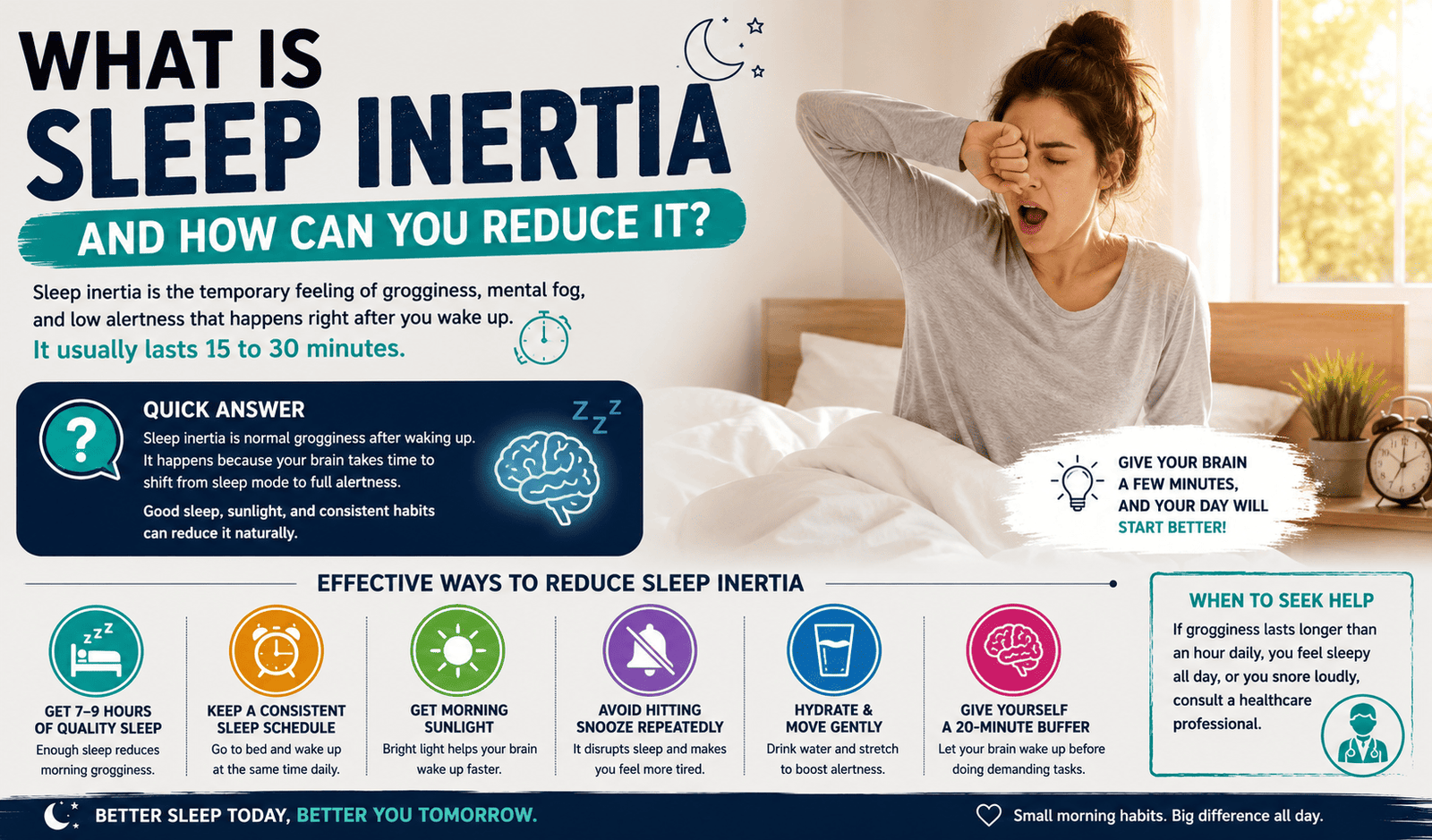
Sleep inertia is the temporary period of grogginess and reduced mental alertness that occurs immediately after waking up. It usually lasts between 15 and 30 minutes, but it may continue longer if you are sleep deprived or wake during deep sleep. The most effective ways to reduce sleep inertia include getting 7–9 hours of quality sleep, waking up at the same time every day, exposing yourself to bright morning sunlight, avoiding repeated snoozing, and allowing your brain a few minutes to fully wake before demanding tasks.
Also Read : Can Air Quality in Your Bedroom Affect Sleep?
What Is Sleep Inertia?

Sleep inertia is a natural biological state that occurs during the transition from sleep to wakefulness. Rather than instantly becoming fully alert, your brain gradually reactivates the regions responsible for attention, memory, reasoning, and decision-making. During this brief period, some parts of the brain remain in a sleep-like state while others are already awake, creating the familiar sensation of mental fog.
Scientists describe sleep inertia as a temporary reduction in cognitive performance. It is not a sign of laziness or poor motivation but a normal physiological process that helps explain why many people feel disoriented immediately after waking.
Also Read : Why Do I Sleep Better in Hotels Than at Home?
What Does Sleep Inertia Feel Like?

The symptoms of sleep inertia are usually strongest during the first few minutes after waking. Most people experience difficulty concentrating, slower thinking, reduced short-term memory, heavy eyelids, low motivation, and an overwhelming desire to go back to sleep.
Although these symptoms gradually improve, they can temporarily affect productivity, learning, driving, and other activities that require quick thinking. This is why experts recommend giving yourself a short buffer before performing mentally demanding tasks whenever possible.
Also Read : How Often Should You Replace Your Pillow for Better Sleep?
Why Does Sleep Inertia Happen?

Sleep inertia occurs because waking is a gradual process rather than an instant switch. Several biological factors influence how intense it feels.
The most important factor is waking during deep sleep, also known as slow-wave sleep. This restorative stage helps repair the body, but awakening from it often produces the strongest grogginess because the brain requires additional time to become fully alert.
Sleep deprivation also increases sleep inertia. When you consistently get too little sleep, your body prioritizes deep sleep, making it more likely that your alarm interrupts this stage. Your internal circadian rhythm also plays a role, which is why waking during the early morning hours or working night shifts often results in more severe morning fog.
Also Read : Can Your Mattress Be Causing Poor Sleep?
How Long Does Sleep Inertia Last?

For most healthy adults, sleep inertia lasts between 15 and 30 minutes. The feeling usually peaks immediately after waking and gradually fades as brain activity returns to normal. However, after poor sleep or severe sleep deprivation, cognitive impairment may continue for up to an hour or even longer.
A consistent sleep routine often shortens this recovery period because your body becomes better synchronized with its natural wake cycle.
Also Read : Does Sleeping Naked Help You Sleep Better?
Sleep Inertia vs General Fatigue

Sleep inertia and fatigue may feel similar, but they are different conditions. Sleep inertia happens only after waking and improves naturally within a short period. Fatigue, on the other hand, can occur throughout the day and often lasts for hours due to poor sleep, stress, illness, or other underlying causes.
If you feel exhausted all day despite sleeping enough, the problem is likely something other than ordinary sleep inertia and may deserve medical evaluation.
Also Read : Why Do I Feel More Awake at Night Than During the Day?
How to Reduce Sleep Inertia Naturally?

The most effective way to reduce sleep inertia is by improving overall sleep quality. Adults generally benefit from 7–9 hours of uninterrupted sleep each night, as adequate rest reduces both the severity and frequency of morning grogginess.
Maintaining a consistent wake-up time is equally important. Going to bed and waking up at similar times every day strengthens your circadian rhythm, allowing your body to anticipate waking more naturally. Bright morning sunlight also helps signal your brain that it is daytime, increasing alertness and supporting a healthier sleep cycle.
Avoid relying on the snooze button repeatedly. While an occasional snooze is not necessarily harmful, frequent snoozing often fragments sleep and can make mornings feel less refreshing. Giving yourself 20 minutes before important decisions, combined with hydration and gentle movement, allows your brain to complete its transition into full wakefulness.
Also Read : Can Sleeping With a Fan Improve Sleep Quality?
Does Coffee Help?

Coffee is one of the most common morning rituals in America, and caffeine can certainly improve alertness. However, it does not eliminate sleep inertia instantly. Caffeine requires time to reach peak effectiveness, meaning the first few minutes of grogginess may still occur even after drinking coffee.
For many people, combining caffeine with morning sunlight, hydration, and a consistent sleep schedule provides better results than relying on coffee alone.
Also Read : Why Do My Legs Twitch When I’m Trying to Sleep?
Is Sleep Inertia Worse After Naps?

Yes, sleep inertia can feel stronger after certain naps. Short naps lasting around 10–20 minutes usually end before deep sleep begins and are less likely to leave you feeling groggy. Longer naps increase the likelihood of entering slow-wave sleep, making it more difficult to wake up feeling refreshed.
Timing also matters. Early afternoon naps tend to be more beneficial than evening naps, which may interfere with nighttime sleep quality.
Also Read : Is It Better to Sleep With Socks On?
Who Experiences the Strongest Sleep Inertia?

Some groups are more likely to experience severe sleep inertia. Shift workers often wake during their biological night, making the transition to alertness more difficult. Teenagers naturally have later circadian rhythms, so early school mornings frequently produce intense grogginess. Parents of young children may experience stronger sleep inertia because fragmented sleep interrupts normal sleep cycles, while people living with chronic sleep deprivation often experience longer-lasting morning brain fog.
Also Read : Can Seasonal Changes Affect Your Sleep Cycle?
When Should You See a Healthcare Provider?

Occasional morning grogginess is completely normal, but persistent symptoms should not be ignored. If your grogginess regularly lasts longer than an hour, you sleep seven to nine hours but never feel refreshed, you frequently fall asleep during the day, or your partner notices loud snoring or pauses in breathing during sleep, it is worth speaking with a healthcare provider. These symptoms may indicate an underlying sleep disorder such as obstructive sleep apnea or another condition affecting sleep quality.
Also Read : Why Do I Wake Up at the Same Time Every Night?
A Healthy Morning Routine for Better Energy

A simple and consistent morning routine can dramatically reduce sleep inertia over time. Wake up with a single alarm, open your curtains immediately to let in natural light, drink a glass of water, perform a few minutes of gentle stretching or walking, and avoid checking stressful emails the moment you wake up. These small habits support your body’s natural awakening process and help improve both mood and mental performance throughout the day.
Also Read : How much sleep do adults over 40 need?
Conclusion
Sleep inertia is a normal biological response that occurs as your brain transitions from sleep to wakefulness. Although the groggy feeling can be frustrating, it usually disappears within 15 to 30 minutes. The best long-term solution is not a miracle supplement but consistent, high-quality sleep supported by healthy morning habits. By maintaining a regular sleep schedule, getting enough rest, seeking morning sunlight, limiting snoozing, and giving your brain time to fully wake up, you can significantly improve your morning energy and overall well-being.
Also Read : Why do I wake up sweating at night?
Frequently Asked Questions (FAQs)
1. What is sleep inertia in simple words?
Sleep inertia is the temporary groggy feeling that happens immediately after waking up, making it harder to think clearly and stay alert.
2. How long does sleep inertia last?
Most people recover within 15–30 minutes, although it may last longer after poor sleep or waking during deep sleep.
3. Is sleep inertia normal?
Yes. It is a normal part of the sleep-to-wake transition and affects nearly everyone.
4. Why do I feel more tired after a nap?
Long naps may wake you during deep sleep, increasing sleep inertia and leaving you feeling temporarily groggy.
5. Does hitting the snooze button make it worse?
Repeated snoozing can fragment sleep and may make mornings feel less refreshing, especially if it becomes a daily habit.
6. Can coffee eliminate sleep inertia?
Coffee improves alertness, but it does not remove sleep inertia instantly because caffeine takes time to become effective.
7. Is sleep inertia the same as fatigue?
No. Sleep inertia occurs only after waking and fades naturally, while fatigue can last throughout the day and may have different causes.
8. Does sunlight help reduce morning grogginess?
Yes. Bright natural light helps increase alertness and supports your body’s circadian rhythm.
9. Who is most affected by sleep inertia?
Shift workers, teenagers, sleep-deprived adults, and people with irregular sleep schedules often experience stronger sleep inertia.
10. When should I seek medical advice?
If morning grogginess regularly lasts longer than an hour, occurs despite adequate sleep, or is accompanied by excessive daytime sleepiness or loud snoring, consult a healthcare professional for evaluation.

Your body needs proper rest every night.
Medical Disclaimer: This article is for educational purposes only and does not replace professional medical advice, diagnosis, or treatment. Always consult a qualified healthcare provider before making significant changes to your diet, exercise routine, medications, or health management plan.
Medically reviewed information sourced from trusted health organizations.
References
- National Institutes of Health (NIH). Sleep and Sleep Disorders.
https://www.nhlbi.nih.gov/health/sleep - Sleep Foundation. Sleep Health Resources.
https://www.sleepfoundation.org/ - Centers for Disease Control and Prevention (CDC). Sleep and Sleep Disorders.
https://www.cdc.gov/sleep/ - Mayo Clinic. Sleep Disorders Overview.
https://www.mayoclinic.org/
Reviewed by: Dzarro Editorial Team
Fact-checked using trusted medical and scientific sources.

Sandip Choudhary is a Health & Wellness Researcher and Content Creator specializing in sleep, digestive health, preventive wellness, and evidence-based health education. He has been creating online content and researching health-related topics for several years, focusing on translating complex medical information into practical guidance for everyday readers.
With a strong background in SEO and content strategy, Sandip ensures that every article is optimized for both search engines and real users. His goal is to provide reliable, clear, and helpful information that supports healthier living.
Disclaimer: The content published is for informational purposes only and is not a substitute for professional medical advice.
1 thought on “What Is Sleep Inertia and How Can You Reduce It?”
Comments are closed.