
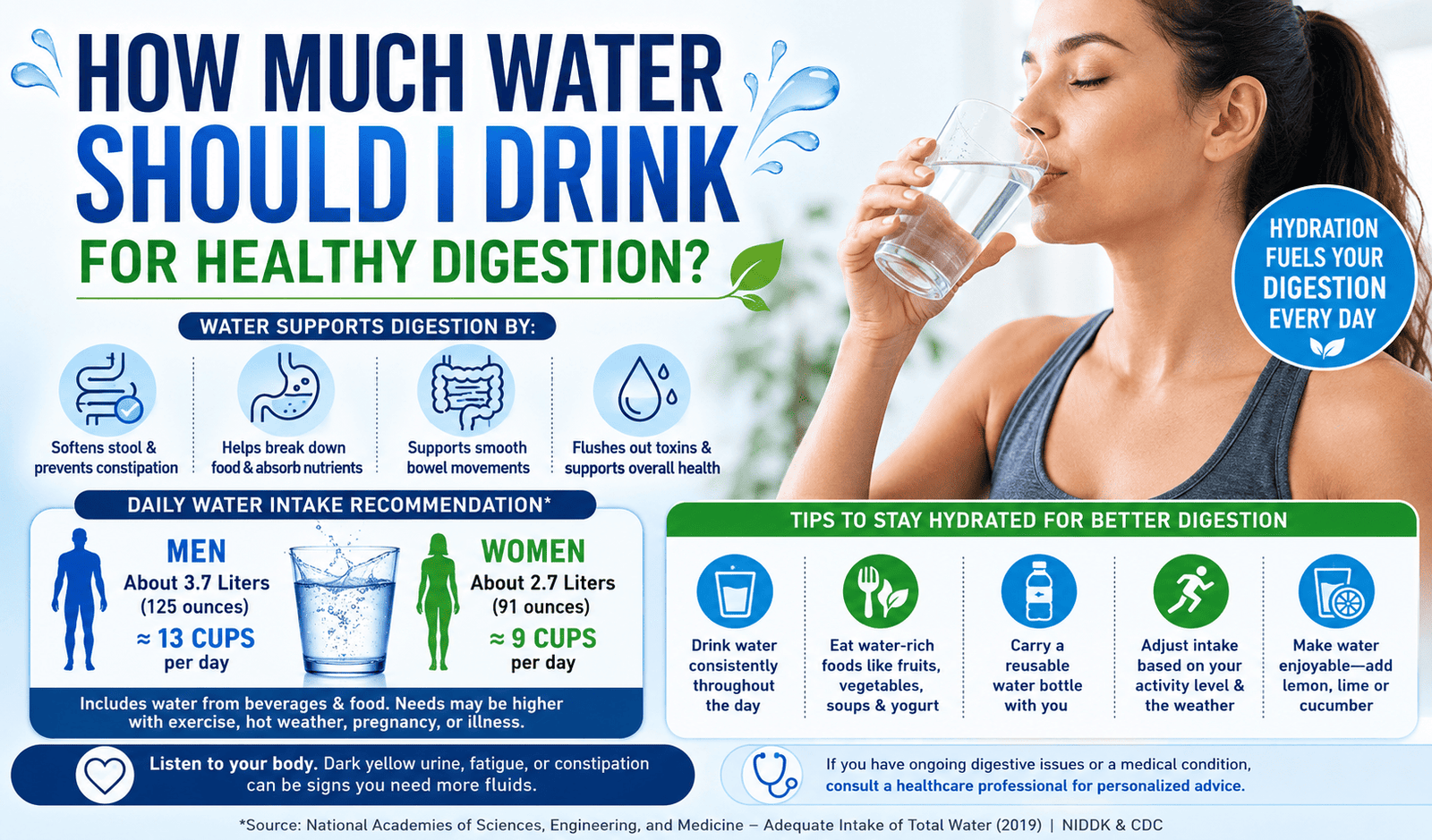
For most healthy adults, there is no single amount of water that guarantees better digestion. A useful general reference is about 3.7 liters (125 ounces) of total water per day for men and 2.7 liters (91 ounces) for women, including water from beverages and food. That works out to roughly 13 cups of fluids for men and 9 cups for women under typical conditions. Your individual needs can be higher or lower depending on activity, climate, pregnancy, breastfeeding, diet, and health conditions.
If your goal is healthy digestion, staying adequately hydrated is particularly important when you eat enough fiber. Water helps keep stool softer and allows dietary fiber to work more effectively, which can support regular bowel movements and help prevent constipation.
Why Is Water Important for Digestion?
Water is essential for many normal body functions, including processes involved in digestion and elimination. Your digestive system needs adequate fluid to help move and soften intestinal contents. When you are dehydrated, your stool may become harder and more difficult to pass, potentially contributing to constipation.
Hydration becomes especially relevant when you increase your fiber intake. Fiber absorbs water and can help create softer, bulkier stools, but getting enough fluids helps fiber perform its role effectively. The National Institute of Diabetes and Digestive and Kidney Diseases recommends drinking plenty of liquids when increasing fiber or using a fiber supplement to help make stools softer and easier to pass.
Water also contributes to the body’s normal elimination processes. The Centers for Disease Control and Prevention notes that adequate water intake helps prevent dehydration and supports the body’s ability to get rid of waste through urination, perspiration, and bowel movements.
Also Read : What Causes Chronic Diarrhea?
How Much Water Should I Drink for Healthy Digestion?
There is no digestion-specific water requirement that applies to everyone. Instead, your daily hydration needs should be considered as part of your overall fluid and water intake.
The National Academies’ adequate intake reference for total water is 3.7 liters per day for adult men and 2.7 liters per day for adult women. Importantly, these numbers include water from food as well as beverages. In the underlying U.S. dietary data, beverages supplied approximately 3.0 liters for men and 2.2 liters for women, while food supplied the remainder.
That means you do not necessarily need to drink the entire 3.7 or 2.7 liters as plain water. Foods such as fruits, vegetables, soups, yogurt, and other water-containing foods contribute to total fluid intake. Plain water is still an excellent choice because it hydrates without adding calories or sugar.
For digestion, consistency is often more practical than trying to consume a large amount of water at once. Drinking fluids regularly throughout the day can make it easier to stay hydrated while supporting a fiber-rich eating pattern.
Also Read : Why Am I Constipated Even When I Eat Fiber?
How Much Water Should I Drink if I Have Constipation?
If constipation is your concern, adequate fluid intake can be an important part of your overall strategy. However, drinking more water alone is not always enough to resolve constipation.
NIDDK recommends getting enough fiber and drinking plenty of water and other liquids, particularly when increasing fiber intake. For adults, the general fiber recommendation cited by NIDDK is 22 to 34 grams per day, depending on age and sex. Increasing fiber gradually can also help your body adjust.
If you suddenly consume a large amount of fiber without enough fluid, you may experience digestive discomfort. A better approach is to gradually increase fiber from foods such as fruits, vegetables, whole grains, legumes, and nuts while maintaining adequate hydration.
Physical activity can also support bowel regularity. NIDDK includes regular physical activity among lifestyle approaches that may help relieve constipation.
Also Read : Can Stress Cause Digestive Problems?
Is Drinking Water Before or After Meals Better for Digestion?
For most healthy people, there is no need to avoid drinking water around meals simply because of digestion concerns. Water can be consumed with meals and throughout the day as part of normal hydration.
In fact, the CDC specifically suggests serving water during meals as one practical way to increase water consumption.
The important consideration is your individual comfort. Some people prefer smaller amounts of fluid with meals because drinking a large volume at once can make them feel overly full. Others have no problem drinking water with food. There is no universal requirement to separate water from meals for healthy digestion.
Also Read : What Foods Are Best for Gut Health?
Can Drinking More Water Help You Poop?
Adequate hydration can help prevent dehydration-related constipation and can help fiber work properly. When stool becomes too dry or hard, having enough fluid available in the digestive system can support softer stools.
However, drinking excessive amounts of water is not a reliable treatment for chronic constipation. Constipation can have many causes, including insufficient fiber, low physical activity, medication side effects, changes in routine, and certain medical conditions.
If constipation continues despite appropriate dietary and lifestyle changes, it is worth discussing the problem with a healthcare professional rather than continually increasing your water intake.
Also Read : How Can I Improve My Gut Health Naturally?
Does Water Help With Bloating and Digestion?
Water can support normal digestion, but it is not a guaranteed treatment for bloating. Bloating can have many different causes, including eating too quickly, swallowing excess air, certain foods, constipation, food intolerances, and gastrointestinal disorders.
If dehydration is contributing to constipation, improving hydration may indirectly help digestive comfort by supporting softer and easier-to-pass stools. But persistent or severe bloating should not automatically be attributed to dehydration.
Pay attention to patterns. If bloating repeatedly occurs after particular foods, meals, or changes in bowel habits, discussing those symptoms with a healthcare professional can help identify the underlying cause.
Also Read : What Causes Bloating Every Day?
What Happens if You Do Not Drink Enough Water?
Not drinking enough fluid can lead to dehydration. According to the CDC, dehydration can contribute to problems such as unclear thinking, mood changes, overheating, constipation, and kidney stones.
From a digestive perspective, constipation is one of the more noticeable problems associated with inadequate hydration. If you are also eating a high-fiber diet, maintaining adequate fluid intake becomes especially important because water helps fiber work more effectively.
Your fluid requirements can increase when you exercise, spend time in hot weather, have a fever, or experience vomiting or diarrhea.
Also Read : Why Does My Stomach Hurt After Eating?
Should You Drink More Water in Hot Weather?
Yes, your fluid needs can increase when you are exposed to heat or physically active because your body loses more water through processes such as sweating.
The National Academies notes that heat exposure and physical activity can increase water losses, while the CDC similarly identifies hot climates and increased physical activity as situations in which people may need more water.
This is particularly relevant for people who exercise outdoors, work in hot environments, or live in regions with high temperatures. Rather than forcing yourself to follow a rigid number every day, consider your activity, environment, food intake, and overall hydration needs.
Also Read : Why do I feel tired after eating?
Does Coffee Count Toward Your Fluid Intake?
Many beverages contribute to total fluid intake. The National Academies’ water recommendations include beverages rather than limiting the calculation to plain water.
The CDC also identifies plain coffee and tea among low- or no-calorie beverage options.
However, water is generally an excellent everyday choice, especially when replacing sugary beverages. The CDC notes that replacing sugary drinks with plain water can reduce calorie intake while still supporting hydration.
Also Read : Why do I feel full after eating small amounts?
How Can I Drink Enough Water for Better Digestion?
A simple approach is to make hydration part of your normal daily routine instead of trying to drink a large quantity at one time. Keep water available during work, meals, exercise, and travel. Drinking water with meals can also make hydration easier to maintain.
Eating water-rich foods can contribute to total water intake as well. Fruits and vegetables contain substantial amounts of water and can contribute alongside beverages.
If plain water feels boring, adding a slice of lemon or lime can make it more appealing. The CDC also recommends carrying a reusable water bottle and choosing water when eating out as practical strategies for increasing water intake.
The goal should not be to force yourself to drink an arbitrary amount simply because a social-media post recommends it. Your needs are individual, and more water is not automatically better.
Also Read : How many times can esophageal dilatation be done?
Can You Drink Too Much Water?
Yes. More water is not always better. The amount a person needs depends on individual circumstances, and people with certain medical conditions or those taking medications that affect fluid balance may need individualized guidance.
The National Academies emphasizes that normal hydration can be maintained across a relatively wide range of water intake, rather than requiring everyone to consume exactly the same amount every day.
If a healthcare professional has given you a specific fluid restriction or hydration recommendation, follow that advice rather than applying general water-intake guidelines.
Also Read : Can esophageal stricture heal naturally?
A Practical Hydration Approach for Healthy Digestion
For a generally healthy adult, think of hydration as one component of a larger digestive-health strategy. Drink fluids consistently throughout the day, eat adequate dietary fiber, stay physically active, and pay attention to changes in bowel habits.
For many adults, the National Academies’ reference of approximately 3.7 liters of total water per day for men and 2.7 liters for women provides useful context, but remember that these figures include water from food and all beverages.
If you experience constipation, increasing fluids may help, especially alongside adequate fiber. If symptoms persist, become severe, or repeatedly return, consult a healthcare professional rather than assuming that dehydration is the only cause.
Also Read : What are the early symptoms of esophageal stricture?
Frequently Asked Questions
1. How much water should I drink for healthy digestion every day?
There is no single digestion-specific amount for everyone. The National Academies lists adequate total water intake at about 3.7 liters per day for adult men and 2.7 liters per day for adult women, including water from food and beverages.
2. How much water should I drink to prevent constipation?
Adequate fluid intake can help prevent dehydration and allows dietary fiber to work more effectively. However, the right amount varies by individual. NIDDK recommends plenty of liquids alongside adequate fiber to help soften stools.
3. Is 8 glasses of water a day enough for digestion?
Eight glasses may be a reasonable routine for some people, but it is not a universal requirement. Water needs vary based on factors such as age, sex, activity, climate, pregnancy, breastfeeding, diet, and health status.
4. Does drinking water help you poop?
Adequate hydration can help prevent constipation and supports the effectiveness of dietary fiber. However, chronic constipation may have other causes and may require evaluation by a healthcare professional.
5. Should I drink water with meals?
For most healthy adults, drinking water with meals is perfectly reasonable. The CDC even recommends serving water during meals as a practical way to increase water consumption.
6. Can drinking too much water cause digestive problems?
Drinking excessive amounts of water is unnecessary and can be unsafe in certain circumstances. Your hydration needs depend on your health, activity level, environment, and other factors. People with medical conditions affecting fluid balance should follow their healthcare professional’s guidance.
7. Does drinking warm water improve digestion?
Warm water can be a comfortable beverage choice, but there is not enough evidence to say that warm water is universally superior to cool or room-temperature water for digestion. The most important factor is maintaining appropriate hydration.
8. Can dehydration cause constipation?
Yes. The CDC lists constipation among problems that can occur with dehydration. Adequate hydration is especially important when consuming fiber because liquids help fiber work more effectively.
9. Do fruits and vegetables count toward my daily water intake?
Yes. Water from foods contributes to total water intake. Fruits and vegetables can provide substantial amounts of water in addition to the fluids you drink.
10. When should I talk to a doctor about digestive problems?
Consider speaking with a healthcare professional if constipation, bloating, abdominal discomfort, or other digestive symptoms persist, repeatedly return, or interfere with daily life. A clinician can determine whether an underlying digestive condition, medication, dietary issue, or another factor needs attention.

A diverse microbiome contributes to better digestive health.
Final Takeaway
How Much Water Should I Drink for Healthy Digestion? For most healthy adults, adequate hydration is more important than following a rigid “8 glasses” rule. A commonly cited reference is about 3.7 liters of total water daily for men and 2.7 liters for women, with part of that water coming from food.
For digestive health, hydration works best as part of an overall healthy lifestyle that includes adequate fiber, regular physical activity, and a balanced diet. If constipation is your primary concern, drinking enough fluids can help fiber work better and make stools easier to pass.
Your individual needs may change with exercise, hot weather, illness, pregnancy, breastfeeding, medications, or certain medical conditions. When in doubt—especially if you have ongoing digestive symptoms or a condition affecting fluid balance—ask a qualified healthcare professional for personalized guidance.
Medical Disclaimer: This article is intended for general health education and is not a substitute for individualized medical advice, diagnosis, or treatment. If you have persistent, severe, or unexplained constipation, or any warning symptoms such as bleeding, severe abdominal pain, vomiting, fever, inability to pass gas, or unexplained weight loss, contact a qualified healthcare professional promptly.
Medically reviewed information sourced from trusted health organizations.
Reviewed by: Dzarro Editorial Team
Fact-checked using trusted medical and scientific sources.

Sandip Choudhary is a Health & Wellness Researcher and Content Creator specializing in sleep, digestive health, preventive wellness, and evidence-based health education. He has been creating online content and researching health-related topics for several years, focusing on translating complex medical information into practical guidance for everyday readers.
With a strong background in SEO and content strategy, Sandip ensures that every article is optimized for both search engines and real users. His goal is to provide reliable, clear, and helpful information that supports healthier living.
Disclaimer: The content published is for informational purposes only and is not a substitute for professional medical advice.
1 thought on “How Much Water Should I Drink for Healthy Digestion?”
Comments are closed.