
Introduction
Do you ever feel anxious, low, or mentally drained without a clear reason? You’re not alone. Millions of people in the United States struggle with mood swings, brain fog, and stress—often assuming it’s purely a mental issue. But what if the root cause isn’t just in your brain… but in your gut?
Emerging research shows a strong connection between your digestive system and mental well-being. This connection could explain why poor gut health is linked to anxiety, depression, and even sleep issues.
Quick Answer
Yes, gut health can significantly affect mental health. The gut and brain are connected through the gut-brain axis, where gut bacteria influence mood, stress levels, and cognitive function. An unhealthy gut can contribute to anxiety, depression, and brain fog, while a balanced gut microbiome supports better mental well-being.
What Is the Gut-Brain Connection?
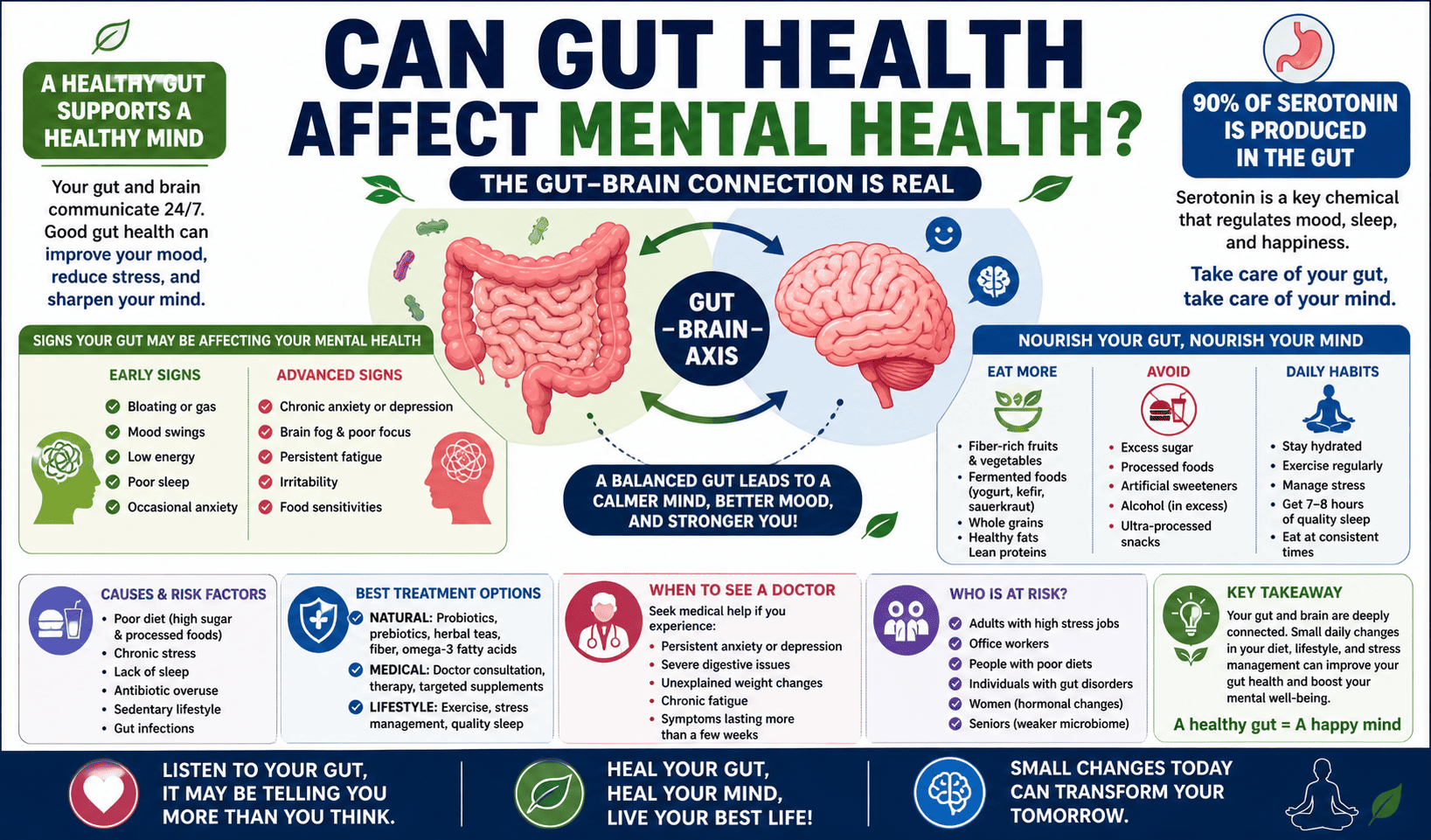
The gut and brain communicate constantly through what scientists call the gut-brain axis.
This connection involves:
- Nerves (especially the vagus nerve)
- Hormones
- Gut bacteria (microbiome)
Your gut produces around 90% of serotonin, a key chemical that affects mood, sleep, and happiness.
👉 In simple terms:
If your gut is unhealthy, your brain can feel it.
Symptoms of Poor Gut Health Affecting Mental Health
Early Symptoms:
- Occasional bloating or gas
- Mild anxiety or mood swings
- Low energy
- Poor sleep quality
Advanced Symptoms:
- Chronic anxiety or depression
- Brain fog or lack of focus
- Frequent fatigue
- Irritability
- Strong food sensitivities
Causes & Risk Factors
Several everyday habits in the U.S. lifestyle can damage gut health and impact mental well-being:
Diet-Related Causes:
- High sugar intake
- Processed and fast foods
- Low fiber consumption
Lifestyle Factors:
- Chronic stress
- Lack of sleep
- Sedentary lifestyle
Medical & External Factors:
- Antibiotic overuse
- Gut infections
- Chronic inflammation
Gut Health vs Mental Health: How They’re Connected
| Factor | Gut Health | Mental Health |
|---|---|---|
| Main Role | Digestion & nutrient absorption | Mood, emotions, cognition |
| Key Link | Microbiome balance | Neurotransmitter function |
| Shared Pathway | Gut-brain axis | Gut-brain axis |
| Impact | Poor gut = inflammation | Inflammation affects mood |
| Chemicals | Produces serotonin | Uses serotonin |
👉 Key takeaway:
Your gut and brain don’t work separately—they function as a team.
Best Treatment Options
1. Natural Remedies
- Probiotics (good bacteria)
- Prebiotics (fiber that feeds gut bacteria)
- Herbal teas (ginger, peppermint)
2. Medical Support
- Consultation with a gastroenterologist
- Mental health therapy if needed
- Targeted supplements (as advised)
3. Lifestyle Changes
- Regular exercise
- Stress management (meditation, breathing)
- Consistent sleep routine
Diet & Lifestyle Tips
What to Eat:
- Yogurt and fermented foods
- Fruits and vegetables (fiber-rich)
- Whole grains
- Lean proteins
What to Avoid:
- Excess sugar
- Ultra-processed foods
- Alcohol (in excess)
Daily Routine Improvements:
- Eat at consistent times
- Stay hydrated
- Get 7–8 hours of sleep
- Reduce screen time before bed
When to See a Doctor
Seek professional help if you notice:
- Persistent anxiety or depression
- Severe digestive issues
- Unexplained weight changes
- Chronic fatigue
- Symptoms lasting more than a few weeks
👉 Early diagnosis can prevent long-term complications.
Who Is at Risk?
Certain groups are more likely to experience gut-related mental health issues:
- Adults with high-stress jobs
- Office workers with sedentary lifestyles
- Individuals with poor diets
- People with chronic digestive disorders
- Women (due to hormonal fluctuations)
- Seniors with weaker gut microbiomes
FAQs
1. Can poor gut health cause anxiety?
Yes, an imbalanced gut microbiome can increase inflammation and affect neurotransmitters, contributing to anxiety.
2. How long does it take to improve gut health?
With proper diet and lifestyle changes, improvements can begin within 2–4 weeks, but full recovery may take longer.
3. Do probiotics help mental health?
Probiotics can support gut balance, which may improve mood and reduce symptoms of anxiety and depression.
4. What foods improve both gut and brain health?
Fermented foods, fiber-rich vegetables, fatty fish, and nuts are excellent for both gut and mental health.
5. Can stress damage gut health?
Yes, chronic stress can disrupt gut bacteria and weaken digestion, leading to both gut and mental health issues.
Conclusion
So, can gut health affect mental health? Absolutely.
Your gut and brain are deeply connected, and ignoring one can negatively impact the other. The good news is that small, consistent changes—like improving your diet, managing stress, and supporting your gut microbiome—can lead to noticeable improvements in your mood and mental clarity.
👉 Start with simple steps today, and your gut—and mind—will thank you.
Reviewed by: Dzarro Editorial Team
Fact-checked using trusted medical and scientific sources.

Sandip Choudhary is a Health & Wellness Researcher and Content Creator specializing in sleep, digestive health, preventive wellness, and evidence-based health education. He has been creating online content and researching health-related topics for several years, focusing on translating complex medical information into practical guidance for everyday readers.
With a strong background in SEO and content strategy, Sandip ensures that every article is optimized for both search engines and real users. His goal is to provide reliable, clear, and helpful information that supports healthier living.
Disclaimer: The content published is for informational purposes only and is not a substitute for professional medical advice.
1 thought on “Can gut health affect mental health?”