
Quick Answer
Yes, poor gut health may contribute to anxiety and depression in some people. Research suggests that the gut and brain communicate continuously through the gut-brain axis, a complex network involving nerves, hormones, the immune system, and gut bacteria. An imbalance in gut microbes, known as gut dysbiosis, may influence inflammation, stress responses, and the production of neurotransmitters like serotonin, potentially affecting mood and mental well-being. However, anxiety and depression are complex conditions with multiple causes, and gut health is only one possible contributing factor.
Introduction
Can poor gut health cause anxiety and depression? This question has become one of the most discussed topics in health research over the past decade. Scientists once believed the digestive system and the brain worked independently. Today, growing evidence shows they are closely connected through what experts call the gut-brain axis.
Millions of Americans experience anxiety or depression every year. At the same time, digestive issues such as bloating, constipation, diarrhea, and irritable bowel syndrome (IBS) are also common. Researchers have noticed that these conditions frequently occur together, leading to increased interest in understanding how gut health may influence mental health.
Although improving gut health is not a cure for anxiety or depression, maintaining a healthy digestive system may become an important part of a comprehensive mental wellness plan alongside medical care, therapy, regular exercise, healthy sleep, and stress management.
Also Read : What foods heal the gut lining?
Understanding the Gut-Brain Axis
The gut-brain axis refers to the constant communication between your digestive tract and your brain. This communication occurs through several pathways that work together to regulate digestion, emotions, stress responses, and overall health.
One of the primary communication channels is the vagus nerve, which sends signals between the brain and the intestines. Hormones produced by the digestive system also influence brain function. Additionally, immune cells release inflammatory molecules that can affect mood and cognitive function.
Perhaps the most fascinating part of this connection is the trillions of bacteria living inside the intestines, collectively called the gut microbiome. These microorganisms help digest food, support immune health, produce vitamins, and influence brain chemistry.
How Gut Bacteria Affect Mental Health?
Scientists have discovered that gut bacteria produce and regulate several chemicals involved in mood.
Serotonin is one of the most well-known neurotransmitters linked to happiness and emotional stability. Surprisingly, around 90% of the body’s serotonin is produced in the digestive tract. While this serotonin does not directly enter the brain, gut health still influences the body’s overall serotonin regulation and communication with the nervous system.
Gut bacteria also affect the production of gamma-aminobutyric acid (GABA), dopamine, and short-chain fatty acids. These substances help regulate stress, emotions, inflammation, and brain function.
When the gut microbiome becomes imbalanced, harmful bacteria may outnumber beneficial bacteria. This imbalance may increase inflammation, weaken the intestinal barrier, and alter communication between the gut and brain.
Also Read : How Can I Improve My Mental Health Every Day?
What Is Gut Dysbiosis?
Gut dysbiosis occurs when the balance of healthy and harmful bacteria changes.
Several factors may contribute to dysbiosis, including poor diet, frequent antibiotic use, chronic stress, lack of sleep, excessive alcohol intake, smoking, infections, and certain chronic diseases.
People experiencing gut dysbiosis may notice symptoms such as bloating, abdominal pain, constipation, diarrhea, excessive gas, food sensitivities, fatigue, and skin problems. Some individuals also report increased anxiety, low mood, or difficulty concentrating.
Researchers continue studying whether dysbiosis directly causes anxiety or whether it worsens existing mental health conditions.
Can Poor Gut Health Increase Anxiety?
Several studies suggest that poor gut health may increase anxiety symptoms.
An unhealthy gut microbiome may trigger low-grade inflammation throughout the body. Chronic inflammation has been associated with changes in brain function that influence stress responses.
Certain gut bacteria also help regulate cortisol, the body’s primary stress hormone. When the microbiome becomes imbalanced, stress hormone regulation may become less effective, making people feel more anxious during everyday situations.
Stress itself can also negatively affect digestion. This creates a two-way relationship where anxiety affects gut health while poor gut health may increase anxiety, forming a continuous cycle.
Also Read : Why do I feel anxious at night?
Can Poor Gut Health Contribute to Depression?
Depression is influenced by genetics, life experiences, brain chemistry, physical health, and environmental factors. Gut health is now considered another potential contributor.
Some research has found differences in gut bacteria between people with depression and healthy individuals. Scientists believe changes in gut microbes may affect inflammation, neurotransmitter production, and immune function, all of which may influence depressive symptoms.
However, current evidence does not prove that poor gut health directly causes depression. Instead, it appears to be one piece of a much larger puzzle.
The Role of Inflammation
Inflammation has become one of the leading explanations linking digestive health and mental health.
When the intestinal lining becomes damaged, harmful substances may pass into the bloodstream more easily. This process is sometimes described as increased intestinal permeability or “leaky gut,” although the term is often simplified in popular media.
The immune system responds by releasing inflammatory chemicals called cytokines. Elevated inflammation has been associated with changes in mood, fatigue, reduced motivation, and cognitive problems.
Reducing chronic inflammation through healthy lifestyle habits may benefit both digestive health and mental well-being.
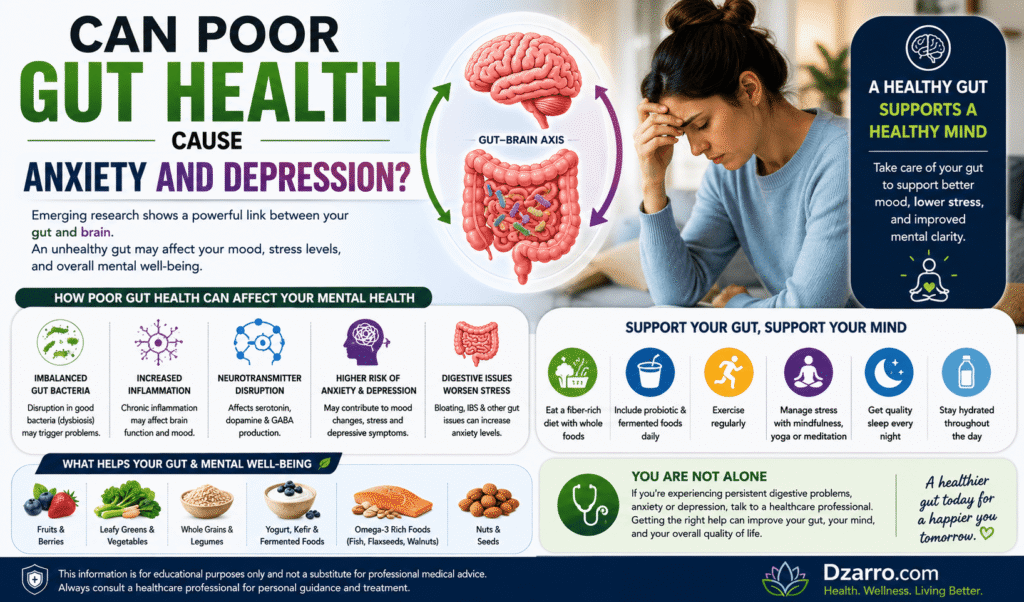
Foods That Support Gut and Brain Health
Diet plays one of the biggest roles in maintaining a healthy gut microbiome.
Eating a wide variety of fruits, vegetables, legumes, whole grains, nuts, and seeds provides dietary fiber that feeds beneficial gut bacteria.
Fermented foods such as yogurt with live cultures, kefir, kimchi, sauerkraut, and miso may introduce helpful bacteria into the digestive system.
Foods rich in omega-3 fatty acids, including salmon, walnuts, flaxseeds, and chia seeds, may help reduce inflammation and support brain health.
Limiting highly processed foods, excessive sugar, and ultra-processed snacks may also help maintain a healthier balance of gut bacteria.
Also Read : Why Americans Are Focusing on Healthspan Instead of Lifespan?
Can Probiotics Improve Anxiety and Depression?
Researchers are actively studying whether probiotics may improve mental health.
Some studies suggest that specific probiotic strains may modestly reduce symptoms of stress and anxiety in certain people. Scientists sometimes refer to these beneficial bacteria as “psychobiotics.”
However, not all probiotics work the same way. Different strains have different effects, and research is still evolving. Current evidence does not support using probiotics as a replacement for therapy or medication for anxiety or depression.
Anyone considering probiotic supplements should discuss them with a healthcare professional, especially if they have immune disorders or chronic illnesses.
Also Read : Can lack of sleep worsen anxiety?
Lifestyle Habits That Benefit Both Gut and Mental Health
Healthy lifestyle habits often improve both digestive function and emotional well-being.
Regular physical activity encourages a healthier gut microbiome while also reducing symptoms of anxiety and depression in many individuals.
Adequate sleep supports both beneficial gut bacteria and emotional regulation. Poor sleep can disrupt the gut microbiome and increase stress hormones.
Stress management techniques such as mindfulness meditation, yoga, breathing exercises, spending time outdoors, and maintaining supportive social relationships may also strengthen the gut-brain connection.
Also Read : Can gut health affect mental health?
When to See a Healthcare Provider?
Digestive symptoms and mental health symptoms should never be ignored.
If you experience persistent abdominal pain, unexplained weight loss, blood in the stool, severe digestive problems, or symptoms of anxiety or depression lasting more than two weeks, seek medical evaluation.
A healthcare provider can identify underlying digestive conditions, nutritional deficiencies, hormone disorders, or mental health conditions that may require treatment.
Early diagnosis often leads to better long-term outcomes.
Also Read : What are the signs of an unhealthy gut?
What Current Research Says?
Scientific evidence strongly supports the existence of the gut-brain axis and the important role of the gut microbiome in overall health.
Researchers agree that gut bacteria influence immune function, inflammation, metabolism, and communication with the nervous system.
However, experts also emphasize that anxiety and depression are complex disorders with many contributing factors. Gut health alone does not explain every case, and improving digestive health should be viewed as one part of a comprehensive treatment approach rather than a standalone solution.
As research continues, personalized nutrition, microbiome testing, and targeted probiotics may play larger roles in future mental health care.
Also Read : How Can I Improve My Gut Health Naturally?
Conclusion
So, can poor gut health cause anxiety and depression? Current research suggests that poor gut health may contribute to anxiety and depression by affecting the gut-brain axis, inflammation, stress hormones, and neurotransmitter activity. However, it is rarely the only cause.
Supporting gut health through a balanced diet, regular exercise, quality sleep, stress management, and appropriate medical care may improve both digestive wellness and emotional health. People experiencing ongoing anxiety or depression should seek evaluation from qualified healthcare professionals rather than relying solely on dietary changes or supplements.
Maintaining a healthy gut is an investment in your overall physical and mental well-being.

Proper digestion helps your body absorb essential nutrients efficiently.
Frequently Asked Questions (FAQs)
Can poor gut health cause anxiety and depression?
Yes. Poor gut health may contribute to anxiety and depression by affecting the gut-brain axis, inflammation, and communication between gut bacteria and the nervous system. However, these mental health conditions usually have multiple contributing factors.
Can anxiety itself cause digestive problems?
Yes. Anxiety can slow or speed digestion, increase stomach acid, worsen IBS symptoms, cause nausea, bloating, diarrhea, or constipation. The relationship works in both directions.
What foods improve gut health for mental wellness?
Foods high in fiber, fruits, vegetables, whole grains, legumes, fermented foods, yogurt with live cultures, kefir, kimchi, walnuts, salmon, flaxseeds, and other omega-3-rich foods support a healthier gut microbiome.
Do probiotics help anxiety?
Some studies suggest certain probiotic strains may help reduce stress and mild anxiety in some individuals, but results are inconsistent. Probiotics should not replace professional mental health treatment.
How long does it take to improve gut health?
Positive changes may begin within a few weeks after improving diet and lifestyle, although rebuilding a healthy gut microbiome often takes several months depending on individual health and underlying conditions.
Can IBS increase anxiety?
Yes. People with irritable bowel syndrome (IBS) often experience higher rates of anxiety and depression due to the close relationship between the digestive system and the brain.
Should I see a doctor for both digestive symptoms and anxiety?
Yes. Persistent digestive symptoms, anxiety, depression, or unexplained changes in health should be evaluated by a healthcare professional to identify underlying causes and develop an appropriate treatment plan.
Medical Disclaimer: This article is for educational purposes only and does not replace professional medical advice, diagnosis, or treatment. Always consult a qualified healthcare provider before making significant changes to your diet, exercise routine, medications, or health management plan.
Medically reviewed information sourced from trusted health organizations.
References
- National Institute of Mental Health (NIMH): https://www.nimh.nih.gov
- National Institute of Diabetes and Digestive and Kidney Diseases (NIDDK): https://www.niddk.nih.gov
- National Center for Complementary and Integrative Health (NCCIH): https://www.nccih.nih.gov
- Harvard Health Publishing – The Gut-Brain Connection: https://www.health.harvard.edu
- Cleveland Clinic – Gut Health: https://health.clevelandclinic.org
- Johns Hopkins Medicine – The Brain-Gut Connection: https://www.hopkinsmedicine.org
- American Gastroenterological Association: https://gastro.org
Reviewed by: Dzarro Editorial Team
Fact-checked using trusted medical and scientific sources.

Sandip Choudhary is a Health & Wellness Researcher and Content Creator specializing in sleep, digestive health, preventive wellness, and evidence-based health education. He has been creating online content and researching health-related topics for several years, focusing on translating complex medical information into practical guidance for everyday readers.
With a strong background in SEO and content strategy, Sandip ensures that every article is optimized for both search engines and real users. His goal is to provide reliable, clear, and helpful information that supports healthier living.
Disclaimer: The content published is for informational purposes only and is not a substitute for professional medical advice.