
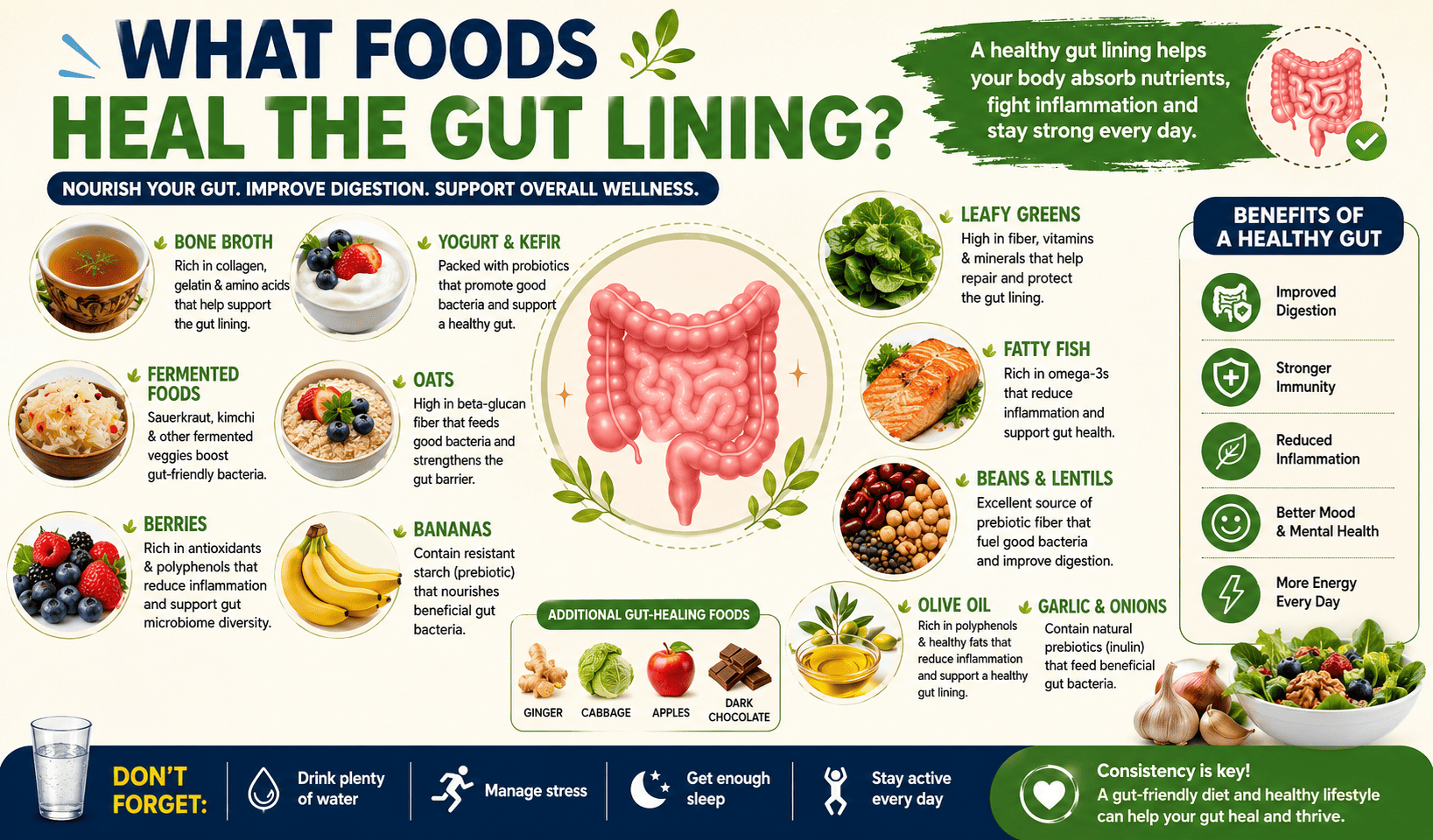
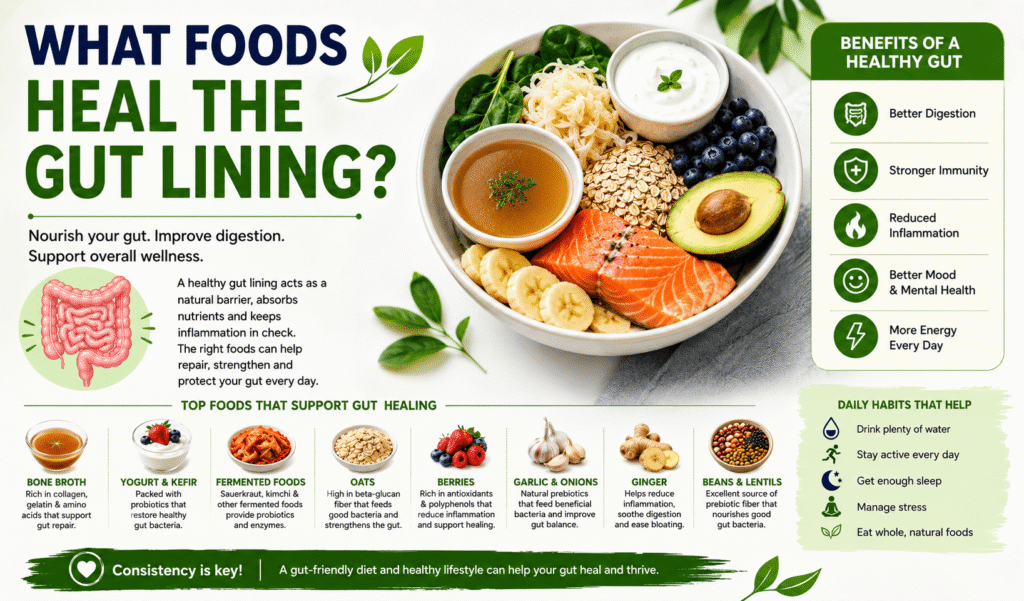
The best foods that may help support the gut lining include bone broth, fermented foods like yogurt and kefir, high-fiber fruits and vegetables, oats, legumes, fatty fish, olive oil, leafy greens, berries, bananas, ginger, and foods rich in glutamine such as chicken, eggs, cabbage, and spinach. A balanced diet combined with adequate sleep, hydration, stress management, and medical care when needed can help maintain a healthy intestinal barrier.
Introduction
If you’ve been struggling with bloating, digestive discomfort, food sensitivities, or irregular bowel movements, you may have wondered, what foods heal the gut lining? While no single food can instantly repair the digestive tract, research shows that certain nutrient-rich foods help support the intestinal barrier, reduce inflammation, and nourish beneficial gut bacteria.
The gut lining acts as a protective barrier between your digestive system and bloodstream. When this barrier becomes compromised, unwanted substances may pass through more easily, potentially contributing to digestive symptoms and inflammation. Fortunately, a healthy eating pattern rich in fiber, probiotics, healthy fats, and essential nutrients can support gut health over time.
This guide explains which foods are most beneficial, why they work, and how to include them in your daily meals.
Also Read : Can probiotics reduce bloating?
Understanding the Gut Lining
The gut lining is a thin layer of cells that lines your intestines. It performs several important functions, including absorbing nutrients, preventing harmful bacteria and toxins from entering the bloodstream, and supporting immune function. Around 70% of the body’s immune system is associated with the gut, making digestive health an important part of overall wellness.
Many factors can affect gut health, including poor diet, chronic stress, excessive alcohol use, smoking, certain medications such as long-term NSAIDs, infections, and inadequate sleep.
Supporting the gut lining involves providing the nutrients your intestinal cells need while encouraging a healthy balance of beneficial bacteria.
Foods That Help Support Gut Lining Health
Bone Broth
Bone broth has become popular because it naturally contains collagen, gelatin, amino acids, and minerals. Gelatin may help support the mucus layer that protects the digestive tract, while amino acids like glycine and glutamine play important roles in maintaining healthy intestinal cells.
Although more human research is needed, bone broth can be a comforting addition to a balanced diet.
Also Read : What causes gut inflammation?
Yogurt with Live Cultures
Plain yogurt containing live and active cultures provides beneficial bacteria known as probiotics. These microorganisms help maintain a healthy balance of gut bacteria and may improve digestion for many people.
Choose unsweetened yogurt with labels indicating live probiotic cultures. Greek yogurt also offers additional protein, which supports tissue maintenance.
Kefir
Kefir contains an even greater variety of beneficial bacteria and yeast than many yogurts. Regular consumption may help improve microbial diversity within the digestive system.
Its probiotic content may also support healthy bowel movements and digestive comfort.
Sauerkraut, Kimchi, and Fermented Vegetables
Naturally fermented vegetables provide probiotics along with vitamins and antioxidants. Fermentation creates beneficial bacteria that may help strengthen the gut microbiome.
Select refrigerated, unpasteurized versions whenever possible because heat processing may destroy live cultures.
Also Read : Can stress damage gut bacteria?
Oats
Oats are rich in beta-glucan, a soluble fiber that serves as food for beneficial gut bacteria. As bacteria ferment fiber, they produce short-chain fatty acids (SCFAs), including butyrate.
Butyrate is considered one of the most important compounds for supporting colon cells and maintaining the integrity of the gut lining.
Bananas
Bananas are gentle on the digestive system and contain resistant starch, particularly when slightly green. Resistant starch functions as a prebiotic, feeding beneficial bacteria that produce gut-supporting compounds.
They also provide potassium and vitamin B6, supporting overall digestive health.
Also Read : IBS vs leaky gut: what’s the difference?
Berries
Blueberries, strawberries, raspberries, and blackberries contain polyphenols and antioxidants that beneficial gut bacteria use as fuel.
Research suggests that polyphenol-rich foods may promote microbial diversity and reduce oxidative stress in the digestive tract.
Leafy Green Vegetables
Spinach, kale, Swiss chard, and collard greens supply fiber, vitamins A, C, K, folate, and magnesium.
These vegetables also contain natural compounds that may encourage the growth of healthy gut bacteria while supporting immune function.
Also Read : Best morning routine for gut health?
Fatty Fish
Salmon, sardines, trout, and mackerel provide omega-3 fatty acids, which have anti-inflammatory properties.
Reducing chronic inflammation throughout the body may indirectly benefit gut barrier function and digestive comfort.
Aim to eat fatty fish at least twice per week when possible.
Olive Oil
Extra virgin olive oil is rich in monounsaturated fats and powerful antioxidants called polyphenols.
Studies suggest these compounds may positively influence gut bacteria while helping reduce inflammation.
Replacing highly processed cooking oils with olive oil is a heart-healthy and gut-friendly choice.
Beans and Lentils
Beans, lentils, and chickpeas are among the richest dietary sources of prebiotic fiber.
Although some people initially experience gas, gradually increasing fiber intake while drinking enough water allows the digestive system to adapt.
The fermentation of these fibers produces beneficial short-chain fatty acids that nourish intestinal cells.
Also Read : Does fasting improve gut health?
Apples
Apples contain pectin, a soluble fiber that acts as a prebiotic.
Pectin supports beneficial bacteria and contributes to the production of butyrate, one of the key compounds involved in maintaining colon health.
Garlic and Onions
Garlic and onions naturally contain inulin and fructooligosaccharides (FOS), both of which function as prebiotics.
These compounds encourage beneficial bacteria to flourish, promoting a healthier gut ecosystem.
Ginger
Ginger has long been used to support digestion.
Research suggests it may help reduce nausea, improve stomach emptying, and provide anti-inflammatory effects that support digestive comfort.
Foods Rich in Glutamine
Glutamine is an amino acid used as fuel by intestinal cells.
Foods naturally containing glutamine include chicken, turkey, eggs, fish, cabbage, spinach, parsley, and beans.
While dietary glutamine supports normal nutrition, glutamine supplements should only be taken under medical supervision, especially in people with certain medical conditions.
Also Read : How long does gut healing take?
Nutrients That Support Gut Barrier Function
Rather than relying on individual foods, focusing on key nutrients is often more beneficial.
Fiber promotes the growth of beneficial bacteria and the production of short-chain fatty acids. Probiotics introduce helpful microorganisms into the digestive tract, while prebiotics feed those bacteria. Omega-3 fatty acids support a healthy inflammatory response, and vitamins A, C, D, and zinc contribute to maintaining healthy tissues, including the intestinal lining.
A varied, whole-food diet naturally provides many of these nutrients.
Foods That May Irritate the Gut
Some foods may worsen digestive symptoms in susceptible individuals.
Highly processed foods high in added sugars, excessive alcohol, ultra-processed snacks, excessive saturated fat, and sugary beverages may negatively influence the gut microbiome when consumed regularly.
This doesn’t mean these foods must be eliminated entirely, but moderation supports overall digestive health.
Also Read : Can gut health affect mental health?
Lifestyle Habits That Support Gut Healing
Diet is only one part of maintaining a healthy gut lining.
Quality sleep helps regulate inflammation and immune function. Regular physical activity supports microbial diversity, while stress management techniques such as meditation, yoga, or deep breathing may reduce stress-related digestive symptoms.
Staying hydrated also helps fiber function effectively within the digestive system.
Sample Gut-Friendly Daily Meal Plan
A balanced day of eating may begin with oatmeal topped with blueberries, walnuts, and plain Greek yogurt for breakfast. Lunch could include grilled chicken, quinoa, spinach, olive oil, and avocado. An afternoon snack might consist of kefir with a banana, while dinner may feature baked salmon, roasted sweet potatoes, steamed broccoli, and fermented vegetables.
This combination supplies probiotics, prebiotics, fiber, healthy fats, and antioxidants that collectively support gut health.
Also Read : Can gut health affect energy levels?
Can the Gut Lining Really Heal?
The intestinal lining naturally renews itself every few days. However, recovery depends on addressing the underlying causes of digestive irritation.
For individuals with conditions such as inflammatory bowel disease, celiac disease, Crohn’s disease, ulcerative colitis, persistent diarrhea, unexplained weight loss, rectal bleeding, or severe abdominal pain, dietary changes alone are not sufficient. Proper diagnosis and treatment from a healthcare professional are essential.
When to See a Doctor
Occasional digestive discomfort is common, but persistent symptoms deserve medical evaluation.
Consult a healthcare provider if digestive symptoms last more than a few weeks, you notice blood in the stool, experience unexplained weight loss, have severe abdominal pain, chronic diarrhea, persistent vomiting, or difficulty swallowing.
Early diagnosis can help identify conditions requiring medical treatment rather than dietary adjustments alone.
Also Read : What are the signs of an unhealthy gut?
Conclusion
If you’ve been asking what foods heal the gut lining, the answer isn’t one miracle food but a consistent dietary pattern rich in whole, minimally processed foods. Bone broth, yogurt, kefir, oats, berries, bananas, leafy greens, beans, olive oil, fatty fish, fermented vegetables, garlic, onions, and glutamine-containing foods all contribute important nutrients that support digestive health.
Combined with adequate sleep, regular exercise, stress management, and proper hydration, these foods create an environment where your gut microbiome and intestinal lining can function at their best. If symptoms persist despite healthy lifestyle changes, consult a healthcare professional for individualized evaluation and treatment.

A healthy microbiome contains trillions of beneficial bacteria.
Frequently Asked Questions (FAQs)
What is the fastest food to heal the gut lining?
There is no single food that instantly heals the gut lining. A diet rich in probiotics, prebiotics, fiber, healthy fats, and nutrient-dense whole foods supports gut health over time.
Is bone broth good for gut health?
Bone broth contains collagen, gelatin, and amino acids that may support digestive health, although more high-quality human research is needed to confirm its direct effects on gut lining repair.
Which fruits are best for gut health?
Bananas, apples, blueberries, raspberries, strawberries, and kiwi provide fiber, antioxidants, and prebiotics that nourish beneficial gut bacteria.
Can probiotics repair the gut lining?
Probiotics help maintain a healthy gut microbiome, which may support gut barrier function. However, they work best as part of an overall healthy diet rather than as a standalone solution.
How long does it take for the gut lining to heal?
The intestinal lining naturally renews itself every few days, but noticeable improvements in digestive health may take several weeks to months depending on the underlying cause and consistency of lifestyle changes.
What foods should I avoid if I have digestive problems?
Limiting ultra-processed foods, excessive alcohol, sugary beverages, and foods that personally trigger symptoms may help improve digestive comfort. Individual tolerance varies, so personalized advice from a healthcare professional may be beneficial.
Medical Disclaimer: This article is for educational purposes only and does not replace professional medical advice, diagnosis, or treatment. Always consult a qualified healthcare provider before making significant changes to your diet, exercise routine, medications, or health management plan.
Medically reviewed information sourced from trusted health organizations.
References
- National Institute of Diabetes and Digestive and Kidney Diseases (NIDDK). Your Digestive System & How It Works. https://www.niddk.nih.gov/health-information/digestive-diseases/digestive-system-how-it-works
- Harvard T.H. Chan School of Public Health. The Nutrition Source – Fiber. https://nutritionsource.hsph.harvard.edu/fiber/
- International Scientific Association for Probiotics and Prebiotics (ISAPP). Resources on Probiotics and Prebiotics. https://isappscience.org/
- National Center for Complementary and Integrative Health (NCCIH). Probiotics: What You Need to Know. https://www.nccih.nih.gov/health/probiotics-what-you-need-to-know
- Academy of Nutrition and Dietetics. Eat Right – Gut Health. https://www.eatright.org
- MedlinePlus. Digestive Diseases. https://medlineplus.gov/digestivediseases.html
Reviewed by: Dzarro Editorial Team
Fact-checked using trusted medical and scientific sources.

Sandip Choudhary is a Health & Wellness Researcher and Content Creator specializing in sleep, digestive health, preventive wellness, and evidence-based health education. He has been creating online content and researching health-related topics for several years, focusing on translating complex medical information into practical guidance for everyday readers.
With a strong background in SEO and content strategy, Sandip ensures that every article is optimized for both search engines and real users. His goal is to provide reliable, clear, and helpful information that supports healthier living.
Disclaimer: The content published is for informational purposes only and is not a substitute for professional medical advice.