
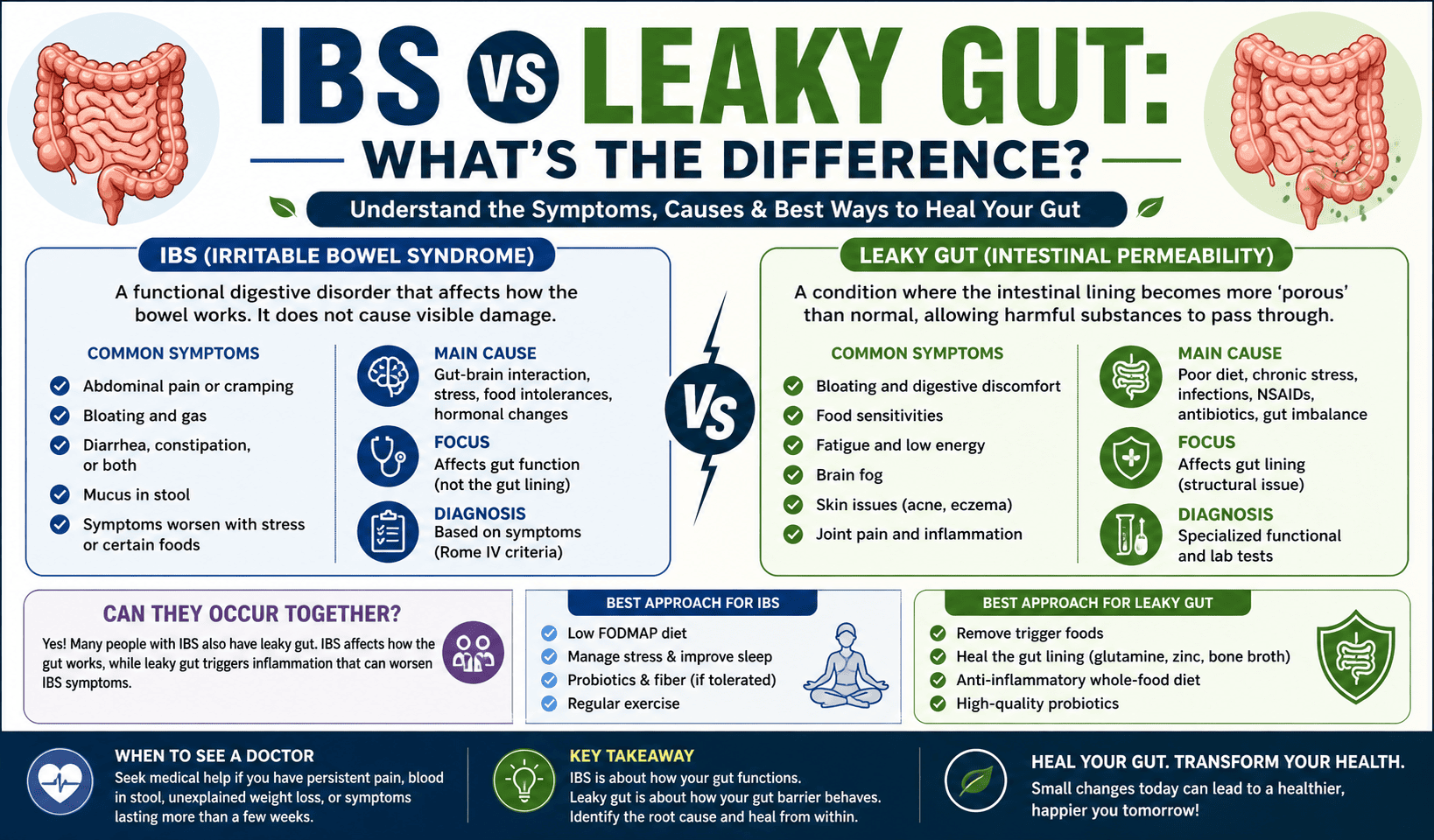
Digestive issues are one of the most common health concerns in the United States. Two conditions that often get confused are Irritable Bowel Syndrome (IBS) and Leaky Gut Syndrome. While they share some overlapping symptoms—like bloating, gas, and abdominal discomfort—they are not the same.
Understanding the difference is critical if you want the right treatment and long-term relief.
What Is IBS (Irritable Bowel Syndrome)?
IBS is a functional gastrointestinal disorder, meaning it affects how your gut works rather than causing visible damage.
Common Symptoms of IBS:
- Abdominal pain or cramping
- Bloating
- Diarrhea, constipation, or both
- Gas and discomfort after eating
- Mucus in stool
IBS is officially recognized in the U.S. healthcare system and is diagnosed based on symptom patterns (Rome IV criteria).
Key Point:
👉 IBS affects gut function, not gut structure.
What Is Leaky Gut?
Leaky gut refers to increased intestinal permeability, where the lining of the intestines becomes more “porous” than normal.
This allows:
- Toxins
- Undigested food particles
- Bacteria
to pass into the bloodstream, potentially triggering inflammation and immune responses.
Common Symptoms of Leaky Gut:
- Chronic bloating
- Food sensitivities
- Fatigue
- Brain fog
- Skin issues (acne, eczema)
- Joint pain
Important Note:
Leaky gut is not always recognized as a formal medical diagnosis in conventional U.S. medicine, but it is widely discussed in functional and integrative health.
IBS vs Leaky Gut: Key Differences
| Factor | IBS | Leaky Gut |
|---|---|---|
| Type | Functional disorder | Structural issue (intestinal lining) |
| Medical recognition | Fully recognized | Still debated |
| Main cause | Gut-brain interaction | Intestinal barrier damage |
| Symptoms focus | Digestive | Whole-body symptoms |
| Testing | Symptom-based diagnosis | Specialized functional tests |
| Inflammation | Usually low | Often higher |
What Causes IBS?
IBS is typically triggered by a combination of factors:
- Stress and anxiety
- Gut-brain axis imbalance
- Food intolerances (like lactose or gluten)
- Changes in gut bacteria
- Hormonal fluctuations
👉 In the U.S., stress-related IBS is extremely common due to lifestyle factors.
What Causes Leaky Gut?
Leaky gut is linked to damage in the intestinal lining caused by:
- Poor diet (processed foods, sugar, alcohol)
- Chronic stress
- Overuse of antibiotics or NSAIDs
- Gut infections
- Imbalanced microbiome
👉 Long-term inflammation is a major driver.
Can IBS and Leaky Gut Occur Together?
Yes, and this is where confusion happens.
Many people with IBS may also have increased intestinal permeability.
Example:
- IBS causes gut sensitivity
- Leaky gut worsens inflammation
➡️ Together, they can amplify symptoms like:
- Severe bloating
- Food reactions
- Fatigue
How to Tell the Difference (At Home Clues)
While proper diagnosis requires a healthcare professional, here are some general indicators:
Likely IBS:
- Symptoms mainly related to bowel habits
- Pain improves after bowel movement
- Triggered by stress or specific foods
Likely Leaky Gut:
- Symptoms go beyond digestion
- You experience fatigue, skin issues, or brain fog
- Increasing food sensitivities over time
Best Treatment Approach for IBS
Treatment focuses on symptom management:
1. Diet Changes
- Low FODMAP diet
- Avoid trigger foods
2. Stress Management
- Meditation
- Exercise
- Sleep optimization
3. Gut Support
- Probiotics
- Fiber supplements (if tolerated)
Best Treatment Approach for Leaky Gut
The goal is to heal the gut lining:
1. Remove Triggers
- Processed foods
- Alcohol
- Excess sugar
2. Repair the Gut
- L-glutamine
- Zinc
- Bone broth
3. Restore Balance
- High-quality probiotics
- Anti-inflammatory diet
IBS vs Leaky Gut: Which Is More Serious?
Neither condition should be ignored.
- IBS can severely impact quality of life
- Leaky gut may contribute to long-term inflammation
👉 The key is identifying the root cause and not treating symptoms blindly.
When Should You See a Doctor?
Seek medical advice if you experience:
- Persistent abdominal pain
- Unexplained weight loss
- Blood in stool
- Severe fatigue
- Symptoms lasting more than a few weeks
Final Takeaway
IBS and leaky gut may look similar on the surface, but they are fundamentally different:
- IBS = how your gut functions
- Leaky gut = how your gut barrier behaves
If you’re dealing with chronic digestive issues, the smartest approach is to:
✔ Identify your symptoms clearly
✔ Track food triggers
✔ Focus on gut healing, not just symptom relief
Reviewed by: Dzarro Editorial Team
Fact-checked using trusted medical and scientific sources.

Sandip Choudhary is a Health & Wellness Researcher and Content Creator specializing in sleep, digestive health, preventive wellness, and evidence-based health education. He has been creating online content and researching health-related topics for several years, focusing on translating complex medical information into practical guidance for everyday readers.
With a strong background in SEO and content strategy, Sandip ensures that every article is optimized for both search engines and real users. His goal is to provide reliable, clear, and helpful information that supports healthier living.
Disclaimer: The content published is for informational purposes only and is not a substitute for professional medical advice.