
Introduction
Feeling constantly tired, stressed, gaining belly fat, or struggling to sleep—even when you’re trying your best to stay healthy?
You’re not alone.
Millions of people in the U.S. are dealing with hormonal imbalance, and one of the biggest culprits is high or low cortisol levels. Often called the “stress hormone,” cortisol plays a key role in energy, metabolism, and mood—but when it’s out of balance, it can affect your entire body.
Quick Answer
To balance cortisol levels, focus on reducing chronic stress, improving sleep quality, eating a nutrient-rich diet, and maintaining regular physical activity. Natural methods like mindfulness, limiting caffeine, and stabilizing blood sugar can help regulate cortisol effectively. In some cases, medical evaluation may be needed for persistent imbalance.
What Is Cortisol?
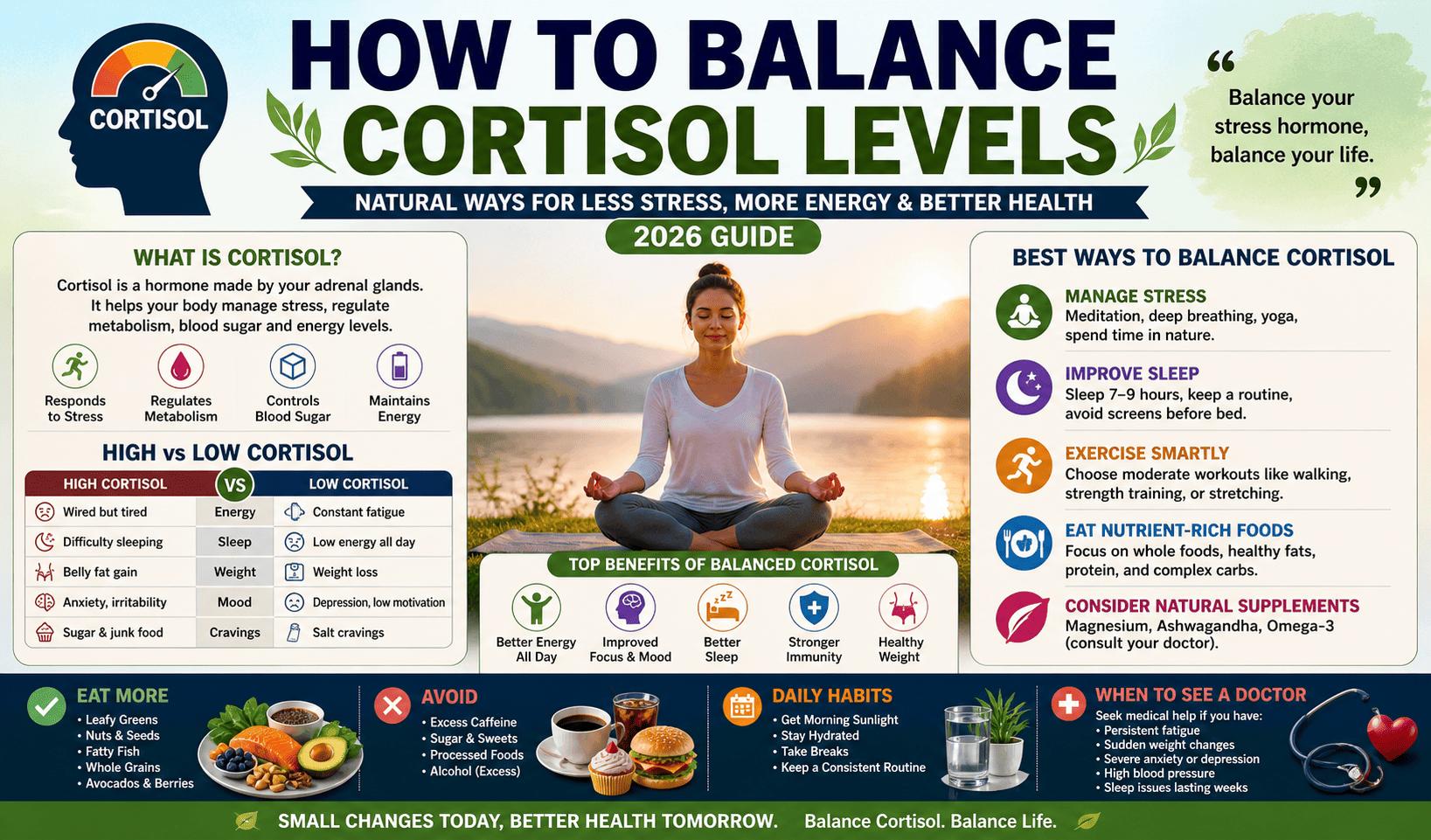
Cortisol is a hormone produced by your adrenal glands. It helps your body:
- Respond to stress
- Regulate metabolism
- Control blood sugar
- Maintain energy levels
In normal situations, cortisol follows a daily rhythm:
- High in the morning (to wake you up)
- Low at night (to help you sleep)
👉 Problems begin when cortisol stays too high or too low for long periods.
Symptoms of Cortisol Imbalance
Early Symptoms:
- Constant fatigue
- Trouble sleeping
- Mood swings or anxiety
- Sugar cravings
- Brain fog
Advanced Symptoms:
- Weight gain (especially belly fat)
- Hormonal imbalance
- High blood pressure
- Frequent illness (low immunity)
- Depression or burnout
Causes & Risk Factors
Cortisol imbalance doesn’t happen randomly. It’s usually caused by lifestyle and environmental factors.
Common Causes:
- Chronic stress (work pressure, financial stress)
- Poor sleep quality
- High caffeine intake
- Processed and sugary foods
- Lack of physical activity
Medical Factors:
- Adrenal disorders
- Thyroid imbalance
- Chronic inflammation
👉 Read our in-depth guide about anxiety symptoms and burnout to better understand emotional recovery.
Key Differences: High vs Low Cortisol
| Factor | High Cortisol | Low Cortisol |
|---|---|---|
| Energy | Wired but tired | Constant fatigue |
| Sleep | Difficulty sleeping | Low energy all day |
| Weight | Belly fat gain | Weight loss |
| Mood | Anxiety, irritability | Depression, low motivation |
| Cravings | Sugar & junk food | Salt cravings |
Best Treatment Options to Balance Cortisol
1. Stress Management (Most Important)
- Meditation (10–15 minutes daily)
- Deep breathing exercises
- Yoga or light stretching
2. Improve Sleep Quality
- Sleep 7–9 hours daily
- Avoid screens before bed
- Maintain a consistent sleep schedule
3. Exercise Smartly
- Moderate workouts (walking, strength training)
- Avoid overtraining (raises cortisol)
4. Natural Supplements (Consult Doctor First)
- Magnesium
- Ashwagandha
- Omega-3 fatty acids
5. Medical Treatment (If Severe)
- Hormone testing
- Prescription medications (if required)
Diet & Lifestyle Tips
What to Eat:
- Whole foods (vegetables, fruits, lean protein)
- Healthy fats (avocado, nuts, olive oil)
- Complex carbs (brown rice, oats)
What to Avoid:
- Excess caffeine
- Sugar and processed foods
- Alcohol (especially at night)
Daily Routine Tips:
- Get morning sunlight
- Stay hydrated
- Maintain a consistent routine
When to See a Doctor
Seek medical help if you experience:
- Persistent fatigue
- Sudden weight changes
- Severe anxiety or depression
- Sleep issues lasting weeks
- High blood pressure
👉 A doctor may recommend hormone testing to confirm cortisol imbalance.
Who Is at Risk?
High-Risk Groups:
- Office workers with high stress
- Entrepreneurs and business owners
- Women (especially hormonal changes)
- People with poor sleep habits
- Individuals with chronic illness
FAQs
Reduce stress through breathing exercises, avoid caffeine, and get proper sleep. Even short-term relaxation can help.
Foods rich in magnesium, omega-3, and antioxidants—like leafy greens, nuts, and fish—help lower cortisol.
Yes, moderate exercise helps—but excessive workouts can increase cortisol levels.
Yes, especially when consumed in excess or late in the day.
It depends on the cause, but with consistent lifestyle changes, improvements can be seen in a few weeks.
Conclusion
Balancing cortisol levels is not about one quick fix—it’s about creating a healthy daily routine.
Focus on:
✔ Stress management
✔ Quality sleep
✔ Balanced nutrition
✔ Smart exercise
These small changes can significantly improve your energy, mood, and overall health.
👉 Start with one habit today—your body will thank you.
Reviewed by: Dzarro Editorial Team
Fact-checked using trusted medical and scientific sources.

Sandip Choudhary is a Health & Wellness Researcher and Content Creator specializing in sleep, digestive health, preventive wellness, and evidence-based health education. He has been creating online content and researching health-related topics for several years, focusing on translating complex medical information into practical guidance for everyday readers.
With a strong background in SEO and content strategy, Sandip ensures that every article is optimized for both search engines and real users. His goal is to provide reliable, clear, and helpful information that supports healthier living.
Disclaimer: The content published is for informational purposes only and is not a substitute for professional medical advice.