
Have you ever found yourself replaying conversations in your head, worrying about future events, or imagining worst-case scenarios late at night? You’re not alone. Millions of Americans struggle with overthinking, especially in today’s fast-paced world filled with work pressure, financial concerns, and constant digital distractions.
While many people think overthinking only affects mental health, it can also have real effects on the body. Persistent stress and racing thoughts may contribute to fatigue, headaches, digestive issues, muscle tension, and sleep problems. Understanding this mind-body connection is the first step toward improving both mental and physical well-being.
Quick Answer
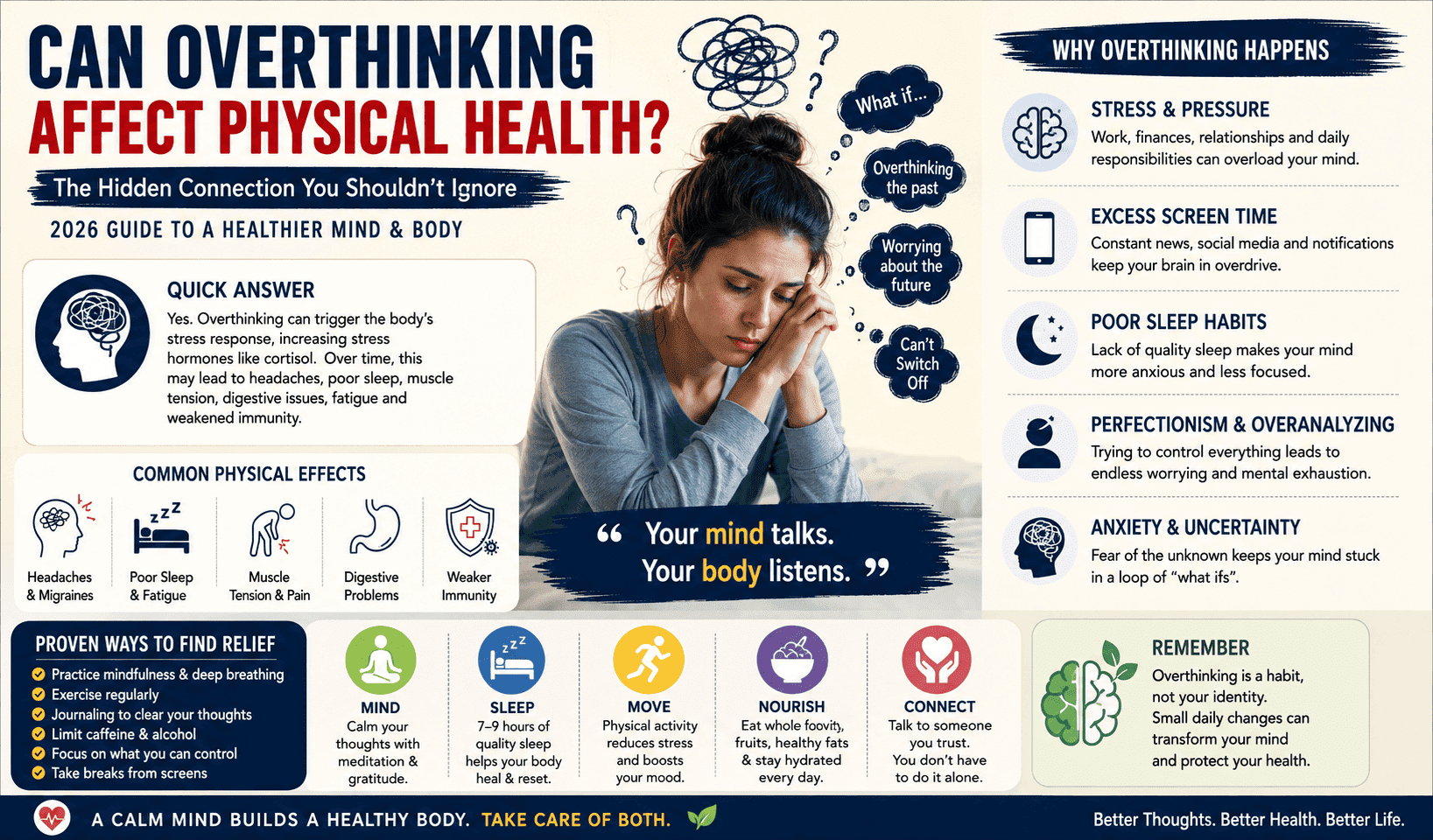
Yes, overthinking can affect physical health. Chronic overthinking activates the body’s stress response, increasing stress hormones like cortisol. Over time, this may contribute to headaches, poor sleep, muscle tension, digestive discomfort, fatigue, and weakened immunity. Managing stress and improving coping habits can help reduce both mental and physical symptoms.
What Is Overthinking?
Overthinking is the habit of repeatedly analyzing situations, worrying excessively, or dwelling on past events and future possibilities. It often involves mental loops that are difficult to stop.
Occasional reflection is normal and healthy. However, overthinking becomes problematic when it interferes with sleep, concentration, decision-making, or daily life.
The brain and body are closely connected. When the mind remains in a constant state of stress, the body often responds physically.
Also Read : Why do I feel mentally drained all the time?
Symptoms of Overthinking Affecting Physical Health
The effects of overthinking may begin subtly and become more noticeable over time.
Early Symptoms
- Difficulty relaxing
- Trouble falling asleep
- Mild headaches
- Increased fatigue
- Muscle tightness
- Digestive discomfort
- Restlessness
Advanced Symptoms
Long-term overthinking may contribute to:
- Chronic stress
- Sleep disturbances
- Persistent fatigue
- Increased anxiety
- Difficulty concentrating
- Frequent headaches
- Neck and shoulder pain
- Reduced quality of life
Not everyone experiences the same symptoms, and severity varies from person to person.
Also Read : Why do I feel anxious at night?
How Does Overthinking Affect the Body?
When you overthink, your body often reacts as if it is facing a threat.
This activates the “fight-or-flight” response, causing the release of stress hormones such as cortisol and adrenaline. While these hormones are helpful during emergencies, prolonged activation may affect multiple body systems.
Over time, chronic stress may influence:
- Sleep quality
- Digestion
- Immune function
- Heart health
- Energy levels
This is why emotional stress can sometimes feel physically exhausting.
Also Read : What foods help reduce stress?
Common Physical Effects of Overthinking
Sleep Problems
Overthinking is one of the most common causes of difficulty falling asleep.
Racing thoughts may keep the brain alert long after bedtime, reducing deep sleep and leaving you feeling tired the next day. Poor sleep can then worsen stress, creating a cycle that is difficult to break.
Muscle Tension and Pain
Stress often causes muscles to tighten unconsciously.
Many people notice tension in the:
- Neck
- Shoulders
- Jaw
- Back
Persistent muscle tension may contribute to discomfort and tension headaches.
Digestive Issues
The gut and brain communicate constantly through the gut-brain axis.
Overthinking and stress may contribute to symptoms such as:
- Bloating
- Stomach discomfort
- Nausea
- Changes in bowel habits
People with digestive conditions like IBS may notice symptoms worsening during stressful periods.
Fatigue and Low Energy
Mental exhaustion can become physical exhaustion.
Constant worrying consumes mental energy, making it harder to focus, stay motivated, or feel refreshed—even after a full night’s sleep.
Weakened Immune Function
Chronic stress may influence immune function over time.
While stress alone does not directly cause illness, prolonged stress may make it harder for the body to maintain normal immune responses.
Also Read : Can lack of sleep worsen anxiety?
Comparison Table: Healthy Reflection vs Overthinking
| Healthy Reflection | Overthinking |
|---|---|
| Helps solve problems | Creates mental loops |
| Leads to decisions | Increases indecision |
| Temporary | Persistent |
| Promotes learning | Increases stress |
| Supports growth | Affects well-being |
Causes & Risk Factors
Overthinking usually develops from a combination of personal habits, stressors, and life circumstances.
Stressful Lifestyle
Modern life often includes demanding schedules, financial pressure, and constant connectivity. These factors can increase mental overload and make it difficult to disconnect.
Poor Sleep Habits
Lack of sleep can worsen overthinking, while overthinking itself disrupts sleep. This creates a cycle where mental stress and fatigue feed into each other.
Excess Screen Time
Constant exposure to social media and news may increase worry, comparison, and information overload.
Checking your phone frequently before bed may make it harder to relax mentally.
Anxiety and Personality Traits
People who naturally strive for perfection or have higher stress sensitivity may be more likely to overthink.
Experiencing uncertainty can also trigger repetitive thought patterns.
Limited Stress Management Skills
Without healthy coping strategies, the brain may remain stuck in repetitive thinking patterns.
Learning stress-management techniques can help interrupt this cycle.
Also Read : How to calm anxiety naturally at home?
Best Treatment Options
There is no single solution for overthinking, but several evidence-based strategies may help.
Practice Mindfulness
Mindfulness encourages focusing on the present moment rather than future worries or past regrets.
Simple practices include:
- Deep breathing
- Meditation
- Guided relaxation
Even a few minutes daily may help calm racing thoughts.
Improve Sleep Quality
Good sleep supports emotional regulation and stress management.
Helpful habits include:
- Maintaining a consistent bedtime
- Limiting screens before bed
- Keeping the bedroom cool and dark
Better sleep often improves mental clarity and resilience.
Exercise Regularly
Physical activity helps reduce stress hormones and support mood.
Walking, strength training, cycling, and yoga may all contribute to better mental and physical health.
Cognitive Behavioral Strategies
Learning to identify and challenge unhelpful thought patterns may reduce excessive worrying.
Mental health professionals often use evidence-based techniques to help people manage overthinking more effectively.
Seek Professional Support
If overthinking significantly affects daily life, speaking with a licensed mental health professional may be beneficial.
Professional support can help identify underlying causes and develop coping strategies.
Also Read : What are the signs of emotional burnout?
Diet & Lifestyle Tips
Lifestyle habits can influence both stress levels and physical health.
What to Eat
A balanced diet that includes:
- Fruits and vegetables
- Whole grains
- Lean proteins
- Healthy fats
may support overall wellness and energy levels.
Foods rich in magnesium, omega-3 fatty acids, and fiber may also support healthy stress responses.
What to Avoid
Excessive intake of:
- Caffeine
- Alcohol
- Sugary foods
- Highly processed foods
may worsen stress or interfere with sleep in some individuals.
Daily Routine Improvements
Small habits can have a meaningful impact over time.
Try:
- Taking regular breaks from screens
- Spending time outdoors
- Maintaining a sleep schedule
- Practicing gratitude journaling
- Setting realistic boundaries for work and social media
Consistency often matters more than perfection.
When to See a Doctor
Consider seeking medical advice if you experience:
- Persistent anxiety or stress
- Sleep problems lasting several weeks
- Severe fatigue
- Difficulty functioning at work or home
- Symptoms of depression
- Physical symptoms that continue despite lifestyle changes
Physical symptoms should always be evaluated appropriately to rule out underlying medical conditions.
Also Read : Why do I feel overwhelmed for no reason?
Who Is at Risk?
Certain groups may be more likely to experience overthinking.
1. Office Workers
High workloads and constant digital connectivity may increase mental stress.
2. Students
Academic pressure and uncertainty about the future can contribute to excessive worrying.
3. Caregivers and Parents
Balancing multiple responsibilities may increase emotional strain.
4. Individuals With Anxiety
People with anxiety disorders may be more vulnerable to repetitive thinking patterns.
5. High Achievers
Perfectionism and high expectations can sometimes increase overthinking.
Frequently Asked Questions
1. Can overthinking cause physical symptoms?
Yes. Overthinking may contribute to stress-related symptoms such as headaches, fatigue, muscle tension, digestive discomfort, and sleep problems.
2. Can overthinking make you feel sick?
Chronic stress may affect sleep, digestion, and energy levels, which can make some people feel physically unwell.
3. Does overthinking increase cortisol?
Overthinking may activate the body’s stress response, which can increase cortisol levels during periods of prolonged stress.
4. Can overthinking affect sleep?
Yes. Racing thoughts may make it harder to fall asleep and stay asleep.
5. How can I stop overthinking naturally?
Stress management techniques such as mindfulness, exercise, healthy sleep habits, and limiting screen time may help reduce overthinking.
👉 Better sleep and stress management support mental clarity naturally.
Conclusion
Overthinking is more than a mental habit—it can also influence physical health. Chronic stress and repetitive thoughts may affect sleep, digestion, energy levels, and overall well-being.
The good news is that small changes can make a meaningful difference. Improving sleep habits, managing stress, staying active, and seeking support when needed may help reduce both mental and physical symptoms.
Taking care of your mind is also an important part of taking care of your body.
Reviewed by: Dzarro Editorial Team
Fact-checked using trusted medical and scientific sources.

Sandip Choudhary is a Health & Wellness Researcher and Content Creator specializing in sleep, digestive health, preventive wellness, and evidence-based health education. He has been creating online content and researching health-related topics for several years, focusing on translating complex medical information into practical guidance for everyday readers.
With a strong background in SEO and content strategy, Sandip ensures that every article is optimized for both search engines and real users. His goal is to provide reliable, clear, and helpful information that supports healthier living.
Disclaimer: The content published is for informational purposes only and is not a substitute for professional medical advice.