
Feeling overwhelmed, anxious, or mentally exhausted has become increasingly common in modern life. Whether it’s work deadlines, financial pressures, family responsibilities, or constant digital notifications, stress affects millions of Americans every day. While stress is a normal part of life, chronic stress can impact sleep, digestion, heart health, and overall well-being.
The good news is that your diet may play a larger role in stress management than you realize. Certain foods contain nutrients that support brain health, regulate stress hormones, and promote relaxation naturally. While no single food can eliminate stress completely, building a stress-friendly diet may help your body become more resilient over time.
This guide explores what foods help reduce stress, how nutrition affects mental wellness, and practical ways to support your health naturally.
Quick Answer
Foods that may help reduce stress include fatty fish, leafy greens, nuts, seeds, berries, yogurt, oats, and magnesium-rich foods. These foods support brain function, regulate cortisol levels, reduce inflammation, and promote relaxation. A balanced diet combined with quality sleep, exercise, and stress management techniques can improve overall mental well-being.
What Foods Help Reduce Stress?
Stress affects more than just emotions. It triggers physical responses throughout the body, including the release of cortisol, often called the “stress hormone.” While cortisol is important for survival, consistently high levels may contribute to anxiety, sleep problems, fatigue, and inflammation.
Certain nutrients help support the nervous system and may improve the body’s ability to cope with stress. These include:
- Magnesium
- Omega-3 fatty acids
- Vitamin C
- B vitamins
- Probiotics
- Antioxidants
A stress-supportive diet focuses on nourishing the body rather than relying on quick fixes.
Also Read : Can lack of sleep worsen anxiety?
Symptoms of Chronic Stress
Stress can appear differently from person to person. Some people notice emotional changes, while others experience physical symptoms.
Early Symptoms
- Feeling overwhelmed
- Irritability
- Trouble concentrating
- Muscle tension
- Mild sleep problems
- Frequent headaches
Advanced Symptoms
- Chronic fatigue
- Anxiety
- Digestive issues
- Burnout
- Persistent insomnia
- Low motivation
- Mood changes
When stress continues for long periods, it can affect multiple systems in the body.
Also Read : How to reduce cortisol naturally?
Causes & Risk Factors
Stress is influenced by many factors, and diet is only one piece of the puzzle.
Lifestyle Factors
Busy schedules, long work hours, and excessive screen time can keep the body in a constant state of alertness. Many Americans experience stress from balancing work, family, and personal responsibilities.
Poor Sleep
Lack of sleep and stress often create a cycle. Poor sleep increases cortisol levels, while elevated stress makes it harder to rest.
Dietary Habits
Diets high in processed foods, sugar, and ultra-processed snacks may increase inflammation and contribute to mood fluctuations.
Medical Conditions
Chronic health conditions, hormonal changes, and certain mental health disorders may also increase stress levels.
Also Read : What are the signs of emotional burnout?
How Nutrition Affects Stress
The brain and body require a steady supply of nutrients to function properly. Nutrient deficiencies may influence mood, energy levels, and the body’s stress response.
A balanced diet may help by:
- Supporting neurotransmitter production
- Regulating blood sugar
- Reducing inflammation
- Supporting gut health
- Promoting healthy sleep
This connection between diet and mental wellness explains why food choices matter for stress management.
Best Foods That May Help Reduce Stress Naturally
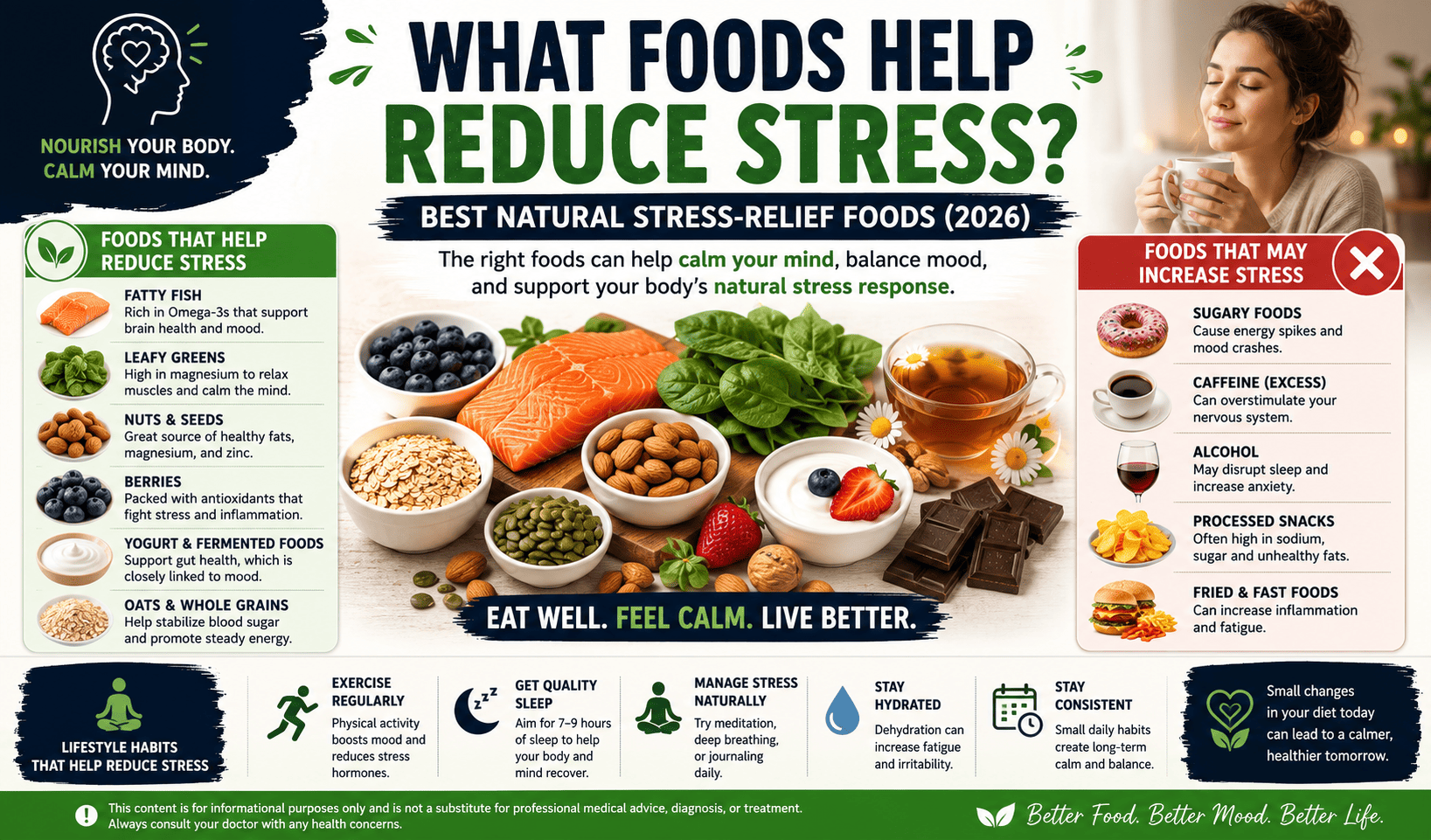
Fatty Fish
Salmon, sardines, and trout contain omega-3 fatty acids, which support brain health and may help regulate stress responses.
Omega-3 fats have been studied for their role in supporting mood and reducing inflammation.
Leafy Green Vegetables
Spinach, kale, and Swiss chard provide magnesium, a mineral involved in nervous system function.
Low magnesium levels have been associated with increased stress and poor sleep quality in some individuals.
Berries
Blueberries, strawberries, and raspberries contain antioxidants that help protect cells from oxidative stress.
Including berries regularly may support overall health and immune function.
Yogurt and Fermented Foods
The gut and brain communicate through the gut-brain axis. Foods containing probiotics, such as yogurt, kefir, and fermented vegetables, may support gut health.
Emerging research suggests gut health may influence mood and stress resilience.
Nuts and Seeds
Almonds, walnuts, pumpkin seeds, and chia seeds provide healthy fats, magnesium, and antioxidants.
These nutrients support brain health and overall wellness.
Oats and Whole Grains
Complex carbohydrates help stabilize blood sugar levels, which may contribute to more stable energy and mood.
Oats also provide fiber that supports digestive health.
Dark Chocolate
Dark chocolate contains antioxidants and may promote the release of feel-good chemicals in the brain.
Moderation is important because chocolate can also contain added sugar and calories.
Herbal Tea
Chamomile and peppermint tea may promote relaxation and support bedtime routines.
Warm beverages can also create calming rituals that reduce stress.
Also Read : Can stress cause physical symptoms?
Comparison Table: Stress-Friendly Foods vs Foods That May Increase Stress
| Stress-Friendly Foods | Foods to Limit |
|---|---|
| Fatty fish | Sugary drinks |
| Nuts and seeds | Energy drinks |
| Oats | Highly processed snacks |
| Berries | Excess alcohol |
| Yogurt | Excess caffeine |
| Leafy greens | Fried foods |
Best Treatment Options for Stress Management
Diet alone cannot eliminate stress, but it works best when combined with healthy lifestyle habits.
Exercise Regularly
Physical activity supports mood regulation and may lower stress hormone levels.
Walking, cycling, yoga, and strength training can all contribute to stress management.
Prioritize Sleep
Adults generally need 7–9 hours of sleep each night.
Improving sleep quality may help regulate cortisol levels and improve emotional resilience.
Practice Relaxation Techniques
Mindfulness, meditation, deep breathing, and journaling may help calm the nervous system.
Even a few minutes each day can make a difference.
Seek Professional Support
If stress significantly affects daily life, speaking with a healthcare professional or mental health specialist may be helpful.
Also Read : What causes brain fog and fatigue?
Diet & Lifestyle Tips for Reducing Stress
A stress-supportive lifestyle goes beyond individual foods.
Aim to build meals around:
- Lean proteins
- Fruits and vegetables
- Whole grains
- Healthy fats
- Hydrating beverages
Try limiting excessive sugar and caffeine intake, especially later in the day, as these may worsen anxiety or interfere with sleep.
Regular meal timing may also help stabilize blood sugar and energy levels throughout the day.
Also Read : Why do I feel mentally drained all the time?
What to Eat During Stressful Periods
During stressful times, many people crave comfort foods. While occasional treats are normal, focusing on nutrient-dense foods may support overall well-being.
Good options include:
- Greek yogurt with berries
- Oatmeal with nuts
- Salmon with vegetables
- Whole grain toast with avocado
- Fruit and nut snacks
Simple, balanced meals often provide more lasting energy than highly processed foods.
When to See a Doctor
Occasional stress is a normal part of life. However, you should consider seeking professional help if you experience:
- Persistent anxiety
- Severe sleep problems
- Panic attacks
- Depression symptoms
- Difficulty functioning at work or home
- Ongoing fatigue despite healthy habits
Stress-related symptoms can overlap with other health conditions, making proper evaluation important.
Also Read : Why do I feel mentally tired after work?
Who Is at Risk?
Certain groups may experience higher stress levels.
1. Office Workers
Long hours, deadlines, and digital overload may increase stress.
2. College Students
Academic pressure and changing schedules can affect mental wellness.
3. Parents and Caregivers
Balancing multiple responsibilities may contribute to chronic stress.
4. Shift Workers
Irregular schedules often affect sleep and stress regulation.
5. Older Adults
Health changes and life transitions can influence emotional well-being.
FAQs
What foods help reduce stress quickly?
Foods rich in magnesium, omega-3 fats, and antioxidants may support relaxation and overall stress management, although no food works instantly.
Can diet affect stress levels?
Yes. Nutrition influences brain health, inflammation, gut health, and hormone regulation, all of which may affect stress responses.
Does caffeine increase stress?
Excess caffeine may increase anxiety and interfere with sleep in some individuals.
Can gut health affect stress?
Research suggests the gut-brain connection may influence mood and stress resilience.
Is dark chocolate good for stress?
Dark chocolate may support mood due to its antioxidant content, but moderation is important.
👉 Reducing stress is one of the best ways to improve overall mental wellness.
Conclusion
If you’ve ever wondered what foods help reduce stress, the answer lies in building a balanced, nutrient-rich diet that supports both brain and body health. Foods such as fatty fish, leafy greens, berries, yogurt, nuts, and whole grains may help support the body’s natural stress response.
Diet alone isn’t a cure for stress, but when combined with quality sleep, regular exercise, hydration, and healthy routines, it can become a powerful tool for long-term wellness. Small daily changes often lead to meaningful improvements over time.
Reviewed by: Dzarro Editorial Team
Fact-checked using trusted medical and scientific sources.

Sandip Choudhary is a Health & Wellness Researcher and Content Creator specializing in sleep, digestive health, preventive wellness, and evidence-based health education. He has been creating online content and researching health-related topics for several years, focusing on translating complex medical information into practical guidance for everyday readers.
With a strong background in SEO and content strategy, Sandip ensures that every article is optimized for both search engines and real users. His goal is to provide reliable, clear, and helpful information that supports healthier living.
Disclaimer: The content published is for informational purposes only and is not a substitute for professional medical advice.
1 thought on “What foods help reduce stress?”
Comments are closed.