
You wake up with a headache before a big meeting. Your stomach hurts during stressful periods. Your chest feels tight, your muscles ache, and your heart races—even though medical tests show nothing serious. If this sounds familiar, you may wonder: Can stress cause physical symptoms?
The answer is yes. Stress doesn’t just affect the mind—it affects the entire body. In today’s fast-paced world, millions of Americans experience physical symptoms linked to chronic stress, work pressure, financial worries, family responsibilities, and lack of sleep. Understanding this connection is the first step toward improving both mental and physical health.
Quick Answer
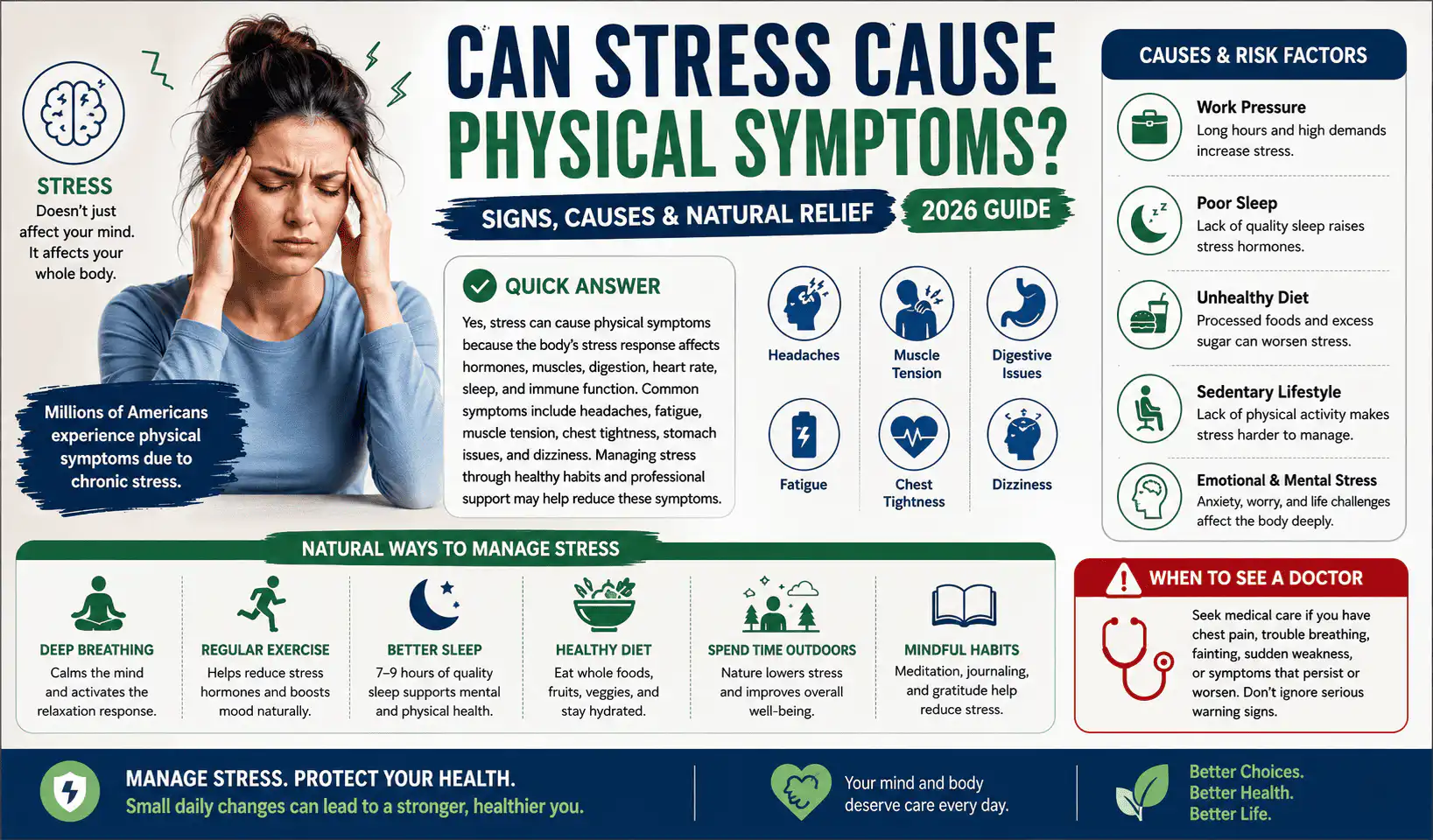
Yes, stress can cause physical symptoms because the body’s stress response affects hormones, muscles, digestion, heart rate, sleep, and immune function. Common symptoms include headaches, fatigue, muscle tension, chest tightness, stomach issues, and dizziness. Managing stress through healthy habits and professional support may help reduce these symptoms.
What Does It Mean When Stress Causes Physical Symptoms?
Stress is the body’s natural response to challenges or perceived threats. When you feel stressed, your body releases hormones such as cortisol and adrenaline. These hormones prepare you for “fight or flight,” increasing alertness and energy.
While short-term stress can be helpful, chronic stress keeps the body in a prolonged state of activation. Over time, this can affect nearly every organ system, leading to noticeable physical symptoms.
The brain and body are deeply connected. That’s why emotional stress can sometimes show up as real physical discomfort, even when there is no obvious injury or illness.
Also Read : How to reduce cortisol naturally?
Common Physical Symptoms of Stress
Stress affects people differently. Some notice only mild symptoms, while others experience more significant physical effects.
Early Symptoms
- Frequent headaches
- Muscle tightness
- Mild fatigue
- Trouble sleeping
- Upset stomach
- Increased sweating
- Jaw clenching
- Difficulty concentrating
Advanced Symptoms
- Chronic fatigue
- Chest tightness
- Digestive issues
- Frequent illnesses
- Persistent muscle pain
- Dizziness
- Heart palpitations
- Anxiety-related physical discomfort
These symptoms may become more noticeable during stressful life events or periods of emotional overload.
Also Read : What causes brain fog and fatigue?
How Stress Affects the Body
Stress influences multiple systems at once. Understanding how it works can help explain why symptoms appear in different areas of the body.
Nervous System
Stress activates the sympathetic nervous system, also known as the “fight or flight” system. This response increases heart rate, raises blood pressure, and releases stress hormones.
If stress continues for weeks or months, the nervous system may remain overactive, making it harder for the body to relax and recover.
Muscles and Joints
Stress often causes muscle tension, especially in the:
- Neck
- Shoulders
- Back
- Jaw
Over time, this tension can contribute to headaches, stiffness, and body aches.
Digestive System
The gut and brain communicate constantly through the gut-brain axis. Stress may affect digestion and lead to:
- Bloating
- Nausea
- Constipation
- Diarrhea
- Acid reflux
Many people notice digestive symptoms worsen during stressful periods.
Sleep System
Stress can interfere with:
- Falling asleep
- Staying asleep
- Deep sleep quality
Poor sleep then increases stress levels, creating a cycle that becomes difficult to break.
Also Read : Why do I feel mentally drained all the time?
Causes & Risk Factors
Several factors increase the risk of stress-related physical symptoms.
Chronic Work Stress
Long work hours, deadlines, and job insecurity can keep the body in a constant state of stress. Office workers in the United States commonly report headaches, fatigue, and muscle pain related to work pressure.
Poor Sleep Habits
Sleep deprivation raises cortisol levels and reduces the body’s ability to recover from stress. Even one night of poor sleep can affect mood and physical health.
Unhealthy Diet
Highly processed foods, excess sugar, and frequent fast-food meals may increase inflammation and reduce energy levels, making the body less resilient to stress.
Lack of Physical Activity
Regular exercise helps regulate stress hormones. A sedentary lifestyle may worsen both mental and physical symptoms.
Medical Conditions
Existing health conditions may make stress symptoms feel more intense. Stress can also worsen symptoms in some chronic illnesses.
Also Read : Why do I feel mentally tired after work?
Stress vs Medical Conditions: How Are They Different?
Because stress can mimic other health issues, many people worry that something more serious is happening.
| Symptom | Stress-Related | Medical Condition |
|---|---|---|
| Headaches | Common during stress | May have other causes |
| Chest tightness | Often temporary | Needs evaluation if severe |
| Fatigue | Common with stress | Can have many causes |
| Digestive issues | Frequently stress-related | May indicate GI disorders |
| Muscle pain | Often linked to tension | May require medical evaluation |
Stress-related symptoms are real, but persistent or severe symptoms should always be evaluated by a healthcare professional.
Best Treatment Options for Stress-Related Physical Symptoms
The goal is not to eliminate stress completely but to improve how the body responds to it.
Stress Management Techniques
Simple stress-reduction methods may help regulate the nervous system and improve overall health.
Helpful approaches include:
- Deep breathing exercises
- Meditation
- Journaling
- Yoga
- Spending time outdoors
- Mindfulness practices
Even 10–15 minutes daily may make a difference.
Exercise Regularly
Physical activity helps lower stress hormones and improve mood.
Many health experts recommend:
- Walking
- Cycling
- Strength training
- Stretching
Regular movement supports both mental and physical well-being.
Improve Sleep Quality
Healthy sleep habits are essential for stress recovery.
A good sleep routine may include:
- Consistent bedtime
- Limiting screens before bed
- Keeping the bedroom cool and dark
- Avoiding caffeine late in the day
Better sleep often leads to lower stress levels.
Professional Support
If stress significantly affects daily life, professional help may be beneficial.
Options may include:
- Therapy or counseling
- Stress management programs
- Medical evaluation when appropriate
Seeking help is an important part of overall wellness.
Also Read : What are the symptoms of chronic stress?
Diet & Lifestyle Tips
Nutrition plays a major role in stress management.
Foods rich in magnesium, fiber, healthy fats, and protein may support overall health and help regulate stress responses. Examples include leafy greens, nuts, seeds, berries, salmon, and whole grains.
Hydration is equally important. Even mild dehydration may contribute to fatigue and headaches.
Limiting excess caffeine, sugary drinks, and highly processed foods may help stabilize energy levels throughout the day.
Daily lifestyle habits that support stress management include taking regular breaks, spending time outdoors, maintaining social connections, and setting healthy boundaries with work and technology.
When Should You See a Doctor?
While stress can cause physical symptoms, some warning signs require medical attention.
Seek medical care if you experience:
- Severe chest pain
- Difficulty breathing
- Fainting
- Sudden weakness
- Unexplained weight loss
- Persistent symptoms that do not improve
Stress-related symptoms should not be used to ignore potentially serious medical conditions.
Also Read : Can dehydration cause anxiety?
Who Is Most at Risk?
Certain groups may be more vulnerable to stress-related physical symptoms.
1. Office Workers
Long hours, screen exposure, and workplace pressure can increase stress levels.
2. Students
Academic stress, social pressure, and irregular schedules may affect both mental and physical health.
3. Caregivers
People caring for children or family members often experience chronic stress and fatigue.
4. Women
Hormonal changes combined with stress may increase physical symptoms in some individuals.
5. Shift Workers
Irregular schedules may disrupt sleep and worsen stress responses.
Frequently Asked Questions
1. Can stress really cause physical pain?
Yes. Stress can contribute to muscle tension, headaches, digestive discomfort, and other physical symptoms through changes in hormones and nervous system activity.
2. Can stress make you feel sick?
Yes. Chronic stress may weaken the immune system and increase fatigue, making some people feel physically unwell.
3. Why does stress affect the stomach?
The gut and brain communicate closely. Stress can alter digestion, stomach acid production, and gut movement.
4. Can stress cause dizziness?
Stress and anxiety may sometimes contribute to dizziness, especially during periods of high emotional stress.
5. How long do stress symptoms last?
This varies from person to person. Symptoms often improve when stress levels decrease and healthy coping strategies are used.
👉 Prioritizing sleep is essential for maintaining mental wellness habits.
Conclusion
Stress is not just a mental experience—it can affect the entire body. From headaches and digestive issues to fatigue and muscle tension, stress-related physical symptoms are common and real.
The good news is that healthy habits such as regular exercise, quality sleep, balanced nutrition, and stress management techniques may help reduce symptoms and improve overall well-being.
If symptoms become severe, persistent, or interfere with daily life, seeking professional medical advice is an important step toward better health.
Reviewed by: Dzarro Editorial Team
Fact-checked using trusted medical and scientific sources.

Sandip Choudhary is a Health & Wellness Researcher and Content Creator specializing in sleep, digestive health, preventive wellness, and evidence-based health education. He has been creating online content and researching health-related topics for several years, focusing on translating complex medical information into practical guidance for everyday readers.
With a strong background in SEO and content strategy, Sandip ensures that every article is optimized for both search engines and real users. His goal is to provide reliable, clear, and helpful information that supports healthier living.
Disclaimer: The content published is for informational purposes only and is not a substitute for professional medical advice.