
Have you ever walked into a room and forgotten why you were there? Or struggled to focus on simple tasks even after a full night’s sleep? If you constantly feel mentally drained, forgetful, or physically exhausted, you’re not alone. Millions of Americans experience brain fog and fatigue, often affecting work performance, relationships, and overall well-being.
Brain fog isn’t a medical diagnosis itself, but it can be a symptom of lifestyle factors, stress, poor sleep, nutrient deficiencies, or underlying health conditions. The good news is that understanding the root cause is often the first step toward feeling like yourself again.
Quick Answer
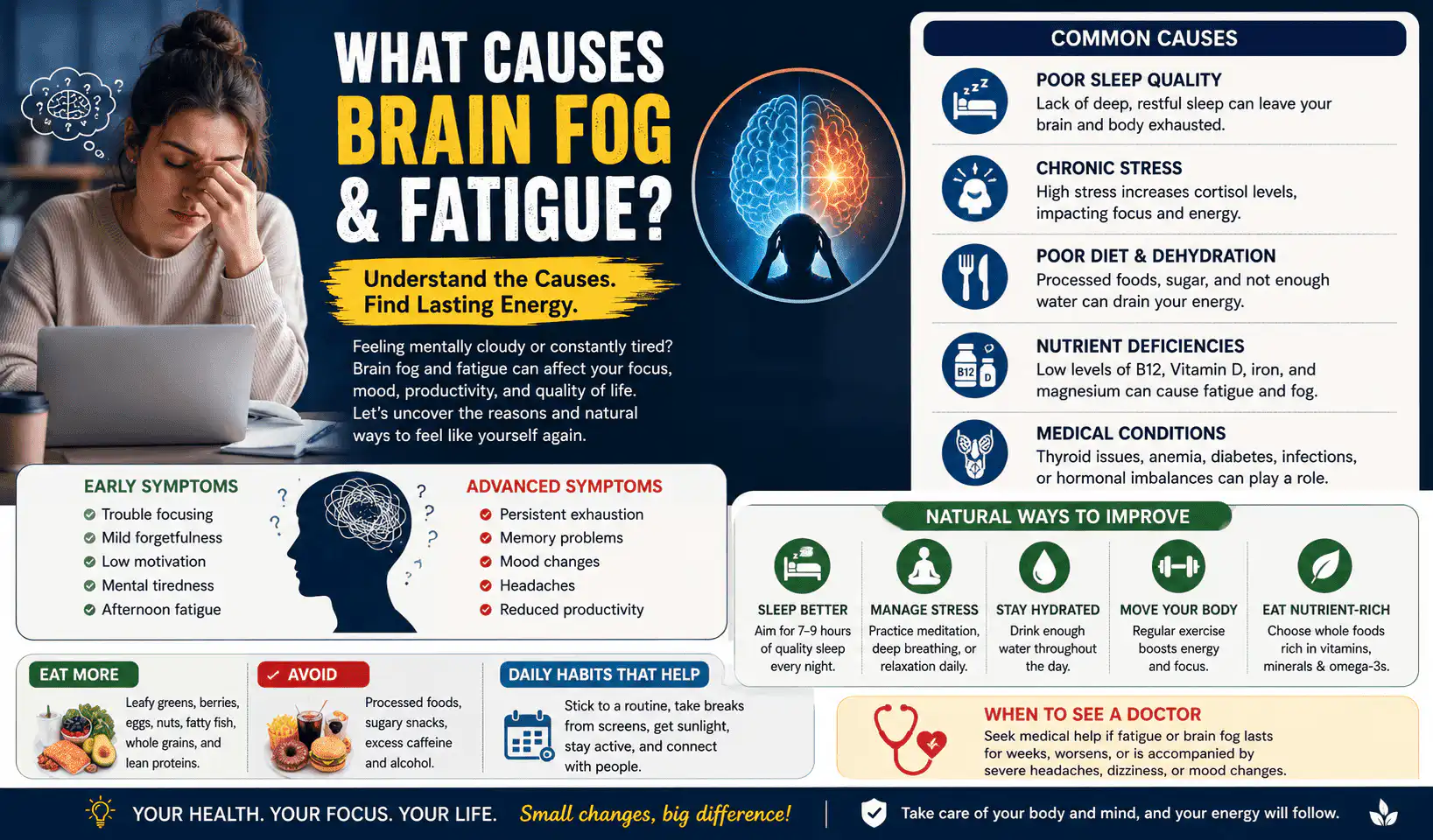
Brain fog and fatigue can be caused by poor sleep, chronic stress, dehydration, nutrient deficiencies, hormonal changes, infections, mental health conditions, and certain medical disorders. Lifestyle habits such as poor diet, lack of exercise, and excessive screen time may also contribute. Identifying the underlying cause can help improve energy, focus, and mental clarity.
What Is Brain Fog and Fatigue?
Brain fog refers to a feeling of mental cloudiness that affects concentration, memory, and thinking. Fatigue is a persistent feeling of physical or mental exhaustion that doesn’t improve with rest.
People experiencing brain fog often describe it as:
- Feeling mentally “slow”
- Difficulty focusing
- Trouble remembering information
- Reduced productivity
Fatigue may occur alongside brain fog, making everyday activities feel overwhelming. Although occasional mental tiredness is normal, persistent symptoms may indicate that your body or brain needs attention.
Also Read : Why do I feel mentally drained all the time?
Symptoms of Brain Fog and Fatigue
Symptoms vary from person to person and may develop gradually.
Early Symptoms
People often notice subtle changes first, such as difficulty concentrating during meetings, forgetting appointments, or feeling unusually tired by afternoon. You may find yourself relying heavily on caffeine or struggling to complete tasks that once felt easy.
Common early symptoms include:
- Trouble focusing
- Mild forgetfulness
- Low motivation
- Daytime sleepiness
- Mental exhaustion
- Slower thinking
Advanced Symptoms
When symptoms persist, they may become more disruptive to daily life.
Advanced symptoms may include:
- Persistent exhaustion
- Frequent headaches
- Mood changes
- Increased stress sensitivity
- Poor memory
- Reduced productivity
- Difficulty making decisions
If symptoms significantly interfere with daily functioning, further evaluation may be needed.
Also Read : Why do I feel mentally tired after work?
What Causes Brain Fog and Fatigue?
Several factors can contribute to brain fog and fatigue. Often, more than one cause is involved.
Poor Sleep Quality
Sleep plays a vital role in memory, learning, and recovery. Even if you sleep for 7–8 hours, poor-quality sleep can leave you feeling tired and mentally sluggish.
Sleep issues linked to brain fog include:
- Sleep apnea
- Insomnia
- Frequent nighttime waking
- Irregular sleep schedules
Poor sleep may also affect hormone regulation and energy production.
Chronic Stress and High Cortisol Levels
Stress triggers the release of cortisol, often called the stress hormone. Short-term stress can be helpful, but chronic stress may affect memory, concentration, and energy.
Many Americans experience stress from:
- Work demands
- Financial pressure
- Family responsibilities
- Constant digital connectivity
Long-term stress may contribute to both mental and physical exhaustion.
Nutrient Deficiencies
The brain requires vitamins and minerals to function properly.
Deficiencies associated with fatigue and brain fog may include:
- Iron
- Vitamin B12
- Vitamin D
- Magnesium
Low levels of these nutrients may reduce oxygen delivery, nerve function, or energy production.
Dehydration
Even mild dehydration can affect mood, focus, and energy.
Many people underestimate how much water they need throughout the day. Dehydration may cause:
- Headaches
- Dizziness
- Fatigue
- Difficulty concentrating
Increasing water intake may improve mental performance in some individuals.
Poor Diet and Blood Sugar Fluctuations
Highly processed foods and sugary snacks may cause rapid spikes and crashes in blood sugar levels.
These fluctuations can lead to:
- Low energy
- Difficulty concentrating
- Irritability
- Afternoon fatigue
Balanced meals with protein, fiber, and healthy fats may support more stable energy.
Hormonal Changes
Hormones play an important role in energy and cognition.
Hormonal changes may occur during:
- Menopause
- Pregnancy
- Thyroid disorders
- Aging
Both men and women may experience fatigue due to hormonal imbalances.
Mental Health Conditions
Anxiety and depression can affect both mental clarity and energy levels.
People experiencing mental health challenges may notice:
- Reduced concentration
- Sleep disturbances
- Low motivation
- Emotional exhaustion
Mental and physical health are closely connected.
Medical Conditions
Sometimes brain fog and fatigue may be associated with underlying health conditions such as:
- Thyroid disease
- Diabetes
- Autoimmune disorders
- Chronic infections
Persistent or worsening symptoms should not be ignored.
Also Read : What are the symptoms of chronic stress?
Comparison Table: Temporary vs Persistent Brain Fog
| Feature | Temporary Brain Fog | Persistent Brain Fog |
|---|---|---|
| Duration | Hours to days | Weeks or months |
| Common Cause | Stress, poor sleep | Medical conditions |
| Improves with rest | Usually | Not always |
| Impact on daily life | Mild | Significant |
| Medical evaluation needed | Rarely | Often |
Best Treatment Options
Treatment depends on the underlying cause, but lifestyle changes often help improve symptoms.
Improve Sleep Quality
Good sleep supports brain function and energy production.
Helpful strategies include maintaining a consistent bedtime, reducing screen time before bed, and keeping the bedroom cool and dark. Adults generally benefit from 7–9 hours of sleep each night.
Manage Stress Naturally
Stress management may improve mental clarity and reduce fatigue.
Practices that may help include:
- Meditation
- Deep breathing
- Walking outdoors
- Journaling
- Mindfulness exercises
Even small stress-reduction habits can make a difference over time.
Stay Physically Active
Regular exercise supports circulation, mood, and brain health.
Activities such as walking, strength training, yoga, or cycling may improve energy and reduce mental fatigue. Exercise also promotes better sleep quality.
Address Nutritional Deficiencies
If symptoms persist, healthcare professionals may recommend testing for nutrient deficiencies.
Treatment may involve dietary changes or supplements when medically appropriate.
Limit Excessive Screen Time
Constant digital stimulation may contribute to mental overload and poor concentration.
Taking regular breaks from screens and avoiding phone use before bed may help improve focus.
Also Read : Can dehydration cause anxiety?
Diet & Lifestyle Tips
Nutrition plays a major role in brain health and energy.
Foods that support brain function include fatty fish, leafy greens, berries, nuts, eggs, and whole grains. These foods provide nutrients that support memory and cognitive performance.
Staying hydrated throughout the day is equally important. Many adults benefit from carrying a water bottle and drinking regularly rather than waiting until they feel thirsty.
It may also help to limit:
- Highly processed foods
- Sugary beverages
- Excess alcohol
- Energy drinks
Daily routines matter as well. Consistent sleep schedules, physical activity, stress management, and social connection all contribute to better mental wellness.
When to See a Doctor
Occasional brain fog happens to most people, but some symptoms warrant medical attention.
Consider speaking with a healthcare professional if you experience:
- Fatigue lasting several weeks
- Sudden memory problems
- Severe headaches
- Unexplained weight changes
- Dizziness or fainting
- Difficulty performing daily tasks
- Symptoms that continue despite healthy lifestyle changes
Medical evaluation can help identify treatable causes.
Also Read : How to improve focus without caffeine?
Who Is at Risk?
Certain groups may be more likely to experience brain fog and fatigue.
1. Office Workers
Long hours of screen exposure, stress, and sitting may contribute to mental fatigue.
2. Students
Academic pressure, poor sleep, and irregular schedules can affect focus and energy.
3. Shift Workers
Disrupted circadian rhythms may increase fatigue and impair concentration.
4. Older Adults
Aging may affect sleep patterns, energy levels, and cognitive function.
5. Women
Hormonal changes during pregnancy, postpartum periods, and menopause may contribute to symptoms.
Frequently Asked Questions
1. Can stress cause brain fog and fatigue?
Yes. Chronic stress may increase cortisol levels, disrupt sleep, and affect concentration and energy.
2. What vitamin deficiency causes brain fog?
Low levels of vitamin B12, vitamin D, iron, or magnesium may contribute to fatigue and cognitive symptoms.
3. Can dehydration affect brain function?
Yes. Even mild dehydration may reduce concentration, memory, and energy levels.
4. Why do I feel tired even after sleeping?
Poor sleep quality, sleep disorders, stress, or underlying health conditions may contribute.
5. Can diet improve brain fog?
A balanced diet rich in whole foods, healthy fats, and essential nutrients may support brain health and energy.
👉 Small daily habits can significantly improve mental well-being over time.
Conclusion
Brain fog and fatigue can affect every aspect of life, from work performance to emotional well-being. While occasional tiredness is normal, persistent symptoms may signal that your body needs rest, better nutrition, stress management, or medical evaluation.
The encouraging news is that many causes of brain fog and fatigue are modifiable. Improving sleep, staying hydrated, managing stress, exercising regularly, and eating nutrient-rich foods may help restore mental clarity and energy over time.
If symptoms continue despite healthy lifestyle changes, consulting a healthcare professional can help identify underlying causes and guide appropriate treatment.
Reviewed by: Dzarro Editorial Team
Fact-checked using trusted medical and scientific sources.

Sandip Choudhary is a Health & Wellness Researcher and Content Creator specializing in sleep, digestive health, preventive wellness, and evidence-based health education. He has been creating online content and researching health-related topics for several years, focusing on translating complex medical information into practical guidance for everyday readers.
With a strong background in SEO and content strategy, Sandip ensures that every article is optimized for both search engines and real users. His goal is to provide reliable, clear, and helpful information that supports healthier living.
Disclaimer: The content published is for informational purposes only and is not a substitute for professional medical advice.