
Have you been feeling constantly stressed, tired, anxious, or unable to relax—even when life seems normal? Maybe you’re struggling with poor sleep, stubborn weight gain, brain fog, or low energy throughout the day. If so, elevated cortisol levels may be playing a role.
In today’s fast-paced world, millions of Americans experience chronic stress. While cortisol is an essential hormone that helps the body respond to challenges, consistently high levels can negatively affect both physical and mental health.
The good news? There are natural, science-backed ways to help regulate cortisol and support overall well-being.
Quick Answer
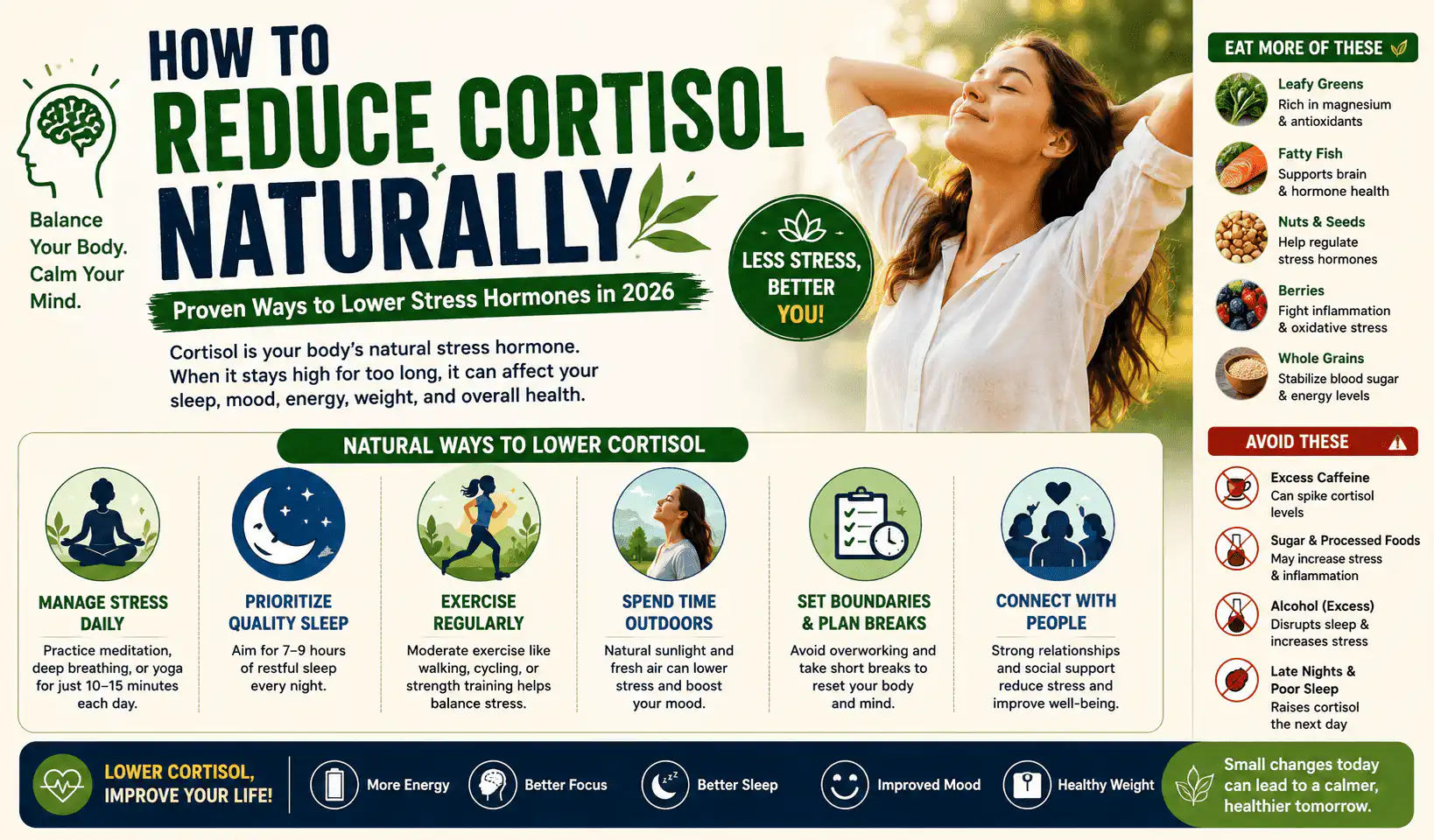
To reduce cortisol naturally, prioritize quality sleep, manage stress through relaxation techniques, exercise regularly, eat a balanced diet, limit excess caffeine, and maintain strong social connections. Healthy lifestyle habits can help support normal cortisol regulation and improve energy, mood, sleep, and overall health.
What Is Cortisol?
Cortisol is often called the “stress hormone” because it is released by the adrenal glands during stressful situations.
However, cortisol is not inherently bad. In fact, it plays several important roles in the body, including:
- Regulating blood sugar
- Supporting metabolism
- Controlling inflammation
- Maintaining blood pressure
- Helping the body respond to stress
- Regulating the sleep-wake cycle
Problems typically arise when cortisol remains elevated for long periods due to chronic stress, poor sleep, unhealthy lifestyle habits, or certain medical conditions.
Also Read : What causes brain fog and fatigue?
Symptoms of High Cortisol Levels
High cortisol symptoms can develop gradually and may vary from person to person.
Early Symptoms
- Feeling stressed most of the time
- Trouble sleeping
- Low energy
- Brain fog
- Increased cravings for sugary foods
- Difficulty relaxing
Advanced Symptoms
- Weight gain, especially around the abdomen
- Anxiety or irritability
- Frequent illness
- Elevated blood pressure
- Persistent fatigue
- Poor concentration
- Mood changes
These symptoms can overlap with many other conditions, so they should not be used for self-diagnosis.
Also Read : Why do I feel mentally drained all the time?
How Does Cortisol Affect the Body?
Cortisol is part of the body’s natural stress response system.
When facing stress, the brain signals the adrenal glands to release cortisol. In short-term situations, this response is helpful. It can increase alertness and energy.
The problem occurs when stress becomes chronic. Over time, prolonged cortisol elevation may affect sleep, metabolism, digestion, mood, and immune function.
This is why stress management is such an important part of overall health.
Also Read : Why do I feel mentally tired after work?
Causes & Risk Factors for High Cortisol
Several lifestyle and environmental factors may contribute to elevated cortisol levels.
Chronic Stress
Long-term stress from work, finances, family responsibilities, or caregiving may keep the body in a constant state of alertness.
Office workers, parents, and caregivers are particularly vulnerable to chronic stress exposure.
Poor Sleep
Sleep and cortisol have a close relationship.
Lack of sleep can increase cortisol levels, while high cortisol can make it harder to sleep. This creates a cycle that becomes difficult to break.
Excess Caffeine
Moderate caffeine intake is safe for most adults, but excessive consumption—especially later in the day—may increase cortisol in some individuals.
Energy drinks and multiple cups of coffee may contribute to this effect.
Sedentary Lifestyle
Physical inactivity may worsen stress and reduce the body’s ability to regulate hormones effectively.
Regular movement supports overall hormonal balance.
Overtraining
While exercise is beneficial, excessive high-intensity exercise without adequate recovery may temporarily increase cortisol levels.
Balance is key.
Medical Conditions
Certain medical conditions can affect cortisol regulation. Persistent symptoms should always be evaluated by a healthcare professional.
Also Read : What are the symptoms of chronic stress?
Comparison Table: Healthy Stress Response vs Chronic Stress
| Factor | Healthy Cortisol Response | Chronically Elevated Cortisol |
|---|---|---|
| Duration | Short-term | Long-term |
| Energy | Temporary boost | Persistent fatigue |
| Sleep | Normal | Sleep disturbances |
| Mood | Stable | Anxiety or irritability |
| Appetite | Balanced | Increased cravings |
| Recovery | Efficient | Reduced recovery |
Best Natural Ways to Reduce Cortisol Naturally
Reducing cortisol often involves improving daily habits rather than relying on quick fixes.
1. Prioritize Quality Sleep
Sleep is one of the most powerful regulators of cortisol.
Aim for 7–9 hours of sleep each night and maintain a consistent sleep schedule—even on weekends.
Creating a cool, dark, and quiet bedroom environment may improve sleep quality naturally.
2. Practice Stress Management
Relaxation techniques help calm the nervous system and support healthy cortisol regulation.
Effective options include:
- Deep breathing
- Meditation
- Journaling
- Yoga
- Mindfulness exercises
Even 10 minutes per day may provide benefits over time.
3. Exercise Regularly
Physical activity supports mental and physical health.
Moderate exercise such as walking, cycling, swimming, or strength training may help improve stress resilience.
Avoid pushing your body beyond its recovery capacity.
4. Strengthen Social Connections
Research consistently shows that supportive relationships are associated with lower stress levels.
Spending time with family and friends may positively influence emotional well-being.
5. Spend Time Outdoors
Exposure to nature and sunlight may help reduce stress and improve mood.
Even short walks outdoors can support overall wellness.
6. Set Healthy Boundaries
Constant work demands and digital overload may contribute to chronic stress.
Setting boundaries around work hours, notifications, and screen time can improve recovery.
Also Read : Can dehydration cause anxiety?
Diet & Lifestyle Tips to Support Healthy Cortisol Levels
Nutrition plays an important role in stress management.
Foods That May Support Overall Wellness
A balanced diet rich in whole foods may support healthy hormone regulation.
Helpful foods include:
- Fatty fish
- Nuts and seeds
- Fruits and vegetables
- Whole grains
- Beans and legumes
- Fermented foods
These foods provide nutrients that support overall health and recovery.
Stay Hydrated
Even mild dehydration can increase stress on the body.
Aim to drink water regularly throughout the day.
Limit Highly Processed Foods
Diets high in added sugar and ultra-processed foods may contribute to inflammation and metabolic stress.
Focusing on nutrient-dense foods may support long-term health.
Also Read : How to improve focus without caffeine?
Daily Routine Improvements for Stress Reduction
Small daily habits often produce meaningful long-term benefits.
Morning Routine
Begin your day with sunlight exposure and hydration.
Avoid checking emails or social media immediately after waking if possible.
During the Day
Take movement breaks, practice deep breathing, and manage workload realistically.
Evening Routine
Reduce screen exposure before bed and create a calming nighttime routine.
Consistency matters more than perfection.
When to See a Doctor
Occasional stress is a normal part of life.
However, consider speaking with a healthcare professional if you experience:
- Severe fatigue
- Persistent sleep problems
- Anxiety interfering with daily life
- Unexplained weight changes
- Depression symptoms
- Ongoing stress that feels unmanageable
These symptoms may have multiple causes and deserve professional evaluation.
Also Read : Can burnout affect physical health?
Who Is Most at Risk?
Certain groups may be more vulnerable to chronic stress and cortisol imbalance.
1. Office Workers
High workloads, long sitting hours, and constant digital connectivity may increase stress levels.
2. Parents and Caregivers
Caregiving responsibilities can create prolonged emotional and physical stress.
3. Shift Workers
Irregular schedules may disrupt natural cortisol rhythms and sleep patterns.
4. College Students
Academic pressure and inconsistent sleep habits may affect stress hormones.
5. Older Adults
Life changes, health concerns, and sleep disturbances may influence stress levels.
Frequently Asked Questions
1. What is the fastest way to lower cortisol naturally?
Stress management techniques, quality sleep, physical activity, and healthy eating habits may support normal cortisol regulation over time.
2. Can exercise reduce cortisol?
Moderate exercise may help improve stress resilience and support healthy hormone balance.
3. Does caffeine increase cortisol?
Caffeine may temporarily raise cortisol levels in some individuals, especially in high amounts.
4. Can poor sleep increase cortisol?
Yes. Sleep deprivation and poor sleep quality may contribute to elevated cortisol levels.
5. What foods help lower cortisol naturally?
A balanced diet rich in fruits, vegetables, healthy fats, and whole grains supports overall wellness and stress management.
👉 Building healthy routines may support better emotional health and resilience.
Conclusion
Cortisol is an essential hormone that helps the body respond to stress, but chronically elevated levels may affect sleep, mood, energy, and long-term health.
The good news is that natural strategies such as better sleep, regular exercise, stress management, healthy nutrition, and strong social connections can support healthy cortisol regulation.
Small, sustainable changes often have the greatest long-term impact. If stress symptoms persist or interfere with daily life, speaking with a healthcare professional may help identify the underlying cause and create a personalized plan.
Reviewed by: Dzarro Editorial Team
Fact-checked using trusted medical and scientific sources.

Sandip Choudhary is a Health & Wellness Researcher and Content Creator specializing in sleep, digestive health, preventive wellness, and evidence-based health education. He has been creating online content and researching health-related topics for several years, focusing on translating complex medical information into practical guidance for everyday readers.
With a strong background in SEO and content strategy, Sandip ensures that every article is optimized for both search engines and real users. His goal is to provide reliable, clear, and helpful information that supports healthier living.
Disclaimer: The content published is for informational purposes only and is not a substitute for professional medical advice.