
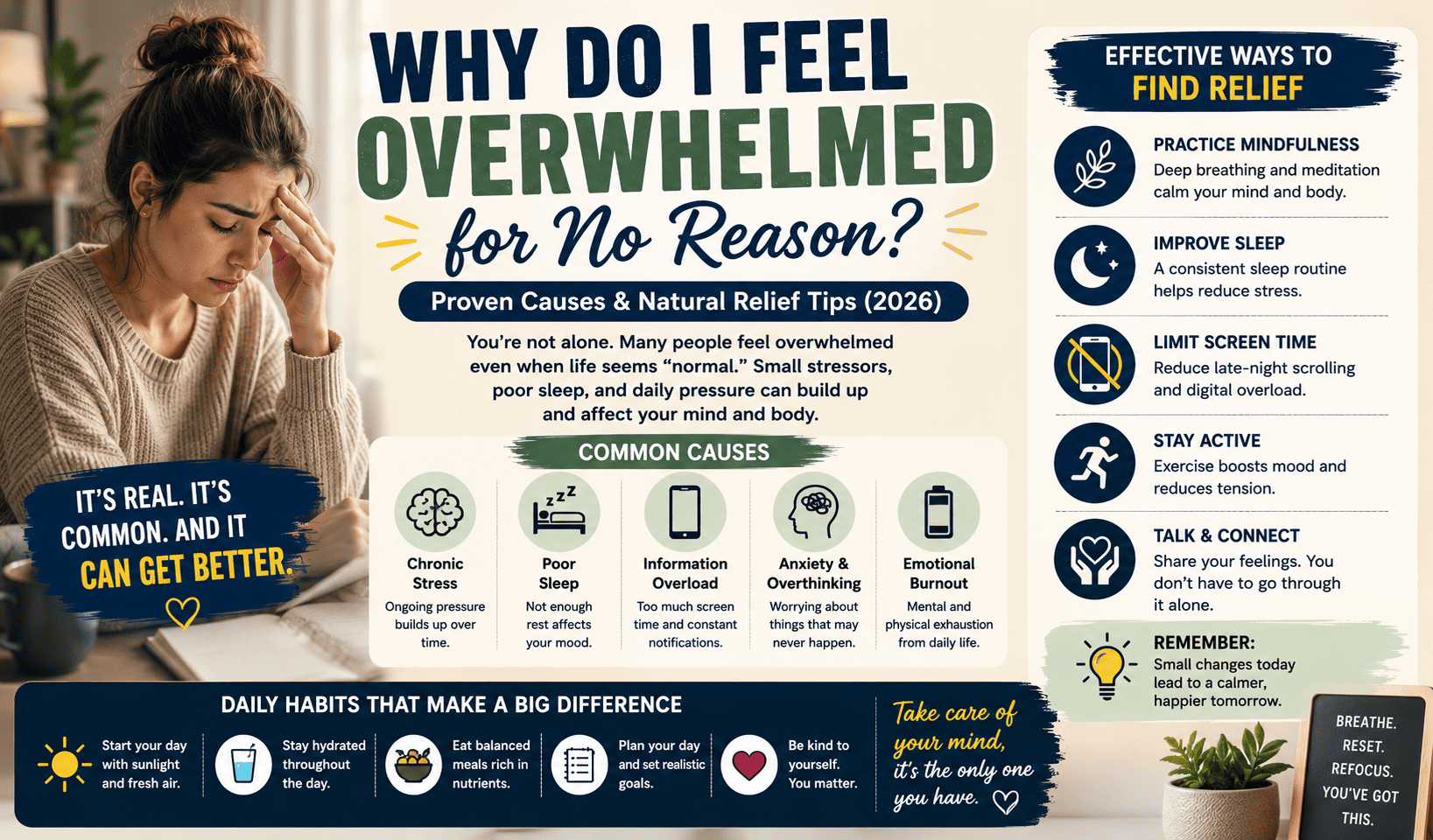
Have you ever been sitting at work, relaxing at home, or even spending time with family when a sudden wave of stress hits you for no obvious reason? Your heart may race, your mind feels overloaded, and even small tasks suddenly seem impossible. If this sounds familiar, you’re not alone.
Many Americans experience periods of feeling overwhelmed without understanding why. Modern life often places constant demands on the brain and body, making emotional overload increasingly common. The good news is that feeling overwhelmed usually has underlying causes—and understanding them is the first step toward relief.
Quick Answer
Feeling overwhelmed for no reason is often linked to stress, poor sleep, anxiety, emotional burnout, hormonal changes, or lifestyle factors such as excessive screen time and lack of rest. Even if there isn’t one obvious trigger, your brain and body may be responding to accumulated stress. Healthy habits, stress management, and professional support can help improve emotional well-being.
What Does It Mean to Feel Overwhelmed?
Feeling overwhelmed occurs when your mind perceives that the demands placed upon you exceed your ability to cope. This doesn’t necessarily mean there is a major crisis happening. Sometimes, many small stressors build up quietly over time until your emotional capacity feels stretched.
Your brain is designed to respond to challenges. However, when stress becomes chronic, your nervous system can remain in a heightened state of alertness. This may leave you feeling emotionally exhausted even when life appears “normal” on the surface.
In today’s fast-paced world, many people juggle work responsibilities, family obligations, finances, social expectations, and constant digital stimulation. Over time, this mental load can become overwhelming.
Also Read : How to reduce cortisol naturally?
Symptoms of Feeling Overwhelmed
The signs of emotional overwhelm vary from person to person. Some symptoms may appear gradually, while others seem to develop suddenly.
Early Symptoms
- Difficulty concentrating
- Feeling mentally drained
- Increased irritability
- Trouble relaxing
- Mild anxiety
- Sleep disturbances
- Feeling easily distracted
Advanced Symptoms
- Persistent fatigue
- Frequent crying spells
- Panic attacks
- Social withdrawal
- Chronic stress
- Physical tension or headaches
- Loss of motivation
Emotional overwhelm can affect both mental and physical health. Many people notice digestive problems, poor sleep, or low energy during stressful periods.
Also Read : What causes brain fog and fatigue?
Why Do I Feel Overwhelmed for No Reason?
In many cases, there is a reason—you just may not recognize it immediately. Emotional overwhelm often develops gradually rather than from one specific event.
Your brain continuously processes information, emotions, and stressors. Even small challenges can accumulate over time until your nervous system feels overloaded.
Several factors may contribute to these feelings.
Causes & Risk Factors
Chronic Stress
Stress is one of the most common causes of feeling overwhelmed. Work deadlines, financial concerns, family responsibilities, and daily life pressures can silently build up.
Even when you believe you are handling stress well, your body may continue producing stress hormones such as cortisol. Over time, elevated stress levels can affect mood, sleep, and energy.
Poor Sleep Quality
Sleep is essential for emotional regulation. Without enough restorative sleep, the brain becomes less capable of handling everyday challenges.
People who regularly sleep poorly often experience:
- Increased anxiety
- Reduced concentration
- Mood swings
- Emotional sensitivity
Poor sleep and emotional overwhelm often create a cycle where each worsens the other.
Information Overload
Modern Americans consume more information than ever before through phones, social media, emails, and news.
Constant notifications and digital stimulation can overwhelm the brain’s ability to process information. This phenomenon is sometimes called cognitive overload.
Anxiety
Anxiety doesn’t always have a clear trigger. Some individuals experience generalized anxiety, where persistent worry exists without an obvious cause.
Anxiety may create symptoms such as:
- Racing thoughts
- Restlessness
- Muscle tension
- Feelings of dread
Emotional Burnout
Burnout occurs when chronic stress leads to emotional, physical, and mental exhaustion.
Many people experience burnout after prolonged periods of:
- High work demands
- Caregiving responsibilities
- Academic pressure
- Lack of recovery time
Hormonal Changes
Hormonal fluctuations can influence mood and stress responses.
This may occur during:
- Menstrual cycles
- Pregnancy
- Menopause
- Thyroid disorders
Hormones can affect neurotransmitters involved in mood regulation.
Nutritional Factors
Diet also plays a role in emotional well-being. Poor nutrition may contribute to low energy and mood changes.
Nutritional deficiencies sometimes associated with fatigue include:
- Vitamin D deficiency
- Iron deficiency
- Low vitamin B12
- Magnesium deficiency
Also Read : Why do I feel mentally drained all the time?
Comparison Table: Normal Stress vs Emotional Overwhelm
| Feature | Normal Stress | Emotional Overwhelm |
|---|---|---|
| Duration | Temporary | Persistent |
| Recovery | Improves with rest | May continue despite rest |
| Daily Function | Usually manageable | Daily tasks feel difficult |
| Mood | Mild frustration | Anxiety or exhaustion |
| Physical Symptoms | Minimal | Headaches, fatigue, tension |
Understanding the difference can help determine when extra support may be needed.
Best Treatment Options
Managing emotional overwhelm often requires addressing both mental and physical well-being.
Practice Stress Management
Stress reduction techniques can calm the nervous system and improve resilience.
Helpful approaches include:
- Meditation
- Deep breathing exercises
- Journaling
- Mindfulness practices
- Spending time outdoors
Even a few minutes daily may help regulate stress responses.
Improve Sleep Habits
Sleep quality strongly influences emotional health.
Healthy sleep habits include:
- Going to bed at consistent times
- Limiting screens before bed
- Keeping the bedroom cool and dark
- Avoiding caffeine late in the day
Better sleep often leads to better emotional regulation.
Set Boundaries
Many people feel overwhelmed because they take on too many responsibilities.
Learning to:
- Say no
- Delegate tasks
- Limit commitments
can reduce mental overload.
Consider Professional Support
If emotional overwhelm becomes persistent or severe, professional guidance may help.
Therapists and healthcare professionals can provide personalized strategies and support.
Seeking help is a proactive step toward better health.
Also Read : Why do I feel mentally tired after work?
Diet & Lifestyle Tips
Your lifestyle habits significantly influence stress levels and emotional health.
Foods that support overall wellness include nutrient-rich options such as fruits, vegetables, whole grains, lean proteins, nuts, and fatty fish. Staying hydrated throughout the day also supports brain function and energy.
Limiting excessive caffeine, alcohol, and ultra-processed foods may help reduce feelings of anxiety and fatigue in some individuals.
Daily movement also plays an important role. Walking, stretching, yoga, or strength training can support both mental and physical health.
Creating small daily routines often provides stability during stressful periods.
When to See a Doctor
Occasional stress is a normal part of life. However, you should seek medical advice if you experience:
- Persistent sadness
- Panic attacks
- Severe anxiety
- Difficulty functioning daily
- Thoughts of self-harm
- Ongoing sleep problems
- Symptoms lasting several weeks
Early support can improve outcomes and overall well-being.
Also Read : Can stress cause physical symptoms?
Who Is at Risk?
Certain groups may be more likely to experience emotional overwhelm.
1. Office Workers
Heavy workloads, long hours, and constant connectivity may increase stress levels.
2. Students
Academic pressure and social expectations can contribute to emotional strain.
3. Parents and Caregivers
Balancing responsibilities for others often increases emotional demands.
4. Women
Hormonal fluctuations and caregiving roles may affect stress experiences.
5. Older Adults
Health concerns, life transitions, and social isolation may contribute to feelings of overwhelm.
Frequently Asked Questions
1. Why do I suddenly feel overwhelmed for no reason?
Feelings of overwhelm often result from accumulated stress, poor sleep, anxiety, or emotional burnout rather than a single event.
2. Can lack of sleep make you feel overwhelmed?
Yes. Poor sleep affects emotional regulation, concentration, and stress tolerance.
3. Is feeling overwhelmed a sign of anxiety?
Sometimes. Anxiety can contribute to feelings of overwhelm, but other factors may also play a role.
4. Can stress affect physical health?
Yes. Chronic stress may influence digestion, sleep, immunity, and energy levels.
5. How can I calm myself when overwhelmed?
Deep breathing, physical activity, mindfulness, and reducing stimulation may help regulate stress responses.
👉 Learning to manage stress can improve long-term mental health and wellness.
Conclusion
If you’ve ever asked yourself, “Why do I feel overwhelmed for no reason?” remember that these feelings are often connected to stress, lifestyle habits, sleep, emotional burnout, or underlying mental health factors.
The good news is that small changes can make a meaningful difference. Improving sleep, reducing stress, setting boundaries, staying active, and seeking support when needed can help restore balance and resilience.
You may not always control life’s challenges, but you can build habits that strengthen your ability to cope with them.
Reviewed by: Dzarro Editorial Team
Fact-checked using trusted medical and scientific sources.

Sandip Choudhary is a Health & Wellness Researcher and Content Creator specializing in sleep, digestive health, preventive wellness, and evidence-based health education. He has been creating online content and researching health-related topics for several years, focusing on translating complex medical information into practical guidance for everyday readers.
With a strong background in SEO and content strategy, Sandip ensures that every article is optimized for both search engines and real users. His goal is to provide reliable, clear, and helpful information that supports healthier living.
Disclaimer: The content published is for informational purposes only and is not a substitute for professional medical advice.