
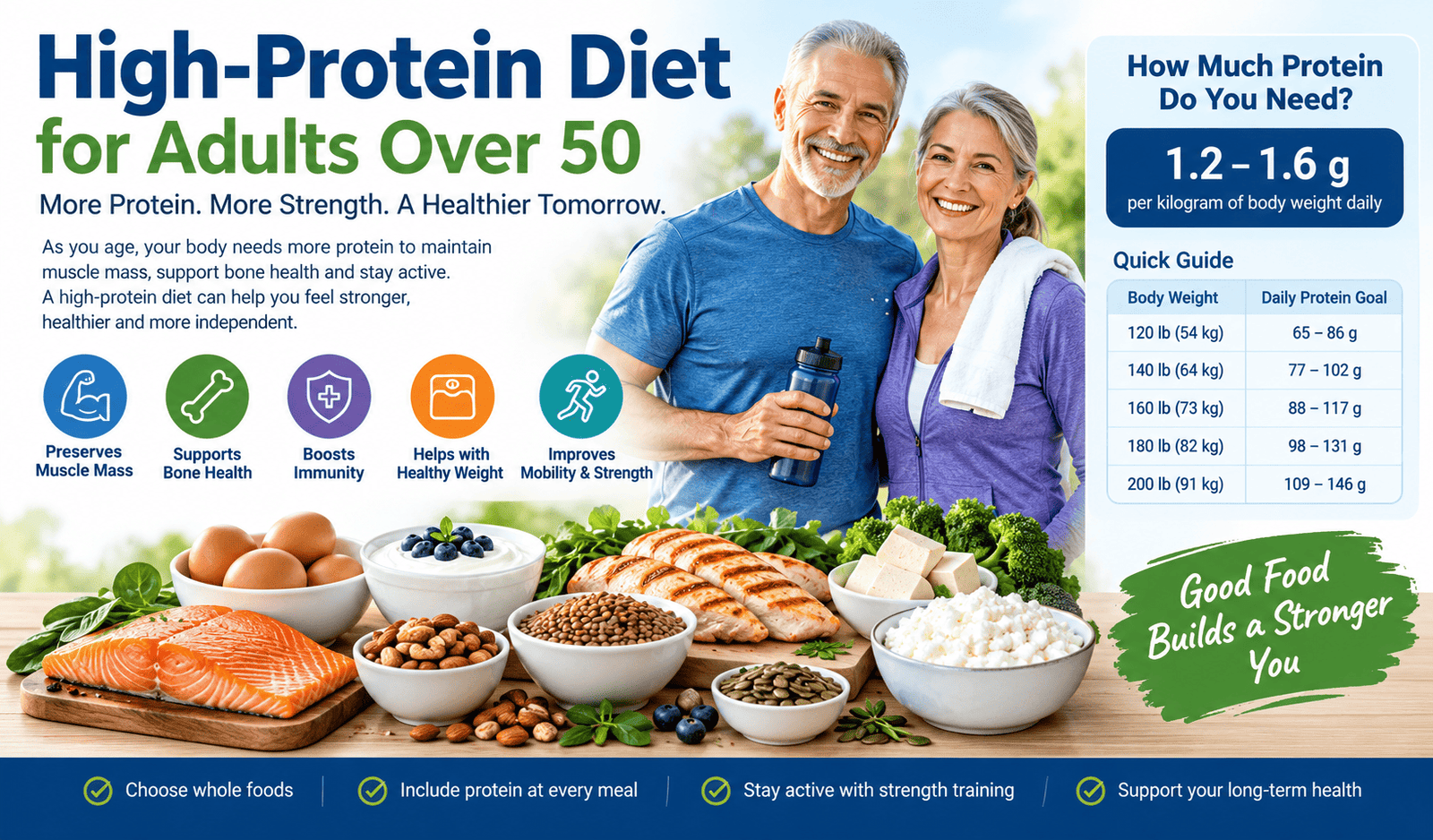
A High-Protein Diet for Adults Over 50 focuses on consuming approximately 1.2–1.6 grams of protein per kilogram of body weight each day while maintaining a balanced diet and staying physically active. This level of protein intake helps preserve muscle mass, supports healthy aging, strengthens bones, improves recovery, and may assist with healthy weight management.
Introduction
Turning 50 brings many positive life experiences, but it also introduces natural changes in metabolism, muscle mass, and overall body composition. One of the most important nutritional strategies for maintaining strength and independence is increasing protein intake. While younger adults can often maintain muscle with moderate protein consumption, older adults require more dietary protein because the body’s ability to build and repair muscle gradually declines with age.
A well-planned High-Protein Diet for Adults Over 50 is not about following a restrictive or extreme eating plan. Instead, it means including high-quality protein at every meal while balancing carbohydrates, healthy fats, vitamins, minerals, and fiber. Whether your goal is staying active, losing weight, building strength, or supporting long-term wellness, adequate protein plays a central role in healthy aging.
Also Read : Mediterranean Diet vs DASH Diet for Longevity
Why Adults Over 50 Need More Protein?
As people age, they naturally lose muscle tissue through a condition known as age-related muscle loss or sarcopenia. This process can begin as early as the fifth decade of life and may reduce strength, mobility, balance, and physical function if left unaddressed. The body also becomes less efficient at using protein to stimulate muscle growth, meaning older adults need higher-quality protein in greater amounts than younger individuals.
Protein is essential because it provides amino acids, the building blocks used to repair muscles, produce enzymes, support hormones, strengthen the immune system, and maintain healthy skin and bones. Eating enough protein each day helps preserve lean body mass and promotes better physical performance, making everyday activities easier and reducing the risk of frailty.
Also Read : Anti-Inflammatory Foods That May Support Longevity
How Much Protein Should Adults Over 50 Eat?
The traditional protein recommendation for adults is 0.8 grams per kilogram of body weight, but many nutrition experts consider this the minimum amount needed to prevent deficiency rather than the ideal intake for healthy aging. Adults over 50 often benefit from consuming 1.2–1.6 grams of protein per kilogram of body weight daily, especially if they exercise regularly or want to maintain muscle mass.
For example, a person weighing 150 pounds may need around 82–109 grams of protein each day, while someone weighing 180 pounds may benefit from 98–131 grams daily. Individual requirements vary depending on activity level, medical conditions, and overall health.
Also Read : Best Foods for Healthy Aging
Daily Protein Requirements
| Body Weight | Daily Protein Goal |
|---|---|
| 120 lb (54 kg) | 65–86 g |
| 140 lb (64 kg) | 77–102 g |
| 160 lb (73 kg) | 88–117 g |
| 180 lb (82 kg) | 98–131 g |
| 200 lb (91 kg) | 109–146 g |
What Is a High-Protein Diet?
A high-protein diet emphasizes foods naturally rich in protein without eliminating other important nutrients. The healthiest approach includes lean animal proteins, dairy, seafood, legumes, soy foods, nuts, seeds, vegetables, fruits, and whole grains. Rather than replacing carbohydrates completely, it creates balanced meals where protein supports energy, recovery, and satiety.
This eating pattern is sustainable for most healthy adults because it encourages nutrient-dense foods instead of heavily processed products.
Also Read : The Biggest Longevity Trends in America
Best High-Protein Foods for Adults Over 50

Salmon
About 22 g protein per 3 oz
Chicken Breast
About 26 g per 3 oz

Greek Yogurt
15–20 g per cup

Cottage Cheese
About 25 g per cup

Eggs
About 6 g each

Lentils
About 18 g per cooked cup

Tofu
About 20 g per cup

Nuts & Seeds
6–9 g per serving
Seafood such as salmon provides heart-healthy omega-3 fats in addition to protein. Dairy products contribute calcium and vitamin D for stronger bones, while beans and lentils offer fiber that supports digestive and cardiovascular health. Including a variety of protein sources ensures a broader intake of essential nutrients.
Also Read : What Does Aging Gracefully Really Mean?
Animal Protein vs Plant Protein
Many adults wonder whether animal protein is superior to plant protein. The reality is that both have unique benefits and can be part of a healthy eating pattern.
Animal proteins such as fish, poultry, eggs, and dairy contain all essential amino acids in highly absorbable forms, making them excellent for muscle maintenance. Plant proteins from beans, lentils, tofu, quinoa, nuts, and seeds provide protein along with fiber, antioxidants, and healthy fats that support overall wellness.
A combination of both animal and plant proteins is often the healthiest and most sustainable approach.
Also Read : Healthy Aging Myths You Should Stop Believing
Why Protein Distribution Matters?
Eating enough protein is important, but when you eat it also matters. Instead of consuming most of your protein during dinner, adults over 50 benefit from spreading protein evenly across breakfast, lunch, and dinner. Each meal should ideally contain 25–35 grams of protein to maximize muscle protein synthesis throughout the day.
This balanced approach supports better recovery, steadier energy levels, and improved appetite control.
Also Read : Can You Slow Down Biological Aging?
Sample One-Day High-Protein Meal Plan
| Meal | Protein |
|---|---|
| Greek yogurt with berries and walnuts | 25 g |
| Turkey sandwich on whole-grain bread | 30 g |
| Cottage cheese with almonds | 18 g |
| Grilled salmon with quinoa and broccoli | 35 g |
| Total | 108 g |
This meal plan demonstrates how reaching over 100 grams of protein is achievable using whole, minimally processed foods while maintaining nutritional balance.
Also Read : Why Americans Are Focusing on Healthspan Instead of Lifespan?
High-Protein Breakfast Ideas
Breakfast is often the lowest-protein meal of the day, yet it offers one of the best opportunities to support muscle health. Starting the morning with protein helps reduce hunger, improve focus, and provide sustained energy.
Excellent breakfast choices include Greek yogurt with berries, vegetable omelets, cottage cheese with fruit, oatmeal made with milk and chia seeds, or a protein smoothie prepared with yogurt, peanut butter, and frozen berries.
Also Read : The Science Behind Longevity Explained.
High-Protein Lunch and Dinner Ideas
Lunch and dinner should combine lean protein with vegetables and complex carbohydrates for lasting energy. Grilled chicken with brown rice, baked salmon with sweet potatoes, turkey chili with beans, tofu stir-fry with vegetables, or shrimp with quinoa are nutritious options that deliver high-quality protein while supporting heart health.
Adding colorful vegetables increases vitamin, mineral, and antioxidant intake, creating meals that nourish the entire body rather than focusing on protein alone.
Also Read : Daily Habits That Support Healthy Aging
Protein and Healthy Weight Management
Maintaining a healthy weight becomes more challenging after age 50 because metabolism naturally slows and muscle mass declines. A higher-protein diet can make weight management easier by increasing fullness after meals and helping preserve lean muscle during calorie reduction.
Unlike crash diets that often lead to muscle loss, adequate protein supports fat loss while protecting metabolism. Combining protein-rich meals with regular exercise creates the most effective long-term strategy for maintaining a healthy body composition.
Also Read : How to Live Longer Naturally?
Can Adults Over 50 Still Build Muscle?
Yes. Muscle growth is absolutely possible after 50. Although the process may be slower than in younger adults, resistance training combined with sufficient protein can significantly improve strength, balance, and physical function.
Exercises such as bodyweight squats, resistance bands, dumbbells, and weight machines stimulate muscle development. Consuming around 25–35 grams of protein after strength training supports recovery and helps maximize muscle repair.
Consistency is more important than intensity. Even two or three strength-training sessions each week can produce meaningful improvements when paired with adequate nutrition.
Also Read : Healthspan vs Lifespan: What’s the Difference?
Is a High-Protein Diet Safe?
For most healthy adults, a moderate high-protein diet is considered safe and beneficial. Protein does not appear to harm healthy kidneys when consumed within recommended ranges, and it may actually support bone health when included as part of a balanced diet rich in calcium and vitamin D.
However, individuals with chronic kidney disease or certain medical conditions should consult their healthcare provider before significantly increasing protein intake. Personalized nutrition is always the safest approach for people managing long-term health conditions.
Also Read : How to improve immune system naturally?
Common Mistakes to Avoid
One common mistake is relying too heavily on processed protein bars and sugary protein shakes instead of whole foods. While supplements can be convenient, they should not replace nutritious meals.
Another mistake is skipping breakfast and eating very little protein until dinner. Even protein distribution throughout the day is generally more effective for supporting muscle maintenance.
Finally, many people increase protein but neglect strength training. Nutrition and exercise work together, and neither provides the same benefits alone.
Also Read : What causes chronic inflammation?
Lifestyle Tips for Success
Building a successful high-protein lifestyle begins with simple habits. Planning meals in advance helps ensure adequate protein intake throughout the week. Keeping healthy snacks such as Greek yogurt, cottage cheese, boiled eggs, or roasted edamame readily available makes it easier to avoid processed foods.
Hydration is equally important because protein metabolism requires adequate fluid intake. Drinking enough water while staying physically active supports digestion, recovery, and overall wellness.
Also Read : Why do I feel older than my age?
Conclusion
A High-Protein Diet for Adults Over 50 is one of the most effective nutritional strategies for supporting healthy aging. By consuming 1.2–1.6 grams of protein per kilogram of body weight, choosing nutrient-dense whole foods, and spreading protein evenly throughout the day, older adults can preserve muscle, improve strength, support healthy weight management, and maintain independence for years to come.
Rather than following extreme diets, focus on consistency, balanced meals, and regular resistance exercise. Healthy aging is not about eating more—it is about eating smarter.
Also Read : What supplements support healthy aging?
Frequently Asked Questions (FAQs)
1. What is the ideal high-protein diet for adults over 50?
A balanced diet that includes lean meats, fish, eggs, dairy, beans, lentils, tofu, nuts, seeds, fruits, vegetables, and whole grains is considered ideal.
2. How much protein should a 55-year-old eat daily?
Most healthy adults over 50 benefit from approximately 1.2–1.6 grams of protein per kilogram of body weight each day.
3. Is 100 grams of protein enough after age 50?
For many adults weighing between 150 and 180 pounds, 100 grams is an appropriate daily target, although individual needs vary.
4. Can protein help prevent muscle loss?
Yes. Adequate protein combined with resistance training helps preserve lean muscle and improve strength during aging.
5. Are protein shakes necessary?
No. Most people can meet their protein needs through whole foods. Shakes are useful only when dietary intake is insufficient.
6. Which protein is better: chicken or beans?
Both are healthy choices. Chicken provides complete protein, while beans offer protein plus fiber and important plant nutrients.
7. What is the best high-protein breakfast?
Greek yogurt, eggs, cottage cheese, protein oatmeal, and tofu scrambles are excellent breakfast options.
8. Can a high-protein diet help with weight loss?
Yes. Higher protein intake increases fullness and helps preserve muscle while reducing body fat during calorie control.
9. Is a high-protein diet safe for healthy kidneys?
For healthy adults, moderate high-protein diets are generally safe. Those with kidney disease should seek medical advice first.
10. Should I eat protein after exercise?
Yes. Consuming 25–35 grams of protein within a couple of hours after strength training supports muscle recovery and growth.

Antioxidants help protect your cells.
Medical Disclaimer : This article is for educational purposes only and should not be considered medical advice. Always consult a qualified healthcare professional regarding dietary or medical concerns.
Medically reviewed information sourced from trusted health organizations.
References
- National Institute on Aging (NIA). Healthy Aging and Longevity Resources.
https://www.nia.nih.gov/health - National Institutes of Health (NIH). Healthy Aging Research.
https://www.nih.gov/health-information - Centers for Disease Control and Prevention (CDC). Healthy Aging.
https://www.cdc.gov/aging - Harvard T.H. Chan School of Public Health. Nutrition and Healthy Aging.
https://www.hsph.harvard.edu/nutritionsource
Reviewed by: Dzarro Editorial Team
Fact-checked using trusted medical and scientific sources.

Sandip Choudhary is a Health & Wellness Researcher and Content Creator specializing in sleep, digestive health, preventive wellness, and evidence-based health education. He has been creating online content and researching health-related topics for several years, focusing on translating complex medical information into practical guidance for everyday readers.
With a strong background in SEO and content strategy, Sandip ensures that every article is optimized for both search engines and real users. His goal is to provide reliable, clear, and helpful information that supports healthier living.
Disclaimer: The content published is for informational purposes only and is not a substitute for professional medical advice.
2 thoughts on “High-Protein Diet for Adults Over 50”
Comments are closed.