
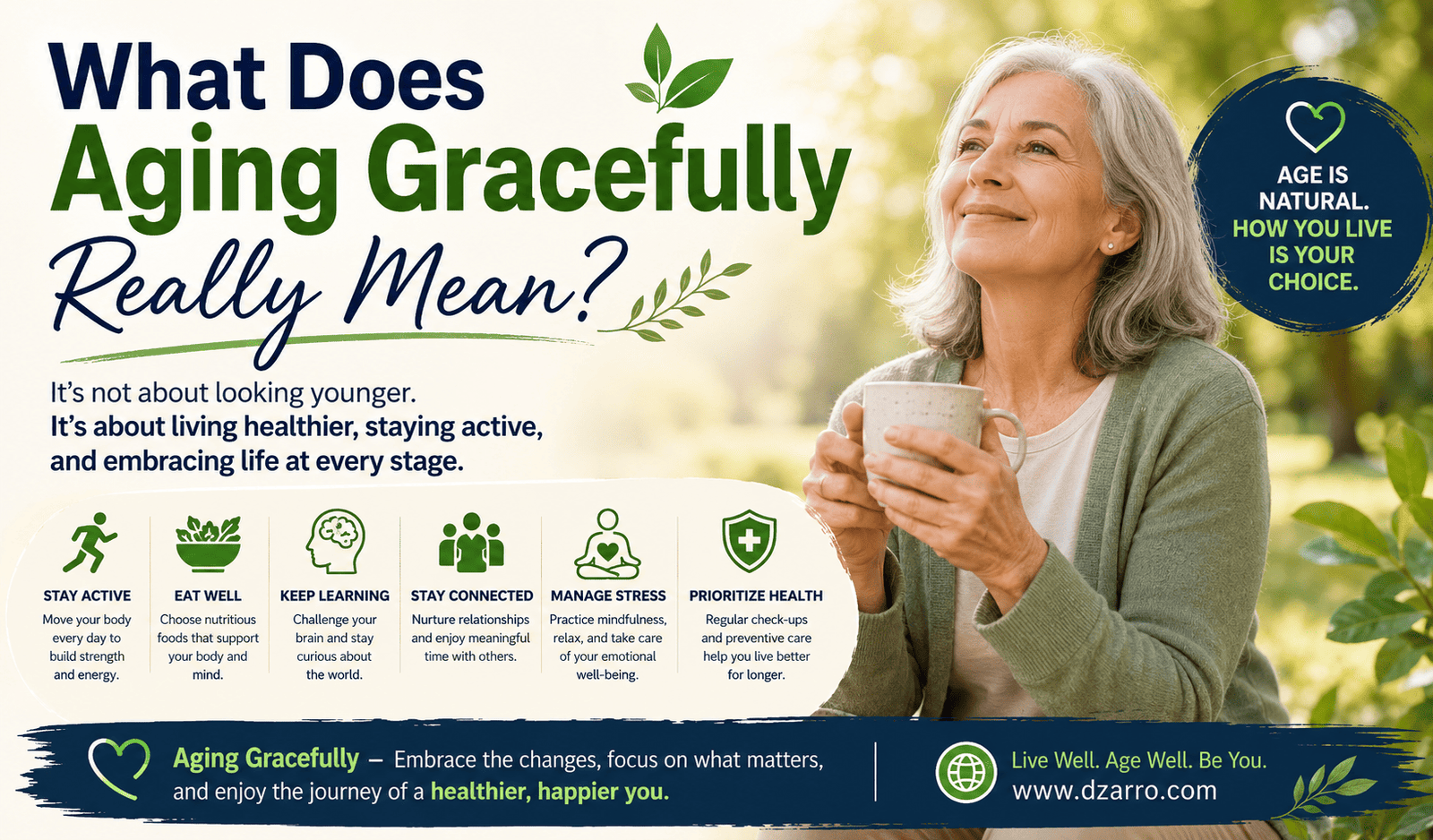
Aging gracefully means accepting the natural changes that come with getting older while taking practical steps to protect your physical health, mental well-being, independence, and quality of life. It does not mean trying to look young forever or avoiding every wrinkle, gray hair, or age-related change. Instead, aging gracefully is about staying as healthy, active, connected, and engaged as possible while adapting to the changes that naturally occur with age. The National Institute on Aging (NIA) emphasizes that healthy aging is influenced by factors such as genetics, lifestyle choices, physical activity, nutrition, preventive health care, mental health, and social engagement.
What Does Aging Gracefully Really Mean?
The phrase “aging gracefully” can mean different things to different people. In the context of health and wellness, however, it is less about appearance and more about how well you maintain your health, independence, confidence, relationships, and ability to participate in activities that matter to you.
Aging is a normal biological process. Everyone experiences it differently, and there is no single definition of what a healthy older adult should look like or be able to do. Genetics influence aging, but lifestyle and health behaviors can also affect how a person experiences later life. According to the NIA, healthy habits can help people maintain their health, mobility, independence, and quality of life as they grow older.
Therefore, aging gracefully should not be interpreted as “looking younger than your age.” It can mean having the energy to enjoy your daily routine, maintaining strength and mobility, managing health conditions responsibly, staying mentally engaged, nurturing meaningful relationships, and continuing to learn and participate in activities you enjoy.
Also Read : Healthy Aging Myths You Should Stop Believing
Aging Gracefully Is Not About Stopping the Aging Process
One of the biggest misconceptions about aging gracefully is that it requires fighting every visible sign of aging. Wrinkles, changes in skin texture, gray hair, changes in body composition, and reduced physical capacity can all occur as part of normal aging. Trying to eliminate every sign of aging can create unrealistic expectations and unnecessary stress.
Healthy aging is not the same as remaining biologically identical to your younger self. The goal is to support your health and function as you age rather than attempting to prevent aging altogether. The NIA notes that researchers continue to study ways to slow age-related declines, while evidence already supports several practical behaviors that can help people maintain health later in life.
Aging gracefully can therefore involve accepting what cannot be changed while actively managing what can be influenced.
Also Read : Can You Slow Down Biological Aging?
Physical Health Is a Major Part of Aging Well
Maintaining physical health becomes increasingly important as people get older because strength, balance, mobility, and cardiovascular fitness can influence independence and everyday activities. Regular physical activity can help older adults maintain physical function and mobility and can make daily activities easier.
The CDC’s Physical Activity Guidelines state that adults ages 65 and older can receive substantial health benefits from regular physical activity. For adults who are able, the guidelines recommend 150 to 300 minutes of moderate-intensity aerobic activity each week, along with muscle-strengthening activities on at least two days per week and activities that include balance training. However, activity should be appropriate for an individual’s abilities and health circumstances.
This does not mean everyone needs an intense gym routine. Walking, gardening, swimming, cycling, dancing, strength exercises, stretching, and balance-focused activities may all have a place in an individual’s routine. Someone who has been inactive can start gradually rather than trying to accomplish a demanding workout immediately.
If you have a chronic health condition, significant mobility limitations, or concerns about starting exercise, discussing an appropriate activity plan with a health professional can help you choose activities that are safe and realistic.
Also Read : Why Americans Are Focusing on Healthspan Instead of Lifespan?
Nutrition Matters as You Get Older
Healthy eating is another important component of graceful aging. Nutritional needs can change with age, and maintaining adequate intake of important nutrients becomes particularly important for preserving health and physical function.
The NIA recommends choosing a variety of foods and emphasizes nutrient-dense choices while limiting excessive added sugar, saturated fat, and sodium. Protein-containing foods can also play an important role in helping maintain muscle, with options including seafood, dairy, fortified soy products, beans, peas, and lentils.
A healthy diet does not have to be extremely restrictive. For many older adults, a practical approach is to build meals around vegetables and fruits, whole grains, appropriate protein sources, and other nutrient-rich foods while paying attention to hydration and individual medical or dietary needs.
People with conditions such as diabetes, kidney disease, heart disease, swallowing difficulties, or other medical concerns may need individualized nutrition advice from a qualified health professional.
Also Read : The Science Behind Longevity Explained.
Strength and Mobility Can Support Independence
For many people, one of the most meaningful aspects of aging gracefully is maintaining independence for as long as possible. Independence can mean being able to walk around the home, climb stairs, prepare meals, shop, drive when appropriate, participate in hobbies, or care for yourself.
Physical activity can help preserve mobility and physical function. The CDC notes that regular activity can make everyday activities easier and may help reduce the risk of falls and fall-related injuries.
This is why strength and balance deserve attention alongside cardiovascular exercise. Maintaining muscle and balance can become particularly valuable as people get older. Even modest improvements can make daily movement more manageable.
Also Read : Daily Habits That Support Healthy Aging
Mental and Emotional Wellness Are Equally Important
Aging gracefully is not exclusively about the body. Mental and emotional well-being are essential parts of healthy aging.
People may experience major life changes as they get older, including retirement, changes in family responsibilities, relocation, bereavement, or changes in social networks. These experiences can affect emotional health. However, feeling sad, persistently hopeless, or socially isolated should not automatically be dismissed as an unavoidable part of aging.
The CDC describes healthy aging as involving physical and mental health as well as continued social engagement.
Taking time for enjoyable activities, maintaining relationships, learning new skills, managing stress, and seeking professional help when needed can all contribute to emotional well-being. If symptoms of depression, anxiety, persistent loneliness, or other mental health concerns interfere with daily life, talking with a healthcare professional is important.
Also Read : How to Live Longer Naturally?
Staying Socially Connected Can Help You Age Gracefully
Human connection remains important throughout life. Friends, family members, neighbors, community groups, volunteer activities, religious or cultural communities, and shared hobbies can provide opportunities for companionship and meaningful interaction.
Social engagement can also make healthy habits easier to maintain. Research reviewed by the CDC has examined physical activity, social support, and skills training as approaches related to emotional health in older adults.
Aging gracefully does not require having a huge social circle. A few meaningful relationships may be more valuable than a large network of casual contacts. Staying in touch with people you care about, participating in community activities, or finding a new hobby can help create a sense of purpose and connection.
Also Read : Healthspan vs Lifespan: What’s the Difference?
Keep Your Brain Active
Healthy aging also involves continuing to challenge and engage the mind. Learning a new skill, reading, taking a class, playing music, working on puzzles, pursuing hobbies, or exploring a subject you enjoy can provide mental stimulation.
It is important, however, to avoid the misconception that a particular brain game or supplement can guarantee protection against cognitive decline. Cognitive health is influenced by many factors, and no single activity can eliminate the possibility of age-related cognitive changes.
The NIA emphasizes that older adults can continue learning new things and highlights activities such as learning, exercising, volunteering, and participating in hobbies as ways to remain engaged as they age.
Also Read : How to improve immune system naturally?
Preventive Health Care Is Part of Aging Gracefully
Aging gracefully also means taking health concerns seriously rather than assuming every new symptom is simply “because of age.” Regular medical appointments can help identify health problems early and provide opportunities to discuss preventive care, medications, vaccinations, screening, physical activity, nutrition, sleep, and other concerns.
The NIA recommends going to the doctor regularly as part of healthy aging.
Preventive care should be personalized because recommendations vary based on age, sex, medical history, family history, medications, and other risk factors. If something changes noticeably in your health, discussing it with a healthcare professional is generally better than assuming it is an inevitable part of getting older.
Also Read : What causes chronic inflammation?
Aging Gracefully Includes Taking Care of Your Skin
For many people, the visible signs of aging are an important part of the conversation. Skin naturally changes over time. It may become thinner, drier, or more prone to wrinkles and changes in pigmentation.
Aging gracefully does not mean ignoring skin health. Protecting skin from excessive sun exposure, avoiding tobacco, staying hydrated, eating a balanced diet, and following a skincare routine appropriate for your skin can support overall skin health.
At the same time, cosmetic treatments are personal choices. There is nothing inherently unhealthy about wanting to improve your appearance, but healthy aging should not be measured by whether someone looks significantly younger than their chronological age.
Also Read : Why do I feel older than my age?
What Aging Gracefully Really Looks Like?
Aging gracefully can look different for every person. For one individual, it might mean continuing to hike, travel, or play sports. For another, it might mean comfortably managing a chronic condition and spending time with family. Someone else may define it as continuing to work, volunteering, learning new skills, creating art, or simply having enough mobility and energy to enjoy everyday life.
The NIA emphasizes that genetics and lifestyle both influence healthy aging, and that healthy choices can help people maintain quality of life and independence.
This is an important distinction because aging gracefully should not become another unrealistic wellness standard. A person does not have to be exceptionally fit, wrinkle-free, wealthy, or constantly energetic to age well. Health conditions and disabilities can occur despite healthy choices. Graceful aging is about adapting, managing health responsibly, and making the most of the abilities and opportunities you have.
Also Read : What supplements support healthy aging?
Simple Habits That Support Graceful Aging
A sustainable approach usually begins with small, consistent behaviors rather than dramatic lifestyle changes. Moving regularly, eating nutritious foods, getting appropriate medical care, maintaining social connections, managing stress, protecting sleep, avoiding tobacco, and continuing meaningful activities can all contribute to healthier aging.
The NIA’s healthy-aging resources similarly emphasize movement, nutritious food, stress management, learning, regular medical care, and connection with family and friends.
The most important principle is consistency. You do not need to completely transform your lifestyle overnight. A daily walk, a healthier meal, a conversation with someone you care about, or making a long-delayed medical appointment can be a meaningful step.
Also Read : How to improve energy after 40?
Can You Start Aging More Gracefully at Any Age?
Yes. Healthy aging is not something that begins only after retirement or at age 65. Habits developed earlier in adulthood can influence health later in life, but it is also never too late to make positive changes.
The CDC notes that it is never too late to become physically active, and physical activity can provide benefits for older adults with different levels of fitness and physical ability.
Someone who has spent years being inactive does not need to become an athlete. Someone who has never focused on nutrition does not need to follow a perfect diet. Starting with realistic improvements and building gradually can be more sustainable.
Also Read : Can inflammation speed up aging?
The Bottom Line
So, what does aging gracefully really mean? It means approaching aging with acceptance, preparation, and healthy habits rather than treating age itself as a problem that must be defeated.
Graceful aging is about maintaining physical function when possible, supporting mental and emotional health, staying socially connected, eating well, remaining active, managing medical conditions, keeping the brain engaged, and preserving independence and purpose. It also means recognizing that aging is individual and that health outcomes cannot always be controlled.
Ultimately, aging gracefully is not about looking younger. It is about living well at every stage of life and adapting to change with confidence, realistic expectations, and self-care.

Hydration keeps your body functioning properly.
Frequently Asked Questions About Aging Gracefully
1. What does aging gracefully really mean?
Aging gracefully means accepting the natural aging process while taking steps to support physical health, mental well-being, independence, relationships, and quality of life. It is not simply about maintaining a youthful appearance. Healthy aging involves multiple aspects of well-being, including physical, mental, cognitive, and social health.
2. Is aging gracefully the same as looking younger?
No. Looking younger can be part of someone’s personal approach to aging, but it is not the medical definition of healthy aging. Aging gracefully is more broadly about maintaining health, function, independence, confidence, and quality of life while accepting normal age-related changes.
3. Can lifestyle choices affect how you age?
Yes. Genetics influence aging, but lifestyle factors also matter. Regular physical activity, nutritious eating, preventive healthcare, mental health care, stress management, and social engagement can support healthier aging.
4. What is the best exercise for aging gracefully?
There is no single best exercise for everyone. A balanced routine can include aerobic activity, muscle-strengthening exercises, and balance-focused activities. Adults 65 and older who are able are generally advised to work toward 150 to 300 minutes of moderate-intensity aerobic activity per week and muscle-strengthening activity at least twice weekly, while adjusting activity to individual abilities and health conditions.
5. Does healthy eating help with aging?
Yes. A nutritious eating pattern can support overall health as you age. The NIA recommends a variety of nutrient-rich foods and highlights adequate protein and limiting excessive added sugar, saturated fat, and sodium as part of healthy eating for older adults.
6. Is it normal to feel lonely as you get older?
Loneliness can occur at any age, but it should not automatically be considered an unavoidable part of aging. Maintaining relationships, participating in community activities, volunteering, and pursuing shared hobbies can create opportunities for social connection. Persistent loneliness or emotional distress deserves attention and may be worth discussing with a healthcare professional.
7. Can older adults still learn new things?
Yes. Age does not mean a person must stop learning. The NIA notes that older adults can continue learning and encourages activities such as taking classes, developing hobbies, exercising, and participating in community activities.
8. How can I maintain independence as I age?
Maintaining physical activity, strength, balance, nutrition, preventive healthcare, and social engagement can support independence. Managing chronic health conditions and addressing mobility or safety concerns early can also be important. Regular physical activity can help preserve mobility and make everyday activities easier.
9. Is it too late to start healthy habits after age 60?
No. Positive lifestyle changes can still be valuable later in life. The CDC specifically notes that it is never too late to become physically active, and the NIA emphasizes that healthy behaviors can help older adults maintain health, independence, and quality of life.
10. What is the most important part of aging gracefully?
There is no single most important habit because healthy aging involves several interconnected areas. A practical foundation includes regular movement, nutritious food, appropriate medical care, mental and emotional well-being, meaningful relationships, adequate rest, and activities that provide purpose and enjoyment. The goal is not perfection but maintaining the best possible quality of life as you age.
Medical Disclaimer: This article is intended for general health and wellness education for a U.S. audience and does not replace individualized medical advice, diagnosis, or treatment. Exercise, nutrition, screening, and preventive-care recommendations may differ depending on your age, health history, medications, and individual circumstances. Speak with a qualified healthcare professional about personal health concerns or before making major changes to your exercise or diet.
Medically reviewed information sourced from trusted health organizations.
References
- National Institute on Aging (NIA). Healthy Aging and Longevity Resources.
https://www.nia.nih.gov/health - National Institutes of Health (NIH). Healthy Aging Research.
https://www.nih.gov/health-information - Centers for Disease Control and Prevention (CDC). Healthy Aging.
https://www.cdc.gov/aging - Harvard T.H. Chan School of Public Health. Nutrition and Healthy Aging.
https://www.hsph.harvard.edu/nutritionsource
Reviewed by: Dzarro Editorial Team
Fact-checked using trusted medical and scientific sources.

Sandip Choudhary is a Health & Wellness Researcher and Content Creator specializing in sleep, digestive health, preventive wellness, and evidence-based health education. He has been creating online content and researching health-related topics for several years, focusing on translating complex medical information into practical guidance for everyday readers.
With a strong background in SEO and content strategy, Sandip ensures that every article is optimized for both search engines and real users. His goal is to provide reliable, clear, and helpful information that supports healthier living.
Disclaimer: The content published is for informational purposes only and is not a substitute for professional medical advice.
4 thoughts on “What Does Aging Gracefully Really Mean?”
Comments are closed.