
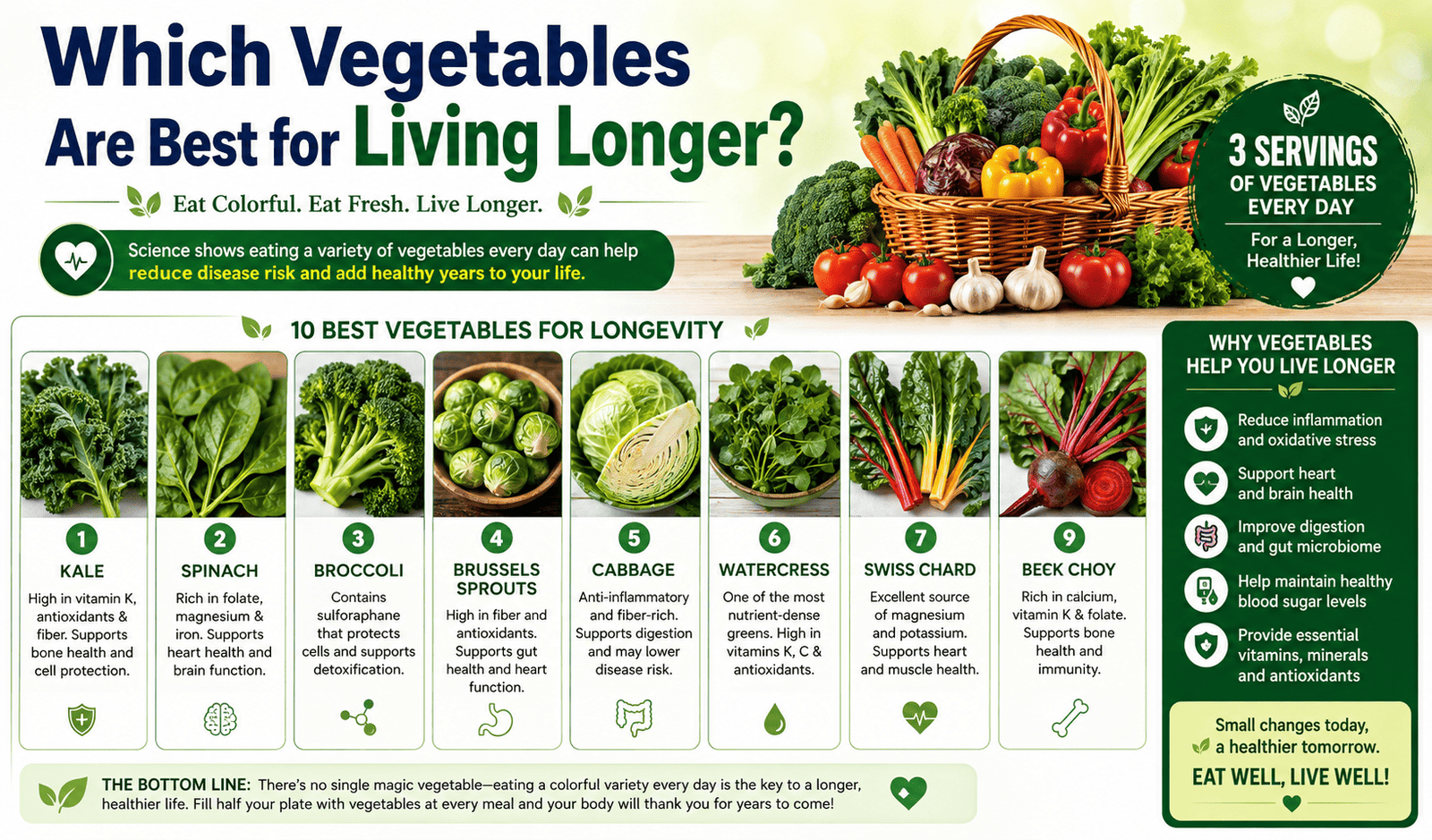
The best vegetables for living longer are kale, spinach, broccoli, Brussels sprouts, cabbage, watercress, Swiss chard, bok choy, beets, and carrots. These vegetables are rich in fiber, antioxidants, vitamins, minerals, and plant compounds that support heart health, brain function, healthy aging, and reduced inflammation.
Eating a variety of vegetables every day is one of the simplest and most effective ways to improve both lifespan and healthspan—the number of healthy years you live. Research consistently shows that diets rich in leafy greens and cruciferous vegetables are associated with a lower risk of chronic diseases such as heart disease, type 2 diabetes, and certain cancers.
Why Vegetables Matter for Living Longer

Living longer isn’t about discovering one miracle food. Instead, it’s about creating daily eating habits that protect your body over time. Vegetables provide dietary fiber that supports gut health, antioxidants that fight oxidative stress, and phytochemicals that help reduce chronic inflammation—one of the major drivers of aging.
For adults in the USA, aiming for around three servings of vegetables each day is an excellent target for supporting long-term health and reducing the risk of premature death.
Also Read : What Are the Best Fruits for Healthy Aging and Longevity?
1. Kale: The Ultimate Longevity Vegetable

Kale is one of the most nutrient-dense vegetables available. It’s packed with vitamin K, vitamin C, vitamin A, calcium, magnesium, and powerful antioxidants like lutein and zeaxanthin. These nutrients support bone health, eye health, and immune function while helping protect cells from age-related damage.
Because kale belongs to the cruciferous vegetable family, it also contains glucosinolates that are converted into beneficial compounds supporting the body’s natural detoxification processes. Adding kale to salads, soups, smoothies, or sautéed dishes is an easy way to increase your daily nutrition.
Also Read : High-Protein Diet for Adults Over 50
2. Spinach: A Daily Boost for Heart and Brain

Spinach is an excellent everyday vegetable thanks to its high levels of folate, magnesium, potassium, iron, and natural nitrates. These nutrients help maintain healthy blood circulation, support brain function, and contribute to normal blood pressure.
Regularly eating leafy greens like spinach may also help slow age-related cognitive decline. Whether blended into smoothies or added to omelets and salads, spinach is one of the easiest vegetables to enjoy daily.
Also Read : Mediterranean Diet vs DASH Diet for Longevity
3. Broccoli: Nature’s Cellular Protector

Broccoli is famous for its powerful plant compound called sulforaphane, which helps protect cells against oxidative stress and supports healthy aging. It’s also rich in vitamin C, vitamin K, fiber, and folate.
Lightly steaming broccoli helps preserve many of its beneficial nutrients while keeping its texture and flavor enjoyable. Roasted broccoli with olive oil and garlic also makes a nutritious side dish.
Also Read : Anti-Inflammatory Foods That May Support Longevity
4. Brussels Sprouts: Small but Powerful

Brussels sprouts are loaded with fiber, vitamin C, and antioxidants that support gut and heart health. Their fiber nourishes beneficial gut bacteria, while their phytonutrients help reduce inflammation throughout the body.
Despite their small size, Brussels sprouts are among the healthiest vegetables you can include in a longevity-focused diet.
Also Read : Best Foods for Healthy Aging
5. Cabbage: An Affordable Superfood

Cabbage is inexpensive, versatile, and incredibly nutritious. Green cabbage provides vitamin C and fiber, while red cabbage contains anthocyanins—powerful antioxidant pigments that give it its vibrant purple color.
Fresh cabbage works beautifully in salads and slaws, while fermented cabbage like sauerkraut can also support digestive health through naturally occurring probiotics.
Also Read : The Biggest Longevity Trends in America
6. Watercress: The Most Nutrient-Dense Green

Watercress consistently ranks among the world’s most nutrient-dense vegetables. It contains impressive amounts of vitamin K, vitamin C, calcium, and antioxidants while remaining extremely low in calories.
Its peppery flavor makes it perfect for salads, sandwiches, and soups. Even a small serving provides significant nutritional value.
Also Read : What Does Aging Gracefully Really Mean?
7. Swiss Chard: Rich in Essential Minerals

Swiss chard is an outstanding source of magnesium and potassium—two minerals that play important roles in muscle function, heart rhythm, and blood pressure regulation.
Its colorful stems also contain betalains, antioxidant compounds that help protect cells from inflammation and oxidative damage. Sautéing Swiss chard with olive oil is one of the best ways to enjoy it.
Also Read : Healthy Aging Myths You Should Stop Believing
8. Bok Choy: A Gentle Green with Big Benefits

Bok choy is a mild-flavored cruciferous vegetable rich in calcium, vitamin K, vitamin A, and folate. It supports bone strength, immune function, and healthy cell growth while adding very few calories to meals.
It’s especially delicious in stir-fries, soups, and lightly roasted vegetable dishes.
Also Read : Can You Slow Down Biological Aging?
9. Beets: Better Blood Flow for Healthy Aging

Beets stand out because they’re naturally rich in dietary nitrates. The body converts these into nitric oxide, a molecule that helps relax blood vessels and improve circulation. Better blood flow supports heart health and may also improve physical performance during exercise.
Their deep red color comes from betalains, antioxidants known for their anti-inflammatory properties.
Also Read : Why Americans Are Focusing on Healthspan Instead of Lifespan?
10. Carrots: An Everyday Longevity Favorite

Carrots are one of the easiest vegetables to keep in your kitchen. They’re rich in beta-carotene, which the body converts into vitamin A for healthy vision, immune function, and skin health.
Whether eaten raw as a snack or roasted for dinner, carrots provide valuable fiber and antioxidants that contribute to overall healthy aging.
Also Read : The Science Behind Longevity Explained.
Why Cruciferous Vegetables Stand Out?

Cruciferous vegetables include broccoli, kale, cabbage, Brussels sprouts, cauliflower, bok choy, and arugula. These vegetables contain unique sulfur-rich compounds that help the body defend itself against oxidative stress and support natural cellular repair.
Including several cruciferous vegetables throughout the week provides a wide range of protective nutrients rather than relying on a single food.
Also Read : Daily Habits That Support Healthy Aging
How Many Vegetables Should You Eat Daily?

For most American adults, eating about three servings of vegetables every day is an excellent goal. Variety matters more than perfection because different vegetables provide different vitamins, minerals, and antioxidants.
A simple daily routine might include spinach at breakfast, broccoli with lunch, and roasted Brussels sprouts or carrots at dinner.
Also Read : How to Live Longer Naturally?
Best Cooking Methods to Preserve Nutrients

The healthiest cooking methods include steaming, roasting, and light sautéing. These techniques help preserve important nutrients while improving the absorption of fat-soluble vitamins when paired with healthy fats like olive oil.
Avoid overboiling vegetables for long periods, as it can reduce certain water-soluble vitamins.
Also Read : Healthspan vs Lifespan: What’s the Difference?
A Simple Longevity Plate

A longevity-friendly meal doesn’t have to be complicated. Fill half your plate with colorful vegetables, add lean protein such as fish, beans, or chicken, include whole grains, and finish with healthy fats like olive oil or avocado.
This balanced approach provides the nutrients your body needs to support healthy aging for decades.
Also Read : How to improve immune system naturally?
Conclusion
If you’re wondering which vegetables are best for living longer, the strongest choices are kale, spinach, broccoli, Brussels sprouts, cabbage, watercress, Swiss chard, bok choy, beets, and carrots. These vegetables deliver fiber, antioxidants, vitamins, minerals, and plant compounds that support heart health, brain function, immunity, and reduced inflammation.
The real secret to longevity isn’t eating one perfect vegetable—it’s enjoying a colorful variety every single day.
Also Read : What causes chronic inflammation?
Frequently Asked Questions (FAQs)
1. Which vegetable is the healthiest for longevity?
Kale is often considered the healthiest because it’s exceptionally rich in vitamin K, antioxidants, fiber, and anti-inflammatory plant compounds.
2. Are leafy greens better than other vegetables?
Leafy greens provide outstanding nutrition, but the greatest benefits come from eating a variety of vegetables rather than only one type.
3. How many servings of vegetables should adults eat daily?
Aim for about three servings of vegetables per day as part of a balanced diet.
4. Is broccoli really a superfood?
Yes. Broccoli contains sulforaphane, fiber, vitamin C, and vitamin K, making it one of the most researched vegetables for healthy aging.
5. Are frozen vegetables as nutritious as fresh?
Yes. Frozen vegetables retain most of their nutrients and are an excellent healthy option year-round.
6. What cooking method keeps vegetables healthiest?
Steaming, roasting, and light sautéing are generally the best methods for preserving nutrients.
7. Which vegetables are best for heart health?
Spinach, kale, broccoli, beets, and Brussels sprouts are particularly beneficial for cardiovascular health.
8. Can vegetables reduce inflammation?
Yes. Many vegetables contain antioxidants and phytochemicals that help reduce chronic inflammation associated with aging.
9. Are cruciferous vegetables worth eating every week?
Absolutely. Including broccoli, cabbage, kale, Brussels sprouts, and bok choy several times a week supports long-term health.
10. What’s the easiest longevity habit to start today?
Fill half of every lunch and dinner plate with colorful vegetables. This simple habit can dramatically improve your overall nutritional intake over time.

Brain health is vital for aging well.
Medical Disclaimer : This article is for educational purposes only and should not be considered medical advice. Always consult a qualified healthcare professional regarding dietary or medical concerns.
Medically reviewed information sourced from trusted health organizations.
References
- National Institute on Aging (NIA). Healthy Aging and Longevity Resources.
https://www.nia.nih.gov/health - National Institutes of Health (NIH). Healthy Aging Research.
https://www.nih.gov/health-information - Centers for Disease Control and Prevention (CDC). Healthy Aging.
https://www.cdc.gov/aging - Harvard T.H. Chan School of Public Health. Nutrition and Healthy Aging.
https://www.hsph.harvard.edu/nutritionsource
Reviewed by: Dzarro Editorial Team
Fact-checked using trusted medical and scientific sources.

Sandip Choudhary is a Health & Wellness Researcher and Content Creator specializing in sleep, digestive health, preventive wellness, and evidence-based health education. He has been creating online content and researching health-related topics for several years, focusing on translating complex medical information into practical guidance for everyday readers.
With a strong background in SEO and content strategy, Sandip ensures that every article is optimized for both search engines and real users. His goal is to provide reliable, clear, and helpful information that supports healthier living.
Disclaimer: The content published is for informational purposes only and is not a substitute for professional medical advice.