
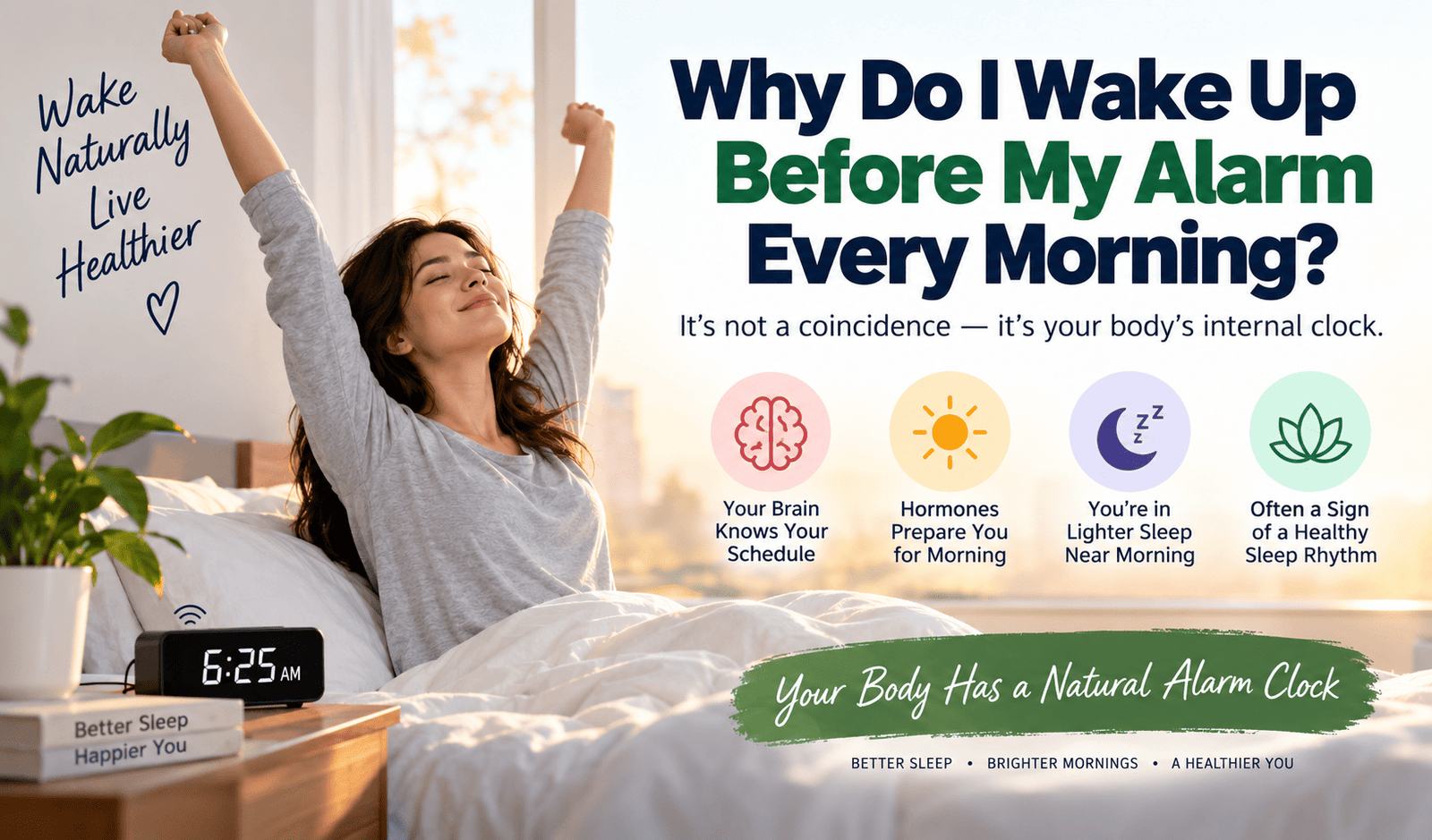
If you wake up before your alarm every morning, your body’s internal clock is likely synchronized with your sleep schedule. As morning approaches, melatonin decreases and cortisol naturally rises, helping you wake up on your own. Waking 5–30 minutes before your alarm is usually normal, but waking one or more hours early every day may indicate stress, poor sleep quality, or an underlying sleep issue.

Many people experience the same surprising moment: you open your eyes, look at the clock, and discover it’s only a few minutes before your alarm rings. It can happen so consistently that it feels like your brain somehow knows the exact time. The good news is that it actually does—at least biologically.
Your body isn’t waiting for your phone alarm to decide when to wake up. Instead, it follows an internal biological clock called the circadian rhythm. This natural timing system regulates when you feel sleepy, when your hormones change, and when your body prepares for the day ahead. For most healthy adults, waking up shortly before the alarm is a sign that this system is working well.
This article explains why it happens, when it’s completely normal, when it may be a warning sign, and how to improve your sleep naturally.
Also Read : What Is Sleep Inertia and How Can You Reduce It?
Why do I wake up before my alarm every morning?
The short answer is that your brain has learned your routine. If you go to bed and wake up at nearly the same time every day, your body begins predicting when morning will arrive. During the final stage of sleep, your brain gradually shifts you from deeper sleep into lighter sleep while increasing alertness hormones. Instead of being shocked awake by an alarm, you naturally wake on your own.
This is why people who maintain a consistent sleep schedule often wake within minutes of their alarm—even on days when the alarm never rings.
Also Read : Can Air Quality in Your Bedroom Affect Sleep?
Your body has its own built-in alarm clock
Deep inside the brain is a small group of nerve cells known as the suprachiasmatic nucleus, often called the body’s master clock. This tiny area coordinates your 24-hour circadian rhythm and controls important daily functions such as sleep, body temperature, hormone production, digestion, and mental alertness.
Every morning, sunlight entering your eyes helps reset this biological clock. Over time, your brain learns exactly when you usually wake up. Rather than keeping you asleep until the alarm sounds, it starts preparing your body for waking about an hour beforehand.
That’s why waking naturally is often much gentler than waking to a loud alarm.
Also Read : Why Do I Sleep Better in Hotels Than at Home?
The science behind waking naturally
Two hormones play a major role in your morning wake-up process: melatonin and cortisol.
Melatonin is the hormone that promotes sleep. It rises during the evening as darkness increases and helps you feel tired. As morning approaches, melatonin levels begin falling.
At the same time, cortisol gradually increases. Although cortisol is often called the stress hormone, it is also essential for healthy mornings. Its natural rise provides energy, improves focus, raises alertness, and prepares your body for physical activity. This normal increase is known as the cortisol awakening response.
When these hormones work together properly, your body can wake naturally before your alarm without feeling groggy.
Also Read : How Often Should You Replace Your Pillow for Better Sleep?
Is waking before your alarm a good sign?
In many cases, yes.
If you wake up feeling rested and energetic, it’s usually a positive sign that your sleep cycles are aligning with your circadian rhythm. Your brain is allowing you to finish a sleep cycle naturally instead of being interrupted during deep sleep.
However, how you feel afterward matters more than the clock itself. Someone who wakes ten minutes early feeling refreshed has a very different experience from someone waking two hours early feeling exhausted.
A healthy early wake-up usually happens within about 5–30 minutes of the alarm and leaves you feeling mentally clear. A problematic early wake-up often happens much earlier and is accompanied by fatigue, irritability, or difficulty functioning during the day.
Also Read : Can Your Mattress Be Causing Poor Sleep?
Why stress makes you wake up early?
Stress is one of the most common reasons people begin waking earlier than they want.
When your brain perceives ongoing emotional pressure—whether from work, finances, relationships, or major life changes—it becomes more vigilant during sleep. Even if you fall asleep easily, your nervous system may wake you during the early morning hours when sleep becomes lighter.
Many people notice this before important events. Students wake before exams, travelers wake before early flights, and parents often wake before their children without needing an alarm. The brain has an impressive ability to anticipate meaningful events.
If your early waking began during a stressful period, reducing stress may improve your sleep more effectively than changing your alarm time.
Also Read : Does Sleeping Naked Help You Sleep Better?
Could anxiety or depression be involved?
Sometimes, yes.
Persistent early morning waking is a common symptom of insomnia and may also occur alongside anxiety or depression. The important point is not to self-diagnose based on one symptom alone.
If you’re waking much earlier than intended for several weeks and also experiencing constant worry, sadness, loss of motivation, or significant daytime fatigue, it’s worth discussing these symptoms with a healthcare professional.
Occasional early waking is normal. Persistent sleep disruption deserves attention.
Also Read : Why Do I Feel More Awake at Night Than During the Day?
Understanding your sleep cycles
Sleep isn’t one continuous state. Throughout the night, your brain cycles through different stages approximately every 90 minutes.
Early in the night, deep sleep dominates and helps restore the body physically. As morning approaches, REM sleep and lighter sleep become more frequent. Because you’re already in lighter sleep near your usual wake time, it’s much easier for your brain to wake naturally.
This is also why alarms often feel less unpleasant when they ring near the end of a sleep cycle rather than during deep sleep.
Also Read : Can Sleeping With a Fan Improve Sleep Quality?
Why do I wake up 5 minutes before my alarm?
This is probably the most common version of the question.
The answer is surprisingly simple: your body has learned your schedule. Your circadian rhythm doesn’t know the exact minute in the way a digital clock does, but it recognizes a consistent pattern. Hormone changes begin before your usual wake time, allowing you to become alert naturally.
Five minutes isn’t magical—it’s simply the final transition between sleeping and waking.
Also Read : Why Do My Legs Twitch When I’m Trying to Sleep?
Why do I wake up an hour before my alarm?
An hour is a different story.
If you consistently wake about an hour early and feel completely rested, you may simply need slightly less sleep than you’re allowing yourself. While most adults need 7–9 hours of sleep, individual needs vary.
However, if you wake an hour early feeling tired and cannot fall back asleep, several factors may be contributing. Poor sleep quality, alcohol before bed, late caffeine consumption, stress, environmental noise, or an untreated sleep disorder can all fragment sleep during the early morning hours.
Keeping a sleep diary for two weeks can help identify patterns in bedtime, wake time, caffeine intake, and stress levels.
Also Read : Is It Better to Sleep With Socks On?
Does age affect early waking?
Yes, absolutely.
As people grow older, their circadian rhythm naturally shifts earlier. Many older adults become sleepy earlier in the evening and wake earlier in the morning. This is considered a normal age-related change rather than a sleep disorder.
Teenagers experience the opposite pattern. Their biological clocks tend to shift later, making early school mornings especially challenging despite getting enough sleep.
Age changes the timing of sleep—not necessarily the quality.
Also Read : Can Seasonal Changes Affect Your Sleep Cycle?
How to stop waking up before your alarm?
If waking early bothers you, improving your overall sleep routine is usually more effective than simply setting a later alarm.
The first step is maintaining the same bedtime and wake time every day, including weekends. Consistency strengthens your circadian rhythm and helps your body predict sleep more accurately.
Morning sunlight is equally important. Spending 20–30 minutes outside shortly after waking helps reinforce your biological clock and improves nighttime melatonin production.
Limiting bright screens before bed, reducing late-afternoon caffeine, avoiding heavy meals close to bedtime, and keeping your bedroom cool, dark, and quiet can also improve sleep quality.
If you wake naturally only a few minutes before your alarm and feel rested, there’s usually no reason to force yourself back to sleep. Getting up may actually support a healthier sleep rhythm.
Also Read : Why Do I Wake Up at the Same Time Every Night?
When should you see a doctor?
Waking before your alarm is usually harmless, but certain symptoms deserve medical evaluation.
If you’ve been waking one or more hours too early for longer than three weeks, experience excessive daytime sleepiness, struggle to stay asleep every night, snore loudly, have breathing pauses during sleep, or notice significant mood changes alongside sleep problems, consult a healthcare provider.
These symptoms may indicate insomnia, sleep apnea, circadian rhythm disorders, anxiety, depression, or another underlying medical condition that requires proper evaluation.
Also Read : How much sleep do adults over 40 need?
Healthy sleep habits for better mornings
The quality of your morning often begins the night before. Going to bed at a consistent time allows your brain to establish a predictable rhythm. Exposing yourself to natural daylight soon after waking strengthens that rhythm even further. Regular physical activity during the day also supports deeper sleep, while minimizing caffeine and alcohol in the evening reduces unnecessary sleep disruption.
Rather than aiming to sleep until the last possible minute, aim to wake feeling refreshed. Natural waking is often healthier than relying on repeated snooze alarms that interrupt the final stages of sleep.
Also Read : Why do I wake up sweating at night?
Final Thoughts
If you’ve ever wondered, “Why do I wake up before my alarm every morning?”, the answer is usually reassuring. Your body has an incredibly sophisticated internal clock that learns your daily routine and prepares you for waking through carefully timed hormone changes and sleep cycles.
Waking 5–30 minutes before your alarm is often a sign of a well-regulated circadian rhythm, especially if you feel rested. The real concern isn’t waking early—it’s waking early and feeling exhausted, anxious, or unable to function during the day. In those situations, improving sleep habits and seeking medical advice when needed can make a meaningful difference.
Also Read : Can low vitamin D affect sleep?
Frequently Asked Questions (FAQs)
1. Why do I wake up before my alarm every morning?
Your circadian rhythm anticipates your usual wake time, allowing your brain to wake naturally before the alarm rings.
2. Is it normal to wake up 10 minutes before my alarm?
Yes. Waking within 5–30 minutes of your alarm is common and usually considered normal.
3. Why do I wake up before my alarm but still feel tired?
You may be experiencing poor sleep quality, insufficient sleep, stress, or an underlying sleep disorder.
4. Can stress cause early morning waking?
Yes. Chronic stress can increase nighttime alertness and make early morning awakenings more frequent.
5. Does cortisol naturally wake you up?
Yes. Cortisol rises naturally before your usual wake time and helps increase alertness and energy.
6. Why do I wake up at exactly the same time every day?
A consistent sleep schedule trains your internal body clock to wake at a predictable time.
7. Is waking before the alarm healthier than using an alarm?
Generally, yes. Natural waking often means you’re finishing a sleep cycle rather than being interrupted during deep sleep.
8. How much sleep should adults get?
Most healthy adults need between 7 and 9 hours of sleep each night.
9. Should I try to fall back asleep if I wake early?
If you’re only a few minutes before your alarm and feel fully awake, it’s usually fine to get up. If it’s much earlier, relax and avoid stressing about sleep.
10. When is waking early considered insomnia?
It may be insomnia if you regularly wake much earlier than intended, cannot return to sleep, and experience daytime fatigue for several weeks.

Relaxation techniques can help you fall asleep faster.
Medical Disclaimer: This article is for educational purposes only and does not replace professional medical advice, diagnosis, or treatment. Always consult a qualified healthcare provider before making significant changes to your diet, exercise routine, medications, or health management plan.
Medically reviewed information sourced from trusted health organizations.
References
- National Institutes of Health (NIH). Sleep and Sleep Disorders.
https://www.nhlbi.nih.gov/health/sleep - Sleep Foundation. Sleep Health Resources.
https://www.sleepfoundation.org/ - Centers for Disease Control and Prevention (CDC). Sleep and Sleep Disorders.
https://www.cdc.gov/sleep/ - Mayo Clinic. Sleep Disorders Overview.
https://www.mayoclinic.org/
Reviewed by: Dzarro Editorial Team
Fact-checked using trusted medical and scientific sources.

Sandip Choudhary is a Health & Wellness Researcher and Content Creator specializing in sleep, digestive health, preventive wellness, and evidence-based health education. He has been creating online content and researching health-related topics for several years, focusing on translating complex medical information into practical guidance for everyday readers.
With a strong background in SEO and content strategy, Sandip ensures that every article is optimized for both search engines and real users. His goal is to provide reliable, clear, and helpful information that supports healthier living.
Disclaimer: The content published is for informational purposes only and is not a substitute for professional medical advice.