
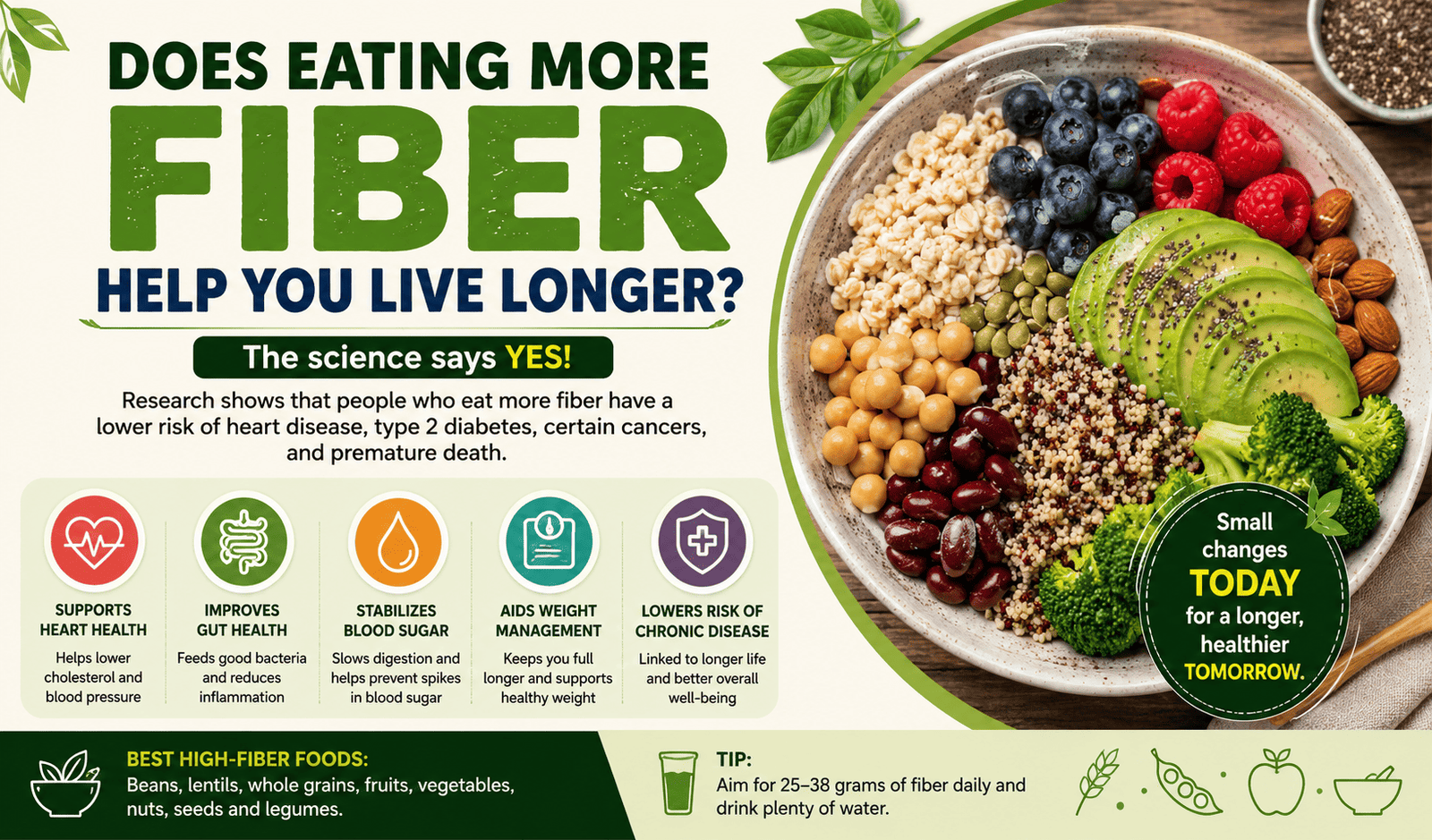
Yes, eating more fiber is strongly associated with a longer and healthier life. Research consistently shows that people who consume more dietary fiber have a lower risk of premature death, particularly from heart disease, stroke, type 2 diabetes, and certain cancers. While fiber alone cannot guarantee longevity, regularly eating fiber-rich foods such as whole grains, beans, fruits, vegetables, nuts, and seeds is one of the most evidence-based dietary habits for healthy aging.
What Is Dietary Fiber?

Dietary fiber is a type of carbohydrate found naturally in plant-based foods that the human body cannot fully digest. Instead of being broken down for energy, fiber moves through the digestive system where it supports digestion, feeds beneficial gut bacteria, and helps regulate cholesterol and blood sugar levels. Fiber is generally divided into two categories: soluble fiber, which dissolves in water and helps lower cholesterol and stabilize glucose, and insoluble fiber, which adds bulk to stool and promotes regular bowel movements. Most natural foods contain a combination of both, making a varied diet the best approach.
Also Read : Which Vegetables Are Best for Living Longer?
The Science Behind Fiber and Longevity

Scientists have studied dietary fiber for decades, and the results are remarkably consistent. Large population studies involving millions of adults have found that individuals with the highest fiber intake tend to live longer than those consuming the least. The greatest reductions in mortality are seen in cardiovascular disease, diabetes, and digestive health. Although these studies cannot prove that fiber alone extends lifespan, the repeated findings across different countries and age groups strongly suggest that fiber plays an important role in reducing chronic disease risk and supporting healthy aging.
Also Read : What Are the Best Fruits for Healthy Aging and Longevity?
Why Most Americans Need More Fiber

The recommended daily fiber intake for most adults in the United States is about 25 grams for women and 38 grams for men, yet the average American consumes only around 15 to 17 grams each day. This gap is largely caused by diets high in refined grains, sugary snacks, and ultra-processed foods that have much of their natural fiber removed. Simply replacing refined foods with whole plant foods can dramatically improve daily fiber intake without following a restrictive diet.
Also Read : High-Protein Diet for Adults Over 50
How Fiber Protects Your Heart

Heart disease remains the leading cause of death in the United States, and fiber is one of the most effective nutrients for supporting cardiovascular health. Soluble fiber binds to bile acids in the digestive tract, encouraging the body to use excess cholesterol to produce more bile. This naturally lowers LDL cholesterol levels. High-fiber diets are also associated with healthier blood pressure, reduced inflammation, improved blood vessel function, and a lower likelihood of heart attacks and strokes over time. These benefits make fiber an essential component of a longevity-focused eating pattern.
Also Read : Mediterranean Diet vs DASH Diet for Longevity
Fiber and the Gut Microbiome

Your digestive system contains trillions of microorganisms collectively known as the gut microbiome. These beneficial bacteria rely on fiber as their primary food source. When they ferment fiber, they produce short-chain fatty acids that nourish the lining of the colon, strengthen the immune system, reduce chronic inflammation, and support overall metabolic health. Scientists increasingly believe that maintaining a diverse and healthy microbiome is closely connected to healthy aging and disease prevention.
Also Read : Anti-Inflammatory Foods That May Support Longevity
Better Blood Sugar and Metabolic Health

Fiber slows the digestion and absorption of carbohydrates, preventing rapid spikes in blood sugar after meals. This helps improve insulin sensitivity and reduces the long-term risk of developing type 2 diabetes. Stable blood glucose levels also contribute to better energy, reduced inflammation, and healthier metabolism. For people trying to prevent metabolic syndrome or manage prediabetes, increasing fiber intake is one of the simplest nutritional changes with substantial health benefits.
Also Read : Best Foods for Healthy Aging
Does Fiber Help with Weight Management?

Maintaining a healthy body weight is another important factor linked to longevity. Fiber-rich foods are naturally more filling because they absorb water and slow stomach emptying. As a result, people often feel satisfied for longer and naturally consume fewer calories without feeling hungry. Unlike fad diets that focus on restriction, a high-fiber diet emphasizes adding nutritious foods, making it a sustainable strategy for lifelong weight management.
Also Read : The Biggest Longevity Trends in America
The Best High-Fiber Foods for a Longer Life

The healthiest sources of dietary fiber come from minimally processed plant foods. Legumes such as black beans, lentils, and chickpeas provide exceptional amounts of fiber while also delivering protein and iron. Whole grains including oats, barley, quinoa, and brown rice contribute both soluble and insoluble fiber. Fruits like raspberries, pears, apples, and oranges offer fiber alongside powerful antioxidants. Vegetables including broccoli, Brussels sprouts, carrots, and leafy greens increase fiber intake while remaining nutrient-dense and low in calories. Nuts and seeds such as chia, flaxseed, pistachios, and almonds add healthy fats together with valuable fiber.
Also Read : What Does Aging Gracefully Really Mean?
A Simple High-Fiber Day of Eating

A realistic high-fiber day begins with oatmeal topped with blueberries, chia seeds, and walnuts. Lunch can include a quinoa and black bean salad filled with colorful vegetables and avocado. An afternoon snack of an apple with almond butter provides additional fiber and healthy fats. Dinner featuring grilled salmon, roasted broccoli, and brown rice completes a balanced menu that can easily provide more than 30 grams of dietary fiber while supplying protein, vitamins, minerals, and omega-3 fats.
Also Read : Healthy Aging Myths You Should Stop Believing
Can You Eat Too Much Fiber?

Although fiber is incredibly beneficial, increasing intake too quickly may lead to bloating, gas, or abdominal discomfort. The best approach is to increase fiber gradually over several weeks while drinking plenty of water. Hydration helps fiber move efficiently through the digestive tract and reduces the likelihood of constipation. People with certain digestive conditions should consult their healthcare provider before making major dietary changes.
Also Read : Can You Slow Down Biological Aging?
Are Fiber Supplements as Good as Whole Foods?

Fiber supplements such as psyllium can be useful for people who struggle to meet their daily needs, especially for improving cholesterol or relieving constipation. However, whole foods remain the better option because they provide vitamins, minerals, antioxidants, and thousands of beneficial plant compounds that supplements cannot fully replace. Think of supplements as a backup, not a substitute for a plant-rich diet.
Also Read : Why Americans Are Focusing on Healthspan Instead of Lifespan?
Conclusion
So, does eating more fiber help you live longer? The strongest scientific evidence suggests yes. A diet rich in fiber is consistently linked with lower risks of premature death, better heart health, improved blood sugar control, healthier digestion, and reduced inflammation. While longevity depends on many factors including exercise, sleep, stress management, and genetics, increasing your intake of whole grains, beans, fruits, vegetables, nuts, and seeds is one of the simplest and most effective nutritional habits you can adopt for a healthier, longer life.
Also Read : The Science Behind Longevity Explained.
Frequently Asked Questions (FAQ)
1. Does eating more fiber really help you live longer?
Yes. Higher fiber intake is consistently associated with a lower risk of premature death and chronic diseases, especially heart disease and type 2 diabetes.
2. How much fiber should adults eat each day?
Most adult women should aim for about 25 grams of fiber daily, while most adult men should aim for approximately 38 grams.
3. What are the healthiest high-fiber foods?
Beans, lentils, oats, chia seeds, raspberries, pears, broccoli, Brussels sprouts, almonds, and whole grains are among the best choices.
4. Is soluble or insoluble fiber better?
Both are important. Soluble fiber supports cholesterol and blood sugar, while insoluble fiber improves digestive health and regularity.
5. Can fiber reduce cholesterol naturally?
Yes. Soluble fiber helps lower LDL cholesterol by binding bile acids and encouraging the body to remove excess cholesterol.
6. Does fiber improve gut health?
Absolutely. Fiber feeds beneficial gut bacteria, helping produce compounds that support immunity, digestion, and reduced inflammation.
7. Can eating more fiber help with weight loss?
Yes. Fiber increases fullness, slows digestion, and helps reduce overall calorie intake without extreme dieting.
8. Are fiber supplements enough?
They can help, but whole foods are generally better because they provide additional nutrients and antioxidants that supplements lack.
9. What happens if I suddenly eat a lot more fiber?
You may experience bloating or gas. Increase your intake gradually and drink plenty of water to help your digestive system adjust.
10. What is the easiest way to eat more fiber every day?
Start by replacing refined grains with whole grains, adding beans to meals, eating fruit instead of sugary snacks, and including vegetables with both lunch and dinner.

Mobility keeps older adults independent.
Medical Disclaimer : This article is for educational purposes only and should not be considered medical advice. Always consult a qualified healthcare professional regarding dietary or medical concerns.
Medically reviewed information sourced from trusted health organizations.
References
- National Institute on Aging (NIA). Healthy Aging and Longevity Resources.
https://www.nia.nih.gov/health - National Institutes of Health (NIH). Healthy Aging Research.
https://www.nih.gov/health-information - Centers for Disease Control and Prevention (CDC). Healthy Aging.
https://www.cdc.gov/aging - Harvard T.H. Chan School of Public Health. Nutrition and Healthy Aging.
https://www.hsph.harvard.edu/nutritionsource
Reviewed by: Dzarro Editorial Team
Fact-checked using trusted medical and scientific sources.

Sandip Choudhary is a Health & Wellness Researcher and Content Creator specializing in sleep, digestive health, preventive wellness, and evidence-based health education. He has been creating online content and researching health-related topics for several years, focusing on translating complex medical information into practical guidance for everyday readers.
With a strong background in SEO and content strategy, Sandip ensures that every article is optimized for both search engines and real users. His goal is to provide reliable, clear, and helpful information that supports healthier living.
Disclaimer: The content published is for informational purposes only and is not a substitute for professional medical advice.