
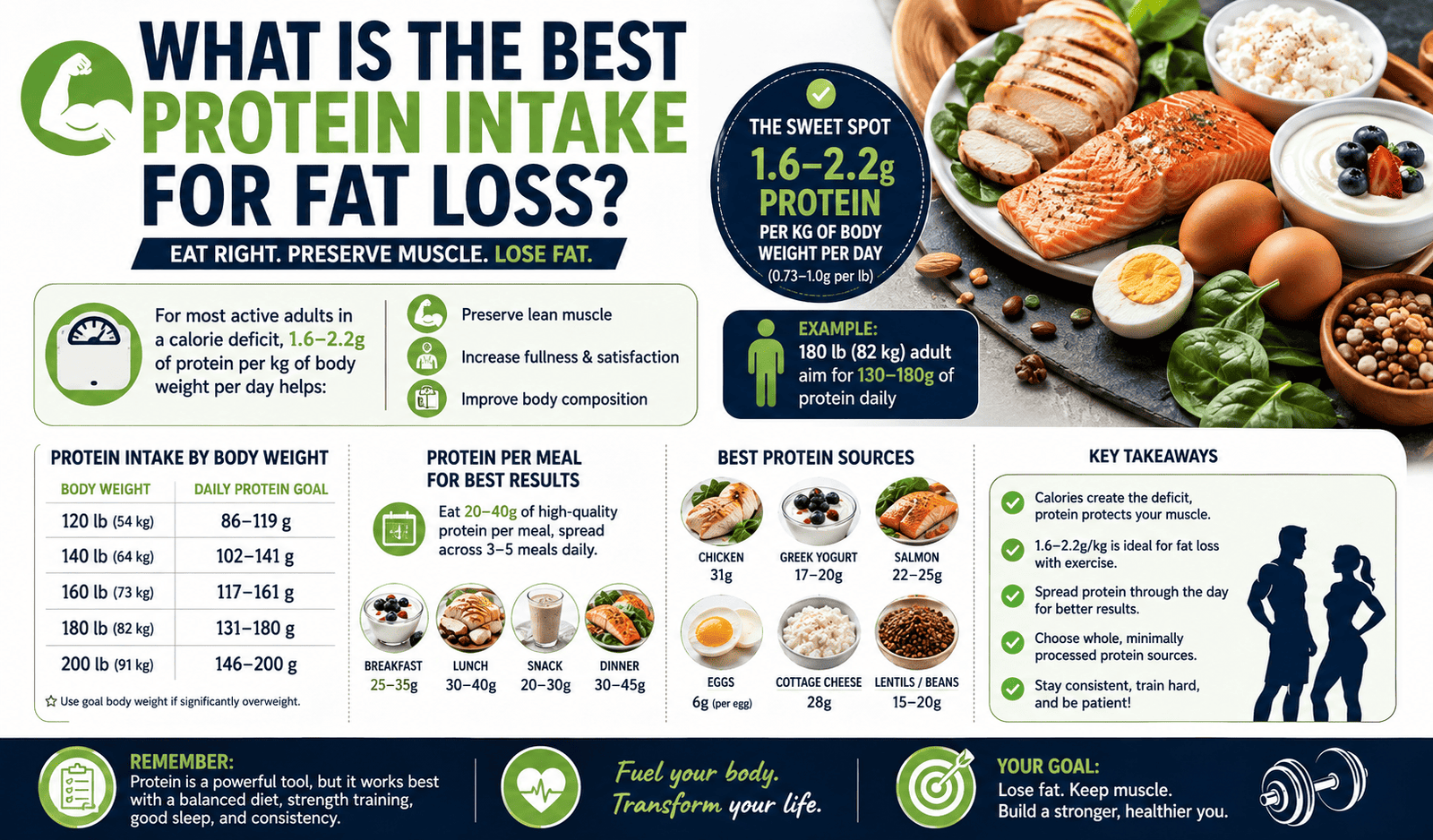
The best protein intake for fat loss is 1.6–2.2 grams of protein per kilogram of body weight per day (0.73–1.0 grams per pound) for most adults who are eating in a calorie deficit. This range helps preserve lean muscle, keeps you feeling full longer, and supports healthier body composition while losing weight. People who strength train regularly usually benefit from the higher end of this range.
For example, a person weighing 180 pounds (82 kg) should aim for approximately 130–180 grams of protein daily depending on activity level and fitness goals.
Why Protein Is Essential for Fat Loss

Many people believe eating fewer calories is the only requirement for losing weight, but the quality of those calories matters just as much. Protein plays a unique role because it helps your body hold onto muscle while encouraging fat loss. Without enough protein, your body is more likely to lose lean muscle tissue during dieting, which can reduce strength, lower metabolic efficiency, and make maintaining weight loss more difficult over time.
Protein also increases feelings of fullness by influencing appetite-regulating hormones. This means people who eat adequate protein often find it easier to stay within their calorie goals without constantly feeling hungry. Instead of simply making the number on the scale smaller, sufficient protein helps improve the ratio of fat loss to muscle loss, creating a leaner and healthier physique.
Also Read : Does Walking 10,000 Steps Actually Help You Lose Weight?
The Science-Based Protein Recommendation

The Recommended Dietary Allowance (RDA) for protein is 0.8 grams per kilogram of body weight, but this recommendation is designed to prevent deficiency rather than optimize body composition. For individuals actively trying to lose fat, research consistently supports a much higher intake.
A daily target of 1.6–2.2 g/kg is considered the ideal range for most active adults. Those who are sedentary but dieting may still benefit from around 1.2–1.6 g/kg, while highly trained athletes in aggressive calorie deficits sometimes require even more. For the average American adult combining resistance training with healthy eating, 1.6–2.2 g/kg provides the best balance between effectiveness and sustainability.
Also Read : What is the 30-30-30 rule for weight loss?
Protein Intake by Body Weight

Calculating protein is easier when you use your body weight rather than percentages of calories. Multiply your weight in kilograms by 1.6 to 2.2 to find your ideal daily range.
| Body Weight | Daily Protein Goal |
|---|---|
| 120 lb (54 kg) | 86–119 g |
| 140 lb (64 kg) | 102–141 g |
| 160 lb (73 kg) | 117–161 g |
| 180 lb (82 kg) | 131–180 g |
| 200 lb (91 kg) | 146–200 g |
If you’re significantly overweight, some registered dietitians recommend calculating protein using your goal body weight instead of your current weight. This creates a more practical target while still supporting muscle retention during fat loss.
Also Read : Why am I not losing weight even in a calorie deficit?
Is Eating More Protein Always Better?

Social media often promotes extremely high-protein diets containing 250 or even 300 grams of protein every day. While protein is incredibly beneficial, more is not always better. Research shows that the greatest benefits occur within the 1.6–2.2 g/kg range for most people. Beyond that point, the improvements in muscle preservation become relatively small unless someone is exceptionally lean or training at a very high level.
Protein should be viewed as a tool that supports fat loss rather than a magic solution. A calorie deficit remains the primary driver of weight loss, while protein helps ensure that most of the weight lost comes from fat instead of muscle.
Also Read : How many calories should I eat to lose weight safely?
Grams vs Percentage: Which Method Is Better?

Many diets recommend eating 25–35% of your calories from protein, but this method can be misleading because calorie intake varies dramatically between individuals. Someone eating 1,400 calories and another person eating 2,600 calories would consume very different amounts of protein despite having the same percentage.
Using grams based on body weight is more accurate because it reflects your body’s actual protein requirements. This personalized approach is the method preferred by sports nutrition professionals and is easier to adjust as your weight changes.
Also Read : Can gut health affect body weight?
How Much Protein Should You Eat Per Meal?

Your total daily protein intake is the most important factor, but distributing protein throughout the day can further improve muscle maintenance and recovery. Most adults benefit from consuming 20–40 grams of high-quality protein per meal across three to five meals.
For example, if your daily goal is 150 grams, you could divide it into 35 grams at breakfast, 40 grams at lunch, 30 grams as a snack, and 45 grams at dinner. This consistent intake provides your muscles with a steady supply of essential amino acids while also helping control hunger between meals.
Also Read : Best high protein breakfast for weight loss?
How Protein Supports Fat Burning?
Protein does not directly melt body fat, but it creates several conditions that make fat loss more effective. First, protein has the highest thermic effect of food, meaning your body uses more energy digesting it than it does digesting carbohydrates or fats. Second, protein increases satiety, reducing the likelihood of overeating. Finally, maintaining muscle during weight loss helps preserve physical performance and contributes to a stronger, leaner appearance.
Together, these benefits make protein one of the most valuable nutrients in any sustainable fat-loss plan.
Also Read : How to stop emotional eating?
Best High-Protein Foods for Fat Loss

Choosing nutrient-dense protein sources is just as important as reaching your daily target. Lean chicken breast provides approximately 31 grams of protein per serving while remaining relatively low in calories. Greek yogurt offers around 17–20 grams and is an excellent breakfast or snack option. Salmon supplies high-quality protein along with heart-healthy omega-3 fatty acids, while eggs and cottage cheese provide complete protein and important vitamins.
For people following vegetarian or vegan diets, lentils, black beans, chickpeas, tofu, tempeh, and edamame are excellent choices. Combining a variety of plant proteins throughout the day easily provides all essential amino acids while adding beneficial fiber that further supports fullness and digestive health.
Also Read : What is metabolic health?
Animal vs Plant Protein

Both animal and plant proteins can successfully support fat loss. Animal proteins naturally contain all nine essential amino acids and are generally more protein-dense, making it easier to reach daily targets. Plant proteins, however, offer additional fiber, antioxidants, and other nutrients associated with long-term health.
Rather than choosing one over the other, many nutrition experts recommend including both. A diet containing lean meats, dairy, seafood, legumes, soy foods, and whole grains provides excellent nutritional variety while supporting muscle preservation during weight loss.
Also Read : Can stress cause belly fat?
Protein Needs After Age 40

After age 40, maintaining muscle becomes increasingly important because adults naturally lose muscle mass as they age. This process can reduce strength, mobility, and metabolic health if left unaddressed. Higher protein intake combined with resistance training is one of the most effective ways to slow this decline while losing body fat.
Adults over 40 should generally aim for 1.6–2.0 g/kg/day, especially if they exercise regularly. Spreading protein evenly across meals may also improve muscle protein synthesis and support healthier aging.
Also Read : What are signs of hormonal weight gain?
Is High Protein Safe?

For healthy adults with normal kidney function, higher-protein diets within recommended ranges are generally considered safe. The misconception that high protein damages healthy kidneys is not supported by strong evidence in healthy individuals. However, people living with chronic kidney disease or other medical conditions affecting kidney function should consult their healthcare provider before significantly increasing protein intake.
A healthy fat-loss diet should also include plenty of vegetables, fruits, whole grains, healthy fats, and adequate hydration rather than focusing exclusively on protein.
Also Read : Why am I always hungry?
Sample 1,800-Calorie High-Protein Day

A practical fat-loss meal plan should feel satisfying while meeting protein goals. One example begins with plain Greek yogurt topped with berries for breakfast, followed by a grilled chicken salad for lunch. An afternoon protein smoothie helps maintain fullness, while baked salmon with rice and roasted vegetables creates a balanced dinner. Finishing the day with cottage cheese provides additional slow-digesting protein before bed.
| Meal | Protein |
|---|---|
| Greek yogurt with berries | 30 g |
| Grilled chicken salad | 40 g |
| Protein smoothie | 30 g |
| Salmon with vegetables & rice | 42 g |
| Cottage cheese | 18 g |
| Total | 160 g |
This approach demonstrates that reaching a high-protein target is possible using mostly whole foods without relying heavily on supplements.
Also Read : Does drinking water help lose weight?
Common Protein Mistakes

One of the most common mistakes is eating very little protein during breakfast and trying to consume nearly everything at dinner. Another is relying almost entirely on protein powders instead of nutrient-rich whole foods. Some people also cut calories so aggressively that their protein intake drops below the amount needed to preserve muscle, resulting in poorer body composition despite losing weight.
Consistency matters far more than perfection. Meeting your protein target most days while maintaining a moderate calorie deficit is a strategy that is both effective and sustainable.
Also Read : Best morning habits for weight loss?
Final Verdict
The best protein intake for fat loss is 1.6–2.2 grams per kilogram of body weight per day for most adults. This range helps preserve lean muscle, improves satiety, supports recovery from exercise, and promotes healthier body composition while dieting. Combined with strength training, quality sleep, and a balanced calorie-controlled diet, adequate protein becomes one of the most powerful nutritional tools for sustainable fat loss.
Also Read : What causes slow metabolism?
Frequently Asked Questions
1. What is the best protein intake for fat loss?
Most adults should consume 1.6–2.2 grams of protein per kilogram of body weight daily while maintaining a calorie deficit.
2. Is 100 grams of protein enough for weight loss?
It depends on your body weight. For lighter individuals, 100 grams may be sufficient, while larger or more active adults usually need more.
3. How much protein should a 180-pound person eat?
A person weighing 180 pounds should aim for approximately 130–180 grams of protein per day.
4. Does protein help burn belly fat?
Protein supports overall fat loss and muscle preservation, but it cannot specifically target belly fat.
5. Should I eat protein before or after workouts?
Either timing works well. Meeting your total daily protein goal is more important than exact timing.
6. Are protein shakes good for fat loss?
Yes. Protein shakes are a convenient way to meet daily protein goals, although whole foods should provide the majority of your nutrition.
7. Is animal protein better than plant protein?
Both are effective. Animal protein is generally more protein-dense, while plant protein provides valuable fiber and antioxidants.
8. Can women follow the same protein recommendations?
Yes. Protein needs are based primarily on body weight and activity level rather than gender.
9. Is too much protein harmful?
For healthy adults, recommended high-protein diets are generally safe. People with kidney disease should seek medical advice before increasing protein intake.
10. What matters more for fat loss: calories or protein?
Calories determine whether you lose weight, while protein helps ensure that the weight lost comes primarily from fat rather than muscle.

A healthy thyroid supports normal metabolic function.
Medical Disclaimer: This article is intended for general educational purposes and does not replace individualized medical, nutritional, or mental health advice. If you are experiencing recurrent binge eating, loss of control around food, severe distress, or symptoms of an eating disorder, speak with a qualified healthcare professional.
Medically reviewed information sourced from trusted health organizations.
Reviewed by: Dzarro Editorial Team
Fact-checked using trusted medical and scientific sources.

Sandip Choudhary is a Health & Wellness Researcher and Content Creator specializing in sleep, digestive health, preventive wellness, and evidence-based health education. He has been creating online content and researching health-related topics for several years, focusing on translating complex medical information into practical guidance for everyday readers.
With a strong background in SEO and content strategy, Sandip ensures that every article is optimized for both search engines and real users. His goal is to provide reliable, clear, and helpful information that supports healthier living.
Disclaimer: The content published is for informational purposes only and is not a substitute for professional medical advice.