
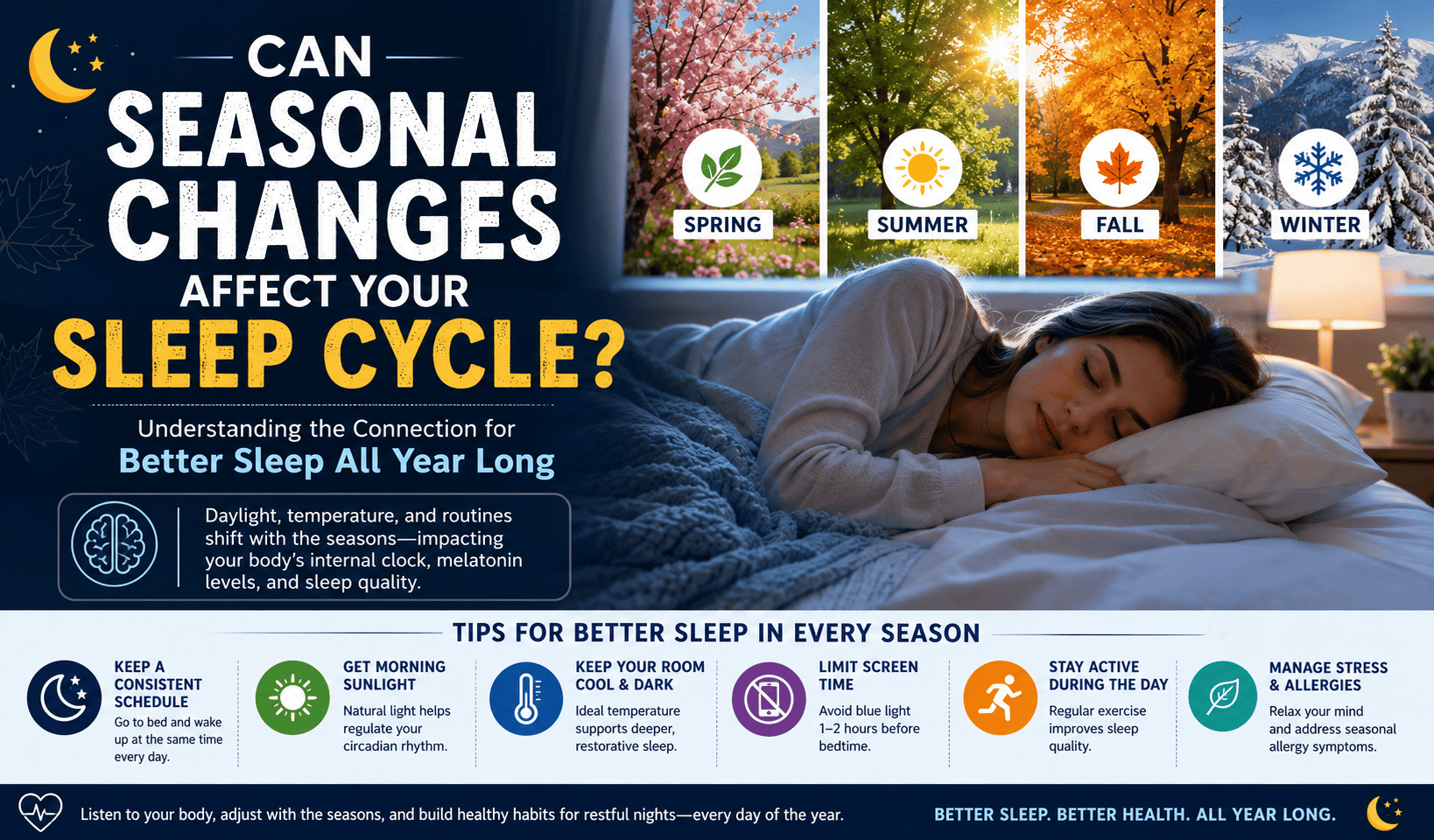
Yes, seasonal changes can affect your sleep cycle. As daylight hours, temperature, humidity, and daily routines shift throughout the year, your body’s internal clock—known as the circadian rhythm—must constantly adjust. These seasonal transitions can influence melatonin production, sleep quality, energy levels, mood, and even overall health.
Many people in the United States notice they sleep longer during winter, struggle with insomnia during summer, or feel unusually tired during seasonal transitions. While these changes are often temporary, they can become significant enough to affect work performance, mental health, and physical well-being.
Understanding why seasonal sleep changes occur can help you maintain healthier sleep habits all year long.
Understanding Your Sleep Cycle
Your sleep cycle is controlled primarily by the circadian rhythm, a roughly 24-hour internal clock located in the brain. This biological clock regulates when you feel awake and when you become sleepy.
Light is the strongest signal controlling this rhythm. When sunlight reaches your eyes, your brain reduces melatonin production, helping you stay alert. As darkness arrives, melatonin levels naturally increase, signaling that it’s time to sleep.
Seasonal changes alter both the amount and timing of daylight exposure, which explains why your sleep schedule often shifts throughout the year.
Also Read : Why Do I Wake Up at the Same Time Every Night?
Why Do Seasonal Changes Affect Sleep?
The primary reason seasonal changes affect sleep is because the environment changes dramatically throughout the year. These changes influence several biological systems responsible for regulating sleep.
During winter, shorter daylight hours increase melatonin production, making many people feel sleepier and less energetic. In contrast, long summer evenings delay melatonin release, making it harder to fall asleep at your usual bedtime.
Temperature also plays an important role. The body naturally lowers its core temperature before sleep. Extremely hot summer nights can interfere with this process, causing difficulty falling asleep and more nighttime awakenings.
Humidity, weather patterns, physical activity levels, and changes in daily schedules further contribute to seasonal sleep disruptions.
Also Read : How much sleep do adults over 40 need?
How Spring Affects Your Sleep
Spring is often associated with renewal and increased energy, but it can temporarily disrupt your sleep.
As daylight increases, your circadian rhythm must gradually adapt. Many people experience difficulty falling asleep during the first few weeks of spring because evening sunlight delays melatonin production.
Seasonal allergies can also become a major sleep disruptor. Nasal congestion, sneezing, itchy eyes, and nighttime coughing often reduce sleep quality.
Additionally, the transition to Daylight Saving Time in many parts of the United States causes people to lose an hour of sleep, temporarily increasing fatigue and reducing alertness.
Fortunately, most individuals adjust within one to three weeks.
Also Read : Why do I wake up sweating at night?
Summer and Sleep Problems
Summer presents unique challenges for maintaining healthy sleep.
Long daylight hours delay natural sleep signals. Exposure to bright evening sunlight suppresses melatonin, making bedtime feel later than usual.
Hot temperatures can prevent your body from cooling down sufficiently before sleep. Research consistently shows that cooler bedroom temperatures support deeper, more restorative sleep.
Vacation schedules, outdoor activities, late-night social events, and increased screen time often lead to inconsistent sleep routines during summer.
People frequently report:
Difficulty falling asleep
More nighttime awakenings
Earlier morning wake-ups due to sunrise
Reduced deep sleep
Morning fatigue despite adequate sleep duration
Maintaining a cool, dark bedroom becomes especially important during warmer months.
Also Read : Can low vitamin D affect sleep?
How Fall Influences Sleep?
Many people find fall to be one of the easiest seasons for quality sleep.
Cooler temperatures naturally support healthy sleep, and decreasing daylight gradually encourages earlier melatonin production.
However, seasonal transitions can still cause temporary adjustments as your internal clock shifts toward shorter days.
Busy work schedules, school routines, and increased responsibilities after summer vacations may also contribute to stress-related sleep difficulties.
Overall, many individuals report improved sleep quality during autumn compared to summer.
Also Read : What causes sleep anxiety before workdays?
Winter and Longer Sleep
Winter often has the greatest impact on sleep patterns.
Reduced sunlight increases melatonin production, causing many people to feel sleepier earlier in the evening and remain sleepy longer in the morning.
Some individuals experience excessive daytime sleepiness, lower energy, and mood changes during winter.
For certain people, these symptoms become severe enough to develop Seasonal Affective Disorder (SAD), a form of depression linked to seasonal changes. SAD commonly includes excessive sleeping, fatigue, low motivation, and difficulty concentrating.
Even people without SAD may naturally sleep slightly longer during winter due to increased darkness.
The Role of Melatonin
Melatonin is often called the “sleep hormone,” although it primarily helps regulate sleep timing rather than causing sleep itself.
Seasonal light exposure directly affects melatonin production.
Long summer days reduce melatonin release, delaying sleepiness.
Short winter days increase melatonin production, encouraging earlier bedtime and longer sleep duration.
Artificial lighting at night—including televisions, smartphones, tablets, and computers—can further confuse your circadian rhythm by suppressing melatonin even after sunset.
Limiting bright light before bedtime helps support natural sleep regulation regardless of season.
Also Read : How to reset sleep schedule naturally?
Circadian Rhythm and Seasonal Adaptation
Your circadian rhythm constantly responds to environmental cues.
The most important cue is natural sunlight.
When daylight patterns shift during seasonal transitions, your brain gradually adjusts hormone production, body temperature, metabolism, digestion, and sleep timing.
Some individuals adapt quickly, while others require several weeks.
People with irregular work schedules, frequent travel, or existing sleep disorders often find seasonal adjustments more challenging.
Maintaining consistent wake-up times helps strengthen your circadian rhythm throughout the year.
Can Seasonal Changes Cause Insomnia?
Yes.
Seasonal transitions can temporarily trigger insomnia in susceptible individuals.
Common causes include delayed melatonin release, stress, allergies, temperature changes, and disruptions to normal routines.
Symptoms may include difficulty falling asleep, frequent nighttime awakenings, waking too early, or feeling unrefreshed despite spending enough time in bed.
If insomnia persists for more than several weeks or significantly affects daily functioning, consultation with a qualified healthcare professional is recommended.
Also Read : Why does my body feel heavy after waking up?
Seasonal Changes and Mental Health
Sleep and mental health are closely connected.
Reduced daylight during winter may contribute to depression, anxiety, irritability, and reduced motivation.
Poor sleep further worsens emotional regulation, creating a cycle in which mental health problems and sleep disturbances reinforce each other.
Regular physical activity, outdoor sunlight exposure, healthy nutrition, stress management, and consistent sleep schedules all support both emotional well-being and better sleep.
Who Is Most Sensitive to Seasonal Sleep Changes?
Although everyone experiences some seasonal adaptation, certain groups are more affected.
Individuals with insomnia, depression, anxiety disorders, shift work schedules, older adults, adolescents, people living in northern states with shorter winter days, and those with Seasonal Affective Disorder often notice larger seasonal changes in sleep quality.
Lifestyle factors such as limited daylight exposure, excessive evening screen use, and irregular sleep schedules may further increase sensitivity.
Also Read : Can sleep problems affect mental health?
Tips to Sleep Better During Every Season
Healthy sleep habits remain effective regardless of the season.
Maintaining a consistent bedtime and wake-up time helps stabilize your circadian rhythm. Getting morning sunlight shortly after waking reinforces healthy sleep timing. Keeping your bedroom cool, quiet, and dark supports deeper sleep, especially during summer months. Reducing screen exposure one to two hours before bedtime helps preserve natural melatonin production.
Regular exercise improves sleep quality throughout the year, although vigorous workouts should generally be completed several hours before bedtime. Managing allergies during spring, staying hydrated during summer, and maximizing natural daylight exposure during winter all contribute to healthier sleep.
Most importantly, avoid making large changes to your sleep schedule simply because the season changes. Gradual adjustments are easier for your body to handle.
When Should You See a Doctor?
Occasional seasonal sleep changes are completely normal.
However, medical evaluation may be appropriate if sleep problems continue for more than a month, interfere with work or daily activities, involve loud snoring or breathing interruptions, produce excessive daytime sleepiness, or occur alongside persistent depression or anxiety.
A healthcare provider or sleep specialist can determine whether an underlying sleep disorder, medical condition, or mental health issue requires treatment.
Also Read : What are the best nighttime habits for deep sleep?
Final Thoughts
So, can seasonal changes affect your sleep cycle? Absolutely. Seasonal shifts influence your circadian rhythm, melatonin production, body temperature, and daily routines, all of which play important roles in sleep quality. While most people naturally adapt over time, some individuals experience more noticeable disruptions, especially during spring and winter transitions.
The good news is that maintaining consistent sleep habits, maximizing natural daylight exposure, limiting evening screen time, and creating an ideal sleep environment can help minimize seasonal sleep disturbances. If your symptoms become persistent or begin affecting your quality of life, seeking professional medical advice is the best course of action.
By understanding how each season affects your body’s internal clock, you can make informed lifestyle adjustments and enjoy healthier, more restorative sleep throughout the entire year.

Insomnia can make it difficult to fall asleep.
Frequently Asked Questions (FAQs)
1. Can seasonal changes affect your sleep cycle?
Yes. Seasonal changes alter daylight exposure, temperature, and melatonin production, which can shift your circadian rhythm and influence sleep quality.
2. Why do I sleep more during winter?
Shorter daylight hours increase melatonin production, making many people naturally feel sleepier and increasing total sleep duration.
3. Why is it harder to sleep in summer?
Longer daylight hours and warmer nighttime temperatures can delay melatonin release and make it more difficult for your body to cool down for sleep.
4. Does Daylight Saving Time affect sleep?
Yes. Losing one hour during the spring transition temporarily disrupts the circadian rhythm and may cause fatigue, insomnia, and reduced alertness for several days.
5. Can allergies affect sleep during spring?
Yes. Seasonal allergies often cause nasal congestion, sneezing, coughing, and breathing difficulties that reduce sleep quality.
6. Is Seasonal Affective Disorder related to sleep?
Yes. People with Seasonal Affective Disorder often experience excessive sleepiness, fatigue, lower energy, and changes in sleep duration during winter.
7. How long does it take to adjust to seasonal sleep changes?
Most people adapt within one to three weeks, although some individuals require longer depending on their health, age, and lifestyle.
8. How can I improve sleep during seasonal transitions?
Maintaining a regular sleep schedule, getting morning sunlight, keeping your bedroom cool and dark, limiting evening screen time, exercising regularly, and managing seasonal allergies can all help support better sleep year-round.
Medical Disclaimer: This article is for educational purposes only and does not replace professional medical advice, diagnosis, or treatment. Always consult a qualified healthcare provider before making significant changes to your diet, exercise routine, medications, or health management plan.
Medically reviewed information sourced from trusted health organizations.
References
- National Institutes of Health (NIH). Sleep and Sleep Disorders.
https://www.nhlbi.nih.gov/health/sleep - Sleep Foundation. Sleep Health Resources.
https://www.sleepfoundation.org/ - Centers for Disease Control and Prevention (CDC). Sleep and Sleep Disorders.
https://www.cdc.gov/sleep/ - Mayo Clinic. Sleep Disorders Overview.
https://www.mayoclinic.org/
Reviewed by: Dzarro Editorial Team
Fact-checked using trusted medical and scientific sources.

Sandip Choudhary is a Health & Wellness Researcher and Content Creator specializing in sleep, digestive health, preventive wellness, and evidence-based health education. He has been creating online content and researching health-related topics for several years, focusing on translating complex medical information into practical guidance for everyday readers.
With a strong background in SEO and content strategy, Sandip ensures that every article is optimized for both search engines and real users. His goal is to provide reliable, clear, and helpful information that supports healthier living.
Disclaimer: The content published is for informational purposes only and is not a substitute for professional medical advice.
1 thought on “Can Seasonal Changes Affect Your Sleep Cycle?”
Comments are closed.