
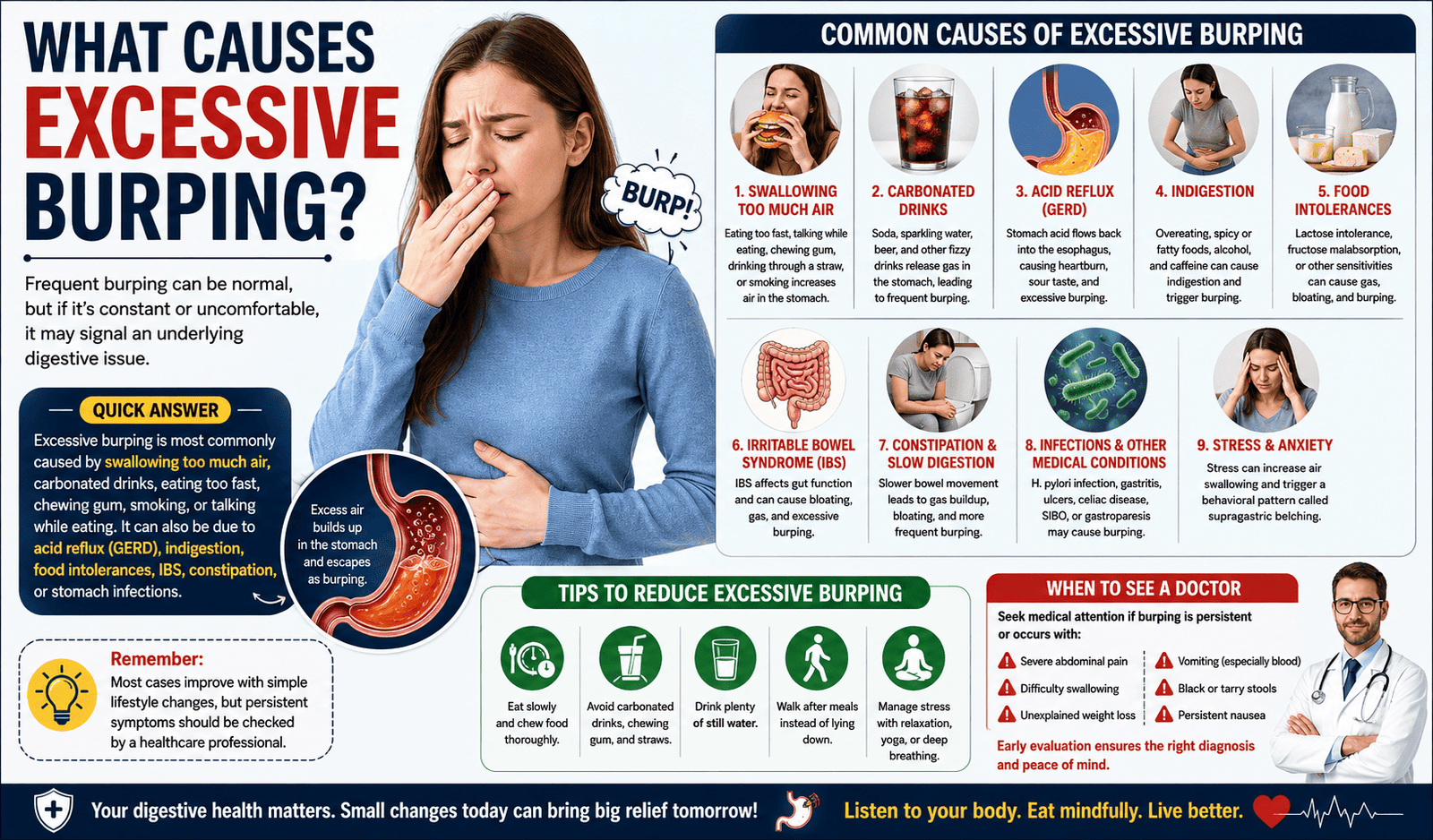
Excessive burping is a common digestive complaint that affects millions of people in the United States. While occasional burping is completely normal and helps release swallowed air from the stomach, frequent or persistent burping may indicate dietary habits, digestive disorders, or lifestyle factors that need attention. In most cases, excessive burping is not dangerous and can be improved through simple changes such as eating more slowly, reducing carbonated drinks, and identifying food triggers. However, when it occurs alongside symptoms like unexplained weight loss, severe abdominal pain, or difficulty swallowing, it deserves medical evaluation.
What Causes Excessive Burping?

What causes excessive burping? Excessive burping is most commonly caused by swallowing too much air while eating or drinking, consuming carbonated beverages, chewing gum, smoking, or talking during meals. It may also result from digestive conditions including acid reflux (GERD), indigestion, lactose intolerance, irritable bowel syndrome (IBS), constipation, or certain stomach infections. Most cases improve with lifestyle changes, but persistent symptoms should be evaluated by a healthcare professional.
Also Read : Is It Normal to Have Gas Every Day?
What Is Excessive Burping?

Burping, also known medically as belching, is the natural release of air from the stomach through the mouth. Every person swallows small amounts of air throughout the day while eating, drinking, speaking, or breathing. This trapped air eventually escapes as a burp, relieving pressure inside the digestive system.
Excessive burping refers to burping that occurs much more frequently than normal or becomes bothersome in everyday life. Rather than being a disease itself, it is usually a symptom that something is affecting the normal digestive process. The goal is not simply to stop burping, but to identify the underlying cause so it can be treated effectively.
Also Read : Can Coffee Upset Your Stomach?
1. Swallowing Too Much Air (Aerophagia)

The most common cause of excessive burping is aerophagia, which means swallowing excess air. Many people unknowingly swallow large amounts of air during meals, especially when eating too fast or talking while chewing. The extra air accumulates in the stomach and is later released through repeated burping.
Other habits that increase swallowed air include chewing gum, sucking on hard candy, drinking through a straw, smoking cigarettes, and breathing through the mouth. Even anxiety can contribute because nervous breathing patterns often lead to increased air intake. Correcting these habits alone can dramatically reduce frequent burping in many individuals.
Also Read : What Foods Trigger Heartburn?
2. Carbonated Drinks and Fizzy Beverages

Carbonated beverages contain dissolved carbon dioxide gas. Once these drinks enter the stomach, the gas expands and must escape somehow, making burping a normal response. Soft drinks, sparkling water, energy drinks, beer, and flavored fizzy beverages are all common triggers.
People who regularly consume multiple carbonated drinks each day often experience significantly more burping than those who primarily drink still water. Replacing soda with plain water or herbal tea is one of the simplest and most effective ways to reduce excessive belching.
Also Read : What Is Acid Reflux and How Can I Prevent It?
3. Acid Reflux (GERD)

Gastroesophageal reflux disease, commonly called GERD, is another leading cause of persistent burping. This condition occurs when stomach acid flows backward into the esophagus because the valve separating the stomach and esophagus does not close properly.
In addition to frequent burping, GERD often causes heartburn, a sour or bitter taste in the mouth, chest discomfort, and regurgitation after meals. Many people notice symptoms become worse after eating large meals, consuming spicy or fatty foods, or lying down shortly after dinner. Treating acid reflux often reduces excessive burping as well.
Also Read : Why Do I Feel Full So Quickly?
4. Indigestion (Dyspepsia)

Indigestion is a broad term describing discomfort in the upper digestive tract after eating. It commonly causes burping, bloating, nausea, early fullness, and mild stomach pain. Rich meals, fried foods, excessive alcohol, caffeine, and overeating are frequent triggers.
Unlike acid reflux, indigestion does not always involve stomach acid entering the esophagus. Instead, the digestive process itself becomes uncomfortable, leading to increased pressure and repeated belching. Eating smaller portions and avoiding heavy late-night meals often provides noticeable relief.
Also Read : Can Dehydration Cause Constipation?
5. Food Intolerances

Certain foods are difficult for some people to digest, leading to increased gas production and excessive burping. Lactose intolerance is one of the most common examples in the United States. When the body cannot properly digest lactose, bacteria ferment it inside the intestines, producing gas, bloating, and abdominal discomfort.
Other food intolerances may involve fructose, artificial sweeteners, or gluten-related digestive sensitivity. Keeping a food diary can help identify patterns between meals and symptoms, allowing healthcare providers to recommend appropriate dietary adjustments without unnecessary food restrictions.
Also Read : How Much Water Should I Drink for Healthy Digestion?
6. Irritable Bowel Syndrome (IBS)

Irritable bowel syndrome is a chronic digestive disorder affecting the communication between the brain and the gut. Although IBS is most recognized for abdominal pain and changes in bowel habits, many people also experience excessive burping and persistent bloating.
Interestingly, IBS symptoms are not always caused by excessive gas. Instead, the digestive tract becomes more sensitive to normal amounts of gas and intestinal movement. Stress, certain foods, hormonal changes, and irregular eating patterns may all contribute to symptom flare-ups. Managing IBS typically involves personalized nutrition, stress reduction, and lifestyle improvements.
Also Read : What Causes Chronic Diarrhea?
7. Constipation and Slow Digestion

Constipation can indirectly increase burping by slowing the movement of food through the digestive tract. When stool remains in the colon for longer periods, fermentation increases and additional gas is produced. This may lead to bloating, abdominal pressure, and frequent belching.
Improving hydration, increasing dietary fiber gradually, exercising regularly, and maintaining consistent bathroom habits can improve bowel function and reduce associated digestive symptoms. Many people notice that treating constipation also improves bloating and burping simultaneously.
Also Read : Why Am I Constipated Even When I Eat Fiber?
Less Common Medical Causes

Although lifestyle habits explain the majority of cases, persistent excessive burping may occasionally be linked to medical conditions that require professional treatment. These include Helicobacter pylori infection, gastritis, stomach ulcers, gastroparesis, celiac disease, and small intestinal bacterial overgrowth (SIBO).
These conditions usually produce additional symptoms beyond burping, including chronic nausea, vomiting, significant abdominal pain, unexplained weight loss, or ongoing digestive discomfort. A healthcare provider may recommend blood tests, breath tests, stool testing, or endoscopy depending on the overall clinical picture.
Also Read : Can Stress Cause Digestive Problems?
Symptoms That Often Accompany Excessive Burping

Excessive burping rarely occurs alone. Many people experience bloating, abdominal fullness, excessive gas, heartburn, nausea, upper stomach discomfort, or changes in bowel habits at the same time. The combination of symptoms often helps identify the underlying cause.
For example, burping with heartburn commonly suggests acid reflux, while burping with bloating and diarrhea may point toward food intolerance. Burping accompanied by constipation often indicates slowed digestion rather than excessive swallowed air. Paying attention to when symptoms occur—before meals, after meals, or overnight—can provide valuable information during a medical evaluation.
Also Read : What Foods Are Best for Gut Health?
How Doctors Diagnose the Cause?

Diagnosis begins with a detailed conversation about your symptoms rather than immediate testing. Your healthcare provider will ask how often you burp, whether symptoms are related to meals, what foods trigger discomfort, and whether heartburn or weight loss is present.
If symptoms persist, additional tests may include lactose intolerance testing, screening for H. pylori, celiac disease evaluation, reflux monitoring, or upper endoscopy. The purpose of testing is to identify treatable conditions while avoiding unnecessary procedures.
Also Read : How Can I Improve My Gut Health Naturally?
Natural Ways to Reduce Excessive Burping

The most effective treatment depends on the underlying cause, but many people improve significantly through everyday lifestyle changes. Eating slowly allows less air to enter the stomach, while chewing food thoroughly supports healthier digestion. Drinking still water instead of carbonated beverages reduces trapped gas, and avoiding chewing gum or drinking through straws minimizes swallowed air.
Walking for ten to fifteen minutes after meals may also support digestion better than lying down immediately. If certain foods consistently trigger symptoms, keeping a daily food journal can help identify personal dietary patterns without eliminating nutritious foods unnecessarily.
Also Read : What Causes Bloating Every Day?
Foods That May Trigger Burping

Some foods naturally produce more digestive gas because beneficial gut bacteria ferment undigested carbohydrates. Beans, lentils, broccoli, cabbage, cauliflower, onions, dairy products for lactose-intolerant individuals, and foods containing sugar alcohols are common examples.
These foods are generally healthy and should not automatically be avoided. Instead, the goal is identifying individual tolerance levels, since digestive responses vary widely from person to person. Portion size and preparation methods can also influence how well these foods are tolerated.
Also Read : Why Does My Stomach Hurt After Eating?
When Should You See a Doctor?

Occasional burping is normal, but persistent or severe symptoms should not be ignored. Seek medical evaluation if excessive burping lasts for several weeks, becomes progressively worse, interferes with daily activities, or occurs alongside alarming symptoms such as difficulty swallowing, persistent vomiting, black stools, vomiting blood, severe abdominal pain, or unexplained weight loss.
Early evaluation helps rule out serious digestive disorders while ensuring appropriate treatment for conditions like GERD, ulcers, or chronic gastrointestinal disease.
Also Read : Why do I feel tired after eating?
Can Stress Cause Excessive Burping?

Yes. Stress and anxiety can significantly affect digestion through the gut-brain connection. Many people unknowingly swallow more air during periods of emotional stress, leading to frequent burping throughout the day. Others develop a behavioral pattern called supragastric belching, where air rapidly enters and exits the esophagus without reaching the stomach.
Relaxation techniques, diaphragmatic breathing, mindfulness, adequate sleep, and regular physical activity may help reduce stress-related digestive symptoms. Addressing emotional well-being is often an important part of long-term digestive health.
Also Read : Why do I feel full after eating small amounts?
Conclusion
Excessive burping is usually a symptom rather than a disease. The most common causes include swallowing excess air, carbonated beverages, acid reflux, indigestion, food intolerances, IBS, and constipation. Fortunately, most people experience significant improvement by eating more slowly, avoiding fizzy drinks, identifying dietary triggers, and supporting healthy digestion through simple lifestyle habits. If burping becomes persistent or occurs with concerning symptoms such as weight loss, severe pain, or difficulty swallowing, consulting a healthcare professional is the safest approach for accurate diagnosis and treatment.
Also Read : How many times can esophageal dilatation be done?
Frequently Asked Questions (FAQs)
1. What causes excessive burping after every meal?
The most common causes include swallowing excess air, eating too quickly, indigestion, carbonated beverages, and acid reflux.
2. Is excessive burping a sign of acid reflux?
Yes. Frequent burping accompanied by heartburn, chest burning, or a sour taste in the mouth may indicate GERD.
3. Can anxiety cause frequent burping?
Yes. Stress and anxiety can increase air swallowing and contribute to repetitive burping through the gut-brain connection.
4. Is it normal to burp several times a day?
Yes. Occasional burping is a normal digestive function, especially after meals. It becomes excessive when it is unusually frequent or disruptive.
5. Do carbonated drinks always cause burping?
Most carbonated beverages contain carbon dioxide gas, making burping a common and expected response.
6. Can lactose intolerance lead to excessive burping?
Yes. Lactose intolerance often causes burping, bloating, gas, and diarrhea after consuming dairy products.
7. What is the difference between burping and bloating?
Burping is the release of swallowed air through the mouth, while bloating is the feeling of abdominal fullness or pressure.
8. Can constipation make you burp more?
Yes. Slow digestion and constipation can increase gas buildup, leading to bloating and frequent burping.
9. What foods commonly trigger excessive burping?
Beans, broccoli, cabbage, cauliflower, onions, dairy in lactose-intolerant individuals, and carbonated beverages are common triggers.
10. When should I worry about excessive burping?
You should seek medical attention if burping persists for weeks or occurs with weight loss, severe abdominal pain, black stools, vomiting blood, or difficulty swallowing.

GERD may require lifestyle changes and medical treatment.
Medical Disclaimer: This article is intended for general health education and is not a substitute for personalized medical advice, diagnosis, or treatment. Fluid and dietary needs differ from person to person. If you have persistent constipation, significant symptoms, a chronic medical condition, or concerns about your hydration needs, consult a qualified healthcare professional.
Medically reviewed information sourced from trusted health organizations.
Reviewed by: Dzarro Editorial Team
Fact-checked using trusted medical and scientific sources.

Sandip Choudhary is a Health & Wellness Researcher and Content Creator specializing in sleep, digestive health, preventive wellness, and evidence-based health education. He has been creating online content and researching health-related topics for several years, focusing on translating complex medical information into practical guidance for everyday readers.
With a strong background in SEO and content strategy, Sandip ensures that every article is optimized for both search engines and real users. His goal is to provide reliable, clear, and helpful information that supports healthier living.
Disclaimer: The content published is for informational purposes only and is not a substitute for professional medical advice.