
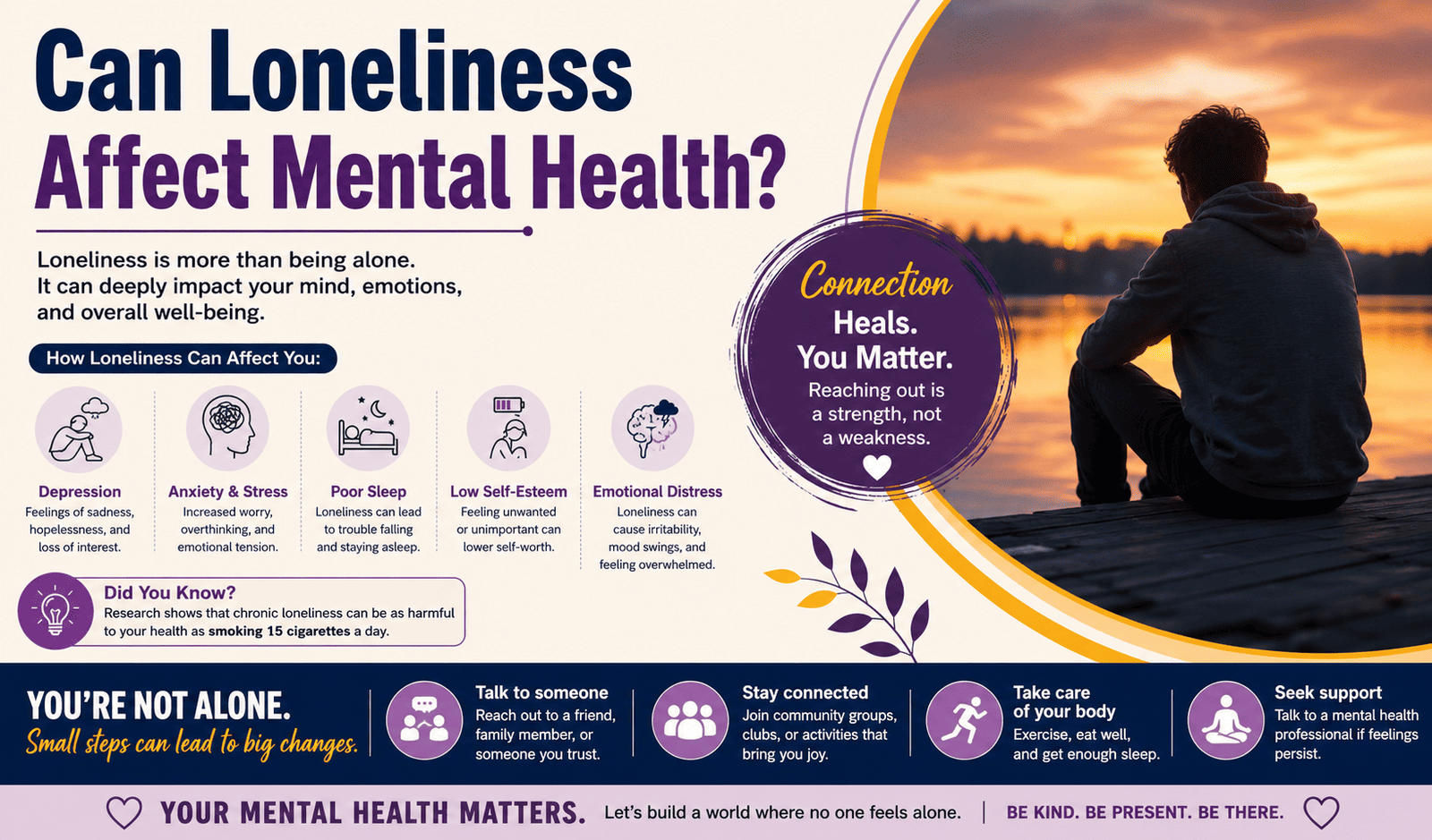
Yes, loneliness can significantly affect mental health. Persistent loneliness increases the risk of depression, anxiety, chronic stress, poor sleep, low self-esteem, and emotional distress. Although loneliness is not a mental illness itself, long-term feelings of social disconnection can contribute to the development or worsening of several mental health conditions.
Introduction
Loneliness is more than simply being alone. It is the emotional experience of feeling disconnected, misunderstood, or lacking meaningful relationships. In today’s fast-paced world, millions of Americans experience loneliness despite living in busy cities, working with colleagues, or staying connected through social media.
Mental health experts increasingly recognize loneliness as an important public health issue because emotional connection plays a vital role in psychological well-being. Understanding how loneliness affects the mind can help individuals recognize warning signs early and take meaningful steps toward recovery.
Also Read : Why Do I Feel Unmotivated Every Morning?
What Is Loneliness?
Loneliness is a subjective emotional feeling that occurs when a person’s desired level of social connection is greater than what they actually experience. It is possible to feel lonely while surrounded by family, coworkers, or friends because loneliness depends on emotional closeness rather than physical presence.
Healthy relationships provide support, belonging, and emotional security. When those needs remain unmet, loneliness can gradually affect both mental and physical health.
Also Read : How Does Exercise Improve Mental Well-Being?
Can Loneliness Affect Mental Health?
Yes, loneliness has a powerful impact on mental health. Human beings are naturally wired for social connection, and meaningful relationships help regulate emotions, reduce stress, and improve resilience during difficult times.
When loneliness becomes chronic, the brain interprets social isolation as a form of stress. This ongoing emotional stress can influence mood, thinking patterns, behavior, and overall psychological functioning. Over time, persistent loneliness may increase vulnerability to depression, anxiety disorders, sleep disturbances, and reduced emotional well-being.
The relationship works in both directions. Loneliness can contribute to mental health problems, while existing mental health conditions may also cause people to withdraw socially, creating a difficult cycle to break.
Also Read : What Are the Early Signs of Chronic Stress?
How Loneliness Affects the Brain?
The human brain responds strongly to social connection. Positive relationships promote feelings of safety and happiness, while emotional isolation increases stress responses. Chronic loneliness may make individuals more sensitive to negative experiences and more likely to interpret everyday interactions as rejection or criticism.
People experiencing prolonged loneliness often notice difficulty concentrating, increased worrying, emotional exhaustion, sadness without an obvious cause, reduced motivation, and feelings of hopelessness. These emotional changes are genuine psychological responses rather than personal weakness.
Also Read : Can Social Media Harm Mental Health?
Depression and Loneliness
Depression is one of the most common mental health conditions associated with loneliness. Feeling disconnected from others can reduce a person’s sense of purpose, belonging, and hope for the future. Without emotional support, everyday challenges may feel overwhelming.
Someone experiencing both loneliness and depression may lose interest in hobbies, avoid social situations, struggle with motivation, and experience persistent sadness. While loneliness does not always cause depression, it is considered a significant risk factor for developing depressive symptoms.
Also Read : Why Do I Feel Emotionally Numb?
Anxiety and Social Isolation
Loneliness can also increase anxiety. Individuals who feel emotionally isolated often become more concerned about being judged, rejected, or misunderstood by others. This fear may lead to avoiding conversations, declining invitations, and withdrawing from relationships.
Unfortunately, avoiding social interaction usually strengthens loneliness instead of reducing it. Breaking this cycle often requires gradually rebuilding confidence through supportive relationships and healthy communication.
The Connection Between Loneliness and Stress
Emotional isolation keeps the body’s stress response active for longer periods. Chronic stress affects both the mind and body, making it harder to relax and recover from everyday pressures.
People experiencing loneliness frequently report feeling emotionally drained, easily irritated, overwhelmed by small problems, and less capable of coping with change. Managing stress becomes much easier when strong emotional support systems are present.
Also Read : How Can I Improve My Mental Health Every Day?
Can Loneliness Affect Sleep?
Yes. Poor sleep and loneliness often occur together. Individuals who feel lonely may have trouble falling asleep, wake frequently during the night, or feel tired even after sleeping.
Sleep is essential for emotional regulation, memory, and mental recovery. When sleep quality declines, anxiety and depression symptoms may become even more noticeable, creating another self-reinforcing cycle.
Also Read : Why does stress affect my stomach?
Who Is Most Vulnerable?
Loneliness can affect people of every age, background, and lifestyle, but certain groups face greater risk.
Young adults often experience loneliness during college, career transitions, or while comparing themselves to others on social media. Older adults may struggle after retirement, losing a spouse, or reduced mobility. Remote workers sometimes miss meaningful daily interactions, while caregivers frequently prioritize others’ needs over their own emotional well-being.
The important message is that loneliness is a common human experience—not a personal failure.
Also Read : Can burnout make you physically sick?
Loneliness vs. Social Isolation
Although these terms sound similar, they describe different experiences.
| Loneliness | Social Isolation |
|---|---|
| Emotional feeling of disconnection | Limited physical social contact |
| Subjective experience | Objective situation |
| Can happen in crowds | Usually involves fewer interactions |
| Primarily affects emotions | Can affect both mental and physical health |
A person living alone may feel completely fulfilled, while someone with hundreds of online friends may still feel intensely lonely.
Signs Loneliness Is Affecting Your Mental Health
Recognizing early symptoms is important because loneliness usually develops gradually rather than suddenly.
Common signs include feeling disconnected from loved ones, persistent sadness, low self-esteem, loss of motivation, difficulty concentrating, poor sleep, increased irritability, avoiding social events, emotional numbness, and believing that nobody truly understands you.
If these feelings continue for several weeks and begin affecting work, relationships, or daily functioning, professional support may be beneficial.
Also Read : What are symptoms of high cortisol?
Physical Health and Emotional Well-Being
Mental and physical health are deeply connected. Chronic loneliness has been associated with increased stress hormones, weakened immune function, higher risk of heart disease, reduced cognitive health, and lower overall quality of life.
While loneliness is primarily an emotional experience, its long-term effects can extend throughout the entire body.
Also Read : Can overthinking affect physical health?
Why Social Media Doesn’t Always Help?
Many people assume that being constantly connected online prevents loneliness, but digital communication cannot always replace meaningful human relationships.
Passive scrolling and comparing your life with others may actually increase feelings of isolation. In contrast, genuine conversations, supportive communities, video calls with loved ones, and real-life friendships provide stronger emotional benefits.
Quality matters far more than quantity when it comes to social connection.
Also Read : Why do I feel anxious at night?
How to Reduce Loneliness Naturally?
Overcoming loneliness begins with small, consistent actions rather than dramatic life changes. Reaching out to one trusted friend or family member can begin rebuilding emotional connection. Joining community groups, volunteering, attending fitness classes, or participating in local events creates opportunities for meaningful relationships.
Regular physical activity improves mood naturally, while healthy sleep habits strengthen emotional resilience. Practicing mindfulness can also reduce negative thinking patterns that often accompany loneliness.
The goal is not to have more people in your life—it is to create deeper, healthier connections with the people who matter.
Also Read : What foods help reduce stress?
When Should You Seek Professional Help?
Occasional loneliness is a normal part of life. However, professional help should be considered if loneliness lasts for several months, causes persistent depression or anxiety, interferes with work or relationships, leads to substance misuse, or includes feelings of hopelessness or thoughts of self-harm.
Licensed mental health professionals can provide therapy, emotional support, and practical strategies for improving both mental health and social well-being.
Also Read : Can lack of sleep worsen anxiety?
Conclusion
So, can loneliness affect mental health? The answer is absolutely yes. Persistent loneliness can influence depression, anxiety, stress, sleep quality, self-esteem, and overall emotional well-being. The encouraging news is that loneliness is treatable. Meaningful relationships, healthy daily habits, community involvement, and professional support can all help restore emotional balance and improve quality of life.
Remember that everyone experiences loneliness at different stages of life. Taking one small step toward connection today can become the beginning of better mental health tomorrow.
Also Read : How to calm anxiety naturally at home?
Frequently Asked Questions (FAQs)
1. Can loneliness cause mental health problems?
Yes. Long-term loneliness increases the risk of depression, anxiety, chronic stress, and emotional distress.
2. Is loneliness a mental illness?
No. Loneliness is an emotional experience, not a diagnosable mental disorder, but it can contribute to mental health conditions.
3. Can you feel lonely even with friends?
Yes. Loneliness depends on emotional connection, not the number of people around you.
4. Does loneliness increase anxiety?
Yes. Feeling disconnected can increase worry, fear of rejection, and social avoidance.
5. Can loneliness lead to depression?
Persistent loneliness is considered a significant risk factor for developing depressive symptoms.
6. How does loneliness affect sleep?
Loneliness can make it harder to fall asleep, reduce sleep quality, and increase nighttime awakenings.
7. Who experiences loneliness the most?
Young adults, older adults, remote workers, caregivers, and people going through major life transitions are commonly affected.
8. Can exercise help reduce loneliness?
Yes. Regular exercise improves mood, reduces stress, and often creates opportunities for social interaction.
9. How long is too long to feel lonely?
If loneliness persists for several weeks or months and affects daily life, it is a good idea to seek professional support.
10. What is the best way to overcome loneliness?
Building meaningful relationships through regular conversations, community activities, healthy routines, and emotional support is the most effective long-term approach.

Digital detox habits can improve mental focus and clarity.
Medical Disclaimer: This article is intended for general educational and informational purposes and does not provide medical advice, diagnosis, or treatment. Stress-related symptoms can overlap with many other medical and mental health conditions. If you have persistent, severe, or concerning symptoms, consult a qualified healthcare professional for personalized evaluation and guidance.
Reviewed by: Dzarro Editorial Team
Fact-checked using trusted medical and scientific sources.

Sandip Choudhary is a Health & Wellness Researcher and Content Creator specializing in sleep, digestive health, preventive wellness, and evidence-based health education. He has been creating online content and researching health-related topics for several years, focusing on translating complex medical information into practical guidance for everyday readers.
With a strong background in SEO and content strategy, Sandip ensures that every article is optimized for both search engines and real users. His goal is to provide reliable, clear, and helpful information that supports healthier living.
Disclaimer: The content published is for informational purposes only and is not a substitute for professional medical advice.