
Feeling anxious before work, worrying excessively at night, or experiencing a racing heart for no clear reason can be overwhelming. Anxiety has become increasingly common in the United States, affecting people of all ages—from students and office workers to parents and retirees.
While occasional anxiety is a normal part of life, chronic stress and persistent anxious feelings can affect sleep, digestion, focus, and overall well-being. The good news is that many natural strategies may help calm anxiety at home and support long-term mental wellness.
This guide explains practical, science-backed ways to manage anxiety naturally while maintaining a healthy lifestyle.
Quick Answer
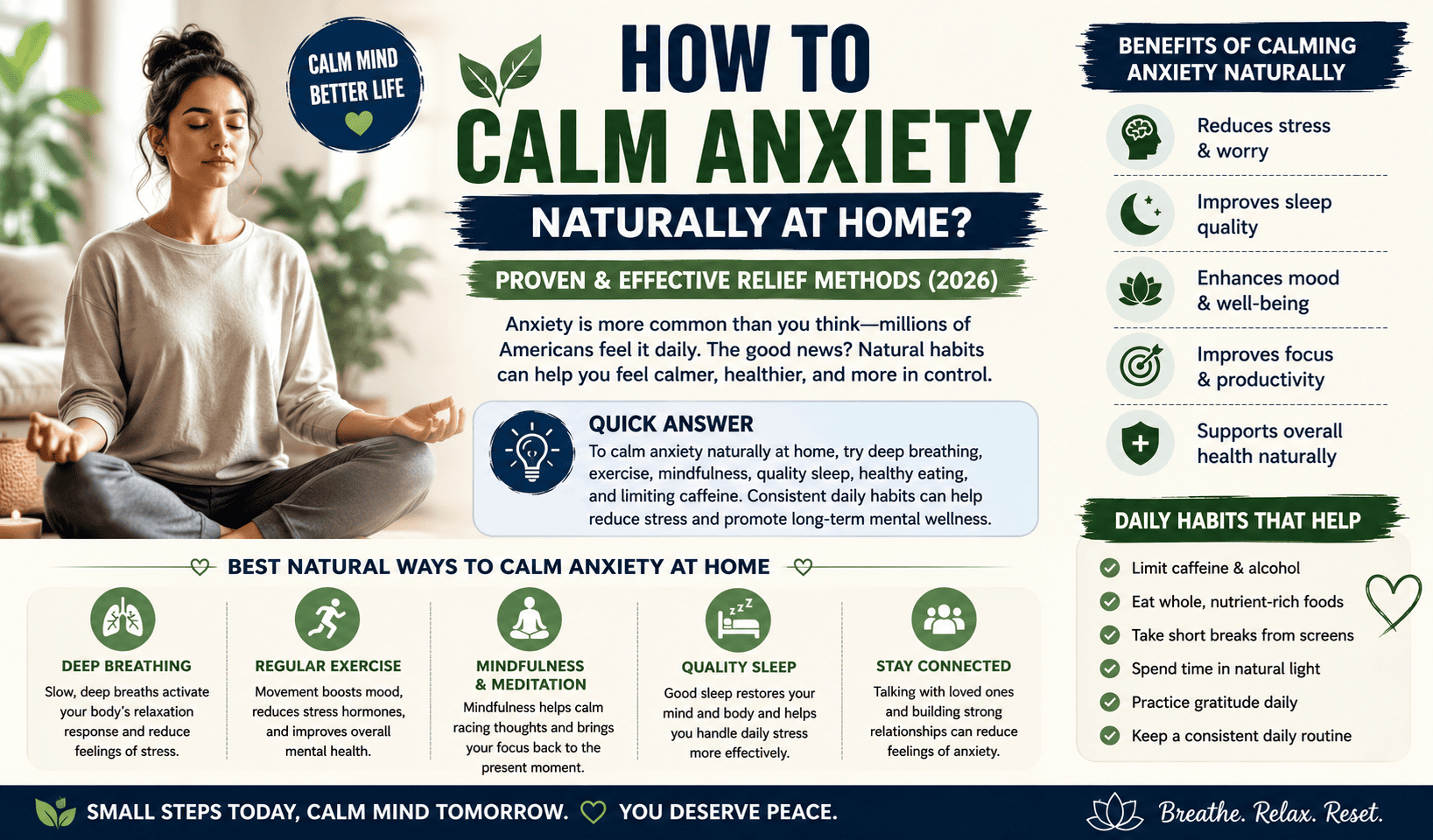
To calm anxiety naturally at home, try deep breathing, regular exercise, quality sleep, mindfulness practices, reducing caffeine, staying socially connected, and maintaining a balanced diet. Natural anxiety management works best when healthy habits are practiced consistently and combined with professional support when needed.
What Is Anxiety?
Anxiety is the body’s natural response to stress, uncertainty, or perceived danger. In small amounts, anxiety can help keep us alert and motivated. However, when anxious feelings become frequent or overwhelming, they may begin affecting daily life.
Anxiety can influence both the mind and body. It may affect concentration, sleep quality, digestion, energy levels, and emotional well-being. Importantly, experiencing anxiety does not mean something is “wrong” with you—many people experience periods of increased stress throughout life.
Also Read : What are the signs of emotional burnout?
Common Symptoms of Anxiety
Anxiety symptoms can vary widely from person to person.
Early Symptoms
- Excessive worrying
- Restlessness
- Difficulty relaxing
- Trouble concentrating
- Mild sleep disturbances
- Increased irritability
Advanced Symptoms
- Panic-like feelings
- Persistent sleep problems
- Muscle tension
- Digestive discomfort
- Fatigue
- Racing thoughts
- Avoidance behaviors
Some individuals experience mostly emotional symptoms, while others notice physical symptoms first.
Causes & Risk Factors
Anxiety rarely has a single cause. Instead, it often develops due to a combination of biological, environmental, and lifestyle factors.
Stress and Life Events
Major life changes such as financial pressure, relationship difficulties, work deadlines, or health concerns can increase anxiety levels. Many Americans report stress related to work-life balance and economic uncertainty.
Poor Sleep Habits
Sleep and anxiety influence each other closely. Poor sleep may worsen anxiety symptoms, while anxiety itself can make it harder to fall asleep.
Individuals who sleep fewer than the recommended 7–9 hours per night often report higher stress levels and lower emotional resilience.
Diet and Nutrition
What you eat may influence how you feel emotionally. Diets high in processed foods, sugar, and excessive caffeine may contribute to increased feelings of anxiety in some individuals.
Meanwhile, nutrient-rich diets that include fruits, vegetables, healthy fats, and lean proteins support overall brain health.
Sedentary Lifestyle
Physical inactivity may contribute to higher stress levels. Exercise helps regulate mood-supporting chemicals in the brain and may improve stress management.
Environmental Factors
Constant notifications, excessive screen time, social media exposure, and busy schedules can contribute to mental overload and anxious feelings.
Family History and Medical Conditions
Some individuals may be more vulnerable to anxiety due to genetics or certain health conditions. Persistent symptoms should be discussed with a healthcare professional.
Also Read : Why do I feel overwhelmed for no reason?
Anxiety vs Normal Stress: What’s the Difference?
| Feature | Normal Stress | Anxiety |
|---|---|---|
| Trigger | Usually specific | May occur without a clear trigger |
| Duration | Temporary | Can persist for weeks or months |
| Impact on daily life | Mild | May interfere with daily activities |
| Physical symptoms | Occasional | More frequent or intense |
| Sleep impact | Sometimes | Common |
Understanding this difference may help individuals decide when to seek additional support.
Best Natural Ways to Calm Anxiety at Home
Natural strategies often work best when practiced regularly rather than only during stressful moments.
1. Practice Deep Breathing
Deep breathing activates the body’s relaxation response. Slow, controlled breathing may help lower heart rate and reduce feelings of tension.
Try inhaling slowly for four seconds, holding for four seconds, and exhaling for six seconds. Repeat for several minutes.
2. Exercise Regularly
Physical activity is one of the most effective natural ways to support mental wellness.
Activities such as walking, cycling, yoga, or strength training may help:
- Reduce stress hormones
- Improve mood
- Support better sleep
- Increase energy levels
Even 20–30 minutes of movement most days can make a difference.
3. Practice Mindfulness and Meditation
Mindfulness involves paying attention to the present moment without judgment.
Simple mindfulness practices may include:
- Guided meditation
- Body scans
- Mindful breathing
- Journaling
These techniques can help reduce overthinking and improve emotional regulation.
4. Improve Sleep Quality
Sleep is essential for mental health.
Helpful sleep habits include:
- Maintaining a consistent sleep schedule
- Limiting screen time before bed
- Keeping the bedroom cool and dark
- Avoiding caffeine late in the day
Better sleep often supports lower stress levels.
5. Stay Connected With Others
Social support is an important part of emotional well-being.
Talking with trusted friends, family members, or support groups may help reduce feelings of isolation and anxiety.
6. Limit News and Social Media Exposure
Constant exposure to stressful news and online content may increase anxious feelings in some people.
Consider setting boundaries around screen time and taking regular digital breaks.
Also Read : Can stress cause physical symptoms?
Diet & Lifestyle Tips for Anxiety Relief
Nutrition and lifestyle habits play a meaningful role in mental wellness.
Foods That May Support Calmness
Foods rich in nutrients may support overall brain health, including:
- Fatty fish
- Leafy greens
- Nuts and seeds
- Whole grains
- Yogurt
- Berries
Staying hydrated throughout the day is also important, as dehydration may worsen fatigue and concentration problems.
Foods and Habits to Limit
Some individuals find that certain substances increase anxious feelings, such as:
- Excess caffeine
- Alcohol
- Highly processed foods
- Sugary beverages
Keeping a food journal may help identify personal triggers.
Daily Routine Improvements
Building a structured routine may support emotional balance.
Helpful habits include:
- Getting morning sunlight exposure
- Taking movement breaks during work
- Practicing gratitude
- Setting realistic goals
- Scheduling relaxation time
Small daily habits often create meaningful long-term benefits.
Also Read : How to reduce cortisol naturally?
Professional Treatment Options
Natural strategies can be helpful, but some people may benefit from additional support.
Professional options may include:
- Counseling or therapy
- Stress management programs
- Cognitive behavioral therapy (CBT)
- Medical evaluation when appropriate
Seeking help is a proactive step toward better health.
When Should You See a Doctor?
Consider speaking with a healthcare professional if anxiety:
- Interferes with work or relationships
- Causes severe sleep problems
- Leads to panic attacks
- Persists for weeks or months
- Causes significant distress
Immediate medical attention may be necessary if you experience thoughts of self-harm or feel unsafe.
Also Read : What causes brain fog and fatigue?
Who Is Most at Risk?
Certain groups may experience higher rates of anxiety, including:
1. Office Workers
High workloads, deadlines, and long hours can increase stress levels.
2. College Students
Academic pressure and life transitions may contribute to anxiety.
3. Women
Hormonal changes and caregiving responsibilities may influence emotional health.
4. Shift Workers
Irregular schedules may disrupt sleep and increase stress.
5. Older Adults
Health concerns and social changes can sometimes affect mental well-being.
Frequently Asked Questions
1. How can I calm anxiety naturally at home?
Deep breathing, exercise, mindfulness, quality sleep, and healthy eating may help reduce anxiety naturally.
2. Does caffeine make anxiety worse?
For some individuals, excessive caffeine intake may increase feelings of nervousness or restlessness.
3. Can exercise reduce anxiety?
Regular physical activity may support mood regulation and stress reduction.
4. What foods help with anxiety?
Foods rich in omega-3 fats, fiber, vitamins, and minerals may support brain health and emotional well-being.
5. When should anxiety be taken seriously?
Anxiety should be evaluated by a healthcare professional if it significantly affects daily functioning or quality of life.
👉 Creating healthy boundaries may help improve emotional well-being.
Conclusion
Learning how to calm anxiety naturally at home begins with small, sustainable lifestyle changes. Prioritizing sleep, regular movement, healthy nutrition, mindfulness, and social connection may support both mental and physical wellness.
Anxiety management is not about eliminating all stress from life. Instead, it’s about building healthy habits that improve resilience and help you respond to challenges more effectively.
If anxiety continues to interfere with daily life, reaching out to a healthcare professional can provide additional guidance and support.
Reviewed by: Dzarro Editorial Team
Fact-checked using trusted medical and scientific sources.

Sandip Choudhary is a Health & Wellness Researcher and Content Creator specializing in sleep, digestive health, preventive wellness, and evidence-based health education. He has been creating online content and researching health-related topics for several years, focusing on translating complex medical information into practical guidance for everyday readers.
With a strong background in SEO and content strategy, Sandip ensures that every article is optimized for both search engines and real users. His goal is to provide reliable, clear, and helpful information that supports healthier living.
Disclaimer: The content published is for informational purposes only and is not a substitute for professional medical advice.
2 thoughts on “How to calm anxiety naturally at home?”
Comments are closed.