
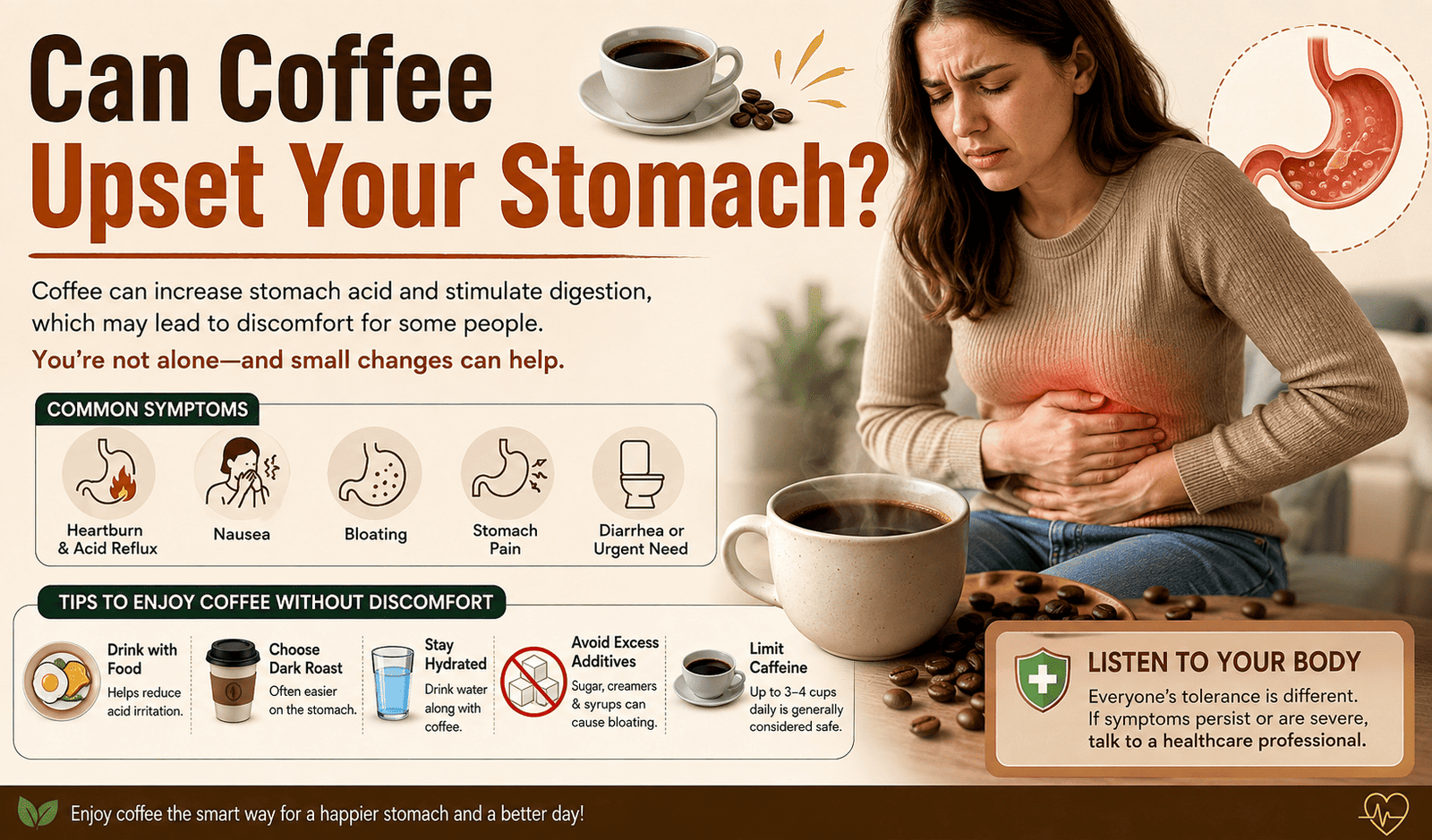
Coffee is one of the most popular beverages in the United States, with millions of people enjoying it every morning. It helps improve alertness, supports focus, and provides natural antioxidants that may benefit overall health. However, many people notice that their favorite cup of coffee sometimes comes with an uncomfortable side effect—stomach pain, heartburn, nausea, bloating, or an urgent trip to the bathroom.
The good news is that coffee does not affect everyone the same way. Some people can drink several cups without any digestive problems, while others experience discomfort after just one serving. Understanding why coffee upsets the stomach can help you make better choices without necessarily giving up your daily coffee routine.
Can Coffee Upset Your Stomach?

Yes, coffee can upset your stomach. It may increase stomach acid production, stimulate digestion, and speed up bowel movements, leading to symptoms such as heartburn, acid reflux, nausea, bloating, indigestion, and diarrhea. These effects are more common in people with sensitive stomachs, acid reflux (GERD), or irritable bowel syndrome (IBS).
For most healthy adults, moderate coffee consumption is generally safe. The key is understanding your personal tolerance and drinking coffee in a way that supports digestive comfort.
Also Read : What Foods Trigger Heartburn?
Why Does Coffee Upset Your Stomach?

Coffee naturally stimulates the digestive system. One of its primary effects is increasing the release of gastrin, a digestive hormone that tells your stomach to produce more gastric acid. While this is a normal part of digestion, excess acid can irritate the stomach lining in sensitive individuals and contribute to burning or discomfort.
Caffeine also activates the muscles of the digestive tract. As food moves more quickly through the intestines, some people experience cramping or loose stools shortly after drinking coffee. Additionally, coffee may relax the lower esophageal sphincter, the muscle that normally prevents stomach acid from flowing back into the esophagus. When this valve relaxes, heartburn and acid reflux become more likely.
Also Read : What Is Acid Reflux and How Can I Prevent It?
Common Stomach Symptoms After Drinking Coffee

If coffee irritates your digestive system, symptoms usually appear within 15 to 60 minutes after drinking it. The most common complaints include heartburn, acid reflux, nausea, bloating, stomach pain, indigestion, diarrhea, and an urgent need for a bowel movement.
The intensity of these symptoms depends on factors such as caffeine sensitivity, genetics, stress levels, medications, and existing digestive conditions. Two people drinking the same coffee may have completely different experiences.
Also Read : Why Do I Feel Full So Quickly?
Is Coffee Acidity the Real Problem?

Many people believe that coffee’s acidity is the only reason it causes stomach problems, but the science is more complex. Coffee contains chlorogenic acids and several bioactive compounds that stimulate stomach acid production. The digestive discomfort comes more from coffee’s biological effects than from its pH alone.
This is why even decaffeinated or low-acid coffee may still trigger symptoms in some individuals. Choosing a darker roast may help because darker roasting changes some of the compounds associated with acid stimulation, making it easier for certain people to tolerate.
Also Read : Can Dehydration Cause Constipation?
Can Coffee Cause Acid Reflux and Heartburn?

Yes, coffee is a common trigger for heartburn, especially in people living with gastroesophageal reflux disease (GERD). When coffee increases stomach acid and relaxes the lower esophageal sphincter, acid can travel upward into the esophagus and create the familiar burning sensation.
It is important to understand that coffee does not usually cause GERD itself. Instead, it may worsen symptoms in people who already have reflux. Many individuals find relief by reducing portion sizes, avoiding coffee late in the day, or drinking it alongside breakfast instead of on an empty stomach.
Also Read : How Much Water Should I Drink for Healthy Digestion?
Why Does Coffee Make You Feel Nauseous?

Nausea is one of the most overlooked side effects of coffee. Drinking coffee first thing in the morning without eating can increase stomach acid while allowing caffeine to enter the bloodstream more quickly. This combination may lead to queasiness, dizziness, shakiness, or an unsettled stomach.
People who are particularly sensitive to caffeine often notice nausea even after a small cup. Eating a protein-rich breakfast before coffee and drinking water beforehand may reduce these symptoms significantly.
Also Read : What Causes Chronic Diarrhea?
Is Drinking Coffee on an Empty Stomach Worse?

For many people, the answer is yes. Food acts as a natural buffer inside the stomach, helping reduce the intensity of gastric acid. Without food, coffee’s digestive effects can feel much stronger and may increase burning, nausea, or stomach discomfort.
Although drinking coffee on an empty stomach has not been proven to cause stomach diseases, it can make existing digestive sensitivity more noticeable. Even a small meal such as yogurt, oatmeal, eggs, or whole-grain toast may improve tolerance.
Also Read : Why Am I Constipated Even When I Eat Fiber?
Can Coffee Cause Bloating?

Coffee itself does not directly create gas, but it can contribute to bloating through several mechanisms. Faster digestion, increased stomach activity, and certain coffee additives may all play a role. In many cases, the real culprit is not the coffee but the milk, flavored syrups, artificial sweeteners, or sugary creamers added to specialty drinks.
If bloating happens only after lattes or flavored coffees, try switching to plain black coffee or lactose-free milk for a few days and compare how your body responds.
Also Read : Can Stress Cause Digestive Problems?
Is Coffee Bad for Gastritis or Stomach Ulcers?

A common myth is that coffee causes stomach ulcers. Modern medical evidence does not support this claim. Coffee does not cause ulcers or gastritis in healthy people. However, if someone already has inflammation of the stomach lining, coffee may worsen pain or irritation because it stimulates acid production.
This means coffee may aggravate existing symptoms without being the underlying cause of the condition. Anyone with persistent stomach pain should seek medical evaluation rather than assuming coffee is the only issue.
Also Read : What Foods Are Best for Gut Health?
Who Is Most Likely to Experience Coffee-Related Stomach Problems?

Certain people are naturally more sensitive to coffee’s digestive effects. Individuals with GERD often experience increased heartburn, while those with IBS may notice diarrhea or bowel urgency because caffeine stimulates intestinal movement. People with functional dyspepsia frequently report indigestion, and those with high caffeine sensitivity may develop nausea, shakiness, or abdominal discomfort after relatively small amounts.
Age, stress, sleep quality, medications, and genetics also influence how the body processes caffeine, making tolerance highly individual.
Also Read : How Can I Improve My Gut Health Naturally?
How to Drink Coffee Without Upsetting Your Stomach?

You do not necessarily need to stop drinking coffee to improve digestive comfort. Small lifestyle adjustments often make a significant difference. Drinking coffee after eating slows caffeine absorption and reduces irritation caused by excess stomach acid. Choosing a dark roast instead of a light roast may feel gentler for some people, and reducing daily caffeine intake can decrease both digestive and nervous system side effects.
Hydration is equally important. Drinking a glass of water with your coffee may reduce feelings of nausea, while limiting sugary syrups and heavy creamers may help prevent bloating and indigestion.
Also Read : What Causes Bloating Every Day?
Best Coffee Options for Sensitive Stomachs

People with sensitive stomachs often tolerate certain coffee styles better than others. Dark roast coffee is commonly considered gentler because of its roasting profile. Cold brew tends to have a smoother flavor that many people perceive as less acidic, while decaffeinated coffee may reduce symptoms related specifically to caffeine sensitivity.
The best option is ultimately the one your body tolerates comfortably. Keeping a simple food and symptom journal for one week can help identify whether the roast, caffeine level, serving size, or additives are triggering your digestive discomfort.
Also Read : Why Does My Stomach Hurt After Eating?
When Should You See a Doctor?

Occasional stomach discomfort after coffee is usually not a medical emergency. However, persistent or severe symptoms should never be ignored. If you experience heartburn several times each week, severe abdominal pain, repeated vomiting, black or bloody stools, unexplained weight loss, or ongoing nausea even after stopping coffee, consult a healthcare professional promptly.
These symptoms may indicate an underlying digestive disorder that requires proper diagnosis and treatment rather than simple dietary changes.
Also Read : Why do I feel tired after eating?
Final Thoughts
Coffee can upset your stomach, but it is not automatically harmful for everyone. The digestive effects are largely related to increased stomach acid, faster intestinal movement, and individual sensitivity rather than coffee damaging the stomach itself. Many people can continue enjoying coffee comfortably by drinking it with food, choosing a darker roast, reducing caffeine, staying hydrated, and avoiding excessive sugary additives.
If your symptoms are frequent or severe, it is worth discussing them with a healthcare provider to determine whether coffee is truly the trigger or whether another digestive condition is responsible.
Also Read : Why do I feel full after eating small amounts?
Frequently Asked Questions (FAQs)
1. Can coffee upset your stomach even if it is decaf?
Yes. Decaffeinated coffee contains much less caffeine, but it can still stimulate stomach acid and cause digestive discomfort in sensitive people.
2. Why does coffee make me poop immediately?
Coffee stimulates digestive hormones and intestinal muscle contractions, which can increase bowel movements shortly after drinking it.
3. Is black coffee better for your stomach than coffee with milk?
It depends. Black coffee may reduce bloating caused by dairy, but some people find a small amount of milk makes coffee feel gentler. Lactose intolerance can make milk-based coffee drinks worse.
4. Can coffee cause stomach ulcers?
No. Current medical evidence shows that coffee does not cause stomach ulcers, although it may aggravate symptoms in people with existing stomach irritation.
5. Does cold brew upset the stomach less?
Many people find cold brew easier to tolerate because it has a smoother taste and is often perceived as less acidic, although individual tolerance varies.
6. Should I stop drinking coffee if I have acid reflux?
Not necessarily. Many people with mild reflux can still enjoy coffee by reducing serving size, drinking it with food, and avoiding it late in the evening.
7. Is drinking coffee on an empty stomach unhealthy?
It is not unhealthy for everyone, but it can increase nausea, heartburn, and stomach discomfort in people with sensitive digestion.
8. How much coffee is safe to drink daily?
Most healthy adults can safely consume up to 400 mg of caffeine per day, which equals about three to four regular cups of brewed coffee.
9. Why do flavored coffee drinks cause bloating?
Artificial sweeteners, sugary syrups, heavy creamers, and dairy ingredients often contribute more to bloating than the coffee itself.
10. What is the best coffee for a sensitive stomach?
Dark roast coffee, smaller serving sizes, coffee consumed with food, and decaffeinated coffee are often the most comfortable choices for people with sensitive stomachs.

Heartburn often develops after spicy or fatty meals.
Medical Disclaimer: This article is intended for general health education and is not a substitute for personalized medical advice, diagnosis, or treatment. Fluid and dietary needs differ from person to person. If you have persistent constipation, significant symptoms, a chronic medical condition, or concerns about your hydration needs, consult a qualified healthcare professional.
Medically reviewed information sourced from trusted health organizations.
Reviewed by: Dzarro Editorial Team
Fact-checked using trusted medical and scientific sources.

Sandip Choudhary is a Health & Wellness Researcher and Content Creator specializing in sleep, digestive health, preventive wellness, and evidence-based health education. He has been creating online content and researching health-related topics for several years, focusing on translating complex medical information into practical guidance for everyday readers.
With a strong background in SEO and content strategy, Sandip ensures that every article is optimized for both search engines and real users. His goal is to provide reliable, clear, and helpful information that supports healthier living.
Disclaimer: The content published is for informational purposes only and is not a substitute for professional medical advice.