
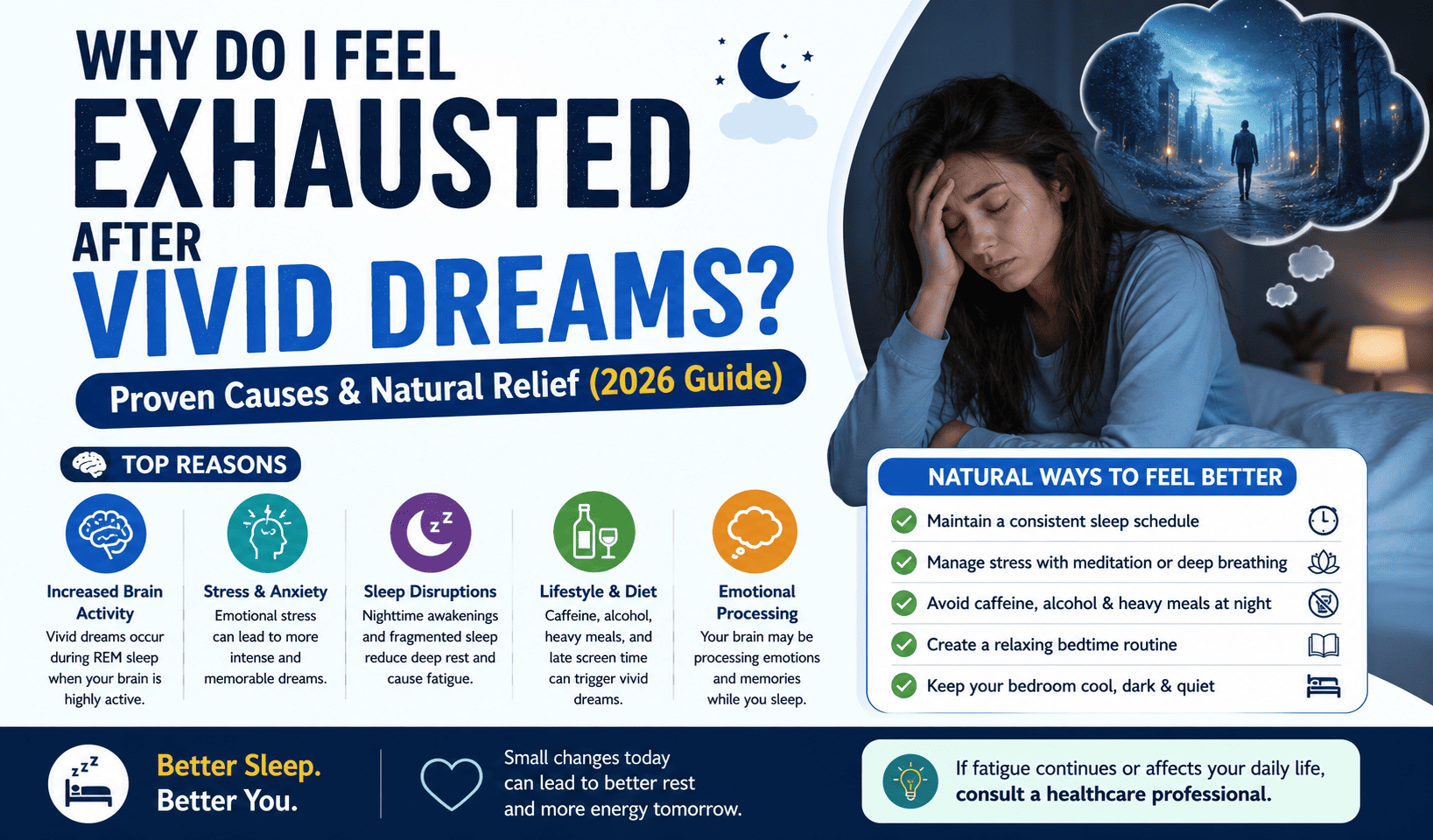
Have you ever woken up after a long night’s sleep feeling completely drained because of an intense dream? Maybe you were running from danger, reliving a stressful situation, or experiencing vivid emotional scenes that felt incredibly real. Instead of feeling refreshed, you wake up exhausted, mentally foggy, and ready for another nap.
If this sounds familiar, you’re not alone. Many Americans report feeling tired after vivid dreams, especially during stressful periods of life. While dreams are a normal part of sleep, certain types of vivid or emotionally intense dreams can interfere with sleep quality and leave you feeling fatigued the next day.
This guide explains why vivid dreams can make you feel exhausted, common causes, risk factors, and practical ways to improve sleep quality naturally.
Quick Answer
Yes, vivid dreams can make you feel exhausted because they often occur during REM sleep, a stage where brain activity increases significantly. Frequent, emotional, stressful, or intense dreams may disrupt sleep quality, increase nighttime awakenings, and leave you feeling mentally drained even after a full night’s sleep.
What Does It Mean to Feel Exhausted After Vivid Dreams?
Dreaming is a normal part of healthy sleep. Most vivid dreams occur during REM (Rapid Eye Movement) sleep, when the brain is highly active.
During REM sleep:
- The brain processes emotions
- Memories are organized
- Learning is reinforced
- Emotional experiences are processed
When dreams become unusually vivid, emotional, or frequent, the brain may remain highly active throughout the night. As a result, you may wake up feeling like you never truly rested.
Many people describe it as:
- Feeling mentally exhausted
- Waking up emotionally drained
- Feeling tired despite sleeping 7–9 hours
Also Read : What causes sudden insomnia in adults?
Common Symptoms of Dream-Related Fatigue
Early Symptoms
- Morning grogginess
- Mental fatigue
- Difficulty concentrating
- Feeling emotionally drained
- Mild headaches
- Low motivation
Advanced Symptoms
- Chronic daytime tiredness
- Brain fog
- Anxiety upon waking
- Frequent nighttime awakenings
- Mood swings
- Reduced productivity
- Difficulty remembering information
These symptoms often become more noticeable when vivid dreams occur repeatedly.
Also Read : Why do I wake up tired after naps?
Why Do Vivid Dreams Cause Exhaustion?
Several factors may contribute to waking up tired after vivid dreams.
1. Increased Brain Activity During REM Sleep
Unlike deep sleep, REM sleep involves intense brain activity.
During vivid dreams:
- Emotional centers become highly active
- Memory processing increases
- Stress-related thoughts may resurface
Although your body is resting, your brain may be working harder than usual.
This can contribute to morning fatigue and mental exhaustion.
2. Frequent Sleep Interruptions
Many vivid dreamers wake up briefly throughout the night.
These interruptions may:
- Reduce deep sleep
- Fragment sleep cycles
- Lower overall sleep quality
Even if you don’t fully remember waking up, your sleep may still be disrupted.
3. Stress and Anxiety
Stress is one of the most common causes of vivid dreams.
When stress levels increase:
- The brain processes more emotional information
- Dreams become more intense
- REM sleep may become more active
Many Americans experience vivid dreams during:
- Work stress
- Financial concerns
- Relationship problems
- Major life changes
4. Sleep Debt and REM Rebound
When you don’t get enough sleep, the body may compensate later.
This phenomenon is called REM rebound.
During REM rebound:
- REM sleep increases
- Dreams become more vivid
- Emotional dream content may intensify
Many people notice vivid dreams after:
- Poor sleep schedules
- Long work weeks
- Travel
- Sleep deprivation
5. Certain Medications
Some medications can increase dream intensity.
Examples may include:
- Antidepressants
- Blood pressure medications
- Sleep aids
- Certain supplements
Never stop medication without consulting your healthcare provider.
6. Mental and Emotional Processing
Dreams often reflect emotional experiences.
Major life events can increase dream intensity, including:
- Loss of a loved one
- Career changes
- Anxiety
- Trauma
- Emotional stress
The brain may continue processing emotions while you sleep.
Also Read : Can poor sleep weaken the immune system?
Comparison Table: Normal Dreams vs Vivid Dreams
| Factor | Normal Dreams | Vivid Dreams |
|---|---|---|
| Detail Level | Moderate | Very detailed |
| Emotional Intensity | Mild | Strong |
| Recall After Waking | Often forgotten | Easily remembered |
| Sleep Disruption | Rare | More common |
| Morning Fatigue | Less likely | More likely |
Main Causes & Risk Factors
Several factors increase the likelihood of vivid dreams and sleep-related fatigue.
Lifestyle Factors
- Irregular sleep schedules
- Excessive screen time
- Poor sleep hygiene
- Overworking
- Shift work
Dietary Factors
Certain foods and habits may affect dreams.
Possible Triggers
- Heavy meals before bed
- Excess caffeine
- Alcohol
- High sugar intake
These may disrupt sleep cycles and increase dream activity.
Stress & Emotional Health
Stress remains one of the strongest predictors of vivid dreams.
People experiencing:
- Anxiety
- Burnout
- Chronic stress
often report more vivid and emotionally intense dreams.
Medical Factors
Some health conditions may contribute to vivid dreams:
- Sleep apnea
- Depression
- PTSD
- Narcolepsy
- Anxiety disorders
Persistent symptoms should be evaluated professionally.
Also Read : How to calm nighttime anxiety naturally?
Best Treatment Options for Vivid Dream Fatigue
The goal is not to eliminate dreams but to improve sleep quality and reduce dream-related exhaustion.
1. Improve Sleep Hygiene
Healthy sleep habits support more balanced sleep cycles.
Helpful Sleep Habits
- Sleep at consistent times
- Avoid screens before bed
- Keep the room cool and dark
- Maintain a relaxing bedtime routine
2. Manage Stress Naturally
Reducing stress may significantly reduce vivid dream frequency.
Helpful Techniques
- Meditation
- Deep breathing
- Journaling
- Yoga
- Evening walks
Stress reduction supports healthier REM sleep.
3. Improve Sleep Environment
A sleep-friendly environment promotes better recovery.
Ideal Sleep Environment
- Cool temperature
- Minimal noise
- Comfortable bedding
- Low light exposure
Many sleep experts recommend bedrooms around 60–67°F.
4. Limit Dream Triggers Before Bed
Some habits may increase vivid dreams.
Reduce:
- Excess alcohol
- Late-night caffeine
- Heavy meals
- Emotional media before sleep
Creating a calm evening routine can help.
5. Address Underlying Sleep Disorders
If vivid dreams are severe or frequent, sleep disorders may be involved.
Conditions such as:
- Sleep apnea
- Anxiety disorders
- PTSD
may require professional evaluation.
Also Read : Why does my mind race at night?
Diet & Lifestyle Tips
Foods That May Support Better Sleep
- Bananas
- Oatmeal
- Almonds
- Kiwi
- Chamomile tea
- Magnesium-rich foods
These foods may support relaxation and healthy sleep patterns.
Foods to Avoid Before Bed
- Energy drinks
- Excess coffee
- Alcohol
- Sugary desserts
- Heavy fried meals
These may disrupt sleep quality and increase nighttime awakenings.
Daily Routine Improvements
Morning
- Get sunlight exposure
- Stay hydrated
- Avoid oversleeping
Evening
- Reduce screen time
- Keep a consistent bedtime
- Practice relaxation techniques
Consistency often improves both sleep and dream quality.
When Should You See a Doctor?
Seek medical advice if you experience:
- Severe daytime fatigue
- Nightmares several times per week
- Sleep paralysis
- Loud snoring
- Breathing interruptions during sleep
- PTSD-related dreams
- Significant emotional distress
Persistent sleep problems should not be ignored.
Also Read : Can sleeping late affect hormones?
Who Is Most at Risk?
1. Adults Under High Stress
Work pressure and financial concerns commonly trigger vivid dreams.
2. Students
Academic stress and irregular sleep schedules can increase dream intensity.
3. Women
Hormonal fluctuations may affect sleep and dream patterns.
4. Shift Workers
Disrupted circadian rhythms often contribute to vivid dreams.
5. People With Anxiety
Anxiety frequently increases REM sleep activity and dream recall.
FAQs
1. Why do vivid dreams make me feel tired?
Vivid dreams often occur during active REM sleep and may disrupt sleep quality, leading to mental and physical fatigue.
2. Can stress cause vivid dreams?
Yes. Stress and anxiety are among the most common triggers of vivid and emotionally intense dreams.
3. Is it normal to wake up exhausted after dreaming?
Occasionally, yes. However, frequent exhaustion after vivid dreams may indicate poor sleep quality or an underlying issue.
4. Can certain foods cause vivid dreams?
Some people report more vivid dreams after consuming alcohol, caffeine, sugar, or heavy meals close to bedtime.
5. How can I stop feeling tired after vivid dreams?
Improving sleep habits, reducing stress, maintaining a healthy sleep environment, and addressing sleep disorders may help.

Sleep performance tips can help maximize recovery and mental clarity.
Conclusion
Feeling exhausted after vivid dreams is surprisingly common and often linked to increased REM sleep activity, stress, poor sleep quality, or disrupted sleep cycles. While dreaming is a normal and healthy part of sleep, frequent intense dreams may leave you feeling mentally and emotionally drained.
The good news is that simple lifestyle changes—such as reducing stress, improving sleep hygiene, optimizing room temperature, and maintaining a consistent sleep schedule—can often improve sleep quality and reduce dream-related fatigue.
If vivid dreams become frequent, disruptive, or affect your daily life, consider speaking with a healthcare professional to identify potential underlying causes.
Medically reviewed information sourced from trusted health organizations.
References
- National Institutes of Health (NIH). Sleep and Sleep Disorders.
https://www.nhlbi.nih.gov/health/sleep - Sleep Foundation. Sleep Health Resources.
https://www.sleepfoundation.org/ - Centers for Disease Control and Prevention (CDC). Sleep and Sleep Disorders.
https://www.cdc.gov/sleep/ - Mayo Clinic. Sleep Disorders Overview.
https://www.mayoclinic.org/
Reviewed by: Dzarro Editorial Team
Fact-checked using trusted medical and scientific sources.
Last Updated: June 13, 2026

Sandip Choudhary is a Health & Wellness Researcher and Content Creator specializing in sleep, digestive health, preventive wellness, and evidence-based health education. He has been creating online content and researching health-related topics for several years, focusing on translating complex medical information into practical guidance for everyday readers.
With a strong background in SEO and content strategy, Sandip ensures that every article is optimized for both search engines and real users. His goal is to provide reliable, clear, and helpful information that supports healthier living.
Disclaimer: The content published is for informational purposes only and is not a substitute for professional medical advice.